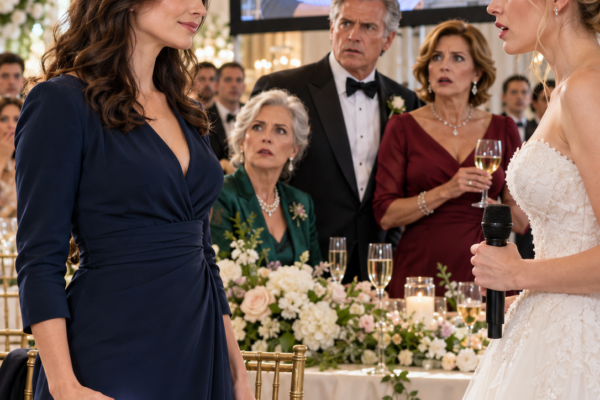
My parents gave my sister $250,000 for her wedding, while I only received $500. My mom whispered: “That’s all you deserve.” I left. 2 years later, my sister and mom drove past my house. My sister cried: “Mom, why don’t I have that?”
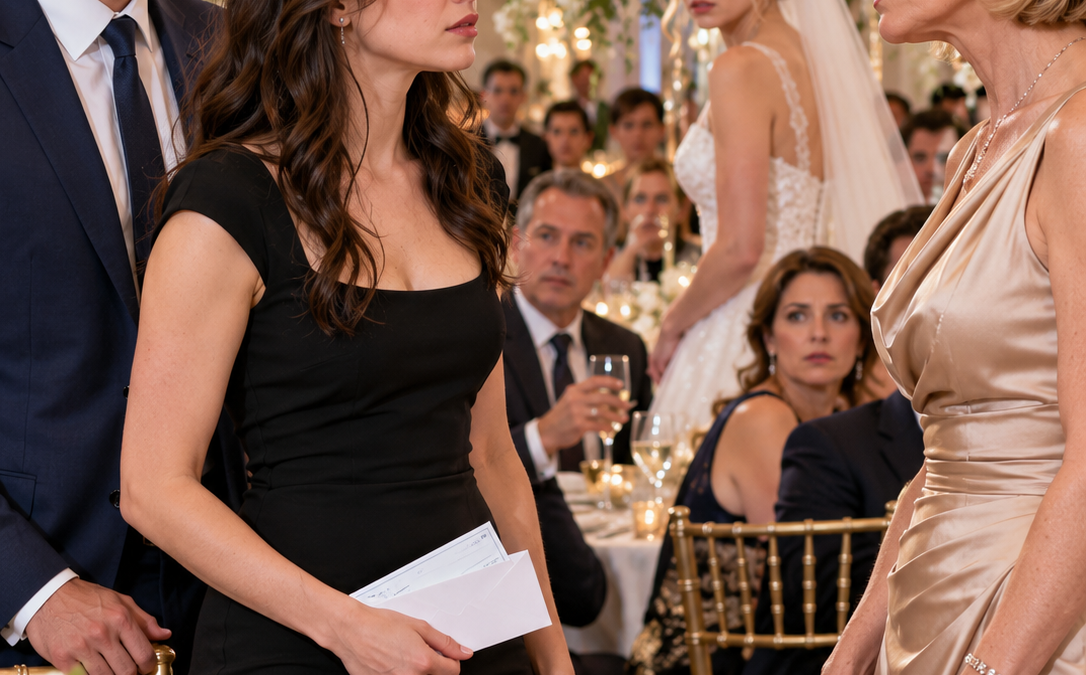
“That’s all you deserve,” my mother whispered, pressing a $500 check into my hand while my sister posed for photographs at her $250,000 wedding reception.
I was standing in the corner of a Ritz-Carlton ballroom in Hartford, Connecticut. Crystal chandeliers hung overhead. Two hundred guests filled the room. Bottles of Moët sat on every table, filet mignon was going cold on fine china, and there I stood in an $89 black dress from Nordstrom Rack, holding a thin white envelope that was supposed to be my mother’s answer to a question I’d asked twenty minutes earlier.
“Mom, will you help Daniel and me the way you helped Britney?”
The $500 wasn’t what made me leave that night. It was what my mother said to the man standing beside me—the man who would later help me build everything she had sworn I’d never have.
Before I go on, please take a moment to like and subscribe, but only if you genuinely connect with this story. And tell me in the comments where you’re watching from right now and what time it is where you are.
My name is Naomi Walker. I’m thirty years old now, but let me take you back two years, to a Saturday in June, inside that ballroom at the Ritz-Carlton in Hartford. It was the night I finally stopped trying to earn my mother’s love.
I grew up in Glastonbury, Connecticut, the kind of town where every lawn seems trimmed to the same height and every family portrait hangs in exactly the same place above the fireplace. We lived in a four-bedroom Colonial on a tree-lined street, with a two-car garage and a golden retriever named Baxter. From the outside, the Walkers looked like a family from a catalog. From the inside, we operated on a ranking system.
My older sister, Britney, was the blueprint. Straight-A student, captain of the varsity lacrosse team, early admission to Johns Hopkins. She moved through life like someone who had been told since birth that the world belonged to her. And she believed it because our mother had made sure she did.
Patricia Walker was fifty-eight, a former surgical nurse who had once dreamed of attending medical school but had never applied. She poured every ounce of that unfinished ambition into Britney, like concrete into a mold. And Britney hardened into exactly what our mother wanted: a dermatologist with a private practice, a boyfriend from the right family, and a smile that photographed beautifully at holiday parties.
Then there was me.
I was the daughter who drew instead of studied. The one who won an art contest during sophomore year and brought the ribbon home to a silent dinner table. My mother examined it the way someone might examine a coupon they knew they’d never use.
“That’s nice, Naomi. But creativity is a luxury. Stability is a responsibility.”
That ribbon went into a drawer in my bedroom. Britney’s lacrosse trophies, honor roll certificates, and Johns Hopkins acceptance letter lived in the glass display cabinet in our living room. You could see it from the front door. Guests always noticed, which was precisely the point.
One daughter who would save lives. One daughter who drew pictures. Guess which one got mentioned at Thanksgiving.
I graduated from UConn with a degree in communications and a GPA nobody in my family ever bothered to ask about. I landed a job as a junior marketing coordinator at a small agency in Hartford called Bridwell & Partners. Eleven employees, an office above a sandwich shop on Asylum Street, and a salary of $38,000 a year before taxes. It wasn’t glamorous, but it was mine.
The problem was transportation.
Hartford’s public transit system didn’t reach the suburbs where I needed to meet clients. I needed a car, but my credit history was thin: a student credit card with a $2,000 limit and six months of on-time rent payments. It wasn’t enough to qualify for an auto loan on my own.
So my parents co-signed.
The loan was for $18,000, financing a 2019 Honda Civic with 62,000 miles on it. My monthly payment was $312. On paper, it looked like a generous thing for parents to do for their daughter. In practice, it became a leash.
My mother kept the co-signing agreement in her bedside drawer the way some people keep a loaded weapon. Every Thanksgiving, every phone call in which I mentioned wanting something different, every time I pushed back against one of her judgments, the leash tightened.
“You still owe us for that car, Naomi. Don’t bite the hand that co-signed your loan.”
My father, Robert, was sixty, a retired sales manager and the kind of man who read the newspaper to avoid conversations. He would sit across the dinner table and say nothing while my mother spoke. He’d look down at his plate, chew slowly, and wait until she had finished.
Then, without fail, he’d say, “Your mother has a point.”
He never specified which point.
Every holiday, my Honda Civic sat in my parents’ driveway beside the BMW X5 they’d bought Britney as a medical school graduation gift. Two cars parked side by side. One I was paying for. One that had been bestowed without conditions. Both telling the truth about where we stood.
I met Daniel Callaway at a coffee shop on Pratt Street, the kind of place with mismatched mugs and a chalkboard menu that changed every day. He was sitting by the window with a laptop open to Figma, a half-finished cold brew sweating beside his elbow, and an air of calm that I initially mistook for indifference.
Then he looked up and smiled.
Daniel was twenty-nine, a freelance UX designer who had been on his own since he was eighteen. His parents had divorced when he was fourteen. His mother moved to Florida, and his father slowly disappeared into a bottle. Daniel put himself through community college, taught himself design, and built a client list one cold email at a time.
His emergency fund was small, but it existed, which was more than most people I knew could say.
What I loved about Daniel wasn’t that he was ambitious in the way my mother understood ambition, with corner offices and impressive titles. He was ambitious in the way that mattered. He showed up every single day—for his work, for me, and for the life we were quietly building in a one-bedroom apartment furnished with secondhand furniture and a budget spreadsheet taped to the refrigerator.
My mother learned about Daniel three months into our relationship. Her reaction arrived over Sunday pot roast.
“A freelancer?”
She set down her fork as though she were placing evidence on a courtroom table.
“So neither of you has a real job.”
That same month, Britney got engaged to Dr. William Baker, an orthopedic surgeon from an old-money family in Darien. Ferragamo loafers, perfect posture, and the kind of jawline that belonged on a campaign poster. He was everything my mother believed a successful son-in-law should be.
She hosted their engagement dinner herself. Champagne, catering, forty guests gathered in the backyard beneath strings of lights. The entire evening felt like a celebration of everything she’d spent her life cultivating.
“Britney found a partner who matches her ambition,” my mother told me that night.
Then she glanced across the yard at Daniel.
“You found a partner who matches your situation.”
Daniel heard her.
He didn’t flinch or respond, but I saw his jaw tighten in that particular way it does when he’s swallowing something he knows he’ll never forget.
Five weeks before Britney’s wedding, Daniel proposed.
There was no rooftop restaurant, no champagne glass with a ring at the bottom, no elaborate speech rehearsed for an audience. It happened on a Tuesday evening in our apartment. Pasta was simmering on the stove, rain tapped against the window, and Daniel stood in front of me looking more nervous than I’d ever seen him.
“I don’t have a speech,” he said. “I just know I want this to be my life. You, this, us.”
The ring was a simple solitaire he’d spent more than four months saving for.
I said yes before he finished the sentence.
We told my family the following Sunday. Britney smiled, although the expression never reached her eyes. My father said, “That’s wonderful, sweetheart,” before returning to his newspaper.
My mother examined my engagement ring for exactly one second.
Then she turned to Britney.
“Have you confirmed the florist for the orchids?”
The wedding preparations had already become a freight train. The Ritz-Carlton in Hartford, a wedding planner flown in from New York, and flowers imported from Ecuador. Not roses, orchids, because Britney had decided roses were too predictable.
The budget had crossed $250,000, and my mother discussed it the way other people discussed a necessary home renovation. It was an investment, she said. Overdue. Money being spent on the right things.
My role in the wedding was assigned rather than discussed.
I would manage the guest book table.
The guest book table was a small podium near the ballroom entrance, away from the ceremony, away from the reception, and conveniently outside the frame of almost every important photograph. My responsibility was to greet arriving guests, offer them a pen, and smile.
A week before the wedding, Britney sent me a text.
“You can bring Daniel. Just don’t let him talk to William’s colleagues about freelancing. It’s not the same world.”
I stared at that message for a long time.
I should have said something. I didn’t. The wedding was only weeks away, and I was still doing what I’d done my entire life: swallowing the insult, keeping the peace, and pretending it didn’t cost me anything.
I didn’t know yet that this wedding would be the last time I sat at my family’s table.
The Ritz-Carlton ballroom looked as though it had been designed to remind every guest exactly how much money was being spent. Crystal chandeliers hung low above tables dressed in crisp white linen. Every centerpiece was a sculpted tower of white peonies and trailing jasmine, surrounded by taper candles that filled the air with tuberose and warm cedar.
A string quartet played Pachelbel in the corner. Two hundred guests circulated in cocktail attire. Each place setting featured a gold-rimmed charger, polished silverware, and three forks per person.
I arrived early, exactly as instructed.
My dress was black, simple, and cap-sleeved. I’d ordered it from Nordstrom Rack during a seventy-percent-off clearance sale for $89. I’d tried it on three times in our bathroom mirror before deciding it was fine.
It was always going to be fine.
Nobody was looking at me anyway.
Britney floated through the ceremony in a custom Vera Wang gown, her cathedral-length veil trailing behind her like a promise the world had already agreed to keep. She looked beautiful. She always did.
My mother sat in the front row wearing champagne-colored silk, dabbing her eyes with a monogrammed handkerchief. Watching her, I had one thought I couldn’t push away.
She’s never looked at me the way she’s looking at Britney right now. Not once.
After the ceremony, I took my assigned place at the guest book table. I smiled, handed out pens, and said congratulations forty-seven times to people who didn’t know my name.
One of my mother’s cousins, Aunt Susan, approached the table wearing pearls and carrying the unmistakable confidence of someone three glasses of Pinot Grigio into the evening.
She squinted at me as she signed.
“Oh, you’re the other one.”
I kept smiling.
“I’m Naomi.”
“Right, right. Patricia always talks about Britney. She’s the star of the family, isn’t she?”
I handed her the pen back without answering.
Daniel had been seated at table fourteen, in the last row near the service entrance, beside two of William’s distant professional acquaintances who spent most of the evening discussing golf handicaps.
By the time the toasts were finished, Britney and William had shared their first dance to Sinatra, naturally, and the ballroom had settled into that loose, champagne-warmed haze that descends over expensive parties once everyone knows the bill has already been paid.
I left the guest book table to find Daniel. I wanted to sit beside him, eat something, and maybe steal one quiet moment together before the night was over.
I made it only halfway across the ballroom before my mother appeared at my elbow.
“Naomi, come here.”
She guided me toward a corner near the bar. It wasn’t quite private. Three or four guests seated at a nearby high-top table could have heard us if they’d been listening, and a waiter was restocking champagne flutes barely two feet away.
“I know you and Daniel are planning something,” she began.
Her tone was the same one she’d used when I was twelve and she’d caught me drawing instead of completing my algebra homework. Disappointed, but entirely unsurprised.
“You asked me last week if we’d help with your wedding. So, here.”
She pressed a standard-sized white envelope into my hand.
It was light.
I opened it and found a check for $500, written in my mother’s neat cursive handwriting. On the memo line were two words.
Wedding contribution.
I looked up.
She was studying my expression with the detached curiosity of a scientist observing a test subject.
“That’s all you deserve.”
She said it softly, barely above the music, but the waiter heard her. I watched his hand freeze around the stem of a champagne flute. A woman at the high-top table glanced toward us, then quickly looked away, the way people do when they’ve witnessed something they wish they hadn’t.
My sister had received a $250,000 wedding. I had received $500 and a memo line that made the distinction official.
I folded the check carefully, slipped it into my clutch, and looked my mother directly in the eyes.
I didn’t say a word.
I think that frightened her more than anything I could have said.
I walked back to table fourteen.
Daniel saw my face before I’d even sat down. He reached for my hand beneath the table.
“What happened?”
“Later,” I whispered. “Not here.”
But later found us anyway.
Ten minutes after I returned to the table, my mother appeared again. She’d had another glass of champagne—not enough to slur her words, but apparently enough to remove whatever thin membrane of restraint had kept her cruelty semi-private until then.
She stood at the head of the table, and six people I’d never met looked up at her.
She wasn’t looking at me.
She was looking at Daniel.
“I hope you’re not expecting us to fund your wedding, too.”
She smiled, the kind of smile that was really a blade.
“We don’t invest in dead ends.”
The table went silent.
A man wearing a Brooks Brothers blazer stared intently at his water glass. The woman beside him suddenly found her folded napkin fascinating. William’s college roommate, seated two chairs away, opened his mouth and then closed it again.
Daniel didn’t move.
He didn’t raise his voice or turn away. But I watched the tendon in his neck draw tight, like a guitar string stretched to the point of snapping.
And something inside me cracked open.
Not broke. Cracked open.
The distinction matters.
I could tolerate my mother ranking me beneath my sister. I could tolerate the glass display cabinet, the guest book table, the $89 dress, and the $500 check.
But this man—this man who had built his life from nothing, who had never asked my family for a single thing, who had shown me more patience and loyalty than anyone I’d ever known—did not deserve to be humiliated in public by a woman who hadn’t even bothered to learn his name until three months earlier.
I stood up and leaned toward him.
“We’re leaving.”
He nodded without hesitation.
We walked through the ballroom, past the chandeliers and towers of imported flowers, past guests laughing over champagne, and out into the parking lot. Gravel crunched beneath our shoes as we approached the Honda Civic.
For the first time all evening, my thoughts became completely clear.
“I need to refinance that car loan tomorrow,” I said.
Daniel opened the passenger door for me.
“I already have the paperwork pulled up on my laptop.”
By seven the following morning, my phone showed two missed calls from my father and three text messages from Britney. My mother had sent nothing, and somehow her silence was louder than all the messages combined.
My father’s text was predictable.
“Please call us. Your mother is upset.”
Britney’s messages came one after another.
“You left early and everyone noticed.”
“People were asking where you went. You ruined my reception, Naomi. I hope you’re happy.”
Then another.
“This was supposed to be my day.”
And from my mother, absolutely nothing.
Not a word.
Because Patricia Walker didn’t chase after people. She waited for them to come back and apologize.
This time, I wasn’t going back.
I didn’t reply to any of them.
Instead, Daniel and I sat at our little kitchen table, the one from Target that wobbled on its left side. His laptop was open between us, and two cups of coffee were slowly going cold.
On the screen were refinancing options for my auto loan.
My credit score glowed in the corner of the browser: 680. Borderline, but just high enough to qualify, although the new interest rate would be higher than the one my parents had helped me obtain.
“If we go through a credit union, we can get 7.2%,” Daniel said, scrolling through the offers. “It’s higher than what your parents got, but the loan transfers entirely to your name. They come off the title. Clean break.”
A clean break.
The words hung between us like something holy.
I studied the remaining loan balance, roughly $18,000, give or take, and for the first time I saw it clearly. Not simply as debt, but as a chain.
A chain my mother rattled every time I stepped out of line.
And here was Daniel, sitting beside me at seven in the morning, showing me exactly how to cut it.
I stared at that credit score of 680 and the loan balance on the screen.
Why had I allowed an $18,000 loan to keep me tied to a family that had priced me at $500?
Have you ever realized that the thing trapping you was smaller than you thought? That the lock was cheaper than the cage? Tell me in the comments. I want to know.
Within seventy-two hours, I would have a plan.
Within thirty days, I would have a new city.
Two weeks after the wedding, the official family version of what had happened was already circulating. The story had been written, just not by me.
My Aunt Linda, my father’s sister, was the quiet one in the family. She sent birthday cards with ten-dollar bills tucked inside and almost never took sides in an argument.
She called me on a Wednesday afternoon and didn’t even bother saying hello.
“I thought you should know what your mother’s telling people.”
The narrative, as Patricia had constructed it, was clean and efficient.
Naomi had left the wedding in a jealous rage. She couldn’t handle seeing Britney happy. She had always been the difficult daughter. Her parents had even given her money, and she’d thrown their generosity back in their faces.
At every family dinner, during phone calls with cousins, and in casual conversations at the grocery store with neighbors who’d known us since we were small enough to ride in car seats, that version of the story spread exactly as my mother intended.
Quietly. Thoroughly.
Like wallpaper paste.
Then came Instagram.
Britney posted a photograph from her honeymoon in Maui. She was standing on the bow of a chartered boat, Dior sunglasses pushed up into her hair, William’s arm wrapped around her waist, and the Pacific Ocean glittering behind them.
Her caption read:
“Grateful for family who shows up. Some people can’t handle other people’s blessings.”
Forty-seven comments followed. Hearts, fire emojis, compliments, and encouragement.
“You’re so graceful about it.”
“Their loss, babe.”
“Living your best chapter.”
I saw the post because a friend from college took a screenshot and sent it to me with a single question mark.
I stared at the photograph for ten seconds. Then I closed the app, opened my laptop, and went back to the pitch email I was writing for a prospective client—a small bakery in East Austin that needed help managing its social media.
Aunt Linda texted me again later that week.
“I saw what happened at the wedding. Your mother was wrong. That’s all I’ll say.”
She wasn’t exactly an ally. She was a witness.
Sometimes that’s enough to keep you sane.
“They can have the story,” I told Daniel that night. “I’ll have the results.”
The next important phone call came on a Thursday evening, three weeks after the wedding and nine days after I’d submitted my refinancing application to a credit union in Hartford.
When I saw the name on the screen, my stomach dropped the way it does when you hear a fire alarm in a building you thought was safe.
Mom.
My mother almost never called me directly. She summoned. She waited. She used silence until someone else became uncomfortable enough to break it.
The fact that she was calling meant she’d heard something she didn’t like.
“I understand you’re planning to move.”
Her voice was flat and measured, the same tone she used with pharmaceutical representatives who failed to bring the samples she wanted.
“Someone told me you’re looking at apartments out of state.”
I said nothing.
For once, I let her fill the silence.
“If you leave, Naomi, don’t expect us to keep co-signing that loan. I’ll call the bank Monday morning.”
“Mom, you can’t unilaterally remove yourself from a co-signed loan. That’s not how it works.”
A pause.
I’d never responded to one of her threats with a fact before. The words landed like a stone dropped into still water.
“Excuse me?”
“The loan is a binding agreement. You can’t withdraw your name without the lender’s consent and a refinance.”
I kept my voice level and professional, exactly the way Daniel had coached me the evening before.
“Which is what I’ve already started.”
The silence on her end was different this time.
It wasn’t the silence of someone exercising power. It was the silence of someone reaching for a lever and discovering it was no longer there.
Five days later, the credit union approved my refinancing application. The new interest rate was 7.2%, higher than the original, but I didn’t care.
The loan was now entirely in my name.
Patricia and Robert Walker were removed from the title and the loan agreement.
I sent one email.
“Mom, Dad,
The auto loan has been refinanced under my name only. You’re no longer on it.
Thank you for the original co-sign.
Naomi.”
Professional. Brief. No emotion.
The leash was cut.
Thirty days after the wedding, I packed everything I owned into the Honda Civic. It didn’t take long. Two suitcases, a box of marketing textbooks and dog-eared copies of Building a StoryBrand and Made to Stick, my laptop, and a folder of client samples I’d assembled during my time at Bridwell & Partners.
I also packed a cactus Daniel had given me for our first anniversary. Somehow, it had survived two Connecticut winters on our windowsill.
I’d handed in my resignation at the agency the previous week. My boss, Greg, was a decent man who wore the same blue Oxford shirt every Tuesday. He shook my hand when I told him I was leaving.
“You’re better than this place, Naomi. I’m sorry I couldn’t pay you enough to prove it.”
That afternoon, he wrote me a reference letter on company letterhead.
Daniel had already transitioned his freelance clients to fully remote work. His laptop functioned just as well in Austin as it had in Hartford. That was the beauty of his work, and the thing my mother had never understood about it.
It traveled.
We chose Austin because Daniel had done the math. Texas had no state income tax. His research suggested a cost of living roughly thirty percent lower than Hartford County, a growing startup ecosystem welcoming small businesses, and a creative community that didn’t require a prestigious pedigree to participate.
The morning we left Connecticut, our combined bank balance was $4,200.
Everything we had.
My father sent a text as we crossed the Pennsylvania state line.
“Are you safe?”
I waited until we stopped for gas outside Rowan Oak before answering.
“Yes.”
One word.
Nothing came from my mother. Nothing from Britney. Just Robert, finally asking the question he should have been asking for twenty-eight years.
The interstate stretched ahead of us. I-81 south, then I-40 west, and eventually the long, flat approach into Texas. In the rearview mirror, Connecticut had already begun to disappear.
Ahead, a green highway sign announced Austin, 312 miles.
“You okay?” Daniel asked.
I watched the road unfold in front of us.
“Ask me in a year.”
Our first apartment in Austin was a studio on East Riverside Drive. Four hundred and eighty square feet of warped hardwood floors, an air conditioner that rattled like a diesel engine, and one window overlooking a parking lot where someone had spray-painted DREAM BIG across the side of a dumpster.
Rent was $1,100 a month.
We didn’t even have a bed.
Not at first.
Daniel borrowed an air mattress from a man he’d met in an online design forum who happened to live in East Austin. On our first night, we lay side by side on that mattress, listening to the air conditioner shudder through another cycle.
I stared at the ceiling. There was a water stain in one corner shaped like a lopsided heart.
And then the thought arrived, uninvited.
What if my mother was right?
I didn’t say it aloud.
I didn’t have to.
Daniel rolled onto his side and looked at me.
“It’ll get better,” he said. “It has to. We didn’t drive seventeen hundred miles to quit.”
I started working the next morning.
I got a job as a barista at a coffee shop on South Congress. Twelve dollars an hour plus tips. The owner was a woman named Denise who made her own oat milk and called everyone “sugar.”
I poured lattes from six in the morning until two in the afternoon. Then I went home, showered, sat at the little kitchen counter—which was also our dining table and my desk—and opened Upwork.
During my first month, I landed three gigs.
Social media management for a nail salon in Round Rock: $400.
A flyer design for a food truck called Big Tony’s Brisket: $250.
An email campaign for a yoga studio on South Lamar: $750.
My total freelance income for that first month was $1,400.
Combined with my barista wages and tips and Daniel’s freelance UX work, we managed to cover rent. Barely.
We bought groceries at H-E-B, and I learned that rice, beans, and optimism could stretch much farther than I’d ever imagined.
Freedom tastes different when you can’t afford furniture.
In March, during those early months in Austin, I signed what I considered my first real contract. It wasn’t an Upwork gig. It was a proper client, with a defined scope of work and a signed agreement.
The client was a boutique hotel on South Congress called the Ren. Twelve rooms, exposed brick walls, and a rooftop bar that served mezcal cocktails to tourists who wanted to feel like locals.
The owner needed a complete brand refresh: a new logo, a social media strategy, and updated website copy.
The fee was $3,500.
I was so excited that I called Daniel from the parking lot and nearly cried when I told him.
Three weeks later, the owner killed the project.
His name was Derek. He wore linen shirts and changed his mind the way other people changed socks.
First, he didn’t like the color palette. Then he didn’t like the font. Then he decided the entire design didn’t have the right “vibe.”
He canceled the contract, paid the required fifty-percent kill fee, and hired a friend from Los Angeles who’d promised to do the work for free.
Just like that, it was over.
Three weeks of work. Two hundred dollars out of my own pocket for Canva Pro and stock photography. A $1,750 payment that felt more like compensation for a failure than evidence of progress.
That evening, I sat on the concrete steps outside our apartment building, holding a bottle of water and watching traffic roll along Riverside Drive.
Daniel came outside with a cup of coffee—the good kind from Denise’s shop. He’d bought it with the last of the tip money he’d earned helping Denise rearrange the storage room.
“Hey,” he said, sitting beside me.
I didn’t answer right away.
“Your credit score hit 710 last month,” he said. “The refinance is working.”
He paused and took a sip of coffee.
“Also, remember that woman at the café? The one who asked about your food truck campaign for Big Tony’s? Michelle something?”
I turned toward him.
“What about her?”
“She left her card. Said you should call.”
“Who’s she?”
“I don’t know yet. But she said your Big Tony’s campaign was the best local work she’d seen in six months.”
He handed me the business card.
Michelle Grant.
Marketing Consultant.
Austin, Texas.
I held it between two fingers, almost afraid it would dissolve if I squeezed too hard.
When we went inside, I pinned Derek’s $1,750 check to the kitchen wall with a magnet. Beside it, I wrote a note in black Sharpie.
First real payment. First real lesson.
I didn’t go searching for Britney’s Instagram page.
The algorithm found me.
One evening in April, I was sitting cross-legged on our air mattress because we still hadn’t bought a couch. I was scrolling through industry hashtags, looking for hospitality marketing ideas, when Instagram decided I might also enjoy a photograph of my sister standing inside her beautiful new kitchen.
The house was a four-bedroom Colonial in West Hartford. It had a Calacatta marble island, brass pendant lights, a pristine white subway-tile backsplash, and what looked like enough custom cabinetry to cost more than several months of my rent.
Her caption read, “Dream home with my dream man.”
The house had been purchased using a $250,000 gift from my parents as the down payment, with William co-signing the mortgage.
My parents’ investment seemed to be appreciating nicely, at least according to the life Britney was presenting online.
I was about to close the app when something caught my attention.
The photograph had fewer likes than Britney usually received. She had nearly 200,000 followers, mostly patients and lifestyle-related accounts, and her posts normally attracted plenty of attention.
Buried among the comments, one of her friends had written:
“Where’s William? Haven’t seen you two together in a while.”
Britney had replied:
“He’s busy saving lives!!!”
Those exclamation marks were doing an extraordinary amount of work.
I closed Instagram and returned to the pitch email I was drafting for a bed-and-breakfast in Dripping Springs. The owner needed help improving the property’s booking funnel, and I was trying to explain how better website copy and social media marketing could increase direct reservations.
Britney’s kitchen had a six-burner Wolf range.
I was working at an IKEA Lack table I’d assembled incorrectly twice. The legs were slightly uneven, so my laptop always tilted about one degree to the left.
Every email I’d sent during those four months had been written at a slant.
I didn’t know it then, but Britney’s dream home was already worth approximately $60,000 less than she’d paid for it.
The Connecticut housing market had softened.
And William wasn’t quite as busy saving lives as she wanted people to believe.
He was busy ruining theirs.
May was the month that nearly broke us.
Five months into our Austin life, the numbers in my banking app had begun to resemble a countdown clock.
Checking account balance: $1,800.
Rent due in six days: $1,100.
That would leave $700 for groceries, gas, our phone bills, the internet service we needed to keep working, and the Canva Pro subscription I couldn’t cancel without losing access to client templates.
Then Daniel lost his largest client.
A fintech startup in San Francisco had been paying him $4,000 a month for UX design work. One morning, an email arrived with two short sentences.
“We’re restructuring our design budget. Effective immediately, we’re pausing all contractor agreements. Thanks for everything.”
Thanks for everything.
The corporate equivalent of a shrug.
That month, our combined income dropped forty percent.
We ate rice and black beans four nights in a row. Daniel picked up a one-day job helping Denise build shelves at the coffee shop. Two hundred dollars in cash, paid at the end of the day.
I took a rush project from a real estate agent in Pflugerville who needed Instagram content. Three hundred dollars for fifteen posts.
I completed all fifteen in one night, fueled by instant coffee and a feeling that hovered somewhere between determination and dread.
One evening, while Daniel was on a call with a prospective client, I walked into our bathroom and shut the door. I turned on the faucet to cover the sound and started crying.
Not the graceful kind of crying.
The kind where your whole body folds in on itself and the noises coming out of your throat don’t sound like your own voice.
I pressed my face into a towel and let it happen.
The bathroom was small, with white tiles, yellowed grout, and a faucet that dripped every three seconds. There was nowhere to go and nothing to do but stand there until I could breathe normally again.
When I came out, Daniel was still on his call.
I washed my face, sat down, and opened my email.
There was one new message.
From Michelle Grant.
“Your food truck campaign was surprisingly sharp. I’ve been watching your recent work. Come to my office Thursday. I might have something.”
I read it three times.
Then a fourth.
I didn’t know it yet, but that Thursday meeting was going to change the direction of everything.
Michelle Grant worked from a third-floor office in a co-working building on Rainey Street, the kind of place where every suite displayed a different startup name and the communal kitchen permanently smelled like somebody’s overly ambitious pour-over coffee.
Her office was small, immaculate, and deliberately spare. A standing desk, two chairs, a single orchid on the windowsill, and nothing on the walls except a framed 2014 cover of Ad Age with her name in the subheading.
Michelle was fifty-two, with a silver bob cut so precise it looked surgical. She wore a navy blazer over a white T-shirt and no jewelry except a Cartier Tank watch on her left wrist.
The watch caught the overhead light every time she moved her hand, which was often, because Michelle spoke the same way she worked.
Directly. Quickly. Without wasted motion.
“Your Big Tony’s Brisket campaign increased their weekend foot traffic by thirty-four percent,” she said before I had fully sat down.
I blinked.
“I called Tony,” she continued. “He confirmed the numbers. That’s not luck.”
She paused and studied me the way a contractor might examine a load-bearing wall, assessing how much weight it could support.
“But your pricing is amateur.”
I straightened in my chair.
“You charged eight hundred dollars for work worth four thousand.”
She didn’t soften the criticism.
“You’re not doing yourself any favors by being cheap. You’re telling clients you don’t believe in your own value.”
The words landed closer to home than she could possibly have known.
“Here’s what I’m offering,” she continued. “I have two hospitality clients. A boutique hotel in the Domain and a bed-and-breakfast out in Hill Country. Both need social media strategy and brand refreshes.”
She leaned forward.
“I’ll refer you if, and only if, you come back to me with a proper proposal, proper pricing, and a registered LLC. Not a freelancer with an Upwork profile. A business.”
Then she checked her watch.
“You have forty-eight hours.”
I stood, my hands trembling.
“Thank you, Michelle.”
“Don’t thank me. Earn it. I don’t refer sloppy work.”
I walked out of her office, climbed into my Honda Civic, and called Daniel.
“I need you to help me register an LLC tonight.”
That evening, we sat at our uneven IKEA table with Daniel’s laptop open to the Texas Secretary of State website.
The filing form for a limited liability company was surprisingly straightforward. Name, registered agent, address, purpose.
The filing fee was $300.
After paying rent, we had $700 left in the account.
“That’s almost half of what we have left,” I said.
Daniel looked at me.
“It’s an investment, Naomi. Not an expense.”
I placed my fingers on the keyboard and typed the name into the registration field.
Walker Creative LLC.
Daniel studied the screen.
“You’re using your family name.”
“It’s my name, too,” I said. “And I’m going to make it mean something different.”
He didn’t argue.
He clicked Submit.
Three hundred dollars.
More than half of what my mother had decided I was worth at Britney’s wedding.
Over the next forty-eight hours, I built two complete proposals in Google Docs. One for the boutique hotel in the Domain, and the other for the bed-and-breakfast in Hill Country.
I priced each project at $4,500.
My fingers hesitated over the numbers.
Michelle’s voice echoed in my head.
You’re telling clients you don’t believe in your own value.
I kept the price.
At 11:42 p.m. on Saturday, thirteen minutes before Michelle’s deadline, I emailed her both proposals.
Monday morning, the first client, the Finch Hotel in the Domain, replied.
“Let’s do it.”
Tuesday afternoon, the second client, Blue Bell B&B in Wimberley, replied.
“Can we start next week?”
Nine thousand dollars in the pipeline.
More than I’d earned in any single month of my entire life.
I quit my barista job that Friday.
Denise hugged me across the espresso machine, holding me so tightly I almost knocked over a pitcher of steamed milk.
“Go be somebody, sugar,” she said. “And send me a client if you can.”
I printed the LLC certificate at an Office Depot on Lamar Boulevard and pinned it to our kitchen wall, right beside the $1,750 check from the canceled hotel project.
My wall of evidence.
Not evidence of failure.
Evidence of becoming.
Things didn’t get easy after that.
They got fast.
By August, three months after filing the LLC, Walker Creative had four clients and monthly revenue of $22,000.
I hired my first contractor, a copywriter named Sarah who had recently moved from Nashville. She wrote headlines the way some people wrote poetry—clean, sharp, and inevitable.
I paid her fairly because I remembered exactly how it felt when someone didn’t.
By October, we had seven clients.
Michelle introduced me to the Austin Hospitality Alliance, a network of hotel owners, restaurant groups, and tourism boards that met quarterly over overpriced salads at a restaurant on West Sixth Street.
She told me to prepare a five-minute presentation explaining the return on investment from social media marketing for boutique hospitality properties.
“Don’t charm them,” she said. “Show them numbers.”
So I stood in front of forty people wearing a borrowed blazer and showed them numbers.
My hands shook during the first ninety seconds.
Then the data took over.
Big Tony’s Brisket had seen a thirty-four-percent increase in weekend foot traffic. The Finch Hotel’s Instagram engagement had risen two hundred percent. Blue Bell B&B’s direct booking revenue had increased forty-one percent in two months.
By the time I finished speaking, three people had left their business cards on my chair.
In December, Walker Creative generated $38,000 in revenue.
I hired a second contractor, a graphic designer named John.
Daniel and I moved out of our East Riverside studio and into a two-bedroom apartment on South Lamar. It had a separate room I could use as an office.
A real desk.
A real chair.
And a real bed.
Queen-sized, with a solid oak frame from Article, which we assembled together on a Sunday afternoon while Daniel played Coltrane through a Bluetooth speaker.
That Christmas, my father sent an email.
“Merry Christmas, Naomi. I hope Austin is treating you well.”
I replied.
“For the first time in six months, it is. Merry Christmas, Dad.”
Short, but not closed.
Not anymore.
Every invoice I sent felt like another sentence in a letter I was writing to my future self.
One year after moving to Austin, Walker Creative had twelve retainer clients and two full-time employees besides me.
And when I opened our annual financial spreadsheet, I had to read the revenue figure three times before I believed it.
$480,000.
Gross revenue, not profit. I want to be clear about that.
After salaries, software subscriptions, contractor fees, and taxes, what I actually took home was only a fraction of that amount.
But the trajectory was real.
For the first time in my life, a graph was pointing upward because of something I’d built with my own hands.
We leased a small office on East Sixth Street.
Eight hundred square feet, a converted storefront with exposed ductwork, polished concrete floors, and a glass front door.
Daniel designed the logo himself.
WALKER CREATIVE.
Clean sans-serif lettering in slate gray against white.
We had it printed on the glass.
On our first morning there, I stood outside on the sidewalk and watched the Austin sunlight strike those letters. Their shadows stretched across the polished concrete inside, casting our company’s name onto the floor like a shadow in reverse.
I stood there longer than I needed to.
For years, my family name had been something that reminded me of where I ranked.
Now it was printed on a door that belonged to me.
That was also the month Daniel proposed properly.
We had already been engaged since that quiet Tuesday night in Hartford, before Britney’s wedding. But so much had happened since then that the original proposal felt like something from another lifetime.
We still hadn’t had a ceremony.
Daniel took me to a rooftop bar near Congress Avenue Bridge at dusk, just as the bats were beginning their nightly migration.
Nearly a million of them spiraled into the pink evening sky, turning and sweeping above the river like a dark ribbon against the sunset.
Daniel stood beside me and took my hand.
“We should make this official,” he said. “Not for anyone else. For us.”
We married at the Travis County Courthouse on a Wednesday.
Fifteen guests.
Michelle came wearing her navy blazer. Denise brought a cake she’d baked at the coffee shop.
There was no Vera Wang gown, no imported orchids, and no $250,000 budget.
Just a $90 filing fee and a promise.
And it was enough.
Two weeks after our wedding, I received an email from the Austin Business Journal.
“Ms. Walker,
You’ve been nominated for our annual 40 Under 40 list. Would you be available for an interview?”
I read the message twice before answering.
Yes.
I had no idea who else would be living in Austin by the time the awards ceremony took place.
Britney moved to Austin that October.
Not by choice.
William had been offered a position with a hospital system affiliated with UT Southwestern.
“Offered” was the word Britney used when explaining the move to people.
I later learned the truth was considerably less flattering.
His department in Hartford had encouraged him to make a transition following an HR complaint from a colleague. The details didn’t reach me at the time, and I didn’t need them to understand what had happened.
Dr. William Baker was relocating to Texas.
Britney was following him.
They sold their Colonial in West Hartford.
The dream house my parents had helped purchase with a $250,000 gift closed at a $65,000 loss.
The Connecticut housing market had continued softening since they’d bought the property, and the mortgage they’d taken out to finance the remaining balance carried an interest rate that hadn’t aged well.
By the time the closing check cleared and the real estate agent took her commission, Britney and William walked away with almost nothing.
A quarter of a million dollars, effectively gone.
Not stolen. Not gambled away.
Just slowly, quietly dissolved by a market that didn’t care about extravagant wedding gifts or parental promises.
Britney didn’t know I was in Austin.
I maintained no public social media accounts under my personal name. Walker Creative had a professional website and a business Instagram page, but my sister had no reason to go looking for a hospitality marketing agency.
Our worlds no longer overlapped.
Or so I thought.
The overlap happened on a Tuesday afternoon.
Patricia had flown in from Connecticut to help Britney settle into the rental house she and William had found in Austin.
The three of them were driving south along Congress Avenue when Britney looked out the window and pointed toward a storefront.
“That’s a cute office space.”
My mother glanced up.
She saw the glass door.
Then she saw the name printed across it.
WALKER CREATIVE.
She didn’t speak.
Instead, she picked up her phone and searched the name on Google.
The website appeared.
She opened the About page.
There was my photograph.
Naomi Walker.
Founder and CEO.
According to what I later heard, she stared at the screen for a long moment before placing her phone face down in her lap.
She said nothing.
My mother had seen my name on that glass door, and for the first time in her life, she had nothing to say about what I was doing.
The Austin Business Journal’s 40 Under 40 gala took place on a Thursday evening in November at the JW Marriott downtown.
The event was held on a rooftop terrace thirty-four floors above the city, with the Austin skyline glowing beneath us like an enormous circuit board.
There were four hundred guests: founders, investors, technology executives, hospital administrators, city council members, and people whose business cards carried titles I’d once been afraid to say out loud.
An open bar ran along one side of the terrace. A jazz trio played near the windows. The name tags were printed on heavy cardstock that felt like an invitation just to hold.
I wore red.
Not bright red.
A deep, arterial red blazer tailored by a seamstress on South First Street. It was the first piece of clothing I’d ever had custom-fitted.
Underneath, I wore a simple black silk blouse. My hair was pulled back into a clean low bun, and my lipstick matched the blazer.
Daniel stood beside me wearing a navy suit, the first one he’d ever owned that wasn’t rented.
Michelle had chosen his tie.
Charcoal gray, slim, no pattern.
“You want them to remember your face,” she’d told him. “Not your tie.”
We arrived at seven, checked in, and found our seats.
Table three.
Front section.
A year earlier, I’d been assigned to table fourteen beside the service entrance at my sister’s wedding.
The math wasn’t lost on me.
Michelle was already at the VIP table, speaking to the editor-in-chief of the Austin Business Journal in her usual manner, as though she were conducting a board meeting nobody had formally scheduled.
As I adjusted my blazer and scanned the room, there was one thing I didn’t know.
Six tables behind me, near the bar, William Baker was settling into his chair.
The hospital system that had recruited him was a platinum sponsor of the event. He’d received an invitation through the medical staff liaison.
Britney was seated beside him.
And between them sat Patricia, who had extended her visit to help Britney unpack boxes.
My mother was wearing a champagne-colored blouse.
The exact same shade she’d worn to Britney’s wedding.
The master of ceremonies approached the podium.
The room gradually quieted, and the names began.
The honorees were called alphabetically by last name.
Dawson.
Espinosa.
Gutierrez.
Each recipient walked onto the stage, shook the emcee’s hand, accepted a crystal award, and said a few words.
The audience applauded politely.
Cameras flashed.
Then the emcee leaned toward the microphone.
“Next, founder and CEO of Walker Creative, one of Austin’s fastest-growing hospitality marketing firms, with revenue exceeding $2.1 million in its second year—Naomi Walker.”
Four hundred people applauded.
I stood.
My legs were steady.
My hands were steady.
Two years earlier, those same hands had been gripping a $500 check in a Ritz-Carlton ballroom.
Tonight, they were smoothing the front of a red blazer that fit as though it had been waiting for me all along.
I walked toward the stage.
The spotlight felt warm against my face.
The crystal award was heavier than it looked.
Six tables behind me, near the bar, my mother’s champagne flute stopped halfway to her lips.
Britney turned toward her.
“Wait. Walker Creative? Is that—”
Patricia didn’t answer.
I stood before the microphone.
I didn’t look for them.
I didn’t need to.
“Two years ago, I drove to Austin with $4,200 and a Honda Civic.”
My voice was clear.
Four hundred faces looked up toward the stage.
“I didn’t have a backup plan. I had a partner who believed in me, a mentor who challenged me, and a decision to stop waiting for permission to build my own life.”
I paused and let the room hold the silence.
“Legacy isn’t what you inherit. It’s what you build.”
The applause was louder this time.
Daniel was on his feet.
Michelle nodded from the VIP table, wearing the smallest smile I’d ever seen on her face—the kind she reserved for things that had finally met her standards.
I walked back to table three.
As I sat down, my eyes drifted across the room, over the four hundred faces, the candlelight, and the skyline beyond the windows.
For one second, my gaze landed on my mother.
She was looking directly at me.
I held her eyes.
Then I nodded once.
A small, polite acknowledgment, the way you might greet someone you recognized but hadn’t spoken to in a very long time.
I turned back toward Daniel and let the evening continue without her.
I learned what happened afterward from Aunt Linda, who heard the details from Robert. He had been home in Connecticut when Patricia called him at 10:47 that night.
The story traveled the way Walker family stories always traveled, through telephone conversations filled with just enough detail to wound.
The gala ended around ten.
Britney and Patricia walked to the parking garage in silence while William stayed behind to network—or whatever William called the things he did when his wife wasn’t watching.
The garage was underground.
Concrete walls. Fluorescent lights humming overhead.
No chandeliers. No string quartet.
No Instagram filter capable of softening what was about to happen.
Britney climbed into the driver’s seat of her BMW X5. The car was five years old now, and a long scratch ran along the rear quarter panel, one she’d never bothered to repair.
She didn’t start the engine.
She sat with both hands on the steering wheel.
“She built a company, Mom.”
Her voice cracked on the word company.
“A real company. People stood up for her. Four hundred people clapped.”
“She got lucky,” Patricia said.
The response was automatic, almost reflexive.
The same script she’d been repeating for thirty years.
“Lucky?”
Britney turned sharply toward her.
“We got $250,000, and I can’t even sell a house without losing money. William won’t answer my calls after nine p.m. I moved to a city where I don’t know anyone.”
Her breathing became uneven.
“And she—she stood on that stage, and she had everything.”
For the first time, the confidence that had carried my sister through thirty years of being the favored daughter seemed to give way.
“Mom, why don’t I have that?”
The fluorescent lights buzzed overhead.
Patricia looked down at her hands.
Her nails were perfect.
They were always perfect.
But her hands were still.
“I did what I thought was best,” she said.
Britney’s reply was barely a whisper.
“For who?”
The engine didn’t start for a long time.
Three days after the gala, I received an email.
Not a text message.
Not a voicemail.
An email.
Because Robert Walker was the kind of man who needed the structure of paragraphs to say things he couldn’t manage aloud.
“Naomi,
Someone posted a clip of your speech online. I’ve watched it eleven times. I counted because your mother would say I’m exaggerating, and I want to be precise for once.
I should have stood up for you at the wedding. I should have said something when your mother handed you that envelope.
I should have stood up for you your whole life.
Every Thanksgiving, every phone call, every time she compared you to Britney and I sat there eating my dinner like a coward.
That’s what I was. A coward.
I want to name it because I think you deserve to hear me say it.
I won’t ask you to forgive me. I’ll ask you to let me try to be better.
If you ever want to have coffee, I’ll fly to Austin.
No conditions. No agenda.
Just your dad being late to the only conversation that matters.
I love you. I always did.
I was just too quiet about it.
Dad.”
I read his email sitting at my desk in our East Sixth Street office.
Morning sunlight streamed through the glass front door. The shadow of WALKER CREATIVE stretched across the polished concrete floor.
I read the message once.
Then again.
Then I closed my laptop, pressed both palms flat against the desk, and breathed.
And I cried.
Not the kind of crying I’d done on our bathroom floor back in May.
This was different.
This was the kind of crying that happens when something you stopped hoping for arrives anyway.
Late.
Imperfect.
But real.
I replied that evening.
“I’d like that. But coffee only. And we go slow.”
Robert booked a flight to Austin that same night.
Later, in a follow-up email, he added one more line.
“Your mother has been quiet since the gala. She hasn’t said your name. I think, for the first time, she heard herself.”
Two weeks after the gala, Britney’s marriage completed its collapse.
Not with a dramatic confrontation or a public scandal, but with an iPad left on a kitchen counter.
The details came to me in pieces, mostly through Aunt Linda, who had somehow become our family’s unofficial news service.
William had been seeing a nurse practitioner at the hospital.
It wasn’t a rumor or a suspicion. It was a chain of iMessages that had synced to an iPad he’d left charging beside the coffee maker.
Britney opened it because she was looking for a recipe app.
Instead, she found six months of conversations.
The following week, she filed for legal separation.
Texas was a community-property state, which meant their financial affairs had to be untangled. The Austin rental wasn’t the central problem. The larger issue was the wreckage left from selling the Connecticut house: the remaining mortgage obligations, credit lines, car payments, and other debts that now had to be divided.
The attorney requested a $15,000 retainer.
Money Britney didn’t have available in liquid cash.
Her dermatology license hadn’t transferred to Texas yet, and William had been the primary earner since they’d moved.
She called Patricia first.
“Mom, I need help. Can you and Dad—”
“We already gave you $250,000, Britney. We don’t have more. Your father is retiring. We have our own expenses.”
The same mother who had funded a quarter-million-dollar wedding couldn’t fund a divorce.
Or wouldn’t.
Either way, the vault was closed.
Then Britney called me.
I didn’t answer because I was in a client meeting.
That was an honest reason, although I’m not certain I would have picked up even if I’d been available.
Her voicemail sat on my phone for three hours before I listened to it.
“Naomi, it’s Britney. I know I don’t deserve this call, but I don’t know who else to call.”
That was all.
I sat with the message for a long time.
Daniel found me on the couch that evening, my phone resting in my lap, my eyes fixed on nothing in particular.
“I’m not going to rescue her,” I said. “But I’m not going to gloat either.”
He nodded.
“That’s the right line.”
It was.
And I held it.
One month after the gala, Walker Creative signed the largest contract in its history.
A full rebrand for a chain of eight boutique hotels across the Texas Hill Country.
Website development, social media strategy, email marketing, photography direction—the entire package.
Contract value: $340,000.
The work would be delivered in phases over twelve months.
The Austin Business Journal ran a feature about the company.
The headline read:
“How Naomi Walker Built a $2 Million Agency in Two Years Without a Dollar From Anyone.”
The journalist was a woman named Emily who had attended the 40 Under 40 gala. During our interview, she asked about my background.
I told her the truth, minus the names.
I explained that I’d come from a family that hadn’t believed in my chosen career path. That I hadn’t started with an inheritance or investment capital. That I’d worked as a barista while building my first client list.
Emily condensed it into one sentence.
“Walker launched Walker Creative with no outside investment, no family backing, and no safety net—just a laptop and a conviction that her work had value.”
That same month, we placed a billboard on Congress Avenue.
It was ordinary business advertising, part of a broader campaign to attract hospitality clients.
The design was simple.
The Walker Creative logo.
A photograph of a hotel lobby we’d recently rebranded.
And beneath it, our tagline:
“Your story, told right.”
I approved the placement for business reasons.
But I won’t pretend I didn’t notice that the billboard stood six blocks from Britney’s rental apartment, directly along the route she drove every day to the temporary clinic where she’d begun consulting.
Sometimes I wonder what would have happened if my mother had given me $250,000 instead of $500.
Would I still be here?
Would I have moved to Austin?
Would I have registered an LLC at a kitchen table with only $700 left in my bank account?
Or would I have settled into something safe and comfortable without ever discovering what I was capable of?
I don’t know the answer.
But I think the fire matters more than the money.
What do you think? Can the worst things that happen to us sometimes become the best? I’d love to hear your perspective in the comments.
I didn’t put that billboard up for my mother.
But I’d be lying if I said I didn’t smile when I drove past it.
Robert also helped make something else happen.
He called it coffee, and he meant it literally.
No family meeting. No therapy session. No surprise intervention or carefully arranged ambush.
Just a wooden table at a coffee shop on South Congress, four blocks from the place where I’d once poured lattes for twelve dollars an hour.
I arrived first.
I ordered black coffee and chose a chair facing the entrance, a habit I’d developed during the past two years.
I’d learned to see what was coming.
Patricia walked in at exactly ten.
Her hair was grayer than I remembered, the ash-blonde strands now silver at the temples. She wore a Burberry trench coat over a white blouse, but her handbag was old—the same Coach bag she’d been carrying for at least five years.
Something about the combination told me more than I expected.
The armor was the same.
But the resources behind it had thinned.
She sat down across from me, ordered green tea, and wrapped both hands around the mug as though she needed something solid to hold.
“You look well,” she said.
“I am well.”
Silence settled between us.
Behind the counter, the espresso machine hissed. At the next table, a woman was reading a novel and doing an admirable job of pretending she wasn’t listening.
“I didn’t think you could do it,” my mother said.
There was no cruelty in her voice this time.
Just honesty.
Maybe for the first time.
“I know,” I answered.
She looked down at her tea.
“Maybe I was wrong.”
I let those four words hang in the air.
They were the most she’d ever given me without attaching some condition.
“You were,” I said.
She looked up.
“But I didn’t build my company to prove you wrong. I built it because I needed to prove something to myself.”
I took a breath.
“I don’t need an apology, Mom. I need you to stop telling people I left Britney’s wedding out of jealousy. That’s the minimum.”
She nodded.
Her eyes reddened.
Not tears. Not quite.
But the closest I’d ever seen Patricia Walker come to the edge of them.
“If you want to know me,” I continued, “the real me, you can start by having coffee with me once a month.”
I looked directly at her.
“But you don’t get to rank your daughters anymore. That system is over.”
She didn’t argue.
We sat there with two cups on a wooden table.
Same size.
Same saucer.
Neither one larger than the other.
Six months after that conversation, the family scoreboard looked different.
Patricia and I had met four times.
Always for coffee.
Always at the same shop on South Congress.
The conversations were short, usually thirty minutes, sometimes forty.
She asked about my business, and I told her whatever I felt comfortable sharing.
She didn’t compare me to Britney.
Not once.
I still didn’t know whether she’d genuinely changed or was simply performing change because the old version of our relationship no longer benefited her.
Eventually, I decided that wasn’t my problem to solve.
My responsibility was to hold the boundary.
Her responsibility was to respect it.
Robert flew to Austin in January.
We met at Franklin Barbecue, where he sat at a picnic table with Daniel and me, a tray of brisket resting on brown paper between us.
And my father cried.
Not dramatically.
Robert never did anything dramatically.
He cried quietly, his shoulders trembling, a paper napkin pressed against his eyes.
“I’m proud of you,” he said. “I should have been saying that for twenty-eight years.”
I reached across the table, over the brown paper and the scattered pieces of brisket, and took his hand.
Daniel placed a brisket rib on my father’s plate.
“Eat, Robert,” he said. “It’s better when it’s warm.”
My father laughed through his tears.
It was the best meal I’d had since moving to Austin.
Britney’s divorce was finalized in March.
She sold what little remained of the joint assets, absorbed the $65,000 housing loss, and moved into a small apartment in East Austin.
Eight hundred square feet.
No marble countertops.
No six-burner Wolf range.
She was consulting at a dermatology clinic three days a week while waiting for her Texas license to clear.
For the first time in her life, she was paying her own electricity bill.
In April, she sent me a text.
“I’m sorry for what I said at the wedding and for the Instagram post. I was protecting something that was never real.”
I read the message, set my phone down, and thought about it.
I replied the next morning.
“I know. If you want to get coffee sometime, let me know.”
There was no hug.
No dramatic, tearful reunion.
Just two sisters, for the first time in their lives, standing on level ground.
It’s a Tuesday morning now.
I’m standing in the Walker Creative office, which has expanded into the suite next door.
Fifteen hundred square feet.
Six employees.
Two conference rooms.
And a wall of framed client projects that Sarah calls “the gallery.”
Morning sunlight streams through the glass front door, and our logo casts its shadow across the polished concrete floor, just as it did on that first morning.
Only now there are more desks.
More chairs.
More people answering calls, reviewing creative briefs, presenting proposals, and building campaigns for clients who trust us with their businesses.
More evidence that something I once dreamed about while lying on an air mattress became real.
On the wall behind my desk, three things are displayed.
The first is my LLC certificate from the Texas Secretary of State, dated two years ago. The corners are slightly creased, and the paper has started to yellow around the edges.
The second is the $1,750 check from Derek, the first client who canceled a project after I’d poured weeks of work into it.
My first real payment.
My first real lesson.
The handwritten Sharpie note is still beside it.
First real payment. First real lesson.
And the third is my crystal award from the Austin Business Journal’s 40 Under 40.
Every afternoon around four, the sun hits the award at just the right angle and throws little rainbows across the filing cabinet.
Sarah says it’s the office’s best feature.
I think she’s right.
The $500 check isn’t on the wall.
I tore it up a long time ago.
I don’t need to preserve evidence of what someone else thought I was worth.
I preserve evidence of what I built.
Daniel walks into my office carrying two coffees.
One black.
One with oat milk.
He places mine on the desk, kisses the top of my head, and sits down in the chair across from me.
Together, we look out the window toward Congress Avenue.
The billboard is still there.
“Your story, told right.”
Below it, Austin moves the way it always does.
Fast.
Bright.
Completely indifferent to who you were before you arrived.
My mother gave me $500 and told me that was all I deserved.
She was right about one thing.
I did deserve exactly what I got.
Not the $500.
The fire.
Some people inherit their legacy.
I built mine.
And I built it with the two things my parents never gave me.
Belief.
And a fair chance.
That’s my story.
If you’ve ever been “the other one” in your family, the daughter or son who wasn’t the favorite, who wasn’t considered the investment, I want you to know something.
Your value doesn’t come from their approval.
It comes from what you build when no one’s watching.
If this story meant something to you, hit subscribe and leave a comment. I read every single one. And if you want another story about someone who turned their family’s doubt into fuel, check the link in the description.
I’ll see you in the next one.