When i was 15 my parents kicked me out so my older sister could have her own bedroom. when i asked them where i should go, mom grinned, “figure it out, darkie.” that was 7 months ago. today, they’re both begging for forgiveness.
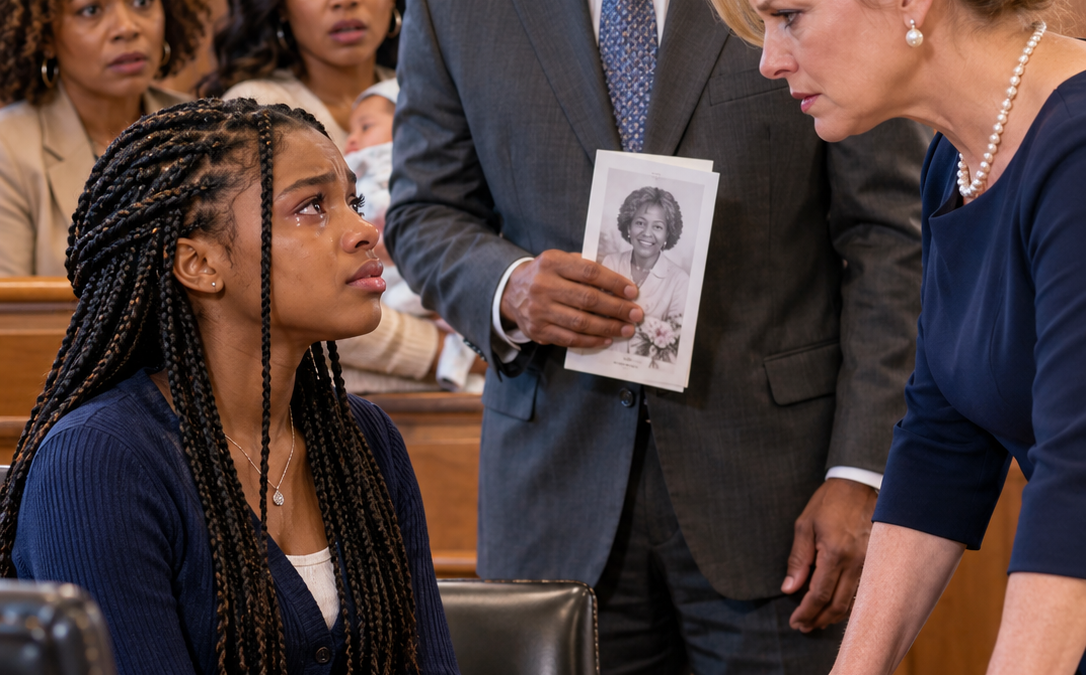
Today, my mother cried in a therapist’s office and called me “baby” for the first time in my life.
She leaned forward on the gray sofa, mascara running down her cheeks in two thin lines. “Baby, please,” she said. “Come home. We’re begging you.”
Beside her, my father nodded, his hands knotted together between his knees. “We’re sorry,” he said. It was the third time he’d said it in twenty minutes. I was counting.
Sixteen years. I had been alive for sixteen years, and that was the first time my mother had ever called me baby. The last time she’d called me anything, it had been a very different word. That was seven months ago, in our kitchen, while everything I owned sat stuffed into two black trash bags on the front porch.
I didn’t answer her right away. Dr. Abernathy kept a little sand timer on the side table for the younger children he saw, and I watched the sand trickle through the glass instead of looking at my mother’s face. Then I slipped my hand into my jacket pocket and touched a sheet of paper folded into quarters. I had written it by hand the night before.
I’d been on the debate team for two years. I knew how to wait for my turn to speak. I had simply never been given one at home.
Aunt C sat beside me with her purse resting on her lap. Inside was a copy of the guardianship order, complete with the court’s official stamp. I had already decided I would read the paper I’d brought. Just not yet.
Seven months ago, my mother told me to figure it out. This is the story of how I did exactly that, and what I finally decided to say to her today.
To understand why that single word, baby, made my hands go cold, you have to understand the crib box in our hallway.
It was Saturday, March 14, and I got home at 5:40 that evening. I know the exact time because I checked the microwave clock through the front window, the way I always did. I’d spent the entire day at a debate tournament in Blue Springs, and I was carrying a second-place trophy pressed against my chest. It was the best I had ever done.
The first thing I noticed was the box. It was enormous, propped against the hallway wall, with a picture of a white crib and the words Delta Children printed across the side. It took up so much space that I had to turn sideways to squeeze past it.
The second thing I noticed was the smell. Fresh paint, sharp enough to sting the inside of my nose.
The bedroom door stood wide open. It was the room I had shared with my older sister for as long as I could remember. But when I looked inside, my bed was gone. The frame had been taken apart, and its pieces were leaning against the closet. On my side of the room, the wall where I had taped up my pencil portraits for three years was already half covered in pink paint.
My father stood on a drop cloth with a roller in his hand, pushing that pink higher and higher over the last of my drawings. The paint can said Blush Petal. I could still see the corner of one portrait showing through, an eye and part of a cheek. Then the roller passed over it, and it disappeared.
“Dad?”
He didn’t turn around.
“Talk to your mother.”
Through the bedroom window, I could see the front porch. Two black trash bags sat there, tied tightly at the top. A navy sleeve with gold lettering stuck out of one of them. It was my debate team hoodie.
I walked back down the hallway, placed my trophy on the bottom stair, and went into the kitchen. Whatever was happening, I wanted somebody to say it out loud.
My mother was wiping down the counter with a dish towel. When she heard me come in, she turned and smiled as though she had been expecting me. She held up one finger. Her phone was wedged between her shoulder and her ear, and she was talking to a daycare parent about a pickup time.
So I waited. I was good at waiting.
She finished her conversation, folded the towel into a perfect square, said goodbye, and placed her phone on the counter. By then, the microwave clock read 6:10.
“Emory’s having a baby,” she said brightly, as casually as if she were announcing what we were having for dinner. “A baby needs a mother and her own room. You’re old enough to understand.”
I already knew Emory was pregnant. Everybody knew. That wasn’t the part I didn’t understand.
“Where am I supposed to sleep?”
“Not here.”
Behind me, somewhere in the hallway, I heard my father set something down and then pick it up again. I kept my eyes on my mother.
“Where should I go?” I asked.
The question came out small, the way a child might ask a teacher for permission to leave class.
My mother grinned.
“Figure it out.”
She didn’t sound angry. That was the part I could never get past, not then and not afterward. She said it like a punch line she had been saving, something she expected everyone else to find funny.
I turned toward my father. He was standing in the kitchen doorway with the paint roller still in his hand, pink paint dripping onto the floor. His eyes were fixed on a streak of Blush Petal across the toe of his shoe, as though it were the most important thing in the entire house.
“Phone,” my mother said, holding out her hand. “I pay for it.”
I gave it to her. My hand moved before I had even decided what to do.
I didn’t beg. Not because I was brave, and not because I was trying to make some kind of statement. I simply didn’t have another sentence left in me.
I walked into the hallway, picked up my trophy from the bottom stair, returned to the kitchen, and placed it on the table directly in front of her.
She didn’t look at it.
Then I went outside, lifted the two trash bags from the porch, and carried them down the steps.
Behind me, the front door closed. A moment later, I heard the deadbolt slide into place.
My mother never locked that door before ten o’clock at night.
I walked to the bus stop on Highway 24 with eleven dollars, no phone, and a debate blazer that had never been designed for forty-one-degree weather. I sat on the bench with the trash bags between my feet and watched the buses pass. Then I watched the last one disappear. After that, there was nothing.
I sat there for four hours.
The whole time, I kept expecting somebody to come. Maybe my father would finally walk out of the house and realize what had happened. Maybe Emory would come looking for me. Maybe somebody would notice that a fifteen-year-old girl was sitting beside a highway in the cold with everything she owned in garbage bags.
Nobody came.
At some point, I pulled my debate hoodie from one of the bags and slipped it on. My pencil box was still in the front pocket. I didn’t remember grabbing it from the pile on the porch, but apparently I had done it automatically, the way other people reach for their keys before leaving home.
Inside the box, tucked beneath my erasers, was the program from my grandmother Odessa’s funeral.
On the back, written in blue ink, were the words If you ever need anything, followed by Aunt C and a phone number.
I took the program out and unfolded it. The paper had grown soft along the creases from being carried around for years. I looked at the handwriting for a long time. Then I put it back, gathered my bags, and started walking.
I dragged those bags two miles to the QuikTrip on Noland Road. Later, the security camera above the register would establish the exact moment I reached the counter: 10:41 p.m.
The night clerk’s name tag said Louise. I asked if I could borrow his phone. He looked at me, then at the two black trash bags beside my legs, and didn’t ask a single question. He handed me the phone, made me a cup of hot chocolate, and refused to let me pay for it.
At 10:46, I dialed the number from the funeral program.
A woman answered on the second ring.
“This is Imani,” I said. “Odessa’s granddaughter.”
She didn’t ask what had happened.
“Which QuikTrip?”
I told her.
“Stay inside. I’m coming.”
At 11:08, my aunt walked through the store doors wearing a rain jacket over her pajamas. She had the same dark brown skin as mine and the same cheekbones. She crossed the store in four quick steps and wrapped her arms around me.
“Look at you,” she whispered into my hair. “You look just like her.”
It was the first time anyone had said that to me as though it were a good thing.
I climbed into her car, leaving Independence with a member of the family my mother had forbidden us to see four years earlier. Louise waved from the store window as we pulled away.
We were already on the highway, with the heater blasting warm air over my frozen hands, before my aunt spoke again. She kept her eyes on the road.
“How long has she been talking to you like that?”
I didn’t know how to answer her.
Even now, it isn’t a question I can answer with a single incident. There was no one moment when everything began. There were years of little things, all of them connected, all of them treated as normal.
My mother is white. My father is half Black, but his skin is light enough that most people never guess. My older sister, Emory, came out looking like our mother. I came out looking like my father’s mother, my grandmother Odessa, right down to her dark brown skin.
It started with sunscreen.
Every morning, from the time I was five years old, my mother would stand me in front of the bathroom sink and rub SPF 70 sunscreen onto my face, neck, arms, and the backs of my hands. Only me.
Emory, who was two years older and pale enough to burn from standing in a parking lot, ran out the door without any sunscreen at all.
When I asked why, my mother said, “So you don’t get any darker, sweetie.”
She said it in the same ordinary voice other mothers might use to explain why their children needed coats in winter. I believed her when she told me it was about protecting my health. I believed that until I was about nine.
Then there were the photographs.
Every Christmas, we went to the mall for family pictures. Every Christmas, the photographer placed me in the middle because I was the shortest. And every Christmas, my mother stepped forward and moved me to the edge.
“For balance,” she would explain.
On our refrigerator, there were fourteen pictures of Emory and three of me. In all three of mine, I was squinting into the sun.
Whenever people came over, my mother would rest her hand on top of my head and introduce me with the same little joke.
“And this is my little coffee bean.”
Everybody laughed. If I didn’t laugh with them, she would tilt her head and say, “Oh, lighten up.”
Then she would wink at the adults.
“No pun intended.”
They always laughed harder at that.
My hair was another story entirely. It was thick and tightly curled, just like my grandmother’s. My mother had no idea what to do with it and absolutely no interest in learning. She called it a situation.
“We need to deal with your situation before church.”
That was how she talked about something growing naturally out of my own head.
When I was nine, she took me to a salon and had my hair chemically straightened. My scalp burned so badly that I developed scabs that lasted for two weeks. She told the stylist I was being dramatic.
When I tell people about my childhood, they often seem to be waiting for the terrible moment that explains everything. A slap. A scream. Some dramatic scene where my mother finally revealed exactly how she felt.
But there wasn’t one.
It was all small, ordinary things, day after day, and almost always delivered with a smile. If I complained, I was the one who had made a problem out of nothing. If I cried, I was too sensitive. If I tried to explain why something hurt, I was accused of ruining everybody’s good time.
So I adjusted.
By the time I was twelve, I had learned to walk to the edge of a family photograph before anyone could move me there. I wore long sleeves in July. I stopped smiling in pictures because I had somehow convinced myself that smiling made my face look rounder and darker.
Eventually, I just stopped trying.
The only person who ever looked at my skin and smiled was my grandmother.
Mom didn’t go to Grandma Odessa’s funeral.
I was eleven when she died. The service was held at her Baptist church on the east side of Kansas City, and my mother stayed home. Emory had a piano recital that afternoon, she explained, and somebody had to attend it.
So it was just my father and me.
He wore a suit that was too big for him, and he made us sit in the very last pew. I could see the rest of his family gathered near the front, aunts and cousins I had met maybe twice in my entire life. There were so many heads of hair that looked like mine. I wanted to go sit among them so badly that my legs actually hurt.
I asked Dad if we could move closer.
“We’re fine here,” he said.
We weren’t fine there. I knew that even at eleven years old.
After the service, while everyone was filing downstairs for the meal, I wandered toward a large photograph of my grandmother displayed on an easel near the front of the church. She was laughing in the picture, her head tipped back, her whole face bright with it.
That was where my aunt found me.
“Look at that,” Aunt C said, coming to stand beside me. She placed a hand on my shoulder. “You’ve got her cheekbones and her color.”
Nobody had ever said your color to me in a voice like that before, as though it were something worth having.
She took a pen from her purse, turned my funeral program over, and wrote on the back. First came the words If you ever need anything. Then she wrote her name and telephone number.
She folded the program and closed my fingers around it.
“If you ever need anything,” she repeated.
My father didn’t stay for the meal. He hurried me out to the car before the food was even served. We were halfway home on the interstate when he finally spoke, without taking his eyes off the road.
“Don’t mention Celia to your mother.”
So I didn’t.
Within a month, my mother had blocked his entire family on Facebook. After that, she only ever referred to them as that side, as though they were a neighborhood she preferred not to drive through.
I hid the funeral program in my pencil box beneath the erasers. I kept it there for four years.
Emory was the only person at home who knew where I kept it.
My sister and I had shared a bedroom my entire life. Her bed was near the window, and mine was against the inside wall. Between them was a narrow strip of floor we called the hallway. It was where we passed notes and snacks after the lights went out.
When I was eight, Emory started doing my hair at night after Mom fell asleep. She learned by watching YouTube videos with the volume turned all the way down and a flashlight held between her teeth.
Her braids were lumpy and never lasted longer than three days.
I loved every single one.
When I was ten, Mom made her coffee bean joke at Thanksgiving dinner in front of the entire family. Emory put down her fork and looked straight at her.
“She’s not a coffee bean. She’s a person.”
Mom grounded her for two weeks.
I remember lying in bed that night, feeling two things so strongly that I could barely breathe. I was grateful that someone had finally defended me. And I was jealous because Emory could talk back to our mother and still be Emory.
When I talked back, I became the problem.
Then, in January of that year, Emory put her fork down at dinner again.
“I’m pregnant,” she announced.
She was eighteen and a senior in high school. Her boyfriend, Dante, was nineteen and worked at a tire shop.
I braced myself for an explosion. I expected yelling, accusations, maybe a lecture that would last until midnight.
Instead, my mother burst into tears. She hurried around the table and threw her arms around Emory.
“Oh, my baby,” she sobbed. “My baby’s having a baby.”
Then she drew back, wiped her eyes, and said, “A baby needs her own space.”
Emory nodded. “I know. Dante’s mom already offered. I can move in with them.”
My mother’s expression changed in less than half a second.
“Over my dead body,” she said. “My grandbaby lives here.”
That night, lying in the dark, Emory whispered across our little hallway.
“Hey, we’ll make it work. We’ll put the crib between our beds, right in the hallway.”
I laughed. “Where will we pass notes?”
“Over the baby. She’ll learn to read early.”
I believed her.
Emory had never once asked for a room of her own, and it genuinely hadn’t occurred to me that anyone would choose one of us and throw the other one away.
We were a set. We had always been a set.
Two months later, I was sitting in my aunt’s upstairs living room at midnight, wearing a hoodie with QuikTrip hot chocolate spilled on the sleeve. Our little set had been broken apart by a crib box.
Aunt C lived in Waldo, in a brick house with a porch that sagged slightly on one side. My uncle Reggie had stayed awake waiting for us. He placed a mug of ginger tea in front of me without saying anything, then went downstairs to bring in my trash bags.
I sat holding the mug with both hands, trying to figure out how to take up as little space as possible.
“Can I stay until Monday?” I asked. “I won’t be any trouble. I’ll do the dishes. I can sleep on the floor. I don’t need the couch.”
Aunt C sat down across from me. She has a slow, thoughtful way of talking, as though every word is being examined before she lets it out.
“You’re not trouble,” she said. “You’re family. And you’re not sleeping on the floor.”
They turned off the overhead light, left a lamp burning, and covered me with a quilt that smelled faintly of cedar. Aunt C stayed in the armchair while I lay on the couch.
It’s easier to tell the truth in the dark.
“I thought if I got good enough,” I said quietly to the ceiling, “she’d stop seeing my color first.”
My aunt didn’t interrupt.
“Like if I got straight A’s and won enough trophies and never talked back. I thought at some point she’d look at me and just see me.”
She was silent for a while.
Then she said, “Baby, there’s no grade high enough for that. That was never a test you could pass.”
From the hallway, I heard Uncle Reggie setting my trash bags inside a closet. There was a pause, followed by the sound of him dragging them out again.
I turned my head and watched him untie the first bag.
He began removing my clothes, one piece at a time, and hanging them on hangers. My debate hoodie, my church dress, my T-shirts, even the stretched-out ones that probably should have been thrown away years earlier. He hung up every single thing.
“Clothes don’t live in trash bags in this house,” he said to nobody in particular.
I lay back down.
Sometime later, I realized I had taken off my hoodie and was lying beneath the quilt in a short-sleeved T-shirt. I hadn’t gone to bed in short sleeves in years.
That was how I fell asleep.
The following morning, Aunt C was sitting at the kitchen table with a cup of coffee and her phone lying facedown in front of her. She didn’t touch it until I sat down. Uncle Reggie was standing at the stove making eggs.
“I need to tell you something before I make a phone call,” she said.
My uncle turned the burner down low, as though he wanted to hear every word too.
“I’m a school counselor,” Aunt C began. “That means when I find out a child isn’t safe at home, I’m required to report it. It’s the law. But I want you to hear this part, too. Even if it weren’t the law, I’d still call.”
She rotated her coffee cup a quarter turn on the table.
“When a kid gets put out of her house at fifteen, I have to make that call. This isn’t about punishing anybody.”
Something cold moved through my stomach.
The first thing I said had nothing to do with my own safety.
“They’ll get in trouble. Mom’s daycare. She has six kids there. If somebody from the state shows up, I—”
I stopped. I could picture the minivans lined up in our driveway, the little cubbies with the children’s names printed on them, the families who trusted my mother to look after their kids while they went to work.
Aunt C didn’t tell me I was wrong to worry. She simply let my unfinished sentence sit there until I heard what I was saying.
Twelve hours after my mother locked me out of our house, I was trying to protect her daycare license.
“Here’s what’s going to happen,” my aunt said. “I’m going to make the call. Somebody from Children’s Division will probably want to talk to you. Maybe this week. And when they come, what you say is yours. Nobody’s going to put words in your mouth.”
She looked directly at me.
“Not me, either.”
I didn’t know what to do with that.
Adults had been putting words in my mouth for as long as I could remember. Say thank you. Say it was an accident. Say you’re sorry for making your mother upset.
Aunt C picked up her phone and dialed. I stayed at the table and listened.
She didn’t embellish anything. She didn’t call my mother names or let her voice shake. She gave my full name, my date of birth, my parents’ names, and our address. She explained that she had received a call at 10:46 p.m. from a borrowed phone and had picked me up at 11:08 from a QuikTrip on Noland Road. She described the two black trash bags containing my belongings, the fact that I had no proper coat, and the fact that my mother had taken my phone.
She said I had told her that my mother ordered me to leave.
She spelled Callaway twice.
Uncle Reggie placed a plate of eggs in front of me and squeezed my shoulder as he passed on his way back to the stove.
When my aunt hung up, I still didn’t know what I would say to whoever came to question me. But for the first time in my life, an adult had handed me my own turn to speak and then stepped back.
On Tuesday, Aunt C drove me all the way back to Truman High School in Independence. I was still enrolled there because nobody had figured out what came next, and transferring schools was only one of about a hundred things that suddenly needed to be settled.
During third-period chemistry, the school counselor knocked on the classroom door and asked for me.
Out in the hallway, she spoke quietly. “There’s someone here from Children’s Division.”
His name was Alan Fitch. He was an older man with reading glasses pushed up on top of his head and a legal pad resting on a little round table. The school counselor, Mrs. Ochoa, sat in the corner. There was a box of tissues between us, and I decided immediately that I wasn’t going to touch it.
“Tell me about Saturday,” Mr. Fitch said.
I had been rehearsing my answer since Sunday without admitting to myself that I was rehearsing anything.
“There was an argument about the room,” I heard myself say. “My sister’s having a baby, and it’s a small house, so I wanted to go stay with my aunt for a while.”
Then I stopped.
Beside his legal pad, somebody had left a program from another school’s debate tournament. I found myself staring at it, and suddenly I could hear Miss Ferrante, my debate coach, repeating the same lesson she had taught us at every practice for two years.
Evidence, not adjectives.
Don’t tell the judge it was terrible. Tell the judge what happened, and let the judge decide it was terrible.
I looked back at Mr. Fitch.
“Actually, that’s not right. Can I start over?”
He put down his pen. “Take your time.”
So I started over, organizing the facts the way I would have organized a rebuttal.
I told him I had gotten home at 5:40. There was a crib box in the hallway. My bed had been dismantled, and my father was painting over my drawings. My clothes were packed in two black trash bags on the front porch. At 6:10, my mother told me that my sister was having a baby and needed her own room.
I told him what happened when I asked where I was supposed to sleep.
“She said, ‘Not here.’”
Then I explained that I had asked where I should go, and I repeated exactly what my mother said in response. Every word, including the last one.
I told him my father had been standing in the doorway holding a paint roller. I told him my mother took my phone. I told him about carrying my bags down the porch steps and hearing the deadbolt slide into place behind me.
Mr. Fitch looked up from his legal pad.
“Did she say exactly that?”
“Yes,” I answered. “And she smiled.”
He wrote it down.
Then he turned the pad around and read everything back to me, slowly, word for word. He asked whether he had gotten it right.
He had.
It was strange seeing what happened written in a stranger’s handwriting. Somehow, the words looked different on paper. They looked less like something I could be talked out of remembering and more like something that had actually happened.
“Thank you, Imani,” Mr. Fitch said.
“You’re welcome,” I replied, like a normal person having a normal conversation.
I walked into the hallway. That was when my hands started shaking. I had to hold my books tightly against my chest to make them stop.
I had just put my mother into an official file with my own mouth, and there was no taking it back.
That night, Aunt C sat on the end of my bed in the little upstairs bedroom she and Uncle Reggie had cleared out for me.
“How do you feel?” she asked.
“Like I set something on fire.”
She shook her head.
“No, baby. You turned on a light.”
The next couple of months passed both quickly and slowly, in the strange way time seems to move when everything in your life changes at once.
At the end of March, my parents signed paperwork agreeing to let Aunt C serve as my temporary guardian. They didn’t fight the arrangement. If anything, they seemed relieved.
Once, while my aunt was organizing the documents, she had my mother on speakerphone in the car. I heard Mom say, “Keep her. She’s happier with your kind anyway.”
Aunt C’s jaw tightened, but her voice remained perfectly steady.
“I’ll send the paperwork Thursday.”
After that, she filed a guardianship petition with the court. She wanted our arrangement to be something more permanent than a favor my parents could decide to take back whenever they felt like it.
In April, I transferred to a high school in Kansas City, closer to Waldo. During my second week, I joined the debate team. A few weeks later, I made it through my first qualifying round.
On Sundays, Aunt C did my hair. We sat at the kitchen table with a towel draped over my shoulders and the radio playing in the background. It usually took two hours, sometimes longer. She explained the name of every product as she used it, like someone hosting a cooking show.
“Leave-in curl cream,” she would announce. “Edge control. Shea butter.”
The first time I referred to my hair as a situation, she stopped what she was doing and looked at me.
“Your hair isn’t a situation,” she said. “It’s a crown that takes time.”
On Saturday mornings, Uncle Reggie taught me how to drive in the church parking lot. He worked delivering mail for the Postal Service, and most of the time he was a quiet man. But the moment he climbed into the passenger seat, he turned into a one-man comedy show.
I would be driving about eight miles an hour, and he would grab the dashboard, gasp dramatically, and cry, “Lord, I’m too young to die!”
Then he would go home and bake corn muffins as though nothing had happened.
Aunt C also found me a therapist, Ms. Shayla Monroe. Her office was above a bakery, and she kept a jar of peppermints on her desk.
During our first session, I apologized six times in fifty minutes.
Ms. Monroe pointed it out gently at the end of the appointment. I hadn’t even noticed.
I had apologized for arriving early, sitting in the wrong chair, not knowing how to answer a question, crying a little, crying again, and taking too long to leave.
By our fifth session, I apologized only once. I was strangely proud of that.
I also started drawing again.
The first thing I drew was my grandmother, using the photograph on the front of her funeral program as a reference. It took me three weeks to get her laugh right. I kept working on the curve of her cheeks and the shape of her open mouth, trying to capture the expression I remembered.
Sometime in April, I slept through an entire night without waking up. I didn’t even realize it had happened until the following morning, when I noticed that I hadn’t heard the garbage truck.
Then, on a Tuesday evening near the end of April, my new phone buzzed.
Aunt C had bought it for me the week after she picked me up at QuikTrip. The message was from Kayla, a girl from my old debate team. She had attached a screenshot.
Is this about you? she wrote.
The screenshot showed a post about a “tantrum about sharing a room.” The message claimed that the family was heartbroken and that the state had become involved because of lies.
There were thirty-seven comments beneath it. Almost all of them were some variation of praying for your family or keeping you in our prayers.
One comment came from my grandmother on my mother’s side, the one who had mailed me ten dollars every birthday.
Praying she comes to her senses.
That same week, Aunt C knocked on my bedroom door and came in with her phone. She sat on the edge of my bed.
“This is about you,” she said. “So I think you should see it. You don’t have to, but I think you should know.”
It was a text from my mother.
Because of your lies, they suspended my daycare license. Six families. I hope you’re proud.
I read both messages over and over.
Two things hit me almost immediately.
The first was that my mother was rewriting what happened. She wasn’t merely hiding it or refusing to discuss it. She was telling a completely different version of the story to everyone she knew, and people were believing her.
The second realization was even harder to accept.
What I had said to Mr. Fitch in that school counseling office had consequences. Six families suddenly needed somewhere else to send their children. Kids I used to help during snack time wouldn’t be coming to my mother’s house anymore because of me.
Then a third thought crept in, quieter and more familiar than the others.
A tantrum about sharing a room.
Had I been rude that night? Had I said something first and somehow forgotten it? Maybe she really had been joking. Maybe I had been too sensitive, the way everyone always said.
That was how things had worked my entire life. Something would happen, and afterward everyone would explain it to me until I wasn’t completely sure it had happened at all.
I got up, found the composition notebook I’d been using for therapy, and opened it to a clean page.
At the top, I wrote one sentence.
She’s rewriting it. I have to remember it exactly.
Then I wrote out the entire night again, every time and every word I could remember, from the moment I saw the crib box until Aunt C walked into QuikTrip.
I didn’t respond to my mother’s message. I didn’t comment on her Facebook post.
Instead, I kept the notebook.
On the last Saturday in April, the doorbell rang.
When I opened the door, Emory was standing on the porch, eight months pregnant and wearing Dante’s hoodie. Her eyes were swollen as though she had cried through the entire drive.
For a second, neither of us moved.
Then she grabbed me so tightly that her belly pressed against mine, and I felt the baby kick directly against my ribs.
Aunt C brought two glasses of iced tea into the living room, set them on the coffee table, and went outside with Uncle Reggie so we could talk privately.
Emory lowered herself onto the couch, one hand resting on her stomach.
“I’ve been texting you for six weeks,” she said. “Six weeks, Monty. Every day. I thought you hated me.”
I sat down beside her.
“Mom took my phone that night. I have a new number. I didn’t know if you’d want it.”
She stared at me. “Why wouldn’t I want it? I had to look Aunt C up online until I found this address. Dante’s waiting in the car.”
Her chin trembled.
“Mom said you wanted to go. She said you packed your stuff while I was at the baby shower and told her you hated the idea of living with a baby.”
“Is that what you thought?”
“I didn’t know what to think,” she admitted. “You were just gone. Your bed was gone.”
So I told her everything.
I started with the crib box in the hallway and described how our room looked when I came home from Blue Springs. I told her about Dad painting over my drawings, my clothes sitting on the porch, and Mom waiting in the kitchen.
When I reached the part where I asked where I was supposed to sleep, I repeated my mother’s exact words.
I had practiced telling the story in order so many times by then that my voice didn’t even shake.
Emory’s did.
She stood up without speaking, walked onto the front porch, and threw up over the railing into Aunt C’s hydrangeas.
Her morning sickness had never completely gone away, but I don’t think that was the only reason.
After about a minute, she wiped her mouth and came back inside.
“She texted me that night,” she said. “Hang on.”
She pulled out her phone and started scrolling backward through her messages. Then she turned the screen toward me.
March 14. 9:20 p.m.
A message from Mom.
Room’s all yours, princess.
There was a little crown emoji after it.
Then another line.
Don’t let her guilt you.
I stared at the screen.
“She sent that before I even got home,” I said.
Emory nodded. “When I walked in, she told me you’d gone to your aunt’s because you wanted to. I thought the princess thing was just Mom being Mom.”
Then her expression changed.
“Wait,” she said. “Wait, wait, wait.”
She opened her email and started scrolling quickly.
“In February, Mom had me do her daycare license renewal online. She sat right next to me and read me the answers, and I typed everything in.”
She found the confirmation email, opened the attached PDF, and handed the phone to me.
Most of the application was ordinary paperwork: smoke detectors, fire extinguishers, the number of children being cared for, and other information about the house.
Then we reached a section labeled Household Members.
It was supposed to list every person living at the address.
Dawn Callaway. Terrell Callaway. Emory Callaway. Infant, expected.
That was the entire list.
My name wasn’t there.
“I asked her where your name was,” Emory said quietly. “She said she’d fix it later. I thought she forgot, Monty. I honestly thought she just forgot.”
We looked at the date at the top of the form together.
February 9.
Five weeks before the crib box appeared in our hallway.
For a long time, neither of us said anything. The ice inside our tea glasses shifted and settled with a little click.
It wasn’t about the room.
It had never been about the room.
My mother had taken me out of that house in February, on an official government form, more than a month before she ever told me to leave.
The baby and the bedroom were simply the explanation she eventually gave out loud.
Emory reached across the space between us and took my hand. Her fingers were cold and damp. I held on tightly.
“I’m not raising my daughter,” she said, “in a house where she has to be the right color.”
That evening, we all ended up sitting around Aunt C’s kitchen table.
Dante came inside from the car, shook Uncle Reggie’s hand, and ate three corn muffins without saying much. Aunt C made spaghetti for dinner. We ate together, and afterward Emory cleared her throat.
“I can’t take her back there,” she said.
Everyone understood that she meant the baby.
“Dante’s mom has a full house now. His sister moved back in. Would it be okay if, after the baby comes, I stayed in your basement for a while? I’ll pay whatever I can.”
Aunt C looked across the table at Uncle Reggie.
He put down his fork.
“I’ll paint it Saturday,” he said. “Any color but pink.”
Even Emory laughed.
I turned toward my aunt.
“If somebody asks me again,” I said, “the state, or a judge, or anybody, can I show them what Emory showed me?”
“It’s Emory’s phone,” Aunt C replied. “Ask Emory.”
So I turned to my sister.
She didn’t hesitate. She picked up her phone, and a moment later mine buzzed. She sent the screenshot of our mother’s text and the PDF of the February renewal form. Aunt C received copies too.
“Use it,” Emory said.
That night, I created a folder on my phone and saved both files inside. I named the folder Exactly.
Something had shifted in me at that kitchen table.
Until then, all I had wanted was to be allowed to stay somewhere. Now I wanted something else, something I hadn’t known how to put into words before.
I wanted my mother’s version of what happened to stop replacing the truth.
Not at church. Not with my grandmother on her side of the family. And not in any official file that had my name on it.
My mother didn’t know yet that Emory had sent me anything.
Three weeks later, my niece was born.
Two weeks after that, my mother found out where Emory had taken her.
Nova Grace Callaway came into the world on a Wednesday in May, weighing seven pounds and four ounces, with a full head of black hair and a voice that sounded like a smoke alarm.
Dante cried more than the baby did.
When the nurse placed Nova in my arms in the hospital room, the first thing I did, before I even said hello, was look at her skin.
I examined her tiny arms, her face, and the backs of her hands. I was checking her color.
Halfway through, I caught myself, and my face grew hot with embarrassment. That was my mother’s habit. I had spent my entire life being measured that way, and now I was doing the same thing to a baby who was only eleven hours old.
I stopped and looked at her eyes instead.
They were open, dark, and completely unimpressed with me.
“Hi,” I whispered. “I’m your aunt. I’ll be the fun one.”
Two weeks later, Emory and Nova moved into Aunt C’s basement. Uncle Reggie had kept his promise and painted the walls harbor gray.
It didn’t take my mother long to find out.
One Saturday morning, somebody started pounding on the front door so hard that the pictures hanging in the hallway rattled.
“I want to see my grandbaby!” my mother shouted from outside. “You can’t keep her from me, Celia!”
Aunt C didn’t open the door. She stood on the other side and answered in the same calm, measured voice she used when counseling students.
“Emory’s an adult, Dawn. You can call her.”
Emory and I sat together on the basement stairs with Nova between us until we heard my mother’s white SUV pull away.
Then, in June, a letter arrived from a law firm in Independence. It was addressed to Aunt C in her capacity as my temporary guardian.
My parents were withdrawing their consent to the temporary guardianship arrangement. They were formally objecting to my aunt’s petition and requesting that the minor child, meaning me, be returned to the family home.
The court scheduled a hearing for September. It also appointed someone called a guardian ad litem, an attorney whose job was to investigate what was in my best interests and report to the judge.
“Why now?” I asked Aunt C. “In March, they practically handed me over.”
She took off her reading glasses.
“I can’t know for certain,” she said. “But I can read. Your mother’s daycare license was suspended because of the investigation. If she wants to challenge what the state found and get her daycare back, it looks a lot better if she can say the family’s back together under one roof.”
She tapped the letter with one finger.
“Daughter home. Everything fine. Just a misunderstanding.”
Then she looked at me.
“This isn’t about missing you, baby. I wish it was.”
I thought about the pink bedroom in Independence. Emory and Nova weren’t there. The room had been freshly painted, but now nobody was using it.
And suddenly my parents wanted me back.
Not necessarily back in that bedroom. Just back in the house.
For the first time since March, I was truly frightened. This wasn’t the fear of sitting outside in the cold or wondering where I would sleep. It was the possibility that somebody could make me go home.
In July, Uncle Reggie took me with him to the Plaza library to return a stack of books. It was three o’clock in the afternoon, and the heat had settled over the parking lot. I stayed outside beside the car while he went in.
A white SUV I knew very well pulled into the parking space next to us.
My mother stepped out.
She was wearing sunglasses and a sundress. When she saw me, she smiled in a way I had never seen before. The expression was soft, almost shy.
“Look at your hair,” she said. “It’s beautiful. You can wear it however you want now.”
She held out a small gift bag with tissue paper sticking out of the top. Inside was a box containing a brand-new phone, one of the expensive models.
I want to be honest about what happened next.
For about three seconds, something warm opened in my chest.
My mother had never once said anything kind about my hair. Part of me wanted to stand there and listen while she kept talking. I wanted to know what else she might say if I gave her the chance.
“I’ve been thinking,” she continued. “We could fix up the basement for you. Make it your own space. Your dad found a little used Honda for when you turn sixteen. You’d have everything.”
Then she reached into her purse and pulled out a single sheet of paper.
“All you’d have to do is sign this.”
It was a typed statement with a blank line at the bottom for my signature.
I left my parents’ home voluntarily after an argument and was not told to leave.
My mother watched me read it.
“This is how we fix it,” she said, as though she were offering me a wonderful opportunity. “The judge sees a family that works things out on its own. I get my license back. Emory comes home with the baby. Everybody wins.”
I studied the paper for a long time. Then I looked up at her.
“Are you going to say you’re sorry?” I asked. “For what you called me?”
Her smile didn’t move, but something behind it changed.
“Honestly, Imani, I don’t even remember what I said. It was a stressful day. You were always so sensitive.”
Just like that, the warm feeling in my chest disappeared.
She leaned closer and lowered her voice.
“If you don’t sign, the judge will send you home anyway. Parents win these things. And I’ll remember that you made it hard.”
I didn’t sign the statement.
But I didn’t tear it up, either.
Instead, I took the sheet of paper, folded it carefully, and slipped it into my back pocket. I wanted a copy of the exact words she had asked me to sign.
“I’ll think about it,” I said.
Behind my mother, the library doors opened, and Uncle Reggie came outside with his keys in his hand. He stopped walking when he saw her.
My mother removed her sunglasses, looked at him, put them back on, and climbed into her SUV.
She drove away, leaving the gift bag on the hood of our car.
That night, at a quarter to one, my phone lit up with a message from a number I didn’t recognize.
Your sister and that baby are on your father’s insurance. Think about who you’re hurting.
I couldn’t sleep after reading it.
I went downstairs to the basement, where Emory and Nova were asleep, and sat at the little folding table beneath the nightlight.
I took out my mother’s statement, unfolded it, and smoothed the creases against the tabletop.
Then I found a pen.
Whenever I didn’t know what to think, I did the thing debate had taught me to do. I argued both sides, one at a time, and tried to examine the evidence instead of my feelings.
If I signed, Emory and Nova would keep their health insurance. My mother would probably leave all of us alone for a while. Maybe things would settle down.
The cost was that her version of March 14 would become the official one forever, with my own signature underneath it.
A tantrum about sharing a room.
If I refused to sign, I might be sent back to Independence anyway. Back to that house. Back to my mother.
And Nova, who was only nine weeks old and had already visited the pediatrician four times, might lose her medical coverage because of me.
I looked toward the crib.
Nova was sleeping with both arms thrown over her head, as though she had just won something.
I lowered the pen to the signature line and started writing my name.
I got as far as the letter I.
Then I stopped.
I sat there for so long that eventually I put my head down on my arms and fell asleep at the table.
The next morning, I woke to find Emory standing over me in her bathrobe, bouncing Nova against her shoulder. She was staring at the paper and the single letter on the signature line.
“What is this?”
I told her about the parking lot. I told her about the phone and the car, the statement, and the message that arrived after midnight.
She read the typed sentence twice.
Then her jaw tightened in exactly the same way Aunt C’s had when she heard our mother say I was happier with her kind.
“Then I’ll sign Nova and myself up for Medicaid,” she said. “Don’t you dare buy me with yourself.”
She handed me the baby.
Then she picked up the paper and tore it straight down the middle. She started to tear it again, but halfway through, she stopped and looked at the two pieces.
She held one of them out to me.
It was the top half, the part containing my mother’s typed statement. The lower half, with my single handwritten letter, went into the trash.
“Keep the half with her words on it,” Emory said.
I stood there with Nova in one arm and that half sheet of paper in the other.
I knew I wasn’t going to sign. But I was beginning to understand that refusing to sign wasn’t enough. If I simply stayed quiet, my mother’s version would continue to be the only one people heard.
It would be silence all over again.
Only this time, it would be my silence instead of hers.
In September, somebody was going to decide where I lived. If I wanted that person to know the truth, I would have to say it myself.
After breakfast, I opened my laptop and typed the first line the way Miss Ferrante had taught us to open a debate case.
Resolved: I did not leave.
I turned sixteen in August.
Aunt C baked me a pound cake. Uncle Reggie let me drive all the way to the grocery store and back on real streets, not just around the church parking lot. Emory gave me a sketchbook with a leather cover.
My parents didn’t call.
I spent most of that month writing.
Miss Ferrante used to say that every good argument had three parts: claim, evidence, and impact. What you were saying, how you could prove it, and why it mattered.
My claim was simple.
I had been told to leave. I hadn’t run away.
My evidence was the list I had been building since April.
The time I got home: 5:40. The conversation in the kitchen: 6:10. My mother’s exact words. My father holding the paint roller. My phone being taken away. The sound of the deadbolt.
The security camera at QuikTrip and the clerk who had helped me. The call made to my aunt at 10:46. The text my mother sent Emory at 9:20. The February daycare renewal form with my name missing from the list of household members.
My impact was what I needed in order to be safe.
To remain with Aunt C. To be allowed to keep living in the house where I was learning to sleep through the night. And to not be forced to sign something I knew wasn’t true.
The first draft of my statement was four pages long and filled with words like horrible and humiliating.
I read it aloud.
It sounded exactly like the version my mother had been telling people at church, except with the roles reversed. I sounded like a dramatic teenager with a grudge.
So I went back to Miss Ferrante’s lesson.
Evidence, not adjectives.
Every time I rewrote the statement, I removed words that told the reader how to feel and replaced them with something that had actually happened.
I rewrote it five times.
By the fifth draft, it was a page and a half long. Nothing but actions, words, and times. Just what my parents had done, what they had said, and when they had said it.
Aunt C read the final version at the kitchen table while I pretended to be doing homework across from her.
She read it twice.
She didn’t pick up a pen or make a single correction.
When she handed it back, she said, “It’s yours. Don’t let anybody make it pretty.”
That same week, in Ms. Monroe’s office above the bakery, I admitted something I hadn’t told anyone.
“Part of me still wants her to read it,” I said. “I want her to cry and say she’s sorry. Like that’s the real reason I wrote it.”
Ms. Monroe unwrapped a peppermint and thought for a moment.
“That part of you gets to exist,” she said. “It doesn’t get to drive.”
I went home and wrote the final line of my statement.
I’m not asking the court to punish my parents. I’m asking not to be sent back to a house that took my name off the list.
That night, I made two decisions. I would give the written statement to the guardian ad litem, and I would ask for the chance to speak directly to the judge.
The guardian ad litem came to Aunt C’s house on the last Thursday in August.
Her name was Patrice Lell. She had short gray hair, sensible flat shoes, and a battered leather briefcase. When she came inside, she shook my hand the way people shake hands with adults.
She asked if she could speak to me alone first.
Aunt C and Uncle Reggie went out to the back porch.
Before I could begin explaining anything, Ms. Lell placed her briefcase on her knees and looked at me.
“I want to be straight with you,” she said, “so you’re not disappointed later. I represent what’s best for you. That’s not always the same as what you want. I’ll listen to everything you tell me, and I’ll check all of it. The judge makes the final decision, not me.”
“Okay,” I said.
Strangely enough, that made me trust her more.
Almost everyone who had promised me something that year had been lying. Ms. Lell wasn’t promising anything.
I handed her my statement, the screenshot of the 9:20 text, and a printed copy of the February daycare renewal form.
She read my statement all the way through without looking up. Then she lifted the printout.
“Where did this come from?”
“My sister. She typed it in February. Our mom read her the answers.”
Ms. Lell made a note.
“I’ll need to confirm that with your sister directly. And I’ll want to see the original email.”
“She’s downstairs with the baby,” I said. “She’ll show you.”
Then Ms. Lell asked me to go through the night of March 14.
When I reached the part about walking to QuikTrip on Noland Road, she interrupted.
“Do you know what time you got there?”
“10:41. I asked the clerk to use his phone. His name tag said Louise. He made me hot chocolate.”
She wrote it down.
“Stores like that usually keep camera footage for a while. I’ll request it, and I’ll try to talk to the clerk.”
Then she put her pen down.
“I need to warn you about something. Your parents’ attorney is probably going to call this teenage exaggeration. He’s going to say your aunt has alienated you from your parents. That you’re a smart, angry girl who’s very good at arguing.”
“I am good at arguing,” I said. “I know.”
“That’s what worries me. Judges sometimes trust children who fall apart more readily than children who don’t.”
She studied me for a long moment before continuing.
“The judge can speak with you privately in chambers. It would be you, the judge, me, and a court reporter. Your parents wouldn’t be present. Would you want to do that?”
I understood the risk.
If I sat in that room, calmly explained my case, and the judge still didn’t believe me, there would be nothing left I could think of to try.
“Yes,” I said.
Ms. Lell went downstairs and talked to Emory for forty-five minutes. When she left, she shook my hand again. She didn’t promise that everything would be okay.
After her car pulled away, I found Aunt C in the kitchen.
“There’s one more person,” I said. “One more person who was in that hallway.”
My aunt hadn’t spoken to her brother in four years, but she still had his work number.
She sent him a text.
Imani would like to see you. Saturday, 6:00. The park across from Mama’s church. Just you.
He didn’t respond for an entire day.
Then he sent back one word.
Okay.
That Saturday, in early September, Aunt C drove me to the old Baptist church where we had said goodbye to my grandmother. She parked across the street and stayed in the car with the windows rolled down.
I walked to the little park and sat on a bench facing the church steps.
My father was ten minutes late.
When he finally arrived, he didn’t sit down. He stood a few feet away with his hands in his jacket pockets, as though he wanted to be ready to leave at any moment.
He looked older than I remembered. Thinner, too. There was gray at his temples that I hadn’t noticed before.
“Hi, Dad.”
“Hi, Monty.”
Only he and Emory ever called me that.
I had already decided I wasn’t going to beg him, and I wasn’t going to yell. I wasn’t even going to try to convince him of anything.
I was going to tell him the one fact he couldn’t argue with.
“You were holding the roller,” I said. “You heard her. You were the only other person in that hallway.”
He looked toward the church instead of at me.
For a long time, I thought he wasn’t going to say anything at all. It felt just like March, standing in our kitchen while he stared at the paint on his shoe.
Finally, he spoke.
“Your mother—it’s complicated. You don’t understand what it’s like.”
He stopped, then started again.
“I’ve been the light one my whole life, Monty. My whole life. Grandma’s friends used to say it at church. ‘Isn’t he handsome? Look how light he is.’ Your mother’s family liked me because of it. You don’t know what that—”
He stopped abruptly, looking almost surprised by what had come out of his own mouth.
I let the silence settle between us.
I hadn’t known that about him.
It didn’t change what he had done, and it didn’t make standing in that kitchen doorway any less wrong. But it explained a little of why he had always seemed to be standing at the very back of his own life, letting other people decide where he belonged.
I opened my bag and took out my grandmother’s funeral program.
The original.
Her laughing face was still on the front, and Aunt C’s handwriting was still on the back. The folds had grown soft from spending four years hidden inside my pencil box.
I held it out to my father.
“Grandma would want you to stop being quiet,” I said. “I’ll want it back.”
He looked down at the picture of his mother, laughing with her head tipped back.
Then he reached out and took the program very carefully, holding it by the edges as though the paper might tear.
He didn’t say another word.
He turned, walked back across the grass to his car, and drove away with the program held flat against his chest.
I stayed on the bench until Aunt C honked softly from across the street.
I had just given away the most important thing I owned, and I had no idea whether I would ever see it again.
Two weeks before the hearing, Aunt C placed a stack of stapled pages on the kitchen table in front of me. Her phone was beside them, with the speaker turned on.
“Imani, this is Anna Whitam,” she said. “She’s my lawyer for the guardianship.”
A crisp voice came through the phone.
“Hello, Imani. Your mother’s attorney filed something yesterday. It’s an affidavit, a sworn statement signed in front of a notary. You don’t have to read it, but I think you’ll want to.”
The document was two pages long.
Most of it described what a devoted mother Dawn Callaway had always been and how Celia Brooks had supposedly resented her for years.
Then I reached the paragraph about March 14, and I read it aloud.
“On March 14, after an argument about room arrangements, Imani packed her belongings and left the home at approximately 2:00 a.m. while my husband and I were asleep. We were not aware she had left until morning.”
I put the pages down.
My first reaction wasn’t calm. It was that old, dizzy feeling, the one I knew far too well.
Is that what happened? Did I leave in the middle of the night?
Then I opened my composition notebook to the page where I had written everything down in April and placed it beside the affidavit.
My mother’s version said 2:00 a.m.
My version started with the kitchen at 6:10 p.m. The deadbolt. The walk to QuikTrip. The security camera at 10:41 p.m. The call from the store at 10:46. Aunt C arriving at 11:08 in her rain jacket and pajamas.
By two o’clock in the morning, I had already been asleep on Aunt C’s couch in Kansas City for more than an hour.
“And there’s the text,” I said. “She texted Emory at 9:20. ‘Room’s all yours.’ If I didn’t leave until two in the morning, who was the room all hers instead of?”
Ms. Whitam was quiet for a moment.
“That’s exactly the question,” she said.
Then she added, “She signed this under oath. That’s a choice she made.”
At the bottom of the second page were my mother’s signature and the notary’s stamp.
There was no second signature.
My father hadn’t signed the affidavit.
I didn’t mention it to anyone, but I noticed.
It was the first small thing about my father in six months that felt like hope.
On Thursday morning, the day of the hearing, Aunt C sat me at the kitchen table at 6:30 with a towel draped around my shoulders.
She didn’t do my hair the way she usually did.
Instead, she propped my pencil portrait of Grandma Odessa against the sugar bowl and began braiding my hair exactly the way my grandmother wore hers in that picture.
Neither of us said very much while she worked.
At 8:40 a.m., we were sitting on a long wooden bench outside a courtroom in the Jackson County Courthouse in Kansas City.
Aunt C sat on one side of me, Uncle Reggie on the other. Emory stood near the window, gently bouncing Nova in her arms. My niece was four months old by then and seemed fascinated by the ceiling lights. Ms. Lell sat at the end of the bench with her battered briefcase balanced on her knees.
The elevator dinged.
My parents stepped out with their lawyer, a tall man in a gray suit.
My mother was wearing her good church dress, the navy one with the white collar. She looked exactly like the heartbroken mother from her Facebook prayer group post.
She walked straight past me.
She didn’t look at me. She didn’t slow down.
Instead, she went directly to Emory and leaned over Nova with her hands clasped together.
“Grandma’s here, sweet pea,” she cooed. “Grandma’s here.”
Emory took one step backward and turned her body so that Nova was facing the window instead.
My mother straightened. Her smile remained exactly where it was.
Then she turned toward Ms. Lell and spoke a little louder than necessary.
“She looks so tired, doesn’t she? Celia keeps her up all hours.”
Ms. Lell wrote something on her legal pad.
My father stayed near the elevator.
He was wearing the same oversized suit he had worn to Grandma Odessa’s funeral. He didn’t come over to speak to me, but I noticed something strange about his right hand.
Every few moments, it drifted toward the left side of his chest, resting flat against the inside pocket of his jacket, as though he were checking to make sure something was still there.
Through the fabric, I could make out the outline of a small rectangle folded in half.
I didn’t let myself think too hard about what it might be.
Ms. Lell leaned toward me.
“Here’s how it’ll go,” she said quietly. “Both attorneys will present first. After that, the judge will speak with you in chambers. I’ll be there.”
I nodded, folded my hands in my lap, and studied the pattern of the floor tiles instead of looking toward my mother.
In my head, I repeated the three points of my statement the way I always did before a debate round.
I was told to go.
It wasn’t about the room.
I’m safe now.
I went over them again.
I was told to go. It wasn’t about the room. I’m safe now.
At 9:02, the courtroom door opened, and a clerk appeared holding a clipboard.
“Callaway guardianship.”
Judge Margaret Ruell was a small woman with silver-framed glasses and a voice that didn’t need a microphone. The courtroom itself was smaller than the ones I had seen on television. There was wood paneling on the walls and a clock at the back of the room that ticked loudly enough for everyone to hear.
My parents’ lawyer called my mother first.
She was good. I’ll admit that.
She spoke softly, dabbed at her eyes, and told the same story she had been telling all spring.
There had been an argument about bedroom arrangements because of Emory’s pregnancy. I had thrown a tantrum. Later that night, around two o’clock in the morning, while she and my father were asleep, I had packed my belongings and left the house.
“We were frantic the next morning,” she said, her voice trembling. “Celia has always resented me. She’s always wanted to get her hands on one of my girls.”
Then she shook her head sadly.
“Imani has always been sensitive about her complexion. I’ve only ever tried to protect her skin.”
Aunt C’s hand found mine beneath the table and stayed there.
Then Ms. Whitam stood up.
She didn’t hurry.
“Mrs. Callaway,” she began, “you testified that you were asleep at two o’clock in the morning on March 15, when your daughter left the house.”
“Yes.”
“And you’re certain of the time?”
“I put it in my affidavit. Yes.”
Ms. Whitam picked up a page.
“This is a still image from the security camera at the QuikTrip on Noland Road, obtained by the guardian ad litem. The timestamp is 10:41 p.m., March 14.”
She handed it to the judge.
There I was, standing at the store counter in my debate hoodie, with two black trash bags sitting at my feet.
“And this,” Ms. Whitam continued, presenting another page, “is the call log from Ms. Brooks’s phone, showing an incoming call at 10:46 p.m. from the store clerk’s number.”
My mother studied the papers for a long moment.
“Maybe I had the time wrong,” she said finally. “Teenagers sneak out. She must have snuck out earlier.”
“With two trash bags?” Ms. Whitam asked.
She didn’t wait for an answer.
Instead, she lifted a third document.
“This is a text message you sent to your older daughter, Emory, on March 14. Would you read it for the court?”
My mother didn’t read it.
Ms. Whitam read it herself, her voice flat and precise.
“Room’s all yours, princess. Don’t let her guilt you.”
She looked at my mother.
“You sent that at 9:20 p.m., Mrs. Callaway. If Imani was still in the house until two o’clock in the morning, who was the room all hers instead of?”
My parents’ lawyer stood up and objected.
The judge overruled him.
“Answer the question, please.”
“It was an expression,” my mother said.
Ms. Whitam reached for one final piece of evidence.
It was a torn half sheet of paper, protected inside a clear plastic sleeve. I had given it to her two weeks before the hearing.
“In July, did you approach your fifteen-year-old daughter in a library parking lot and ask her to sign this statement?”
She read the typed words aloud.
“I left my parents’ home voluntarily after an argument and was not told to leave.”
My mother’s chin lifted.
“I was trying to fix things.”
“No further questions,” Ms. Whitam said.
But my mother wasn’t finished.
As Ms. Whitam returned to her seat, Mom turned directly toward the judge.
“She’s very sensitive, Your Honor. She always has been. And she’s been living with Celia for six months. You don’t know what that woman has been putting in her head.”
For the first time that morning, I looked straight at my mother.
She didn’t look back.
Judge Ruell removed her glasses and placed them on the bench.
“Thank you, Mrs. Callaway. You may step down.”
Then she looked toward the back of the courtroom.
“I’d like to speak with Imani in chambers now, with Ms. Lell.”
The judge’s chambers contained a desk piled with folders, a window overlooking a parking garage, and a small round table.
A court reporter sat quietly in the corner.
Ms. Lell took the chair to my left, and Judge Ruell sat across from me. Her black robe was hanging on a hook beside the door.
Without it, she looked like somebody’s grandmother, the kind who did crossword puzzles in pen.
“Imani,” she said, “you don’t need to make a speech for me. Just tell me, in your own words, why you don’t want to go home.”
I had practiced for weeks.
I knew my three points. I could have delivered them without looking at my notes. I knew where to pause, where to emphasize a detail, and how to make my conclusion sound strong.
But sitting at that little table, I realized something.
I didn’t want to sound like I was competing in a tournament.
I wanted to sound like myself.
“Okay,” I said.
I put my hands on the table.
“First, I didn’t leave. I was told to go. I came home from a debate tournament, and my bed was gone. My clothes were on the porch. I asked my mom where I was supposed to sleep. She said, ‘Not here.’ I asked her where I should go, and she said, ‘Figure it out.’”
I paused.
“And then she called me—”
The word wouldn’t come.
I had repeated the story a thousand times in my head, but I had only said that part aloud to Mr. Fitch and Emory.
“She called me…” I tried again.
Nobody interrupted.
The court reporter’s fingers stopped moving.
I counted silently.
One. Two. Three.
Then I continued.
“Second, it wasn’t about the room. That’s what she keeps saying, that my sister needed space. But Emory never asked for a room of her own.”
I opened my folder and slid the printed daycare renewal form across the table.
“This is my mom’s daycare renewal form. My sister typed it while my mom read her the answers. It lists everyone who lives in the house. My name isn’t on it.”
I pointed to the date.
“It’s dated February 9. That’s five weeks before she told me to leave.”
Judge Ruell picked up the form and read it without speaking.
Then she handed it to Ms. Lell, who nodded once.
I took a breath.
“Third, I’m safe now. I sleep through the night. My aunt does my hair on Sundays. My uncle is teaching me to drive.”
I hesitated.
“I have hangers.”
The words came out before I could stop them, and my face grew warm.
“My clothes are on hangers. That probably sounds dumb.”
“It doesn’t,” Judge Ruell said.
She folded her hands together on the table.
“Let me ask you something. And there’s no wrong answer.”
I waited.
“Do you want your parents punished?”
I had thought about that question more times than I could count.
“No,” I said. “I want to stop being edited.”
The judge looked at me for a moment longer than I expected. Then she nodded slowly, as though I had answered a question she hadn’t actually asked out loud.
“Is there anything else you’d like me to know?”
I took my written statement out of the folder.
I didn’t read the whole thing. I just read the final line.
“I’m not asking the court to punish my parents. I’m asking not to be sent back to a house that took my name off the list.”
“Thank you, Imani,” Judge Ruell said.
She stood and reached for her robe.
“That was very clear. Before I decide anything, I’m going to ask one more person a question.”
When we returned to the courtroom, Judge Ruell put her glasses back on and looked past both attorneys toward the row behind my mother.
“Mr. Callaway,” she said. “I have one question for you.”
My father stood slowly.
The clerk swore him in. Dad answered, “I do,” so quietly that the clerk had to ask him to repeat it.
The judge directed him to stand at the small podium between the two attorneys’ tables.
From where I was sitting, I could see the side of his face.
He was sweating.
“Mr. Callaway,” Judge Ruell began, “on March 14, did your daughter, Imani, leave your home on her own?”
He didn’t answer.
The clock on the back wall ticked.
I counted.
One.
Two.
Three.
My mother leaned forward in her chair.
Four.
Very softly, but loudly enough that everyone could hear, she said, “Terrell.”
Five.
My father reached into the inside pocket of his jacket.
He took out my grandmother’s funeral program.
He unfolded it carefully and laid it flat on the podium, faceup.
There she was.
Grandma Odessa, laughing with her head tipped back.
He looked down at her photograph for a long moment.
Then he raised his eyes to the judge.
“No, Your Honor,” he said. “She didn’t leave on her own. We told her to go.”
His voice cracked.
He cleared his throat and continued.
“My wife said what she said to my daughter. I was standing right there in the hall. I heard every word of it.”
He swallowed.
“We bought the paint on Thursday.”
For a moment, nobody in the courtroom moved.
Then my mother was on her feet.
“He’s confused!” she said, much too loudly. “He doesn’t know what he’s saying. He’s on her side now. Celia’s gotten to him. He’s—”
Her own attorney reached across the table and placed a hand on her arm.
“Dawn,” he said quietly. “Sit down.”
After a moment, she did.
Judge Ruell waited until the courtroom was completely still.
Then she spoke for about five minutes, and I remember almost every word.
Guardianship of the minor child was granted to Celia Brooks.
My parents’ visitation would be limited for the time being. It could expand later, depending on their progress in family therapy with a neutral therapist recommended by the court.
The judge also stated for the record that Mrs. Callaway’s sworn affidavit had been directly contradicted by the evidence presented during the hearing, including testimony from her own husband.
Then she said, “We’re adjourned.”
People always assume that must have been the moment I cheered or burst into tears or jumped out of my chair and hugged my aunt.
I didn’t do any of those things.
Aunt C squeezed my hand so tightly that it hurt. Behind me, I heard Emory release a breath that sounded almost like a sob, and Nova gave a little squawk in her arms.
But I stayed where I was.
I couldn’t stop looking at the podium, where my grandmother’s laughing face was still lying beneath the courtroom lights.
Out in the hallway, my mother walked straight toward the elevator without looking back.
My father stood alone beside a window for a minute. Then he came over to me.
He held out the funeral program.
The folds looked sharper than they had when I gave it to him, as though he had spent the last several weeks opening and closing it over and over.
“You said you’d want it back,” he said.
I took it from him.
Neither of us said anything else.
There was too much to say, and the hallway was full of strangers.
Three weeks later, we were sitting in Dr. Abernathy’s office, and my mother was begging me to come home.
I told you at the beginning that she cried in that room and called me baby.
What I didn’t tell you was what she had lost by then.
The week before that session, Aunt C received a letter in her capacity as my legal guardian. My mother’s appeal of the investigation’s findings had been denied, and her daycare license had been officially revoked.
The six families had found other childcare arrangements months earlier.
And according to Emory, who was still in contact with Dad, my father had been sleeping on the living room couch ever since the hearing.
So here is everything my mother actually said while she sat on that gray sofa.
“We’ve lost everything,” she cried. “The daycare, Emory, the baby. The house is so quiet now, Imani. You don’t know. Nobody’s there.”
She pressed a tissue beneath each eye.
“That room is just sitting there, all fixed up, and nobody’s in it.”
Her voice broke.
“Come home, baby. Please.”
I listened to the entire list.
The daycare.
Emory.
The baby.
The quiet.
The empty room.
I kept waiting for my name to appear somewhere in the middle of it.
I wanted her to say something about me, not about the space I would fill or how my presence might make the house look right again.
But she never did.
It was the February daycare form all over again, only this time she was saying it out loud.
I was still the missing thing that would make everything appear normal.
Then my father spoke.
And what he said was different.
“I’m sorry I painted over your drawings,” he said.
He wasn’t looking at Dr. Abernathy or at my mother.
He was looking directly at me.
“I’m sorry I held the roller and not you.”
That one got through.
Something inside me pulled toward him so strongly that I had to plant both feet flat on the floor. I wanted to cross the room and let him hold me the way he used to when I was little.
I could feel how easy it would be to stand up and go to him.
But I could also see something clearly for the first time.
There were two people begging in that room, and they weren’t begging for the same reason.
One was sorry for what she had lost.
The other was sorry for what he had done.
Dr. Abernathy allowed the silence to continue for a while.
Then he turned toward me.
“Imani,” he said gently, “you mentioned that you brought something to read.”
I slipped my hand into my jacket pocket and took out the paper I had folded into quarters the night before.
I unfolded it slowly, one crease at a time.
Then I looked at my mother.
“Seven months ago, you told me to figure it out,” I said. “I did. Here’s what I figured out.”
I began reading exactly what I had written.
No adjectives.
“One. I’m going to keep living with Aunt C. I’m not moving back into that house. Not now, and not just because it’s quiet.”
My mother stared at me.
“Two. I’ll see you once a month, here in this room. Not alone. Not anywhere else. For now.”
I moved to the next line.
“Three. Dad, I’m going to forgive you a little at a time, starting today, as long as you keep showing up.”
My father’s hands tightened together.
I looked back at my mother.
“Four. Mom, there’s nothing else for us until you can own the word you called me and say what it meant out loud, without the word ‘but’ anywhere in it.”
I folded the paper again.
My mother stared at me for a moment.
Then she let out a short, tired laugh, the same kind of laugh she used to give the church ladies when she wanted everyone to think something was funny.
“It was just a word, Imani,” she said. “My dad said it. Everybody said it back then. I didn’t mean—”
I stood up.
I didn’t raise my voice.
I didn’t need to.
“Then we’re done for today,” I said. “Same time next month. Bring a better sentence.”
Dr. Abernathy held out the family therapy agreement on his clipboard.
I took his pen, wrote my four conditions neatly in the margin, signed my name, and handed it back.
Aunt C stood and picked up her purse.
We walked out together.
The elevator doors were almost closed when a hand reached between them.
My father stood there, breathing hard.
He didn’t try to step inside. He just held the doors apart long enough to look at me.
“Next month,” he said.
I nodded.
He let go, and the doors slid shut.
I made it all the way to Aunt C’s car before I started crying.
I folded over in the passenger seat with my forehead pressed against my knees, and the tears came so hard that I could barely catch my breath.
My aunt rubbed slow circles on my back and didn’t say a word.
It wasn’t about my mother.
It was relief.
It felt like putting down something I had carried for so long that I had forgotten it wasn’t actually part of my body.
When I finally sat up, Aunt C turned on the radio.
An old Al Green song was playing, one Grandma Odessa used to hum while she cooked.
My aunt started singing along. She sang loudly and got about half the words wrong.
I laughed so hard that I gave myself the hiccups.
That winter, things began to settle.
My mother’s daycare never reopened.
In November, Emory drove past our old house and texted me a photograph. The Little Sprouts home daycare sign was gone from the front lawn. All that remained were two small holes in the grass where the stakes had been.
The prayer group stopped posting about the family’s youngest daughter.
Nobody made an announcement or admitted they had gotten the story wrong.
They simply stopped talking about me.
One of the daycare mothers, a woman named Renee whose twins I used to help with snack time, sent Emory a message. She apologized for believing my mother’s post and asked Emory to tell me she was sorry.
The pink bedroom was still empty.
Emory said our mother kept the door closed now. Nobody went inside.
In November, Emory also told me that Dad had moved into a one-bedroom apartment near his work.
He had started seeing a therapist of his own.
Then, in December, he and Aunt C drove out to the cemetery together and stood beside Grandma Odessa’s grave.
It was the first time my father had visited since the day they buried her.
Aunt C told me he stayed there for a long time.
In January, Dad came to one of my debate tournaments.
He sat in the very last row and left before the awards ceremony.
In February, he came to another tournament.
This time, he sat in the front row.
When I won second place again, he clapped louder than anyone else in the room.
After the tournament, he approached me carrying a plastic grocery bag.
Inside was my second-place trophy from Blue Springs.
The same trophy I had carried home on March 14, the one I had placed on the kitchen table directly in front of my mother.
“It was in the garage,” Dad explained. “In a box with the Christmas lights.”
He had taken it with him when he moved out.
I held the trophy for a long moment, feeling the familiar weight of it in my hands.
Our fourth family therapy session happened in February, too.
My mother arrived with a piece of paper of her own.
She didn’t read from it.
She held it in her lap, looked at me, and began speaking in a voice that shook.
“I called you that word,” she said, “because I wanted you to feel smaller than your sister.”
She stopped, swallowed, and looked at me again.
“It was wrong. I’m sorry.”
She didn’t say but.
She didn’t add an excuse or explain why she had been upset. She didn’t talk about the daycare, her own childhood, or how stressful that particular day had been.
She simply stopped.
I looked at her for a long time.
“Thank you,” I said.
That was all I had for her that day.
Forgiveness wasn’t a switch I could flip just because somebody finally said the right words. It was more like learning to drive with Uncle Reggie. You went a little farther each time, and only when you were ready.
In March, one year after the night with the trash bags, the sun came out early.
It was a Saturday afternoon, and I was sitting on the front steps of Aunt C’s house with Nova in my lap.
She was ten months old by then, chubby and loud, with a fierce determination to eat a dandelion growing beside the walkway.
Upstairs, I had a bedroom of my own.
One wall was painted a deep, rich blue I had chosen myself. I called it Odessa blue.
On that wall, in matching frames, hung two things.
One was my pencil portrait of my grandmother, laughing with her head tipped back.
Beside it was the original funeral program, with Aunt C’s handwriting still on the back.
My clothes were hanging in the closet.
Every single piece was on a hanger.
Emory came out onto the porch carrying two glasses of lemonade. She handed one to me and sat down beside us.
She squinted up at the bright sky.
“Do you need sunscreen for her?”
I tilted Nova’s face toward the light.
She blinked and smiled at me, showing all four of her little teeth.
“It’s March,” I said. “Let her get as brown as the sun wants.”
A little later, a car pulled up beside the curb.
My father got out carrying a sweet potato pie in a glass baking dish.
He walked up the path and knocked on the screen door, even though Emory and I were sitting right there on the steps.
Then he waited.
He didn’t come up onto the porch until Aunt C appeared at the door, drying her hands on a dish towel.
“Come on in, Terrell,” she said. “Sit down.”
He sat on the step below me.
Nova immediately reached for his ear.
He let her have it.
Uncle Reggie came outside carrying a pan of corn muffins and a stack of paper towels.
And for a while, nobody said anything important.
Nobody needed to explain themselves or earn their place at the table. Nobody had to win a trophy, get straight A’s, or be good enough to deserve a place to sleep.
We simply sat together and ate in the sunshine.
My phone buzzed on the step beside me.
It was a text from my mother.
She had sent a photograph of a wooden box filled with watercolor paints, the good kind, with twenty-four different colors.
Underneath, she had written:
For your birthday in August, if you’d like it.
No pressure.
I read the message twice.
Then I turned the phone facedown on the warm concrete.
“Maybe in August,” I said, mostly to myself.
Nova reached up and grabbed one of my braids in her little fist. She held on tightly, the way babies do, as though she had absolutely no intention of letting go.
I let her.
My mother had told me to figure it out.
I did.
It turned out that home had never been a room.
Would you have given your parents a second chance in that therapy room, or would you have walked away for good? Tell me in the comments.








