The night i lost my job, dad started packing my things. “your brother needs this house more than you do.” my brother shouted: “who’s going to pay for my porsche now?” mom backed him. i said nothing about the company in my name and the beach house. hours later,…
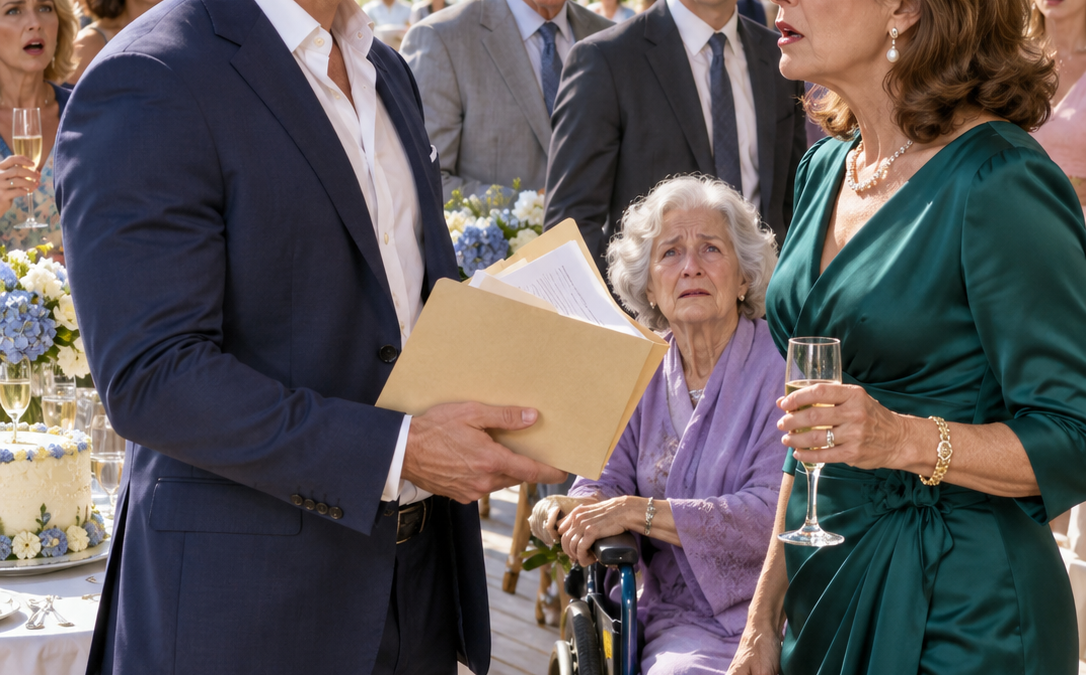
The night I lost my job, Dad started packing my things.
“Your brother needs this house more than you do.”
My brother shouted, “Who’s going to pay for my Porsche now?”
Mom backed him.
I said nothing about the company in my name or the beach house they knew absolutely nothing about.
My name is Silas. I’m thirty-five years old, and for fifteen agonizing, backbreaking years, I functioned as the invisible life-support system for my entire family. I funded their existence, paid their bills, and solved their problems, all while they treated me like an absolute ghost.
That completely one-sided arrangement finally imploded on a freezing Tuesday evening.
They threw me out onto the street the exact night I lost the biggest commercial real estate contract of my entire life.
I had just walked through the front door of my childhood home, bone-tired, rain-soaked, and utterly terrified about how I was going to make payroll for my twelve employees by Friday. I was hoping for a single shred of human comfort from the people who had raised me. Maybe a warm meal. Maybe a sympathetic ear.
Instead, my father had already pulled out the flattened cardboard moving boxes.
He looked me dead in the eye without a single ounce of hesitation and told me that my younger brother, Preston, needed my bedroom more than I did because he was getting married. Apparently, he and his fiancée needed somewhere to store their wedding registry gifts.
While my own father methodically packed my heavy canvas work shirts into a box, Preston sat completely unbothered on the living room couch, furiously texting. He paused only to complain loudly about who was going to pay the massive monthly installments on his luxury Porsche now that my income was supposedly compromised.
My mother, the woman who gave birth to me, gently patted his hand and told him not to worry. She said I would figure something out because I always landed on my feet, effectively stripping me of my humanity and reducing me to a disposable machine.
They humiliated me right there in the middle of our living room, in front of our incredibly nosy neighbor, Mrs. Higgins, treating me like a broken ATM they were finally tossing into the neighborhood dumpster.
But there was one massive, earth-shattering detail they did not know.
They had absolutely no idea that I was the sole legal owner of the million-dollar coastal property my mother had just been bragging about to her friends.
And now, as they face total financial ruin, a devastating foreclosure, and a massive fraud lawsuit that could have ended in federal criminal charges, they are begging me for the very mercy they denied me that night.
Before I tell you exactly how I dismantled their perfect little lives, let me go back. A night like that doesn’t come from nowhere, and I want you to understand the whole shape of it, not just the ending.
The drive from the coastal town of Mara Bay to my hometown of Mil Haven usually took three hours. But that night, a massive coastal storm had turned the highway into a treacherous river.
I was gripping the steering wheel of my heavy-duty Ford work truck so hard that my knuckles had gone completely white. My lower back screamed with every press of the clutch.
My company, Tightline Property Restoration, had just suffered a catastrophic, soul-crushing blow.
We had spent six months preparing for a massive, multimillion-dollar resort restoration contract. We bought the materials, hired extra crew members, and turned down smaller jobs to keep our schedule clear. That morning, the primary investor suddenly pulled out and filed for corporate bankruptcy.
The contract vanished into thin air.
That single piece of paper accounted for a solid quarter of our annual revenue.
I wasn’t looking for a financial bailout from my family. When I drove home that night, I knew they didn’t have a dime to their names anyway. They never did.
All I wanted was to walk into a warm house, sit at the worn-out kitchen table, eat a hot plate of food, and maybe, for the first time in a decade, have someone look at me and ask how my day had actually gone.
But privacy doesn’t exist in my family, especially when malicious gossip is their primary currency.
Word travels incredibly fast when your brother’s heavily entitled fiancée, Sierra, has a loudmouthed cousin who happens to work at the main lumber supply yard in Mara Bay.
They knew the contract had fallen through before my truck tires even touched the cracked pavement of their driveway.
When I pushed the heavy wooden front door open, the silence in the house was deafening. The air inside that cramped living room was suffocating, thick with the overpowering artificial scent of Beatrice’s cheap vanilla candles and the unmistakable stench of betrayal.
Nobody rushed to greet me. Nobody looked up with even a fraction of concern.
Preston, twenty-seven years old and entirely useless, was sprawled across the good sofa, his expensive designer sneakers resting directly on the glass coffee table beside a stack of unpaid utility bills.
He was frantically scrolling through his expensive smartphone, the exact same phone whose unlimited data plan I paid for every single month.
Beatrice sat rigidly in her favorite floral armchair, sipping a glass of sweet iced tea as if it were a casual Sunday afternoon. Her face was set in a mask of calculated indifference.
My father, Roland, was already pacing down the narrow hallway, his arms filled with the familiar brown cardboard boxes we kept in the garage for storage.
Mrs. Higgins, the neighborhood gossip who lived exactly two houses down, was conveniently perched by the front window. Her hands were wrapped tightly around a ceramic coffee mug, and she pretended to be deeply fascinated by the rain striking the glass while her ears were practically pointed toward us, absorbing every ounce of the drama.
Beatrice slowly set her sweating glass on the mahogany side table.
She didn’t ask if I was okay. She didn’t ask whether my business would survive the quarter or whether I needed a moment to breathe and change out of my wet clothes.
She looked at my muddy work boots, then up at my exhausted, pale face, and asked a question that stopped my heart.
In a voice colder than the rain outside, she asked how I planned to maintain the automatic payments on Preston’s sports car that month, since I had clearly messed up my business.
I stood frozen in the entryway, exhaustion settling deep into the marrow of my bones.
“The commercial client went under,” I told her, my voice barely above a raspy whisper.
I explained that I had to restructure my entire business model by Monday morning just to keep my hardworking crew employed and food on their tables.
A luxury car payment, I told her, was the absolute least of my concerns right then.
Preston immediately slammed his phone facedown on the glass table with a loud crack that made Mrs. Higgins jump.
He threw his hands into the air and whined that his precious credit utilization ratio would completely tank if the Porsche got repossessed.
He acted as though my devastating financial crisis were nothing more than a targeted personal attack on his lavish lifestyle.
His face turned a blotchy red as he yelled that he and Sierra were planning to look at mortgage rates the following month. If I let his credit score drop, he insisted, I would be deliberately ruining his future and his marriage.
Then Roland walked out of my bedroom.
My bedroom.
The room I had moved back into eighteen months earlier specifically to care for him after he suffered a massive widowmaker heart attack.
The room where I stayed awake until three in the morning sorting through his complex medical bills, fighting with his insurance company, and organizing his daily pill containers while the rest of the house slept.
He was holding a cardboard box filled to the brim with my belongings: my heavy flannel shirts, my work boots, and my favorite books.
He didn’t even have the basic decency to look me in the eye. Instead, he stared intently at the wooden floorboards.
After clearing his throat, he told me that Preston and Sierra needed a proper room to plan their upcoming wedding and store their gifts.
He mumbled that it simply made logical sense for them to take my space, considering I was apparently going to be struggling financially anyway and they needed a stable environment to start their lives.
Beatrice instantly chimed in, deploying that soft, gentle, intensely manipulative voice she had perfected over decades.
She looked at me with sickeningly fake sympathy.
“Silas, honey, you have to be reasonable.”
She told me my brother needed the house more than I did right now. She reminded me that I was strong, that I was a survivor, and that I would figure things out on my own, just as I always had.
She actually called Preston sensitive, claiming he needed a foundation that only I could provide by leaving.
I looked at the three of them.
I looked at the man who had taught me how to swing a hammer when I was ten years old, now using those exact same hands to pack my life into a disposable box without shedding a single tear.
I looked at the mother who had demanded that I sacrifice my twenties and thirties to fund her household, now discarding me the second she thought my wallet was empty.
And I looked at Mrs. Higgins, whose eyes were wide with malicious delight as she mentally wrote the script for her next HOA meeting, where she would gleefully broadcast my shameful eviction to the entire subdivision.
I didn’t argue with them.
I didn’t scream, throw things, or demand gratitude for the thousands of dollars I had spent keeping a roof over their heads.
In that exact fraction of a second, I realized that you cannot reason someone into loving you, and you absolutely cannot buy loyalty from people who view you as nothing more than a walking bank account.
I walked right past Roland, my shoulder brushing against his, and reached into the top of the open cardboard box he was holding.
Sitting on my folded clothes was a rusted vintage sewing tin that belonged to my grandmother, Hattie. I grabbed it, holding the cold metal tightly against my chest.
Then I reached deep into the denim pocket of my work jacket and felt the heavy, jagged metal of a very specific key ring pressing into my palm.
It was a key ring I had never explained to anyone in that house.
And I certainly wasn’t going to start explaining it now.
I turned to face them one last time. The air in the room felt completely dead.
In a voice devoid of emotion, I told them they weren’t throwing me out. I was actively choosing the door, and once it closed, it would never open for them again.
Beatrice scoffed loudly, rolling her eyes and telling me not to be so incredibly dramatic. Roland simply went back to sealing the cardboard box with brown packing tape.
I walked out into the freezing night.
The heavy wooden door clicked shut behind me with a sound of absolute, irrevocable finality.
By the time I merged my truck onto the dark, rain-slicked coastal highway heading back toward Mara Bay, I wasn’t crying.
Tears were for people who had something left to lose.
I gripped the steering wheel, stared straight ahead at the headlights cutting through the darkness, and started doing the math in my head.
I was calculating exactly how quickly I could pull the financial rug out from under the house they had just kicked me out of.
But I want to pause here for a moment, because I don’t want you to think that cold calculation arrived instantly, fully formed, the way it might sound in the retelling.
Somewhere around mile forty, with the windshield wipers slapping uselessly against the sheeting rain, something in my chest finally gave way.
I had to pull onto the gravel shoulder because I genuinely couldn’t see the road anymore.
Not because of the storm, but because my eyes had blurred despite everything I had told myself about tears being for people with something left to lose.
I sat there in the dark, the hazard lights ticking and the rain hammering the roof of the cab.
And I cried the way I hadn’t allowed myself to cry since I was maybe nine years old. Ugly, shaking, and entirely alone on the side of a highway, three hours from anywhere that had ever felt like home.
I wasn’t crying about the money. I want to be honest about that.
I was crying for the ten-year-old version of myself who used to stand in that same living room hoping somebody would ask him how his day went, and who had never quite stopped hoping.
Even at thirty-five. Even after everything. Even walking out that door with a rusted tin box against his chest.
Grief doesn’t always look like sadness.
Sometimes it looks exactly like rage with the volume turned all the way up.
It took those twenty minutes on the shoulder of that highway for me to understand that the calm I found afterward wasn’t the absence of grief.
It was what remained once the grief had finally finished passing through me.
To fully comprehend the insanity of what they did to me that night, and why my retaliation was so meticulously precise, you have to understand the fifteen-year, completely one-sided tab I had been running for those people.
I was the eldest son in a highly dysfunctional, emotionally starved family.
That title translated directly into being the designated unlimited survival fund.
Before Preston was born, Beatrice suffered two traumatic late-term miscarriages. Those tragedies fundamentally broke something inside her, twisting her maternal instincts into something dark, possessive, and suffocating.
When Preston finally arrived, premature but breathing, she essentially built an impenetrable fortress around him.
He became the undeniable golden child. The fragile miracle.
They built their entire universe around protecting him from the slightest inconvenience.
Somewhere in that deeply flawed psychological process, Beatrice consciously decided that I was the strong one. I was the one made of solid stone, the one who required absolutely zero nurturing, zero attention, and zero financial support.
Preston never had a traditional college fund.
He had my personal checking account.
I remember sitting at the Thanksgiving dinner table when I was twenty-two years old, having just secured my first real commercial contracting job with a decent salary.
I was so proud.
Beatrice completely ignored my promotion to talk endlessly about Preston’s upcoming high school graduation.
She proudly announced to our extended family that Preston would be attending a private out-of-state university that cost more per semester than Roland earned in an entire year.
When I foolishly asked how they planned to pay for it, she simply stared at me across the turkey and gravy and said that family helps family.
She asked whether I wanted my little brother to start his adult life crippled by debt.
Then she literally wept at the kitchen table for three days, refusing to eat until I went to the bank and transferred my entire savings account to cover his first year’s tuition.
When Preston dropped out three semesters later because the classes were, in his words, “too stressful for his mental health,” I was the one left paying off the useless accumulated student loans while he slept until noon every single day.
I still remember exactly how much money was in that savings account before I emptied it, because I had been building it since I was fourteen.
I had mowed lawns, hauled scrap metal, and later worked weekends behind the counter at a hardware store while my classmates were out doing whatever normal teenagers did with their Saturdays.
Eleven thousand, four hundred and twenty dollars.
I remember that number the way some people remember a telephone number from childhood, permanently lodged somewhere it shouldn’t still matter.
I had been saving toward a down payment on my first work truck. An actual reliable one, not the rusted thing with a cracked windshield that I ended up buying instead because there was nothing left after Preston’s tuition check cleared.
I drove that unreliable truck for two more years than I should have, nursing a temperamental transmission through two winters because the money that should have replaced it had gone to pay for a semester and a half of a business degree Preston never finished.
He never once thanked me for it.
I didn’t resent the truck, exactly.
What I resented, much later, once I finally allowed myself to feel it, was that nobody in that family ever once asked what I had given up to make that check possible.
Nobody wondered what I might have wanted for myself at twenty-two.
They only ever wondered what I could still be talked into giving up next.
For years, I lived a carefully constructed double life.
During the grueling workweek, I was building Tightline Property Restoration from the ground up.
I started with a single, heavily rusted pickup truck with a cracked windshield and a borrowed nail gun.
I took on the absolute worst salt-eaten, storm-damaged coastal properties that no other reputable contractor wanted to touch.
I worked ninety-hour weeks. My hands were permanently blistered. My lungs were constantly filled with drywall dust, and my weekends were practically nonexistent.
Over a decade of relentless, backbreaking work, I transformed Tightline into a highly profitable, respected commercial restoration enterprise.
We had a fleet of trucks, a dedicated crew, and major commercial contracts.
But to my family, located three hours inland in the stagnant working-class town of Mil Haven, I was just a struggling blue-collar construction worker living paycheck to paycheck.
I let them believe that elaborate lie because every single time I showed even a microscopic sign of upward mobility or financial success, an emergency magically appeared.
Suddenly, Preston desperately needed a new high-end laptop for his entry-level marketing job.
Or Beatrice absolutely had to have the kitchen remodeled with granite countertops because the old Formica was depressing her and causing anxiety.
If they knew my actual net worth, they would have bled me entirely dry until I had nothing left but the clothes on my back.
I want to describe what those early years actually felt like from the inside, because from a distance, the story sounds like a straightforward grind.
And it wasn’t.
It was lonely in a way I’ve never quite found the right words for, even now.
I remember one particular February, maybe four years into the company, when we were gutting a flood-damaged strip mall that had been sitting waterlogged for three weeks before the insurance adjuster finally cleared us to start work.
The mold was so thick in some of those units that we had to wear respirators just to walk through the doors.
I spent six straight days coming home smelling like bleach and rot, no matter how long I showered.
My hands cracked open at the knuckles from the constant scrubbing and the cold.
I didn’t tell a single person in my family that job existed.
I didn’t tell them about the respirator, or the black mold creeping up the drywall like something out of a nightmare, or the night I genuinely thought I might pass out from the fumes and had to sit on the curb outside with my head between my knees until the world stopped spinning.
I went home that Friday, driving three hours to Mil Haven because Beatrice had called and insisted I come for Sunday dinner.
I sat at that table eating pot roast while Preston complained that his new work laptop had a scratch on the lid.
Beatrice fussed over whether the scratch would affect its resale value someday.
Nobody asked why my hands looked the way they looked.
Nobody asked why I kept flexing my fingers beneath the table as though they ached, which they did, badly, for most of that year.
I think that disconnect, more than any single dramatic betrayal, was what actually wore me down over those fifteen years.
Not one big wound, but the slow, grinding accumulation of a thousand small moments when the people who were supposed to know me best simply never bothered to look closely enough to notice that anything was costing me at all.
There were good moments, too, scattered throughout those years.
I don’t want to pretend the whole decade was unrelieved misery, because that wouldn’t be honest either.
Declan and I used to celebrate every single new contract, however small, with cheap beer and greasy takeout on the tailgate of whichever truck was closest, toasting to nothing in particular except the simple, uncomplicated fact that we’d survived another month.
Those nights felt like the realest family I had in some ways.
Two exhausted men eating fried food out of Styrofoam containers in a gravel parking lot, genuinely happy for each other in a way nobody back in Mil Haven ever managed to be happy for me.
I used to think, driving home from those nights, that maybe this was just what adulthood was supposed to feel like.
Maybe everyone quietly carried two separate lives. One they showed their blood family and one they actually lived.
It took me a long time, and a cardboard box full of my own work shirts, to understand that most people don’t actually live that way.
And the ones who do usually have a very good, very sad reason for it.
The trap truly clamped down eighteen months earlier, when Roland collapsed in the driveway clutching his chest.
I got the panicked phone call while standing on a high steel beam at a commercial job site.
I dropped my tools, drove three hours inland, exceeding every speed limit, and essentially never left.
I want to describe that drive because I think it says something about who I actually was beneath all the resentment I’d been quietly accumulating.
I don’t remember most of those three hours.
I remember gripping the wheel and praying. Actually praying, for the first time in years, to a God I wasn’t sure I still believed in.
I remember bargaining the way people do in moments like that.
Take anything from me. Just don’t take him yet. Not like this. Not with so much still unsaid between us.
I remember pulling into the hospital parking lot and running across the asphalt in my steel-toed work boots, my heart hammering harder than it had on any job site I’d ever climbed.
And I remember finding Beatrice in the waiting room, not crying, not shaking, but talking on the phone with Aunt Monica.
She was describing the entire ordeal in the breathless, theatrical tone she used for anything that might generate sympathy for herself.
She looked up when she saw me.
“Oh, good. You’re here. Can you talk to the doctor? I can’t handle medical details. They upset my stomach.”
Then she went straight back to her phone call.
I sat with that image for a long time afterward.
My father was somewhere beyond a set of double doors, possibly dying, and my mother’s first instinct upon my arrival had been to hand me a task rather than hold on to her son for even thirty seconds of shared fear.
I didn’t process how strange that was until much later.
In the moment, I simply did what I always did.
I found the doctor. I asked the questions. I made the decisions nobody else in that family seemed capable of making, because somebody had to.
And it had never once occurred to any of them, in thirty-five years, that the somebody didn’t have to keep being me.
Someone had to manage the crushing influx of hospital bills.
The property taxes had quietly fallen dangerously behind because of Roland’s secret gambling habits, and there was a massive gap in their homeowner’s insurance.
Beatrice didn’t work, claiming her nerves couldn’t handle it.
Preston spent his meager salary on designer sneakers, craft beer, and expensive dinners with Sierra.
So I packed up my life, moved back into my claustrophobic childhood bedroom, and took the entire weight of the family’s survival onto my own shoulders.
Those eighteen months in that bedroom deserve more than a passing mention because they were, in their own quiet way, some of the hardest months of my entire adult life.
Harder, in some ways, than starting a business with nothing.
I would come home from a full day running crews at job sites, sometimes two or three hours away, then spend my evenings on the phone with insurance adjusters who spoke in deliberately confusing jargon designed to delay and deny claims.
Other nights, I sat at the kitchen table with a legal pad, working out which bills could wait another two weeks and which couldn’t wait another day.
I learned more about cardiac rehabilitation protocols and Medicare supplement plans than any construction contractor should reasonably know.
I set up a system of pill organizers with individual alarms on my phone because Roland kept forgetting his blood thinners.
I would call him from job sites, sometimes standing on a half-torn-off roof in the middle of a coastal wind, just to remind him to take his medication.
I did all of this while Beatrice sat in the next room watching television, occasionally calling out that I should keep my voice down because the noise was giving her a headache.
Meanwhile, Preston came and went as he pleased, treating the house like a hotel with room service, never once asking whether there was anything he could do to help carry what I was carrying alone.
I even foolishly co-signed a predatory lease for Preston’s ridiculous status-symbol Porsche.
I remember that day perfectly.
We were standing in the sterile, overly air-conditioned showroom of the luxury dealership.
Beatrice was crying hysterically, clutching her pearls and putting on a full theatrical performance for the salesman.
She claimed Preston needed a reliable, safe vehicle for commuting and that driving a standard sedan would irreversibly damage his professional image and self-esteem in the corporate world.
I knew that if he defaulted on those massive payments, it would completely wreck the pristine credit score I heavily relied on to secure major commercial bonds for my restoration business.
I signed the paperwork anyway, telling myself it was temporary.
It’s a fatal flaw of mine.
I fix things.
I see a collapsing roof and step underneath to hold it up on my own back, completely ignoring the fact that the people living inside the house are the ones actively swinging sledgehammers at the foundation.
I arrived back at my actual life, my office in Mara Bay, well past midnight.
The rain had finally stopped, leaving a heavy, salty fog rolling off the dark ocean.
My business partner, Declan, was still sitting at his massive oak desk, illuminated by the harsh glare of dual monitors, aggressively crunching numbers to salvage our payroll after the resort contract failure.
Declan was a massive, bearded guy who didn’t sugarcoat anything.
He took one long look at my pale face, the soaking wet canvas jacket, and the single rusty tin box in my hands, and he knew exactly what had transpired.
Declan had been warning me for over a decade that I was setting myself on fire just to keep my ungrateful family warm. He had watched me wire money week after week, slowly hollowing myself out.
“You finally walked away from the parasite tank,” Declan said, his voice a low, steady rumble in the quiet office.
“They threw me out, Deck,” I replied, dropping exhausted into the worn leather chair opposite him. “They needed the room for Preston’s wedding registry gifts. They literally boxed up my life while I was standing there.”
Declan didn’t offer empty, useless sympathy. He didn’t pat my hand and tell me everything would be okay.
He simply nodded toward the rusty tin box I’d carefully placed on the desk.
“So,” he said, “what are we doing about it?”
I want to say a little more about Declan here because he shows up throughout this story mostly as a source of one-liners and moral support, and he deserves better than that shorthand.
Declan and I met fourteen years ago on a framing crew.
Both of us were twenty-one. Both of us were broke. Both of us worked for a contractor who paid late and cut corners on safety equipment.
We actually got fired together for refusing to work on a scaffold that hadn’t been properly inspected.
We spent that first unemployed week sitting in his beat-up Camaro in a fast-food parking lot, arguing about whether we should just start our own outfit instead of going back to working for someone else’s negligence.
Declan had a wife back then, Priya, who left him two years into the business because she was tired of the long hours and financial uncertainty.
I remember him showing up at the office the morning after she moved out, not saying a word about it, just quietly getting to work.
I understood, without either of us needing to discuss it directly, that we were both, in our different ways, men who had learned to carry things alone rather than burden anyone else with the weight.
That shared understanding was, I think, the actual foundation Tightline was built on, more than any business plan.
We never needed to perform strength for each other because we had both already seen each other at our worst. Soaked, exhausted, and broke.
And neither of us had run.
Declan was the one who noticed, long before I was willing to admit it to myself, that something in my relationship with my family had curdled into something closer to exploitation than love.
He used to bring it up carefully, obliquely at first, asking whether I’d gotten a thank-you for the last wire transfer, watching my face when I inevitably said no and then changed the subject.
Over the years, as the transfers grew larger and more frequent, his questions became more direct.
Eventually, maybe five years earlier, he sat me down in that same office and said flatly, “Silas, I need you to hear me say this once clearly, and then I’ll drop it if you want me to. You are bleeding yourself dry for people who wouldn’t cross the street to help you if the roles were reversed. I’ve watched you do it for a decade. I’m not going to watch you do it for another one.”
I didn’t listen to him that night.
I made excuses. The same excuses I’d been making to myself for years.
They’re my family. It’s temporary. Roland’s sick. Preston will figure himself out eventually.
Declan didn’t argue with me.
He simply nodded, the way he nods at most things he disagrees with but has decided aren’t his fights to win, and went back to his spreadsheet.
But I think some part of that conversation lodged itself inside me anyway, waiting patiently for the night I’d finally be ready to hear it.
When I walked into that office soaked and carrying Nana Hattie’s tin, and Declan looked at me and said I’d finally walked away from the parasite tank, I understood that he wasn’t gloating.
He was relieved.
It was the particular relief of a man who had spent years watching a friend slowly drown and had finally seen him climb out of the water.
I didn’t answer immediately.
Instead, I reached over, popped the stiff metal latch of Nana Hattie’s sewing tin, and carefully pulled out a stack of faded, yellowing Polaroids.
They showed a beautiful, vibrant white house sitting directly on a sandy coastal dune, its wraparound porch looking out over the crashing Atlantic waves.
Nana Hattie was the only human being in that toxic family tree who actually loved me for exactly who I was, not for what my wallet could provide.
She used to pull me aside when I was a teenager, slip a crumpled twenty-dollar bill into my pocket, and tell me that I wasn’t the strong one.
I was just the only one who bothered to show up.
She and my grandfather had bought that beautiful coastal house the year they got married.
But when a brutal economic recession hit decades ago, Roland made some terrible investments and asked them for a bailout.
They lost the house to foreclosure.
It completely broke her spirit.
She was eighty years old now, living in a cramped, musty back room of my parents’ house. Her entire world had been reduced to a worn-out recliner and a single dusty window looking out at a brick wall.
I want to tell you more about Nana Hattie because in the shortened version of this story, she can start to sound like a plot device, a convenient source of both motivation and moral high ground.
She was so much more than that to me, in ways that had nothing to do with any of it.
When I was seven years old, still small enough that the world felt mostly frightening and unpredictable, Beatrice went through one of her worst stretches.
There were weeks of slammed doors and long silences I didn’t understand at the time, and which only made sense much later, once I understood the shape of her grief over the miscarriages she’d suffered before Preston.
During those weeks, Nana Hattie fed me breakfast every morning before school.
She sat with me at the kitchen table while I struggled through my multiplication tables and never once made me feel like a burden simply for needing help with something as small as long division.
She had a particular way of humming while she worked, an old tune whose name I never learned.
To this day, I can’t hear anything in that particular minor key without feeling seven years old again, safe at a kitchen table that felt, for a few hours each day, like it actually belonged to me too.
She used to tell me stories about the house on the dune while she sewed, patching my school uniforms or hemming pants Beatrice never had the patience to alter herself.
She described the exact color the sunrise turned the water in October, a specific, almost impossible shade of rose gold she said she’d never seen duplicated anywhere else in her life.
She described my grandfather building the porch railing by hand one summer, cursing at a stubborn plank while she brought him sweet tea and laughed at him from the doorway.
And she described standing on that porch days after they lost the house, watching the bank’s sign go up in the yard, and how she’d quietly sworn to herself that she would see that porch again before she died.
Even though, by then, it seemed like an old woman’s foolish, impossible wish rather than anything resembling a plan.
I don’t think she ever imagined that wish would actually come true.
And I certainly didn’t set out, at twenty-nine years old, standing in a county auction house with my hands shaking, to grant it.
I told myself at the time that I was simply making a smart real estate investment, buying a distressed property at a fraction of its eventual value.
It took me most of the three years of renovation to admit to myself that I hadn’t bought that house for the investment at all.
I’d bought it because some part of me had been quietly, patiently waiting my entire adult life for a chance to give something back to the one person in my family who had never once asked me for anything except my company at a kitchen table.
Three years earlier, I’d found out that the exact property was coming up at a county tax auction.
It was completely dilapidated. The roof was caving in, the beautiful porch sagged dangerously toward the sand, and city inspectors had condemned the building.
I quietly emptied every single dime of my personal savings, outbid a ruthless corporate developer by a few thousand dollars, and bought it back in cash.
For three years, I spent every single weekend driving up the coast.
I ripped out rotted joists, laid new subfloors, updated the plumbing, and brought the house back to life with my own two bare hands.
It was my absolute secret sanctuary.
My family thought I was just working grueling overtime at random job sites.
They had absolutely no idea that I held a clear, unencumbered deed to a piece of prime, million-dollar coastal real estate.
I want to describe what that renovation actually felt like, because it was, in a strange way, the happiest sustained period of my entire adult life.
Even though it happened largely in isolation, with most weekends spent completely alone with a crowbar and a radio playing static-laced classic rock through a single working speaker.
There’s a particular satisfaction in restoring something everyone else has already given up on, a satisfaction I’d spent my whole career chasing in other people’s storm-damaged buildings.
But this was different because this one was mine.
Every board I replaced felt like I was quietly repairing something inside myself at the same time.
I remember the first weekend I got the electrical system fully up to code and could finally flip a switch and watch a light come on in a house that had sat dark and condemned for the better part of two decades.
I stood in that empty living room in the dark, hit the switch, and stared at the bulb for a long moment, feeling something I can only describe as a kind of quiet, private triumph.
The kind that doesn’t need anyone else to witness it to be real.
There was a particular Saturday, maybe eighteen months into the project, when I was up on the roof, re-shingling the section over what would become the master bedroom.
A storm rolled in faster than the forecast had predicted.
I remember standing up there with the wind picking up hard enough to make the ladder rattle against the gutter, deciding whether to climb down and lose the daylight or push through and finish the section before the rain hit.
And choosing, the way I always chose, to push through.
I finished that section soaked to the bone, lightning flickering out over the water in a way that probably should have frightened me more than it did.
When I finally climbed down and looked back up at the house, dripping and exhausted, I felt something close to what I imagined parents must feel watching a child take its first steps.
A fierce, protective pride in something I had built entirely with my own hands, something that owed its continued existence to nobody’s permission but my own.
I brought a small radio to the property most weekends, an old battery-powered thing I’d had since my first apartment.
I’d play it while I worked, usually classic rock or a local sports station broadcasting minor-league baseball games nobody else in three counties seemed to care about.
Over those three years, I developed a strange, one-sided relationship with a particular radio announcer whose voice became as familiar to me as any actual person’s in my life.
He narrated games I only half listened to while I sanded floors or hung drywall, his voice keeping me company through hundreds of hours I otherwise spent entirely alone.
I never told anyone about that radio either, the same way I never told anyone about the house itself.
It became, without my quite planning it that way, a small private world where nobody could disappoint me because nobody but me knew it existed at all.
I thought about Nana Hattie constantly during those three years, though I never told her what I was doing.
I worried that getting her hopes up before the house was actually livable would be its own kind of cruelty if something went wrong.
If the money ran out. If I couldn’t finish it the way I’d promised myself I would.
I’d drive back to Mil Haven some Sunday evenings, exhausted and covered in sawdust, and sit with her for twenty minutes in that cramped back room with its single dusty window.
She’d ask me how the job site was going.
I’d tell her, technically honestly, that it was coming along. That the bones of the place were good. That whoever ended up living there someday was going to be lucky.
She’d nod and say something like, “Well, I hope they know how lucky they are.”
Then she’d go back to her book, never once suspecting that the person I hoped would appreciate the house was actually going to be her.
Sitting in my office, listening to the relentless pounding of the ocean against the docks outside, the final frayed thread of my familial obligation violently snapped.
The guilt that usually paralyzed me completely evaporated, replaced by a cold, surgical, terrifying clarity.
I opened my laptop and logged into my primary banking portal.
The screen glowed in the dark office, displaying the list of scheduled automatic transfers.
The Mil Haven property taxes.
The Mil Haven homeowner’s insurance policy.
The massive monthly draft from the luxury auto lender for Preston’s Porsche.
I moved the cursor.
I didn’t hesitate.
I clicked Cancel on the property taxes.
I clicked Cancel on the insurance.
And with a deep, visceral sense of physical relief, I permanently deleted the payment link to Preston’s car loan.
Let them carry their own roof.
I didn’t write a long, emotional, tear-stained email explaining my feelings.
I didn’t demand a heartfelt apology or request a family meeting to discuss boundaries and respect.
I simply, systematically, and completely dismantled their entire financial safety net while they slept comfortably in their beds, entirely unaware that the floor was about to drop out from under them.
I opened my phone and sent a single, sterile group text message to Beatrice, Roland, and Preston.
It was short, factual, and unmistakable.
“All automatic payments for the Mil Haven property taxes, the homeowner’s insurance, and the Porsche vehicle lease have been permanently terminated as of midnight tonight. Attached are the 1-800 customer service numbers for the respective lending institutions. Do not contact me regarding these accounts. They are solely your responsibility now.”
Then I powered my phone down, shoved it deep into my desk drawer beside my stapler, and went to sleep on a small, uncomfortable cot in the back of the office.
I slept better than I had in a decade.
The fallout was completely spectacular, and it happened far faster than I had anticipated.
I had canceled the Porsche payment exactly two days before the final grace period ended, a grace period I had secretly been keeping afloat for three months because Preston was always complaining about being short on cash.
The luxury auto lender didn’t waste any time.
Two days later, on a bright, sunny Tuesday afternoon, a heavy-duty repossession tow truck loudly backed into my parents’ pristine driveway.
I know exactly how it happened because of the highly detailed, breathless voicemail I later received from Mrs. Higgins.
She was practically vibrating with excitement as she recounted the neighborhood event of the decade.
According to her, the repossession men hopped out with their clipboards and heavy chains in broad daylight, making absolutely no effort to be quiet.
Preston apparently sprinted out the front door wearing nothing but a silk bathrobe.
Completely losing his mind, he threw a massive screaming tantrum right there on the freshly cut lawn, physically trying to block the tow truck driver, a huge man who had clearly dealt with far worse than a spoiled, crying twenty-seven-year-old.
Sierra, his lovely, status-obsessed fiancée, stood on the porch sobbing hysterically and screaming at Preston about how he was humiliating her in front of the entire subdivision.
She threatened that her parents were going to cancel the wedding and demand the deposit back from the caterer.
The truck hooked up the Porsche and dragged it down the street, leaving loud, embarrassing scrape marks on the pavement for the entire neighborhood to see.
When I finally turned my phone back on that evening, it practically exploded in my hand.
I had fourteen missed calls from Preston, eight frantic, all-caps text messages from Beatrice demanding that I instantly fix this terrible misunderstanding, and a highly aggressive, unhinged voicemail from Sierra threatening to sue me for emotional distress and the destruction of her public image.
I deleted all of them without responding.
Let them burn.
I had a business to save.
But the real earth-shattering storm, the one that completely changed the trajectory of my life and turned my quiet resentment into scorching rage, hit on a dreary Thursday morning.
My older cousin Julian, who managed the local post office branch in Mil Haven and generally stayed completely out of the toxic family drama, called my direct office line.
I should say a word about Julian because he ended up being one of the few genuinely steady presences throughout this entire story, and I don’t think I’ve ever properly thanked him for it.
Julian is my mother’s nephew on her side of the family, the son of one of her older siblings, not Aunt Monica’s boy.
He was always the quiet one at family gatherings, content to hang back near the food table while the rest of the family performed for one another.
We were never especially close growing up, more polite acquaintances than real friends.
But somewhere in the last few years, almost by accident, he became the one relative who consistently treated me like a person rather than a resource.
I think it’s because he watched, from a slight distance, the way the rest of the family operated, and something about it had always sat wrong with him.
He never said so directly until the day he called me about that damaged envelope.
He told me much later that he’d started quietly keeping an eye on anything addressed to my parents that passed through the sorting facility.
Not out of nosiness, exactly, but because some instinct told him that a family capable of packing a grown man’s life into a cardboard box was capable of worse things too.
And he wanted to be ready if those worse things ever showed up in an envelope.
I don’t know many people who would extend that kind of quiet, unglamorous vigilance on someone else’s behalf while expecting nothing in return.
Julian never once asked me for anything throughout the entire ordeal.
Not money, not a favor, not even acknowledgment beyond a simple thank-you.
He just did the right thing repeatedly because it was the right thing to do.
And in a family built almost entirely on transactional love, that made him something close to a miracle.
He sounded incredibly frantic when he called, his voice dropping into a harsh, conspiratorial whisper.
“Silas, you need to listen to me very carefully,” Julian said, completely bypassing any standard small talk. “A massive stack of certified mail just came through the sorting facility addressed to Aunt Beatrice. It’s from the primary lending division of Vanguard National Bank. One of the envelopes was damaged in the sorting machine, and, Silas, I saw the header.”
He paused before continuing.
“It’s a filed default notice for a massive home equity line of credit, accompanied by a pre-foreclosure warning.”
I frowned, leaning back in my office chair and rubbing the bridge of my nose.
I felt a slight twinge of confusion, but not panic.
“Julian, that doesn’t make any logical sense. I’ve been paying the primary mortgage directly from my business account for over a year. There’s no equity line on that house. Roland’s credit score is garbage from his gambling debts, and Beatrice hasn’t had a verifiable income in thirty years. No bank would ever approve them for a line of credit. They don’t have the collateral or the income history.”
Julian went dead quiet on the other end of the line.
The silence stretched so long I could hear the rhythmic hum of the post office sorting machinery in the background, chunking mail into bins.
“Silas,” Julian finally whispered, his voice trembling slightly beneath the weight of what he was about to say. “The default notice… the primary borrower listed on the legal document isn’t Aunt Beatrice.”
He swallowed.
“It’s you.”
I felt the blood freeze in my veins.
The temperature in my office seemed to drop twenty degrees in a single second.
I gripped the edge of my desk so hard that the wood bit deeply into my palms.
I asked Julian to repeat himself, desperately hoping I had misheard him over a bad cellular connection or that he was reading the document incorrectly.
He hadn’t stuttered.
My name was explicitly listed on a massive defaulted loan tied directly to the house they had just kicked me out of.
The puzzle pieces began slamming together in my mind with sickening, violent clarity.
I thought back to two years earlier.
The sudden, inexplicable cash Preston had acquired to launch a completely failed artisanal brewery startup, a venture that folded in six months.
The lavish, over-the-top engagement party Beatrice had thrown for Sierra at the exclusive country club, which I had naively assumed Sierra’s wealthy parents had paid for.
Beatrice’s brand-new, high-end stainless-steel kitchen appliances that mysteriously appeared while I was out of town on a month-long commercial job site.
Two years earlier, Beatrice had specifically asked me to leave a box of old financial documents, tax returns, and an expired passport in the house safe for secure storage while I was transitioning between apartments.
She said she wanted to keep my important papers safe from getting lost during the move.
She had taken my Social Security number, my pristine financial history, and my identity.
She had forged my signature on a massive equity loan application, using my impeccable credit score to secure approval through a secondary predatory lender that didn’t require strict in-person verification.
She had been quietly siphoning the money for twenty-four months, assuming I would never find out because she intercepted all the mail before I came home on weekends.
They hadn’t just thrown me onto the street because they favored Preston or needed a room for wedding gifts.
They had thrown me out while standing comfortably on a financial foundation built entirely with stolen money, borrowed under my forged name.
And they knew full well the debt was about to explode and the bank would come looking for the person named on the paperwork.
Me.
I didn’t scream.
I didn’t cry or throw my phone against the wall.
A strange, terrifying calm washed over me, the kind of absolute, dead-eyed calm that settles at the very center of a Category Five hurricane when the wind stops and everything goes perfectly still.
I hung up the phone with Julian, thanking him for the warning.
Then I immediately opened my internet browser, bypassed the local attorneys, and dialed the direct number of the most ruthless corporate fraud attorney in the county.
The time for being the protective, self-sacrificing older brother was officially over.
I was shifting from victim to predator.
And I was going to scorch the earth they walked on.
I spent the next forty-eight agonizing hours sitting in sterile, heavily air-conditioned offices, breathing in the scent of printer toner, cheap break-room coffee, and impending legal warfare.
First, I met with Mr. Henderson, a senior, no-nonsense investigator in the bank’s regional fraud department.
Then I sat across a dented metal desk from Detective Rollins at the county police precinct.
We systematically pulled the original digitized loan documents from the bank’s secure archives.
The moment Henderson turned the heavy computer monitor toward me, the forgery was glaringly, insultingly obvious.
Beatrice hadn’t even bothered to hire a professional or practice the signature on scratch paper.
She had clearly tried to trace my signature manually from an old birthday card I’d given her five years earlier.
The loops were shaky, the pen pressure was entirely wrong, and the date was written in her distinctive, looping cursive slant.
It was amateur hour.
I sat in that hard plastic chair, picked up a black pen, and formally signed a multipage identity-theft affidavit without a single tremor in my hand.
I officially filed a criminal police report for grand larceny, identity theft, and felony fraud, explicitly naming Beatrice Sims and Roland Sims as the primary suspects.
I want to describe one small moment from that meeting with Henderson because it stayed with me longer than almost anything else from those forty-eight hours.
He had pulled up the scanned birthday card Beatrice apparently used as her signature template.
An old card I actually remembered giving her on my thirtieth birthday, five years before any of this began.
I’d written something simple inside at the time. Nothing elaborate.
Love you, Mom. Hope this year treats you well.
The kind of ordinary sentiment you scrawl on a card without thinking too hard about it.
Henderson zoomed in on my old signature beside hers, comparing the shaky trace marks.
In doing so, he also unintentionally enlarged that handwritten message beneath it.
I sat there in that fluorescent-lit office and read my own five-years-younger handwriting, sincere and a little clumsy.
And I felt something crack open in my chest that had nothing to do with the fraud case at all.
I had meant those words when I wrote them.
I had genuinely, uncomplicatedly loved her at thirty, the way a son is supposed to love his mother without yet knowing what she would eventually do with the trust that love implied.
Henderson, to his credit, didn’t say anything about it.
He simply scrolled quietly past the message and returned to the technical analysis, giving me the small mercy of not making me explain why my jaw had tightened.
I’ve thought about that card many times since.
I think it’s the clearest evidence I have that I wasn’t always a cold, calculating person.
Some people who hear the abbreviated version of the story assume I must always have been that way.
But I loved her plainly once, the uncomplicated way children love their parents before they learn better.
She’s the one who taught me better.
I didn’t arrive at ruthlessness on my own.
She built it in me, one betrayal at a time, until it was the only tool left standing.
My lawyer, a brilliant, terrifying shark of a woman named Sarah who charged five hundred dollars an hour, made the situation crystal clear as we walked out of the precinct.
“The bank is going to immediately freeze the asset,” Sarah explained, tapping a manicured nail against her leather briefcase. “They’re going to launch a full-scale federal investigation. Once the handwriting analysis confirms the forgery, which should take a few weeks at most, your name will be completely scrubbed from the liability. But the crushing weight of that massive debt, the back interest, and the severe criminal fraud charges is going to fall squarely and unavoidably onto Beatrice and Roland.”
She looked directly at me.
“They’re looking at a devastating civil lawsuit, total bankruptcy, and very likely federal jail time. Are you prepared for that?”
I looked at her, thinking about my father packing my shirts into a cardboard box.
“File it.”
While I was methodically preparing these legal nuclear codes in absolute silence, the toxic family rumor mill started spinning out of control.
Aunt Monica, Beatrice’s younger sister, called my cell phone.
Monica was the family’s ultimate covert manipulator, a woman who played the sweet, sympathetic peacemaker while actively pouring gasoline on every fire she could find.
“Silas, honey,” she cooed into the phone, her voice dripping with sickeningly fake concern. “I heard about the horrible fight with your father. Your mother is just a total wreck. She can barely get out of bed. Preston is so deeply depressed without his car. He hasn’t left his room in days, and Sierra is threatening to leave him.”
She paused dramatically.
“You know, family forgives family. Silas, you’re the successful one. You have the 401(k), the business. Why don’t you just apologize, pay the missed installment to get the Porsche back, and we can all have a nice, peaceful Thanksgiving dinner?”
I let her talk.
I let her spin her web of guilt, listening to the subtle manipulations designed to make me feel like the villain for simply refusing to be abused.
Then I applied a tiny bit of pressure.
“It’s funny, Monica,” I said smoothly, leaning back in my office chair. “Roland told me it was Preston’s idea to take my room. But Sierra’s cousin said the idea actually came from someone outside the house, someone who sat at the kitchen table and convinced Beatrice that I was a burden.”
It took exactly three minutes of calculated questioning for Monica’s massive ego to trip her up.
She defensively snapped, revealing that she was the one who had sat at the kitchen table and specifically advised Beatrice to pack my boxes.
She proudly admitted she’d told my mother that I was too independent and that pushing me out would force Preston to step up as the man of the house for his new bride.
She was just another snake in the grass, manipulating the board to protect her sister’s bizarre obsession with Preston.
“Thanks for clarifying that, Monica,” I said, my voice cold. “Enjoy the holidays. You’re going to need a good lawyer when the bank comes calling for Beatrice’s accomplices.”
I hung up on her in mid-gasp and permanently blocked her number.
Meanwhile, I still had to keep Tightline from going under.
Gregory, a slimy, aggressively unethical competitor in the restoration industry, caught wind of our lost resort contract.
He immediately started circling our remaining clients like a vulture, offering severely undercut bids to steal our business while he thought we were financially bleeding.
But Declan held the absolute front line.
While I was dealing with detectives and lawyers, Declan was aggressively renegotiating supplier rates, securing new material lines, and locking down our existing contracts with ironclad guarantees.
We were bleeding, but we were absolutely not dying.
I remember one call in particular from that stretch.
A longtime client named Ellen, a property manager who oversaw a chain of coastal medical offices we’d worked with for six years, called gently to ask whether the rumors about Tightline’s instability were true.
I told her the truth, or most of it.
We’d lost a major contract. We were restructuring. Our crews and our commitments to existing clients remained exactly as solid as they’d always been.
She was quiet for a moment, then said something I’ve held on to ever since.
“Silas, I’ve worked with a lot of contractors over the years. Most of them disappear the second things get hard. They chase whatever’s easiest and leave you holding a half-finished job. You’ve never once done that to me. Not in six years. I don’t need Gregory’s cheaper bid. I need someone who shows up.”
She stayed with us.
Most of our long-term clients did.
Once they understood the difference between a company in genuine trouble and a company simply weathering a hard season honestly, they remained loyal.
I think that loyalty, more than any legal victory over my family, was what actually convinced me that the business would survive.
People remember who shows up.
It turns out that’s true in a boardroom the same way it’s true at a kitchen table.
And then, precisely one week after I was thrown out, the universe handed me the ultimate, unbelievable ace in the hole.
A twist of fate so perfect you couldn’t have written it into a movie script.
I was sitting in the Tightline office, staring blankly at a complex spreadsheet, trying to finalize the upcoming event schedule for the rental side of our business.
The rental revenue helped cover the massive property taxes and final renovation costs of Nana Hattie’s beach house.
We occasionally leased the restored property for high-end, exclusive private events such as weddings and corporate retreats.
We managed the listings under a generic corporate subsidiary name to maintain strict privacy and keep my personal name off the public marketing materials.
An automated email notification pinged loudly into the general inquiry inbox.
I clicked it open mechanically, taking a sip of cold coffee.
It was a formal booking request.
Someone wanted to secure a weekend rental for the coastal property to host an elaborate, fully catered eightieth birthday party.
I scrolled down to check the credit card authorization form before running the standard background check.
And I stopped breathing.
I stared at the bright white screen, my eyes tracing the letters over and over again.
A slow, incredibly cold smile began to spread across my face, pulling at the corners of my mouth.
The name explicitly printed on the billing form was Beatrice Sims.
Beatrice, absolutely desperate to maintain her illusion of extreme wealth and keep up appearances in front of the extended family after the highly public Porsche repossession, had frantically searched the internet for luxury coastal venues to host Nana Hattie’s upcoming milestone birthday.
She needed to prove to everyone that she was still the generous, affluent matriarch, completely untouched by financial struggle.
She was trying to buy back her reputation.
The search algorithm had flawlessly served her the listing for my property.
The professional listing photos showed a stunning, modern, million-dollar estate with pristine white railings, expensive landscaping, and floor-to-ceiling glass.
She had absolutely no idea it was the exact same ruined, rotting house her mother had lost to the bank decades earlier.
The renovations I’d completed were too extensive.
It looked entirely different.
And she definitely, absolutely did not know it belonged to the eldest son she had just kicked to the curb.
She had confidently entered her credit card information, likely using a new card opened under Preston’s name given her ruined credit, and paid the massive nonrefundable security deposit directly into my company’s corporate account.
Declan walked into my office holding a mug of black coffee.
He looked over my shoulder at the booking confirmation on the screen, read the name, and let out a loud, booming bark of laughter that echoed off the walls.
“She has literally tried to rent your own house to throw a party,” Declan wheezed, wiping a tear from his eye. “You have to cancel it. Tell her the venue burned down. Let her scramble and look like a fool in front of all her friends.”
I didn’t laugh.
I looked at the calendar pinned to the wall.
The party was scheduled for exactly two weeks from that day.
“I’m not canceling a damn thing, Deck,” I said, my voice eerily calm.
The master plan was clicking into place with terrifying precision.
“I’m going to let her plan the entire event. I’m going to let her invite every single gossiping aunt, uncle, and cousin in the tri-state area. I’m going to let her stand on my wraparound porch, drink champagne, and take all the credit.”
I looked back at the screen, staring at my mother’s name, thinking about the massive fraud investigation quietly creeping toward her doorstep.
“And then, in front of everyone she has ever tried to impress, I’m going to burn her fake empire straight to the ground.”
The final two weeks leading up to Nana Hattie’s eightieth birthday party were an absolute masterclass in psychological compartmentalization and strategic silence.
While the regional bank’s federal fraud division meticulously built a devastating, ironclad legal case against my mother, I spent every available hour at the coastal property making sure the house was absolutely flawless.
I wanted the trap to be beautiful.
I wanted the bait to be so irresistibly shiny that Beatrice would swallow the hook without a second thought.
I washed the expansive floor-to-ceiling windows until the glass practically vanished into the pristine ocean view.
I hired a premium landscaping crew out of my own pocket to lay down fresh, dark cedar mulch, trim the heavy coastal oaks, and plant vibrant hydrangeas along the walkway.
Declan even drove up on his day off to help me string high-end, warm-white bistro lights all along the massive cedar eaves of the wraparound porch.
I wanted the real estate to look so impossibly far outside Beatrice’s actual financial league that her blatant lies would be painfully obvious to anyone in the family who possessed even an ounce of critical thinking.
I kept my distance from the family entirely during those fourteen days.
My phone remained completely silent.
I didn’t receive any more unhinged, all-caps text messages from Preston regarding his repossessed Porsche.
I knew from Julian, my incredibly reliable post office informant, that the pre-foreclosure notices and certified letters from the bank’s legal department were actively piling up in my parents’ mailbox.
But Beatrice was intercepting them, hiding the terrifying reality from Roland.
She was aggressively doubling down on her delusional reality, utterly convinced that if she threw the most lavish, expensive, over-the-top party in the history of our extended family, it would somehow overwrite the fact that her golden child was currently bumming rides to work and her entire financial house of cards was engulfed in a raging inferno.
The morning of the party arrived with a crisp, perfect ocean breeze and a sky so brilliantly blue it looked painted.
The high-end catering company Beatrice had hired, undoubtedly using a newly opened, high-interest credit card secured under Preston’s name, arrived right at noon.
They began setting up tables dressed in crisp white linen on the manicured lawn facing the rolling dunes.
They brought heavy silver chafing dishes, expensive crystal glassware that caught the afternoon sun, and a massive custom-tiered lemon cake, which was Nana Hattie’s absolute favorite dessert.
The caterers buzzed around the property, completely unaware that the woman paying their invoice was weeks away from a possible federal indictment.
I arrived two hours early, pulling my heavy work truck around a back dirt road to the concealed service entrance at the rear of the property.
I wasn’t wearing my usual canvas work jacket, denim jeans, and heavy, mud-caked boots.
I wore a tailored dark navy suit, a crisp white shirt, and polished dress shoes.
I walked into the massive open-concept living room, my footsteps clicking softly and rhythmically against the restored, gleaming hardwood floors.
Then I placed a thick, pristine manila folder directly in the center of the polished granite kitchen island.
Inside the heavy folder was the fully executed legal paperwork drawn up by my corporate fraud attorney, Sarah.
I stepped out onto the vast wooden deck and waited quietly in the deep shadows of the heavy cedar columns, listening to waves crash against the shore.
At exactly four in the afternoon, the cars began to arrive, their tires crunching loudly down the long crushed-shell driveway.
I watched from my concealed vantage point as the entire extended family poured out of their vehicles.
There were aunts, uncles, and second cousins from three different counties, all dressed in their Sunday best and carrying brightly wrapped presents.
I saw Aunt Monica, the venomous manipulator who had orchestrated my eviction, practically vibrating with excitement as she took in the overwhelming scale of the coastal property.
She whispered frantically to her husband, likely calculating exactly how much Beatrice must have spent to secure such a location.
Then my parents’ older, fading sedan pulled up to the front walkway.
Roland got out first.
He looked incredibly tired, his shoulders slumped beneath an invisible, crushing weight, his suit hanging a little too loosely on his frame.
He walked around to the passenger side and gently helped Nana Hattie out of the vehicle, carefully settling her into her transport wheelchair.
She had a colorful, handwoven shawl wrapped tightly around her frail shoulders to block the sea breeze.
She looked confused, her bright, intelligent eyes scanning the unfamiliar, towering modern architecture of the newly renovated house.
And then Beatrice emerged from the back seat.
She stepped out wearing a brand-new, shockingly expensive silk dress that caught the wind.
She immediately plastered on a blinding, theatrical smile, radiating the false, arrogant confidence of a woman who believed she completely owned the world and everyone in it.
She threw her arms open wide, greeting the cousins and church friends, projecting her voice so loudly that it carried over the sound of the ocean.
“Welcome, everyone! Welcome to the coast!” Beatrice announced, her voice dripping with manufactured warmth. “I wanted Mama’s eightieth to be nothing short of spectacular. I searched for months and months to find the absolute perfect luxury rental. Cost an absolute fortune, let me tell you. The deposit alone was staggering, but family deserves the absolute best. You really can’t put a price tag on these precious, fleeting moments.”
I watched her work the crowd from the shadows.
It was genuinely sickening to witness the ease with which she lied.
She glided effortlessly from group to group, accepting glowing compliments on the gorgeous estate with practiced, fake humility.
I overheard her talking loudly to Aunt Monica near the catering tent, blatantly lying about Preston’s career trajectory to cover up the repossession of his luxury vehicle.
“Oh, yes, Preston is just doing phenomenally,” Beatrice bragged, waving her hand dismissively. “He’s on the verge of a massive corporate promotion that will completely double his salary. He actually voluntarily returned the Porsche last week. He told me, ‘Mom, I just want something more practical and family-oriented for my upcoming marriage to Sierra.’ He’s so mature. And of course, Roland and I are contributing heavily to their future children’s college fund. It’s just so important to build generational wealth.”
It was a completely fabricated reality, a desperate, hollow narrative designed solely to feed her insatiable ego and maintain her status as the affluent matriarch of the family.
Preston and Sierra arrived shortly afterward, pulling up in a heavily dented compact rental car that looked entirely out of place beside the luxury SUVs belonging to our extended relatives.
Preston looked absolutely miserable, his usual arrogant, entitled swagger completely gone.
He wore a slightly wrinkled suit.
Sierra looked furious.
She refused to hold his hand as they walked toward the patio, keeping a massive physical distance between them.
They gravitated immediately toward the open bar set up by the caterers, entirely ignoring the rest of the family, clearly in the middle of a massive, relationship-ending fight over their sudden lack of funds.
But my eyes were entirely focused on Nana Hattie.
Roland was slowly pushing her wheelchair up the long, sloping wooden ADA-accessible ramp I’d specifically designed and built into the side of the porch just for her.
As they reached the top deck, rolling onto the smooth cedar planks, Nana Hattie suddenly raised her hand and signaled for Roland to stop.
She sat very still in her chair.
Her trembling hands gripped the black armrests tightly.
She looked at the specific, unique angle of the roofline.
She looked at the ancient, deeply twisted coastal oak tree standing perfectly off to the left side of the dunes, a tree that had survived a hundred hurricanes.
Then she looked down at the wide, perfectly aligned cedar porch planks beneath her wheels.
The deep, extensive renovations had completely modernized the house, replacing the rot with sleek glass and strong timber.
But the fundamental bones, the exact geographic footprint, the soul of the property, remained the same.
I saw the exact moment realization struck her.
Her breath hitched visibly in her chest.
She reached out with one frail, shaking hand and touched the thick, painted wooden railing.
“Roland,” she whispered, her voice cracking with overwhelming, sudden emotion. “Roland, look at the oak tree. Look at the waterline where the rocks meet the sand.”
Roland frowned, stepping out from behind the wheelchair to examine the view, completely misunderstanding her reaction.
“It’s a beautiful view, Mama. Beatrice really outdid herself with this rental. It must be costing us a fortune.”
“No, Roland,” Nana Hattie said, tears instantly spilling over her deeply wrinkled cheeks, her voice gaining a sudden, desperate strength. “This is my house. This is the house your father and I lost to the bank after the recession. I would know the curve of this porch anywhere in the world. Someone brought my house back to life.”
Before Roland could even begin to process the magnitude of what his mother was saying, Beatrice swooped in, holding a crystal glass of expensive imported champagne.
“Mama, are you crying? Oh, I know. It’s just so beautiful and overwhelming, isn’t it?” Beatrice cooed, kneeling slightly to meet the elderly woman’s eyes. “I told the booking agent I needed their absolute premier property for you. I wanted you to feel like a complete queen today. I spared no expense to make you happy.”
Beatrice stood and turned to address the growing crowd of relatives who had gathered on the expansive deck to present their wrapped gifts and offer congratulations.
She raised her champagne glass high and tapped it lightly with a silver spoon to command everyone’s immediate attention.
The quiet chatter of the family instantly died away.
The ocean waves crashed rhythmically in the background, providing a dramatic soundtrack to her impending downfall.
“If I could have everyone’s attention for just a moment,” Beatrice projected, her face glowing with absolute, unchecked narcissism as she basked in the spotlight she had essentially stolen. “We’re all gathered here to celebrate my wonderful, beautiful mother. When I was looking for a venue to host this milestone, I told my husband, I said, ‘Roland, we’re not sparing a single expense.’ I wanted a place that represented our family’s deep legacy of success, unconditional love, and unbreakable unity.”
She smiled out at the gathering.
“It’s been a challenging year for the economy. But seeing all of you standing here on this magnificent property that I was able to secure for us, well, it just fills my heart with so much pride and joy.”
She paused, drawing a deep breath and soaking in the admiring, envious looks from the cousins and aunts who had absolutely no idea she was currently under active federal investigation for identity theft and grand larceny.
“So please,” Beatrice concluded, raising her glass even higher, a triumphant smile plastered across her face, “raise your glasses to Mama and to the enduring, unshakable strength of our family.”
The crowd murmured in agreement, a chorus of voices echoing her sentiment, glasses clinking softly in the salty coastal air.
Beatrice took a long, victorious sip of her champagne.
Her eyes scanned the crowd to ensure every single person was properly worshiping her generosity and manufactured wealth.
That was my cue.
The trap was fully set.
The audience was completely captive.
The lies had been spoken aloud.
And the predator was standing directly in the center of the X.
I stepped out from the deep shadows of the cedar columns and walked directly into the center of the sunlit patio.
I didn’t rush.
I walked with the slow, measured, incredibly heavy steps of a man who held every single card in the deck and was about to flip the table.
“It really is a beautiful property, Beatrice,” I said, my voice carrying clearly and sharply over the sound of the ocean, slicing through the celebratory atmosphere like a blade.
The entire party froze instantly.
Every head snapped in my direction.
The color drained violently from Beatrice’s face, leaving her looking completely hollowed out and ashen.
Preston nearly dropped his drink, his jaw practically hitting his chest.
Roland stared at me, his mouth slightly open in shock, his eyes darting between my tailored suit and my mother’s terrified face.
“Silas!” Beatrice stammered.
Her voice lost all its theatrical confidence in a fraction of a second, dropping into a harsh, panicked, breathless hiss.
“What are you doing here? You were explicitly not invited to this gathering. You need to leave immediately before I call the property manager.”
I stopped in the middle of the crowd, closing the distance and looking directly into her wide, panicked eyes.
“I don’t need an invitation to walk onto my own front porch, Mother.”
The silence that fell over the expansive cedar deck was absolute, heavy, and suffocating.
It was the kind of terrifying silence that precedes a massive, devastating explosion.
You could hear seagulls calling high above in the distance and ice clinking against the glass in Preston’s trembling hand.
The cousins exchanged confused, nervous glances, shifting uncomfortably in their expensive clothes.
Aunt Monica stepped forward, her brow furrowed in deep, arrogant confusion, ready to defend her sister’s honor.
“Your front porch?” she asked, her tone dripping with condescension as she looked between me and my mother as though I’d lost my mind. “Silas, what on earth are you talking about? Are you drunk? Beatrice just told all of us she rented this estate through an exclusive luxury agency.”
Beatrice frantically tried to recover her completely shattered facade.
She forced out a highly unnatural, shrill, grating laugh that echoed awkwardly against the massive glass windows.
“Oh, Silas is just making one of his inappropriate, bitter jokes,” Beatrice practically yelled to the crowd, her eyes wide and silently begging me to stop talking. “You all know how he is. He’s been very stressed and confused lately because his little construction job hasn’t been going well. He’s having money troubles. He’s always been so dramatic and jealous of his brother.”
I didn’t break eye contact with her.
I didn’t raise my voice to match her frantic energy.
I stood perfectly still, my posture straight, and spoke with the cold, absolute authority of a judge handing down an irrevocable sentence.
“I’m not joking, Beatrice. And I’m not struggling.”
My voice cut through her desperate lies like a surgical scalpel.
“You didn’t rent this property from a luxury agency. You rented it from a corporate holding entity called Tightline Property Holdings. You filled out the online forms, and you paid a nonrefundable security deposit of four thousand dollars directly into that corporate bank account.”
I reached slowly into my tailored suit jacket and pulled out the thick manila folder I’d retrieved from the kitchen island.
I flipped it open, the stark white legal documents contrasting sharply with the dark wood of the deck.
“I’m the sole owner of Tightline Property Restoration and all its subsidiary holdings,” I announced, projecting my voice so every aunt, uncle, and second cousin could hear the undeniable truth.
“I’ve owned it for a decade. It’s a multimillion-dollar commercial restoration firm. I’m not a struggling day laborer. And three years ago, I used the profits from my company to purchase this exact piece of real estate at a county tax auction.”
I turned slightly toward Nana Hattie.
“The exact same house that Roland’s terrible financial decisions forced Nana to lose to the bank decades ago. I spent the last three years rebuilding this entire structure from the foundation up with my own two bare hands, pouring my blood and sweat into it, while every single one of you thought I was just working overtime to barely scrape by.”
The collective gasp from the crowd was loud and unmistakable.
Aunt Monica literally covered her mouth with a manicured hand, her eyes bulging.
Mrs. Higgins, who had somehow managed to manipulate her way into an invitation to the party, looked as though she was about to pass out from the overwhelming magnitude of the gossip she was witnessing.
She was gripping the railing for support.
“That’s a complete lie!” Preston suddenly shouted, stepping forward, his face turning a blotchy, violent red with sudden anger and deep humiliation. “You’re a broke contractor! You’re a liar! You wouldn’t even pay my car note last week!”
“I absolutely refused to pay your luxury car note, Preston,” I corrected him sharply, my eyes locking onto his. “There’s a massive, fundamental difference between being broke and simply deciding to cut off a parasite.”
He stopped in his tracks.
“I stopped paying for your Porsche, your insurance, and your lifestyle the exact same night you and your mother threw me out of the house into the freezing rain, just so you could have an extra room to store your wedding registry gifts.”
The cousins started murmuring loudly now, whispers spreading through the crowd like wildfire.
Threw him out.
Parasite.
Repossessed car.
The entire illusion of Beatrice’s perfect, loving, affluent family was cracking wide open for the whole world to see, exposing the ugly, rotting core beneath the surface.
Beatrice was actively hyperventilating.
Her breathing was shallow and rapid, and her hands were shaking so violently that the expensive champagne spilled over the rim of her crystal glass, dripping down her fingers and onto the pristine wooden deck.
“Stop it, Silas!” she hissed, abandoning the sweet maternal tone entirely and revealing the venomous reality of who she was. “You’re ruining your grandmother’s birthday! You’re embarrassing this family in front of our friends! You have no right to do this to me. I am your mother!”
“You lost the absolute right to demand my silence and loyalty the day you stole my identity,” I said, my voice echoing like thunder across the patio.
The entire party went completely, horrifyingly still.
The whispering stopped instantly.
You could have heard a pin drop.
“I know all about the Vanguard National Bank home equity line of credit,” I stated clearly, delivering the final, fatal blow to her carefully manufactured image. “I know you dug into the family safe and used my old tax returns. I know you blatantly forged my signature on the loan application two years ago.”
Beatrice’s face contorted.
“I know you used my pristine credit history to steal hundreds of thousands of dollars against a house you don’t even own outright, just so you could fund Preston’s completely failed brewery, buy Sierra’s approval with a lavish engagement party, and remodel your kitchen.”
Roland staggered backward as though someone had physically struck him in the chest with a sledgehammer.
He looked at Beatrice, his eyes wide with horror and betrayal.
“Beatrice, what is he talking about?” Roland demanded, his voice shaking. “A home equity line? You told me the certified bank letters were just junk mail. You told me the bank was sending credit card offers.”
“She lied to your face, Roland,” I answered for her, never breaking my stare at my mother. “She committed felony grand larceny. And that’s exactly why I sat in a police precinct and filed a formal police report for identity theft last week.”
I held the folder steady in my hands.
“The federal fraud investigation is already fully underway. My corporate lawyer has ensured the asset is frozen. This entire family is looking at a massive civil lawsuit, complete and total bankruptcy, immediate foreclosure of your home, and potential federal prison time.”
I looked straight at Beatrice.
“And all of it happened because you couldn’t stand the thought of Preston actually having to work for a living like a normal adult.”
Beatrice dropped her champagne glass.
It shattered violently against the hard cedar deck, the sharp, explosive sound cutting through the stunned, paralyzed silence.
She collapsed into one of the white patio chairs, burying her face in her hands and sobbing hysterically.
But those weren’t tears of genuine remorse or guilt for what she’d done to me.
They were the bitter, terrified tears of a narcissist who had finally been exposed to the bright, unforgiving light of reality and consequence.
I turned my back on her entirely and walked over to Nana Hattie.
She sat quietly in her wheelchair, tears streaming silently down her beautifully lined face, staring at me with overwhelming pride, deep gratitude, and profound sorrow for the family breaking apart around her.
I knelt on one knee in front of her, ignoring the absolute chaos erupting behind me.
I opened the manila folder and pulled out a crisp, heavy piece of legal parchment with a bright gold notary seal stamped at the bottom.
“Nana,” I said softly.
My voice changed completely, stripped of all the anger and ice, filled instead with the love, warmth, and respect I’d been denied by the rest of them for my entire life.
“You told me once, years ago, that the only thing you wanted before you passed was to watch one more sunset from the porch of a house that was truly yours.”
I placed the legal document gently into her trembling, fragile hands.
“This is a legally binding life estate deed,” I explained, placing my large hand over hers to steady it. “I retain the underlying corporate ownership of the property, but this legal document grants you the absolute, irrevocable right to live in this house for the rest of your natural life.”
She looked down at the paper.
“There’s no rent. There are no conditions. No bank can ever foreclose on it. No one can ever evict you, and absolutely no one in this family can ever take it away from you again. The sunset from this porch belongs to you. This is your inheritance delivered early.”
I smiled at her.
“Welcome home, Nana.”
Nana Hattie let out a sound that was half sob, half laugh, a sound of pure, unadulterated joy that had been buried for decades.
She clutched the heavy parchment against her chest and leaned forward to press her forehead gently against mine.
“My boy,” she whispered fiercely, her voice thick with emotion. “My strong, beautiful, kind boy. You brought my porch back to me.”
I want to stay with that moment a little longer than the pace of the story usually allows, because everything that came before it—the fraud, the confrontation, the collapsing marriage on the deck behind us—all of it was, in the end, only the noise surrounding this one quiet exchange between an old woman and a grandson who had never stopped showing up for her.
She held my face in both hands the way she used to when I was small and had scraped a knee or lost a schoolyard fight.
She looked at me for a long moment before she spoke again.
“You know,” she said, quieter now, just for me, the chaos on the deck behind us fading into background noise, “I used to lie awake in that back room, listening to your mother move around that house like she owned every square inch of air in it.”
Her fingers rested gently against my cheek.
“And I used to think I’d raised a coward for a son and buried a good man in the ground before I ever got the chance to properly know him. And then you’d come by some evening, tired from whatever job site had worked you half to death that week, and you’d sit with me anyway and ask about my day.”
She paused, her eyes glistening.
“And I thought, well, maybe I didn’t raise a coward after all. Maybe I raised a man who just needed time to become who he actually was.”
She patted my cheek once, gently.
“Took you long enough, Silas. But you got there, and you brought me with you.”
I stood slowly and turned back to face the absolute wreckage of my biological family.
Beatrice was wailing loudly, a truly pathetic sound.
Preston was frantically looking at his smartphone, furiously swiping, probably trying to call a cheap lawyer he couldn’t afford or secure a loan to save his own skin.
And Roland…
Roland stared at me, a complicated mixture of deep shame, profound regret, and sudden, terrifying realization washing over his aged face.
The power dynamic of our entire bloodline had permanently and irreversibly shifted in the span of ten minutes.
Every single person standing on that deck knew it.
The immediate aftermath of the revelation was total, unmitigated social and emotional chaos.
Aunt Monica, instantly sensing that the social ship was sinking rapidly and taking her precious reputation to the bottom of the ocean with it, began gathering her designer purse and signaling frantically to her husband.
“Well, I think it’s time we head back. The traffic is going to be terrible,” Aunt Monica announced loudly to no one in particular.
Completely abandoning her sister in her moment of total destruction, she practically sprinted toward the driveway.
The rest of the extended family quickly followed suit, abandoning their half-eaten plates of catered food.
No one wanted to stand within the blast radius of a federal fraud investigation, and nobody wanted to be associated with a woman who had stolen from her own son.
Within fifteen chaotic minutes, the lavish patio was completely deserted, except for the deeply uncomfortable catering staff, who were awkwardly sweeping up the broken champagne glass in total silence.
Beatrice was still hyperventilating in the patio chair, rocking back and forth, completely unable to process the reality of her consequences.
“You ruined me,” Beatrice kept repeating, pointing a shaking, accusatory finger at me and refusing to accept an ounce of accountability. “You ruined your own mother over money. You’re a monster, Silas!”
Then something completely unprecedented happened.
Something I never thought I would witness in my lifetime.
Roland, the man who had spent his entire adult life keeping his head down, avoiding conflict at all costs, and methodically folding my shirts into a cardboard box just to maintain the fragile peace in his house, finally found a spine.
“Enough, Beatrice!” Roland roared.
The sheer volume and raw anger in his voice shocked everyone, including me.
The caterers actually stopped sweeping.
He walked over with heavy, purposeful steps and stood directly between me and her, blocking her view of me entirely.
“Silas didn’t ruin you, Beatrice. You ruined us,” Roland stated, his voice trembling with years of suppressed rage. “You lied to me every single day. You stole from our own hardworking son just to spoil Preston, and you put our entire livelihood, our entire future, on the line.”
His voice shook, but he didn’t stop.
“I let you manipulate this family for thirty years because I was a coward who didn’t want to argue. But I will absolutely not let you blame Silas for your own criminal actions. You did this.”
He turned to look at me, his eyes filled with a heavy, crushing sorrow that looked entirely genuine.
He didn’t ask for my forgiveness because he knew he hadn’t earned it, and likely never would.
He simply nodded once, a silent, solemn acknowledgment of the absolute truth of the situation.
Then he walked over to Nana Hattie, firmly grabbed the handles of her wheelchair, and rolled her inside the beautiful house to get her settled into the luxurious master suite on the first floor.
He left Beatrice completely alone on the deck.
Preston, realizing that his ultimate shield—his mother’s endless stream of stolen money—had just collapsed, turned in pure panic toward Sierra.
“Sierra, babe, listen to me. We can figure this out,” Preston pleaded, grabbing her arm. “It’s just a misunderstanding. I can get a loan from your dad to cover the car, and we can still afford the wedding.”
Sierra violently yanked her arm away, looking at him with pure disgust.
The illusion of the wealthy, successful, upwardly mobile fiancé was completely gone, replaced by a broke, legally compromised possible accessory to fraud who still lived with his parents.
“Do not ever speak to my father, Preston,” Sierra snapped, her voice like absolute ice, loud enough for the catering staff to hear. “The wedding is completely canceled. My parents are calling the country club and pulling the venue deposit first thing tomorrow morning. I’m not marrying into a family of criminals. Lose my number.”
She turned on her heel, her expensive shoes clicking sharply against the wood, and marched down the gravel driveway, aggressively typing on her phone to call for a car.
She left Preston standing there completely alone, his mouth hanging open.
I didn’t stay to watch them clean up the catering or figure out how to get home.
I had already won.
I handed the keys to the property manager I’d hired to assist Nana Hattie, walked back to my heavy work truck, drove to my quiet apartment in Mara Bay, and slept for twelve solid, uninterrupted hours for the first time in fifteen years.
The next six months were a brutal, highly public masterclass in the absolute inevitability of consequences.
The regional bank’s fraud investigation concluded exactly as my lawyer, Sarah, had predicted.
Professional handwriting analysis definitively proved the forgery beyond any shadow of reasonable doubt.
My name was formally and permanently removed from the massive home equity line of credit by a federal judge, instantly restoring my credit score to absolute perfection.
The crushing liability fell entirely and inescapably on Beatrice.
Vanguard National Bank initiated immediate, aggressive foreclosure proceedings on the Mil Haven house.
They didn’t just take the real estate.
They filed a massive civil lawsuit to recover the stolen funds she’d spent.
Faced with overwhelming, undeniable documentary evidence, Beatrice avoided federal prison time only by pleading guilty to a lesser felony charge of criminal fraud and agreeing to severe financial restitution that would garnish her wages for the rest of her life.
The incredible financial stress, constant legal battles, and profound public humiliation completely destroyed their marriage.
Roland filed for a quiet, uncontested divorce shortly after the house was officially seized by the bank and the locks were changed.
I want to mention the day the Mil Haven house was finally emptied because Julian, ever the reliable witness to this entire saga, happened to drive past that afternoon and called to tell me about it without being asked.
He said the moving truck was small, smaller than you’d expect for thirty years of accumulated belongings, mostly because the bank had already seized or auctioned off much of the valuable furniture as part of the restitution settlement.
He said Roland was the one carrying boxes alone, his back bent beneath their weight in the same way mine had been bent beneath the weight of that family for fifteen years.
Beatrice sat in a folding lawn chair on the curb, watching, not lifting a single finger to help.
Julian said that from the road, it looked almost exactly like the scene I’d described to him from the night they threw me out.
Except reversed.
Except sadder somehow, because there was no golden child waiting inside for a room. No cardboard boxes disguised as generosity.
Just an old house finally, quietly changing hands the way houses eventually do, indifferent to whatever cruelty or love has happened inside their walls.
I didn’t drive out to see it myself.
I didn’t need to.
I’d already carried enough boxes out of that house for one lifetime, and this particular move was never going to be mine to witness.
The social funeral of Beatrice’s life in Mil Haven was absolute and devastating.
Aunt Monica and the church friends completely ostracized her, refusing to answer her calls or acknowledge her in public.
She ended up moving into a tiny, rundown, incredibly depressing one-bedroom apartment on the bad side of town, with a felony on her record.
She was forced to take a grueling minimum-wage job working the graveyard shift at a local retail warehouse just to make her court-ordered restitution payments.
I heard secondhand through Julian that she kept a single framed photograph on a nightstand in that apartment.
An old one from Preston’s high school graduation.
The last moment, I suppose, when her particular version of the family story still felt fully intact.
I don’t know whether that detail is true or whether it simply grew in the retelling, the way details do once a story starts circulating among relatives who weren’t actually there.
But I found, when Julian mentioned it, that I didn’t feel the vindication I might once have expected.
I felt something closer to a distant, muted sadness.
Not enough to make me pick up the phone. Not enough to undo two years of hard-won peace.
But enough to remind me that somewhere underneath thirty years of manipulation and one act of genuine criminal betrayal, there had once been a young woman who wanted, however badly she went about it, something that looked to her like a family worth being proud of.
She just never once understood that pride had to be earned honestly.
And that a family built on someone else’s uncompensated labor was never going to be the sturdy thing she was chasing.
I think she’s even now still chasing it.
I hope that wherever that chase eventually leads her, she finds something true at the end of it.
I’ve simply stopped being willing to be the raw material she builds it out of.
Preston’s life unraveled just as quickly and pathetically without my wallet subsidizing his expensive lifestyle.
With his credit entirely ruined by the very public Porsche repossession, he couldn’t afford rent anywhere in the city.
He ended up sleeping on a friend’s stained, foul-smelling couch in a basement apartment.
He actually tried to sue me in small claims court for emotional damages, ridiculously claiming that my public revelation had caused Sierra to leave him and ruined his mental health.
But the judge threw his frivolous lawsuit out of court with prejudice in less than ten minutes and ordered him to pay my legal fees.
The last I heard through the grapevine, he was working part-time at a cell phone accessory kiosk in the dying local mall, still complaining to anyone who would listen and constantly blaming the universe for his lack of a promotion.
I’ll admit that Preston’s collapse never gave me the satisfaction I might once have expected it to.
There’s a particular flatness to watching someone you grew up with hit bottom, even someone who spent his entire adult life taking without once looking back to see what the taking cost.
I remember running into an old family friend at a hardware supply store a little over a year ago.
Her name was Dorene, and she used to babysit both of us when we were small.
She mentioned, without being prompted, that she’d seen Preston at the mall kiosk.
She said he looked thin and tired and had asked, almost shyly, whether she still talked to me, whether I ever mentioned him.
I told Dorene the truth, which was that I didn’t wish him harm.
Some quiet part of me still remembered a scrawny six-year-old who used to follow me around the yard asking for help with whatever project I was working on, before the golden-child treatment slowly, patiently taught him that following anyone else’s lead was beneath him.
I don’t know if that boy is still in there somewhere, buried under thirty years of being told the world owed him things he’d never earned.
I hope he is.
I hope someday, if he ever does the difficult work of digging that boy back out, he finds a life built on something sturdier than my checking account.
I’m just no longer willing to be the one holding the shovel.
Meanwhile, my life moved strictly forward.
With my credit secured and the massive, toxic weight of my family finally removed from my shoulders, Tightline Property Restoration expanded tremendously.
We didn’t just survive losing the resort contract.
We dominated the regional market.
We completely outbid Gregory, the slimy, unethical competitor who had tried to steal our clients, driving his poorly managed firm to the absolute brink of bankruptcy.
I significantly increased my loyal employees’ salaries, bought a brand-new fleet of equipment, and secured the largest municipal restoration contract in our company’s history.
I had amputated a severely infected limb, and for the first time in my entire life, I was finally truly healing.
I want to mention one particular hire from that expansion because he became important to me in a way I hadn’t expected.
His name is Marcus.
He was nineteen years old when Declan brought him on.
A kid from a rough neighborhood who’d been bouncing between odd jobs since dropping out of a trade school program he couldn’t afford to finish.
He reminded me, from his very first week, of myself at that age.
Hungry to prove something. A little too proud to admit when a task was beyond him. Working through injuries he should have reported because he was terrified that admitting weakness would cost him his job.
I caught him one afternoon trying to hide a badly sprained wrist rather than tell his crew leader, gritting his teeth through a task that was clearly causing him real pain.
Something about that moment landed on me harder than I expected.
I pulled him aside, not to scold him, but to tell him plainly that at this company, admitting he needed help was never going to cost him anything.
That the entire culture I’d built here was designed specifically to be the opposite of what I’d grown up inside.
I don’t know whether he fully believed me that day.
I think he does now, two years later, watching how Declan and I actually run things.
Ever since, I’ve made a point of asking Marcus and every other young hire on our crews not just about the job, but about how they’re actually doing.
Whether anything at home is weighing on them. Whether there’s anything the company can help with beyond a paycheck.
It’s a small thing.
It costs almost nothing in the overall scheme of running a company this size.
But I think about what it would have meant to me at nineteen if a single adult in my life had ever once asked that question and actually waited around for the honest answer.
I had amputated a severely infected limb.
And for the first time in my entire life, I was finally, truly healing.
It has been nearly two full years since that explosive, life-altering afternoon on the cedar deck.
The deep, abiding peace I feel right now is something I never thought I would experience in this lifetime.
I’m currently sitting on that exact same wraparound porch, a steaming mug of dark-roast coffee resting in my hand, watching a brilliant, fiery orange and deep purple sunset bleed across the vast expanse of the Atlantic Ocean.
The rhythmic sound of crashing waves hitting the shoreline is a constant, incredibly grounding reminder that I survived the storm.
Nana Hattie is sitting in her plush, comfortable recliner right beside me, wrapped tightly in a thick, heated blanket, completely at peace with the world.
She spends her days watching the seagulls dive for fish, reading long historical novels, and enjoying the absolute, unshakable security of knowing she will never be displaced again.
I hired a full-time, highly qualified, incredibly kind in-home care nurse to assist her during the week while I’m managing the Tightline office, ensuring she has the highest quality of life possible in her final years.
Seeing the genuine smile on her face every morning is worth every single drop of sweat I poured into rebuilding this foundation.
The nurse’s name is Odelise.
I should mention her properly because she’s become something close to family in the two years since I hired her.
In the way people sometimes become family not through blood or obligation, but through the simple, accumulated act of showing up day after day with genuine care.
She’s originally from a small town about an hour south of here and moved to the coast for the nursing job market.
During the first week she worked with Nana Hattie, I remember coming by to check on things and finding the two of them deep in conversation about a mystery novel they’d apparently both read years apart but remembered with the same fondness.
Nana Hattie has a way of drawing people in like that, an old-fashioned warmth that most people, once they’ve experienced it, find themselves genuinely wanting to protect.
Odelise sometimes texts me small updates that have nothing to do with medical necessity.
Nana had a good laugh today watching the pelicans.
Or, She wants to try baking again this weekend, if that’s all right.
Or, She mentioned missing your grandfather today. Might be a heavy one when you visit.
Those texts mean more to me than I think Odelise realizes.
For thirty-five years, nobody in my life ever thought to tell me how my family member’s day had actually gone.
The small, ordinary details that make a life feel witnessed rather than merely managed.
Odelise does that automatically, without being asked, because it’s simply who she is.
I gave her a raise last spring that had nothing to do with performance reviews or standard scheduling.
I gave it to her because I wanted her to know that the care she gives so easily doesn’t go unnoticed, the way the care I gave went unnoticed for most of my life.
I want to describe an ordinary evening from that stretch because I think it says more about what I actually gained than any courtroom drama or confrontation on the deck ever could.
It was a Tuesday.
Nothing special about the date.
I’d come home from the office later than usual.
A supplier delivery had gone sideways, and I’d spent an extra two hours untangling a scheduling conflict on a municipal job.
I walked up the porch steps, tired in that specific, satisfied way that comes from a full day of real work, and found Nana Hattie exactly where she always is around sunset.
Her recliner was angled toward the water, a half-finished crossword puzzle resting on her lap.
She looked up and said what she says most evenings now.
“There’s my boy. Sit down. Tell me about your day.”
And I did.
I told her about the supplier mix-up, about a difficult client we’d finally won over, about a new hire on Declan’s crew who reminded me a little of myself at that age, hungry and a little too proud to ask for help when he clearly needed it.
She listened to all of it.
She asked good follow-up questions and laughed at the parts that were meant to be funny.
And when I finished, she reached over and patted my hand the way she used to when I was small.
“You built something real, Silas,” she said. “Don’t you ever let anybody make you feel small about how you built it.”
I sat with her another hour after that, watching the last of the light turn purple and then dark blue over the water.
I remember thinking, with a clarity that still surprises me when I recall it, that this was an ordinary Tuesday.
A crossword puzzle. Someone asking how my day actually went and genuinely wanting to know.
It was the entire thing I’d spent fifteen years starving for.
And I had finally, quietly built it for myself.
My father, Roland, visits occasionally.
He drives down the coast in a beat-up but extremely reliable used sedan every other Sunday afternoon.
Our relationship isn’t perfectly fixed.
I don’t think it ever truly will be.
There’s too much history and too much silence between us.
But it’s finally honest.
There’s absolutely no manipulation, no unspoken expectations, no guilt trips, and absolutely no money changing hands.
We sit on the porch.
We talk about the weather. We discuss baseball scores. We drink black coffee.
Then he leaves before dinner.
It’s a fragile, careful, heavily guarded boundary, but it’s one I dictate entirely on my own terms.
He respects it because he knows it’s the only access he’ll ever get.
I want to describe one of those Sunday visits in more detail because I think it captures something true about what actual repair looks like, which is almost never dramatic and almost never complete.
It was maybe eight months after the divorce.
Roland showed up looking older than I remembered, thinner, with a kind of careful, deliberate slowness to his movements that hadn’t been there before.
He sat down in the chair across from mine without being invited to, which had become our unspoken arrangement.
For a long while, neither of us said anything at all.
We just watched the water.
The silence was comfortable in a way that silences between us had never once been comfortable when I was growing up.
Eventually, he said, apropos of nothing, “Your grandfather used to sit out here with a beer and just watch the water for an hour without saying a word to anybody. I used to think it was strange. I think I finally understand now.”
I asked him what he meant.
He was quiet for a while longer before answering.
“I think I spent most of my life afraid of silence,” he said. “Afraid of what your mother would say if I let a silence sit too long. Afraid of what it might mean about me if I stopped talking and just let something be.”
He stared out at the ocean.
“I think that’s part of why I never once stood up to her. About you, about the money, about any of it. I filled every silence with whatever kept the peace because I didn’t trust what might happen if I let a real one sit there long enough for the truth to show up in it.”
He looked at me then, and I saw something in his face I hadn’t seen since I was a very small child.
Something like genuine, unguarded regret.
“I’m not asking you to forgive that,” he said. “I don’t think I’ve earned it, and I’m not sure I ever will. I just wanted you to know I finally see it. All of it. Every year of it.”
I didn’t say much back to him that day.
I didn’t tell him I forgave him because I wasn’t sure it was true yet.
And I’d promised myself I wouldn’t say things just to make a moment easier if I didn’t actually mean them, the way my whole family had done to me for thirty-five years.
I simply nodded.
The way he used to nod at me on that deck.
A small acknowledgment that the truth had been spoken and heard, even if nothing about it could be undone.
We sat there another hour after that, mostly quiet.
When he finally stood to leave, he put his hand on my shoulder for a moment, the way he used to when I was small and he was teaching me how to swing a hammer.
“Thank you for letting me come at all,” he said.
I told him I’d see him in two weeks.
He did come back two weeks later.
And two weeks after that.
Steady in a way he had never once been steady with me before.
I’ve come to understand that steadiness, more than any single apology, is the only currency that’s ever going to mean anything between us now.
Some bridges get rebuilt with grand gestures.
Ours is getting rebuilt one quiet Sunday afternoon at a time, plank by plank.
The same patient way I rebuilt this porch.
I haven’t spoken a single word to Beatrice or Preston since the day of the party.
I blocked their numbers.
I blocked their emails.
And I instructed my receptionist at Tightline to immediately hang up if they ever tried calling the corporate office.
The most liberating part is that I don’t feel a single shred of guilt about it.
People often ask me, especially when they hear the abbreviated version of this crazy story from Declan or the construction crew, whether I regret being so incredibly ruthless.
They ask whether I worry about the traditional concept of family loyalty or feel bad that my own biological mother is struggling to pay rent in a bad neighborhood while I’m living in a multimillion-dollar coastal estate.
My answer is always an absolute, unwavering, unapologetic no.
But I want to be honest about the fact that the no wasn’t always quite so absolute.
There was a stretch, maybe four months after the party, when Beatrice’s restitution payments were first being garnished, when I found myself sitting late one night with my phone in my hand.
Her old contact information was still technically recoverable even though I’d blocked her number.
I thought about calling just to hear whether she was eating enough.
Whether that tiny apartment had heat.
Whether some small, animal part of me that still remembered being a child who loved his mother needed one piece of proof that she was, at minimum, physically all right.
I didn’t make that call.
I sat with the impulse instead.
The way a friend once told me about a young woman who had learned to sit with her own impulses rather than act on every one of them.
And I asked myself, honestly, what I actually wanted from making that call.
I eventually realized that what I wanted wasn’t reconciliation.
It was permission to stop feeling guilty.
I understood, sitting there in the dark, that calling her wouldn’t actually grant me that permission.
Only time and distance, and the slow, patient work of building a life that didn’t require her participation to feel complete, were ever going to do that.
I put the phone down.
I haven’t picked it back up since.
Not for that purpose.
And the impulse, when it occasionally still surfaces, arrives a little quieter each time, the way most impulses do once you stop feeding them.
What I learned through a brutal decade of severe financial bleeding and profound emotional starvation is that biological relation does not automatically entitle someone to your soul, your sanity, or your bank account.
Family isn’t a permanent, unpayable debt you inherit at birth.
It isn’t a limitless line of credit.
And it certainly isn’t a weapon to be used to demand endless, soul-crushing sacrifice.
Love should be reciprocal, not a transactional obligation designed to bleed you dry.
Setting a strict boundary isn’t an act of cruelty, regardless of what manipulators will tell you.
Walking away from people who actively view you as a disposable resource, a walking ATM, isn’t an act of selfishness.
It’s the ultimate, necessary act of self-preservation.
I spent fifteen long years acting as a foundational, load-bearing wall for a house full of people who were actively trying to tear me down just to use the bricks for their own temporary comfort.
I let them pack my entire life into a cheap cardboard box, falsely believing my only value in this world was my ability to endure their abuse in total silence.
But the truth is, you don’t have to be the strong one who never needs catching.
You don’t have to set yourself on fire just to keep everyone else warm.
You have the absolute right to choose the door.
You have the right to build your own house on your own foundation with your own two hands.
And you have the absolute right to decide exactly who gets a key to walk through that door.
I gave the key to the woman who loved me unconditionally when I had absolutely nothing.
And I permanently locked the door on the people who only loved what my wallet could provide.
I still keep that key ring in my pocket most days.
Even now, even though it doesn’t open anything I couldn’t walk through freely on my own if I chose to.
Declan noticed it once, a couple of months back, while sitting across from me at the office going over quarterly numbers.
He asked why I still carried it when the lock it had originally belonged to had long since been replaced with something newer, something that opened with a keypad code instead.
I thought about that question longer than it probably deserved.
I think I carry it because it reminds me of the exact moment I understood that a key isn’t really about the lock at all.
It’s about who you trust enough to let all the way in, and who you’ve decided, carefully and deliberately, gets to stay standing outside in the rain.
I spent thirty-five years handing that trust out to anyone who shared my blood, assuming the sharing of it was itself the qualification.
I know better now.
Blood gets you considered.
It doesn’t get you a key.
Only showing up gets you a key.
Showing up on the ordinary days, the ones with no emergency attached.
The ones when nobody needs anything except to sit together and watch the water for a while.
Nana Hattie showed up for me on a thousand ordinary days before I ever had anything worth taking from her.
And that is the only reason her name is on that life estate deed and nobody else’s.
That’s my story.
It started with a lost commercial contract, a freezing, rain-soaked night, and a cardboard box full of work shirts.
And it ended with a legally binding life estate deed, a shattered illusion, and a beautiful porch that a toxic family tried to steal from the man who had already bought it back.
If any part of this reminded you of your own family, your own cardboard box, your own quiet decade of being the strong one nobody ever thought to check on, I hope you hear this clearly.
You’re allowed to stop.
You’re allowed to choose the door.
And whatever key you’re still carrying around out of habit, you get to decide, finally, who it actually belongs to.
Some evenings, after Odelise has left for the day and Nana Hattie has gone inside to rest, I sit out on that porch alone for a while longer.
Just me and the sound of the water.
I think about the ten-year-old boy standing in that living room, hoping someone would ask about his day.
I think about him more gently now than I used to.
For a long time, I thought of him as someone I’d left behind, a weakness I’d outgrown on the way to becoming whoever I am now.
I don’t think that’s quite right anymore.
I think he’s still in here somewhere.
And I think the whole point of everything I built—the company, the porch, the quiet, unhurried evenings with people who actually see me—was never really about proving him wrong.
It was about finally giving him the thing he was waiting for all along.
Somebody asking.
Somebody staying to hear the answer.
I get to be that somebody for myself now.
And most nights, as I watch the light go down over the water that finally, truly belongs to me, that’s enough.








