“That rusty honda is embarrassing our family,” my brother shouted; “get a real car or don’t come around”; i quietly drove away; he followed me home and froze when he saw my garage, because inside were…
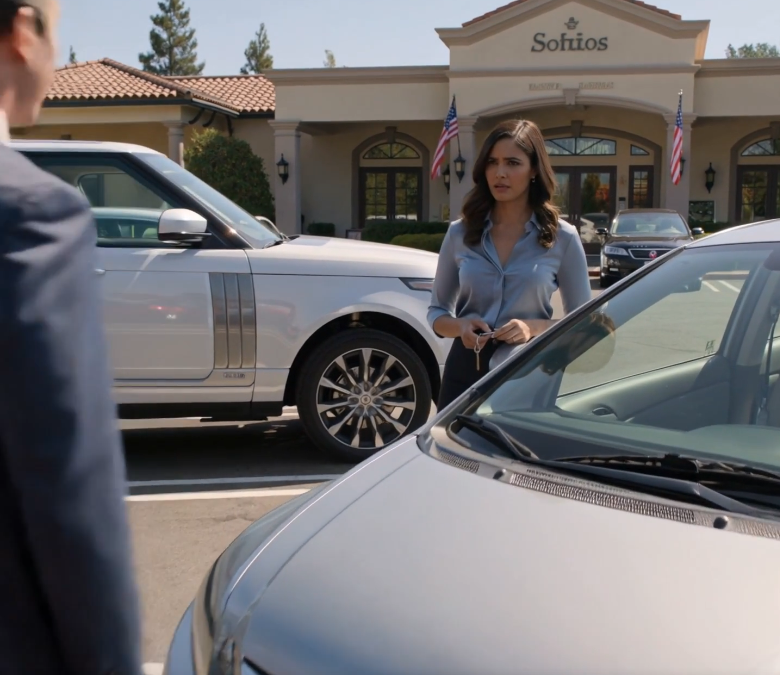
“Emma, you’re twenty minutes late.”
“Sorry, Dad. I got caught up finishing a project proposal.”
“Another one of your computer projects?” Victoria had asked dismissively as she walked up in her designer heels and two-thousand-dollar dress. “How are the keyboard lessons going?”
“I teach comprehensive technology skills to underprivileged children.”
“Right, charity work,” Marcus had chimed in, straightening his five-hundred-dollar tie. “When are you going to get serious about building a real career?”
Inside the club, the interrogation had begun in earnest.
We’d been seated at the family’s usual table in the main dining room, surrounded by the city’s elite business families. The Hendersons were at the next table. He was the mayor; she owned three boutique hotels. The Pattersons sat across the room, both surgeons who’d built a private-practice empire. The Williamses held court near the windows, real estate moguls who had developed half the city’s upscale neighborhoods.
“Look around, Emma,” Mom had said, gesturing subtly at the other families. “These are successful people. Their children drive appropriate cars, wear quality clothes, live in respectable homes.”
“I live in a perfectly good home.”
“A starter house in Milbrook,” Victoria had scoffed. “That’s where college graduates live for two years before moving up to something better.”
“Some of us care more about mortgage-free living than impressing neighbors,” I’d replied.
That was when Marcus had really gotten started.
“Mortgage-free? Emmy, you’re thirty-one. You should be building wealth, not just avoiding debt. You should be investing in appreciating assets, not just scraping by.”
“I am.”
“Investing in what, your Honda?” Victoria had laughed. “That thing is ten years old.”
“It’s seven years old, and it’s reliable.”
Dad had shaken his head sadly.
“Sweetheart, we’re trying to help you understand something important. Success isn’t just about being comfortable. It’s about building something impressive, something that commands respect.”
“Like what Marcus has built?” I’d asked.
Marcus had smiled proudly.
“Exactly. I’m a senior partner at Henderson Morrison and Associates. I bill four hundred dollars an hour. I drive a Porsche 911. I live in a downtown penthouse, and I’m closing on a vacation home in Aspen next month.”
“And Victoria?”
“I own three high-end boutiques in the shopping district,” Victoria had announced. “My stores generated 1.2 million in revenue last year.”
“That’s impressive,” I’d said genuinely.
“Now tell them what you do,” Mom had prompted hopefully.
“I run educational programs that teach technology skills to children who can’t afford computers at home.”
The table had fallen silent.
Around us, I could see members of other prominent families enjoying their conversations about business deals, investment portfolios, and vacation homes.
“That’s nice,” Dad had said finally. “But what’s your five-year plan? What are you building toward?”
“I’m building toward helping more children gain access to technology education.”
Marcus had sighed heavily.
“Emma, that’s not a business plan. That’s a hobby with good intentions.”
“I disagree.”
“Look, I appreciate that you want to help people,” Victoria had said in the condescending tone she’d perfected over the years, “but you can’t live your whole life as a volunteer. You need to think about your future, your retirement, your ability to contribute meaningfully to society.”
“I believe I am contributing meaningfully.”
“By what metric?” Marcus had challenged. “How many people have you employed? How much tax revenue have you generated? What kind of economic impact are you making?”
I’d started to answer, but Dad had cut me off.
“The point is, sweetheart, we’re concerned about your long-term prospects. Teaching computer basics to kids is admirable, but it’s not sustainable as a career.”
“Why not?”
“Because nonprofits don’t pay well,” Mom had explained patiently. “Because you’re not building any equity or ownership. Because you’re essentially limiting yourself to whatever grants and donations you can secure.”
That was when Mrs. Henderson had walked over from the next table, smiling warmly at my parents.
“Robert, Linda, how lovely to see you both. And Marcus, congratulations on making senior partner. The mayor was just telling me about the brilliant legal work you did on the waterfront development project.”
Marcus had beamed.
“Thank you, Mrs. Henderson. It was a complex transaction, but we managed to structure it favorably for all parties.”
“And Victoria, I adore what you’ve done with your newest boutique. The window displays are absolutely stunning.”
“Thank you so much. We’re actually expanding into accessories next quarter.”
Mrs. Henderson had then turned to me with polite interest.
“And Emma, your parents are always so proud of you. What field are you in?”
The table had gone quiet. I could see my family tensing, waiting to see how I’d handle the question.
“I work in educational technology,” I’d said simply.
“Oh, how interesting. Are you with one of the tech companies downtown?”
“I work independently, focusing on underserved communities.”
“That’s wonderful. It’s so important to give back.”
After Mrs. Henderson had returned to her table, my family had looked at me with a mixture of pity and frustration.
“Do you see the problem?” Victoria had asked. “When successful people ask about your career, you have to give vague, apologetic answers.”
“I wasn’t apologetic.”
“You said you work independently,” Marcus had pointed out. “That’s code for unemployed.”
“I’m not unemployed.”
“But you’re not really employed either,” Dad had said. “You’re doing freelance work, project to project, grant to grant. There’s no stability, no growth potential, no real business foundation.”
The conversation had continued like that for another hour, with my family systematically dismantling every aspect of my life choices.
My career was unsustainable. My income was inadequate. My living situation was embarrassing. My car was a reflection of failure.
The final straw had come when we were leaving the restaurant.
“At least promise us you’ll think about making some changes,” Mom had pleaded as we walked toward the parking lot.
“What kind of changes?”
“Get a real job with a real company,” Marcus had said. “Something in corporate training or educational consulting. Use your skills in a way that pays properly.”
“And buy a decent car,” Victoria had added. “Something that doesn’t make people feel sorry for you.”
That was when Marcus had exploded about my Honda, shouting loudly enough for half the parking lot to hear.
Now, thirty minutes later, I was driving home with Marcus’s red Porsche following close behind me in my rearview mirror. He’d clearly decided our conversation wasn’t finished, probably planning to deliver one final lecture about responsibility and realistic expectations.
I lived in Milbrook, a middle-class neighborhood that Marcus and Victoria both considered beneath their standards. The houses were modest but well-maintained, with small yards and single-car garages. It was exactly the kind of place that successful professionals moved away from as quickly as possible.
As I pulled into my driveway, I could see Marcus parking behind me, already shaking his head at the sight of my simple two-story house. It was painted white with blue shutters, had a small front porch, and looked like every other house on the block. Nothing impressive. Nothing that would command respect at country club gatherings.
Marcus got out of his Porsche and walked toward me with the determined stride of someone who’d spent the entire drive preparing his arguments.
“Emma, I followed you because we need to finish this conversation.”
“What conversation?”
“The one about your future. About making better choices.” He gestured at my house. “Look at this place. It’s fine for a starter home, but you’ve been here for four years. When are you going to upgrade? When are you going to start building real equity?”
“I own this house outright, Marcus.”
“That’s not the point. The point is growth, progression, moving up in the world.”
He looked at my Honda sitting in the driveway.
“And that car needs to go. I don’t care if it runs fine. It makes you look like you’re struggling.”
“I’m not struggling.”
“Then prove it. Show me one thing in your life that demonstrates success. One thing that shows you’re building wealth instead of just scraping by.”
I looked at my brother, who had spent the entire evening lecturing me about appearances and status symbols, who was so concerned about what other people thought that he couldn’t see past his own assumptions.
“Marcus, since you’re so concerned about cars, would you like to see my collection?”
“Your collection?” He snorted. “What? Do you have two Hondas hidden somewhere?”
I walked to my garage and pressed the button on my key fob. The large door began to rise slowly.
“These are my weekend cars,” I said as the door revealed the contents of my garage.
Inside the spacious three-car garage sat a midnight-blue Lamborghini Huracán EVO, a silver Aston Martin DB11, and a black Ferrari 488 GTB.
Their combined value was approximately $750,000.
Marcus stood frozen in my driveway, his mouth hanging open, his carefully prepared lecture forgotten.
“What? How? Where did you get these?”
“I bought them,” I said calmly, walking over to run my hand along the Ferrari’s sleek surface.
“With what money? You work at a nonprofit making thirty-five thousand a year.”
“Marcus, you’re absolutely right that I work with underprivileged children. What you don’t know is that I don’t work for a nonprofit organization. I own several of them.”
“What do you mean, you own them?”
“Future Minds Foundation, Digital Dreams Initiative, and Technology Access Alliance. Combined, we serve over fifteen thousand children annually across twenty-three states.”
Marcus was still staring at the cars, his brain trying to process what he was seeing.
“But that doesn’t explain how you can afford—”
“Because those foundations are funded by my primary business. The one you’ve never bothered to ask about despite dismissing it as ‘computer projects’ for the past eight years.”
I pulled out my phone and showed him the app I’d been working on during family gatherings, the one they all thought was me playing with technology.
“Digital Learning Dynamics. We create comprehensive educational software platforms for schools, corporations, and government agencies. Our annual revenue last year was sixty-seven million dollars.”
Marcus’s face went completely white. He grabbed onto his Porsche for support.
“Sixty-seven million?”
“Sixty-seven point three million in revenue, with a net profit of thirty-one point eight million. We have active contracts with 1,247 school districts, eighty-nine Fortune 500 companies, and twelve government agencies.”
I opened the hood of the Lamborghini, revealing the pristine V10 engine.
“This particular car cost $267,000. I paid cash because I don’t believe in financing luxury items.”
“You paid cash for all three cars?”
“The Aston Martin was $198,000. The Ferrari was $280,000. I also paid cash for this house, which I had completely renovated and expanded last year.”
Marcus looked around my property with new eyes, suddenly noticing details he’d missed.
The driveway wasn’t just concrete. It was decorative pavers that probably cost $15,000. The landscaping wasn’t simple. It was professionally designed and maintained. The garage wasn’t standard. It was oversized and climate-controlled.
“Emma, I don’t understand. If you have this much money, why do you live so normally?”
“Because I value substance over appearances. Because I’d rather invest in my business and my charitable work than in impressing people at country clubs. The Honda gets excellent gas mileage, it’s reliable, and it doesn’t make me a target for theft or carjacking. It’s practical daily transportation.”
I walked him around to the side of the garage, where he could see into my home office through a large window.
Inside was a technology setup that would make most corporations jealous: twelve large monitors arranged across three workstations, servers humming quietly in a climate-controlled rack, and equipment worth at least $150,000.
“This is where I built Digital Learning Dynamics. This is where I manage contracts worth tens of millions of dollars. This is where I design educational programs that are transforming how children learn technology skills.”
Marcus pressed his face against the window, staring at the sophisticated setup.
“But you never said anything. You let us all think you were just doing charity work.”
“I am doing charity work. That’s the point you’re missing. My business generates enough profit that I can fund extensive charitable programs while still building personal wealth.”
My phone rang, interrupting our conversation. I glanced at the screen and saw it was Dr. Sarah Chin from Harvard University.
“Excuse me. I need to take this. Hello, Dr. Chin.”
“Emma, excellent news. The university board has approved your proposal. Harvard will be implementing Digital Learning Dynamics across all our computer science and education programs starting next semester.”
Marcus’s eyes widened as he read the caller ID on my phone screen.
“That’s fantastic, Dr. Chin. What’s the contract value?”
“$12.7 million over four years, with automatic renewal options. This will be the largest educational technology contract in Harvard’s history.”
“I’m honored. My development team will begin customization immediately.”
After I hung up, Marcus was staring at me like I was a complete stranger.
“Harvard University. You just signed a twelve-million-dollar contract with Harvard.”
“One of many. We also have active contracts with Stanford, MIT, Yale, Princeton, and Caltech.”
“All the Ivy League schools?”
“Most of them, plus major state universities, community colleges, and specialized institutions. Education is a $750 billion industry, Marcus. Technology spending in education grows by fifteen percent annually.”
I unlocked my phone and showed him our client dashboard.
“These are our current active contracts. Total value: $347 million over the next five years.”
Marcus sat down heavily on my decorative stone retaining wall, looking like he might faint.
“Three hundred forty-seven million dollars in confirmed contracts?”
“Yes. We also have eighty-nine million in pending proposals and $156 million in renewal options.”
“Emma, how long have you been doing this?”
“I started Digital Learning Dynamics nine years ago, the summer after I graduated from MIT.”
“MIT? You went to MIT?”
“Full academic scholarship plus a research fellowship. Master’s in computer science with a specialization in educational technology.”
Marcus put his head in his hands.
“We all thought you went to state university.”
“Because when I tried to tell you about MIT, Dad interrupted to talk about your law school graduation, and the conversation never came back to my education.”
I walked over to the Ferrari and opened the driver’s door.
“Would you like to see the rest of the property? There are some other things you might find interesting.”
“There’s more?”
I started the Ferrari. The engine roared to life with a sound that probably woke half the neighborhood, and I gestured for Marcus to follow me in his Porsche.
We drove around to the back of my property, where what appeared to be a small guesthouse sat among mature oak trees.
“What’s that building?”
“My primary development facility. The home office is for routine administrative work. This is where we create the actual software products.”
I used a key card to open the building, revealing a state-of-the-art technology laboratory that looked like something from a major corporation’s R&D department.
Marcus walked through the facility in complete bewilderment, looking at servers, development workstations, testing equipment, and prototyping stations worth more than most people’s annual salaries.
“This lab cost $3.8 million to build and equip,” I explained. “We develop and test all our educational software here before deployment.”
“You built a $3.8 million laboratory behind your house?”
“I needed a secure, private development environment. Commercial real estate would have been more expensive and less convenient.”
Marcus stopped in front of a wall covered with patents, awards, and certificates.
“What are all these?”
“Patents for various educational technology innovations. Awards from the Department of Education, the National Science Foundation, and various educational organizations. Certifications for security, accessibility, and educational effectiveness.”
He pointed to a framed certificate.
“Is that you with the Secretary of Education?”
“Last year’s National Education Technology Conference. Digital Learning Dynamics won the innovation award for our adaptive learning algorithms.”
Marcus studied the wall more carefully, reading award after award.
Outstanding Contribution to Educational Technology.
Entrepreneur of the Year, Technology Sector.
Innovation Leadership Award.
Educational Excellence Recognition.
“Emma, why have you never shown us any of this?”
“When would I have shown you? Every family gathering is spent listening to you and Victoria describe your accomplishments while dismissing mine as unimportant hobby work.”
I sat down at one of the development workstations and logged into our company dashboard.
“These are our real-time business metrics. Currently, 1.3 million students are actively using our learning platforms. Our software is deployed in forty-seven states and eighteen countries. Today’s revenue will be approximately $290,000.”
“Per day?”
“Per day. Which means that while you were lecturing me about getting a real job, we earned more than most people make in five years.”
Marcus stared at the numbers scrolling across my monitors: active users, completed lessons, revenue streams, profit margins.
“And the charitable work?”
I opened another application.
“Future Minds Foundation has donated $18.7 million to educational programs over the past five years. We’ve built forty-seven computer laboratories in underserved schools, provided full college scholarships to 156 students, and trained over eight hundred teachers in advanced technology skills.”
“Eighteen point seven million dollars in direct charitable giving?”
“Yes. Plus the donated time and software licenses, which adds another twenty-three million in value.”
Marcus was quiet for a long time, just absorbing the scope of what I’d built.
“The country club,” he said finally.
“What about it?”
“When Mrs. Henderson asked about your work and you said you worked in educational technology…”
“I was being accurate. I do work in educational technology.”
“But you made it sound so small. So unimportant.”
“I made it sound honest. I didn’t feel the need to announce my net worth to someone I barely know.”
“What is your net worth?”
I considered the question carefully.
“Between the business valuation, real estate holdings, investment portfolio, and liquid assets, approximately ninety-four million dollars.”
Marcus made a choking sound.
“Ninety-four million?”
“It fluctuates based on market conditions and business performance, but yes. That’s the current estimate.”
“Emma, you’re worth ninety-four million dollars, and we’ve been treating you like a charity case.”
“You’ve been treating me like someone whose work doesn’t matter because it doesn’t produce visible status symbols.”
My phone buzzed with a text message. I glanced at it and smiled.
“What is it?”
“The Department of Defense. They want to discuss adapting our educational technology for military training applications. Potential contract value: forty-seven million dollars.”
“The Pentagon wants to hire you?”
“Educational technology and training technology use very similar frameworks. Our adaptive learning algorithms could revolutionize how the military trains personnel.”
I showed him the text message, which included a request to schedule a meeting with senior officials at the Pentagon.
“This would be our first major government defense contract. It could open up an entirely new market segment.”
Marcus looked around the laboratory, finally understanding the scale and sophistication of what I’d built.
“When you were working on your laptop during family dinners…”
“I was usually reviewing contract proposals, managing development projects, or communicating with clients. The work doesn’t stop just because it’s Sunday dinner.”
“And when we told you to stop playing with computers…”
“You were telling a multimillionaire CEO to abandon the business that was generating more revenue in a month than most people see in a lifetime.”
We walked back toward the house, where my three supercars sat gleaming in the garage like a very expensive rebuke to every assumption my family had made about my success.
“Emma, I owe you the biggest apology of my life.”
“Yes, you do.”
“We’ve been completely wrong about everything. About your work, your success, your choices.”
“You’ve been so focused on what success looks like from the outside that you never bothered to find out what it actually looks like on the inside.”
Marcus looked at his red Porsche, which suddenly seemed much less impressive parked next to my collection.
“Your Honda…”
“Is practical daily transportation that doesn’t draw unwanted attention or make me a target for theft. When I want to enjoy performance driving, I have options.”
“And your house…”
“Is paid for, customized to my needs, and provides the privacy and security necessary for running a multimillion-dollar technology business.”
“And your clothes…”
“Are comfortable and appropriate for my work environment. I don’t need designer labels to validate my success.”
My phone rang again. This time, it was my CFO, Janet Rodriguez.
“Hi, Janet.”
“Emma, I wanted to give you the final numbers for Q4. Revenue was $21.4 million, up forty-three percent from last quarter. Net profit was $12.8 million.”
Marcus’s jaw dropped as he overheard the numbers.
“Excellent. What’s our cash position?”
“$31.7 million in liquid assets, plus the eighteen million in the expansion fund.”
“Perfect. Go ahead and authorize the new East Coast facility.”
“Already in progress. The Boston Development Center will be operational by March.”
After I hung up, Marcus was staring at me with something approaching awe.
“Thirty-one million dollars in cash?”
“Operating capital. We maintain significant liquid assets to fund expansion, handle large development projects, and weather any economic downturns.”
“And you’re opening another facility?”
“Our third major development center. We have the main facility here, a secondary center in Austin, and now Boston. The East Coast location will help us serve our Ivy League clients more effectively.”
Marcus sat down on my front steps, overwhelmed by the scope of everything he’d learned.
“Emma, how can we ever make this up to you? How can we apologize for years of treating you like a failure when you were building an empire?”
I considered his question carefully.
“You can start by understanding that success comes in many different forms. You can stop judging people’s worth by their possessions. And you can recognize that the most successful people often don’t need to advertise their achievements.”
“What else?”
“You can acknowledge that my work helping children gain access to technology education is not just valid, but vital. The students we serve today will become the technology leaders of tomorrow.”
“Done. Absolutely done.”
“And you can stop being embarrassed by my Honda. It’s a reliable car that serves its purpose well.”
Marcus laughed, the first genuine laugh I’d heard from him all day.
“I promise never to complain about your Honda again.”
My phone buzzed with a text from Victoria.
Marcus, what’s taking so long? Did you finish explaining to Emma why she needs to get her life together?
I showed Marcus the message.
“What should I tell her?” he asked.
“Tell her that I’ll be happy to discuss my life choices at next month’s family gathering. And tell her I might drive something different to the country club.”
“Which car will you take?”
“I haven’t decided yet. Maybe the Lamborghini. It’s been a while since I took it out for a proper drive.”
Marcus looked back at the garage, where three supercars worth three-quarters of a million dollars sat waiting.
“The family is going to be shocked.”
“Good. Maybe next time they’ll ask questions about people’s lives instead of making assumptions.”
As Marcus prepared to leave, he turned back to me one more time.
“Emma, can I ask you something personal?”
“Sure.”
“When I was shouting at you about your car being embarrassing, what were you thinking?”
I smiled, remembering my exact thoughts from three hours earlier.
“I was thinking that you cared more about impressing strangers at a country club than you did about understanding your own sister’s accomplishments.”
“And now?”
“Now I’m thinking that maybe this family can learn to value substance over appearances.”
Marcus got back into his Porsche, which looked significantly less impressive than it had when he’d followed me home.
“Emma?”
“Yes?”
“Thank you for not giving up on us, even when we gave up on you.”
As I watched his taillights disappear down Milbrook Drive, I realized that sometimes the best response to judgment isn’t argument or explanation. Sometimes it’s simply letting people follow you home and discover how wrong their assumptions have been.
My phone started ringing almost immediately.
First Victoria, then Mom, then Dad.
Marcus had clearly made some urgent phone calls.
I let them all go to voicemail.
Tomorrow would be soon enough for conversations about respect, success, and the difference between appearing wealthy and actually being wealthy.
But tonight, I was going to take the Ferrari for a drive through the city with all its windows down and its engine singing, just because I could.
After all, when you’ve built a ninety-four-million-dollar fortune by age thirty-one while simultaneously running charitable programs that have helped fifteen thousand children, you’ve earned the right to enjoy your success—even if you prefer to keep it quietly parked in an unassuming garage.








