My sister sent me a message saying, “don’t come to mom’s retirement party. she doesn’t want you there,” and dad liked the message. i just replied, “cool, i’ll stop paying for the venue” then …
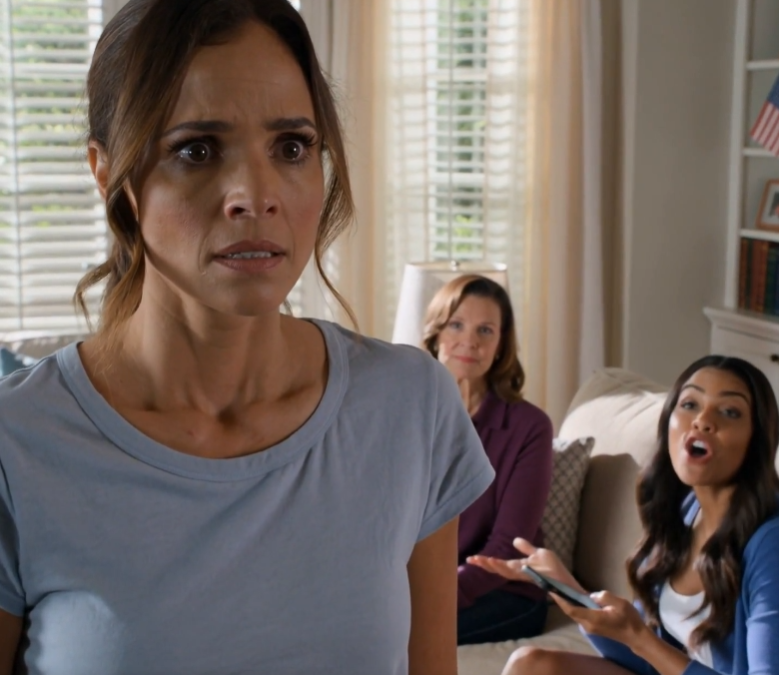
Hi, I’m Violet Bloom, a thirty-year-old woman living in a quiet apartment in the city.
It happened at exactly 10:42 p.m. on a Tuesday.
I was sitting on my couch, tired from a long day at work, when my phone buzzed on the coffee table. The screen lit up with a notification from my sister, Natalie. I picked it up, expecting a question about the balloons or the catering schedule.
Instead, I saw seven words that stopped my heart.
“Don’t come to Mom’s retirement party.”
I stared at the screen. I didn’t blink. I didn’t breathe. At first, I thought it was a joke, or maybe some kind of mistake. Then a second notification appeared directly underneath it.
Dad liked “Don’t come to Mom’s retirement party.”
That little thumbs-up icon felt like a slap across the face. It was casual. It was cold. It was final.
I sat there in the silence of my living room, freezing despite the blanket across my lap. I had spent months planning this party. I had paid for the venue, the food, the flowers. I had done everything I could to make it perfect for them.
And with one text message and one click of a button, I had been uninvited from my own hard work.
But before I tell you how everything flipped, like and subscribe. Drop a comment and tell me where you’re watching from.
I didn’t cry immediately. I just stared at the phone until the screen went black, reflecting my own stunned face back at me.
You might think I screamed. You might think I threw the phone across the room and shattered it against the wall. Maybe you think I called them immediately and demanded an explanation. A normal person might have driven straight to their house, pounded on the door, and shouted, “What is this? Is this a joke?”
I didn’t do any of that.
I just sat there.
The silence in my apartment was heavy, pressing against my ears like water. My heart beat a slow, hard rhythm against my ribs.
Thump. Thump. Thump.
But my hands were perfectly still.
To understand why I didn’t scream, you have to understand my role in the Bloom family. You have to understand the architecture of our house—not the physical bricks and wood, but the emotional structure we lived inside.
Every family has roles. They’re like costumes assigned to us at birth, or maybe they develop slowly over time, stitched together through thousands of tiny moments of reinforcement.
There was the star.
That was Natalie.
She was the golden child, the one whose emotions dictated the weather inside our house. If Natalie was happy, the sun was shining. If Natalie was upset, it was a hurricane, and everybody had to board up the windows.
Then there were my parents, the audience. They watched the star. They applauded her highs and panicked at her lows.
And then there was me.
Violet.
I wasn’t the star. I wasn’t the audience.
I was the stage manager. I was the crew. I was the backbone.
For thirty years, I had been the one who made things work. I was the grease in the gears. If something broke, Violet fixed it. If something cost too much money, Violet paid for it. If feelings got hurt, Violet smoothed them over.
I was the woman dressed in black, standing in the shadows, making sure the spotlight hit Natalie exactly right.
Sitting there on my couch with the words Don’t come burning in my mind, a memory surfaced. It wasn’t random. It was the moment my role in the family had been cemented.
I was sixteen. Natalie was fourteen.
It was a Tuesday night, much like this one, and the air inside our house was thick with tension. Natalie wanted a dress for the spring formal. Not just any dress. She wanted a floor-length cerulean-blue silk gown from the boutique downtown.
It cost three hundred dollars.
My father sat at the kitchen table with his head in his hands, staring at a stack of bills. My mother stood by the sink, wringing a dish towel as though she were trying to strangle it.
“We can’t do it, Nat,” Dad said, his voice exhausted. “The transmission on the van just died. We don’t have three hundred dollars for a dress you’re going to wear once.”
That was the trigger.
Natalie didn’t just cry. She exploded.
She screamed that her life was over. She screamed that she was the only girl at school who looked like trash. She swept a stack of mail off the counter and sent it scattering across the floor.
“I hate you!” she shrieked, her face turning a blotchy red. “I hate this house. I hate being poor!”
Then she stormed upstairs and slammed her bedroom door so hard the pictures on the hallway wall went crooked.
My parents didn’t discipline her. They didn’t tell her to come downstairs and pick up the mail.
They collapsed.
Mom started crying, soft, defeated sobs. Dad looked as if he’d aged ten years in ten seconds.
“I don’t know what to do,” Mom whispered. “She’s going to be miserable for weeks.”
I was standing in the doorway holding my backpack.
At the time, I had a job bagging groceries at the supermarket. I made $5.25 an hour. I’d been working every weekend for six months, saving for a used Honda Civic so I wouldn’t have to take the bus during my senior year.
I had exactly $312 hidden inside a hollowed-out book in my bedroom.
I looked at my mother’s tears. I looked at my father’s slumped shoulders. I listened to Natalie’s sobbing echoing from upstairs.
I couldn’t stand the misery. I couldn’t stand the noise. It felt like the walls were closing in.
So I made a choice.
I chose peace.
I walked upstairs, past Natalie’s room where she was still wailing, and went to my bookshelf. I pulled out the hollowed book and took the money.
It was a thick stack of ones and fives that smelled like old paper.
Then I walked to the mall.
It took me forty minutes.
I bought the dress.
When I came home, I walked into Natalie’s room and laid the garment bag across her bed. She sat up, her eyes swollen and puffy. She unzipped the bag, and the blue silk spilled out.
She didn’t say thank you.
She squealed.
She grabbed the dress and rushed to the mirror.
“Oh my God! Daddy changed his mind!” she yelled.
I stood in the doorway.
“Daddy didn’t buy it,” I said quietly. “I did.”
She paused for half a second. She looked at me.
Then she turned back toward the mirror.
“Well, thank God someone did. Does it make my hips look big?”
Downstairs, the relief was palpable.
Mom made spaghetti that night, Natalie’s favorite, and suddenly the house felt warm again. The war was over.
“You’re such a good big sister, Violet,” Mom said while piling cheese onto Natalie’s plate. “You really saved the day.”
Nobody asked if I had any money left.
Nobody asked about the car I’d been saving for.
Nobody asked why a sixteen-year-old girl had just been required to bail out the family’s finances.
They simply accepted the peace I’d bought for them.
I never got the car.
I rode the bus for another year.
And I learned a dangerous lesson that night.
My value came from my utility.
If I fixed things, they would love me.
If I paid for things, there would be peace.
That pattern became my life.
When I was twenty-two and fresh out of college, Dad lost his job at the plant. He was unemployed for six months. I was working my first corporate job, an entry-level administrative assistant position, barely earning enough to cover my own rent.
One Sunday, I came home for dinner and saw a red envelope sitting on the counter.
Final notice.
The electricity bill.
Dad was pretending to read the newspaper, but his hands were shaking. Mom was outside in the garden, hiding.
I didn’t say a word.
I took the bill. I went to the ATM. I deposited half my paycheck into their account.
The lights stayed on.
Dad never mentioned it. He was too proud.
But his hands stopped shaking.
I bought his dignity back.
The cost was my own savings.
When Natalie got a DUI in college, I was the one who drove three hours at two in the morning to bail her out. I still remember the police station—the smell of stale coffee and floor wax, the fluorescent lights that made everybody look sick.
Natalie sat on a metal bench with mascara running down her face, smelling like cheap vodka.
When she saw me, she didn’t apologize.
She rolled her eyes.
“Took you long enough,” she slurred. “Did you call Mom and Dad?”
“No,” I said as I signed the paperwork. “I didn’t want them to worry.”
“Good,” she snapped. “Don’t be a snitch.”
I paid the bail. I drove her home. I found her a lawyer. I paid the retainer.
I kept the secret.
And somewhere along the way, I became invisible.
My reliability made me boring.
I was like running water or electricity. You only notice it when it stops working. Nobody walks into a room and says, “Thank you, light switch, for turning on.”
You just expect it to work.
And when it doesn’t, you kick the wall.
My family assumed I would always be there. They assumed I had no feelings, no limits, no need for appreciation. They treated me like a machine designed to dispense solutions and cash.
And that machine was currently planning the biggest party of the year.
My mother was retiring after thirty years of teaching third grade. In our small town, it was a huge deal. She had been talking about this day for five years.
She wanted a gala.
She wanted elegance.
She wanted to impress the other teachers and the church ladies.
“I want to feel like a queen, Violet,” she told me over coffee three months earlier, her eyes shining. “Just for one night. I want everything to be perfect.”
“I’ll handle it, Mom.”
The words came out automatically.
“I’ll make it perfect.”
And I did.
Or, at least, I was doing it.
I poured myself into that party. I treated it like a second job.
I found the venue, a beautiful botanical garden with a glass ceiling. It cost $3,800 just to rent the space for four hours.
I paid the deposit from my savings.
I hired a caterer who specialized in French cuisine because Mom loved French food. I went to the tasting alone because Natalie was busy with yoga and Mom had a headache.
I sat there eating tiny quiches by myself and taking notes on napkins.
That was another $2,000 down payment.
I booked a jazz trio because Dad hated DJ music.
“Real instruments,” he always said. “None of that computer noise.”
So I found the best trio in the state.
I spent weeks—literal weeks—scanning three hundred photographs from our old family albums. Every night, I sat at my dining table until midnight while the scanner hummed beside me.
I fixed the colors on my computer. I removed scratches from photographs of Mom in the eighties. I corrected red-eye in pictures from Natalie’s birthdays.
I created a slideshow set to Mom’s favorite songs.
I designed invitations with gold foil.
I ordered a floral photo wall made from real white roses, not cheap plastic ones.
I did all of it.
Natalie said she was too overwhelmed by her part-time job at the boutique.
Dad said he didn’t understand party planning.
So it was just me.
Violet and her checkbook.
Violet and her time.
Violet and her effort.
And now, three weeks before the event—the event I had built, the event I had paid for—they sent me a text.
Don’t come.
They hadn’t just uninvited me.
They had uninvited the architect.
They had uninvited the financier.
But they were so accustomed to me being invisible that they’d forgotten I was the engine.
They thought the party simply happened by magic. They thought flowers grew themselves and food appeared out of thin air because they deserved it.
They were about to learn that magic wasn’t real.
They were about to find out exactly how much heavy lifting the invisible daughter had been doing.
I looked at the text again.
Don’t come.
The letters almost seemed to swim on the screen.
It was so casual.
There wasn’t even punctuation at the end. Just a command.
My thumb hovered above the screen while a million angry responses flooded my mind, hot and frantic.
I paid for everything.
Are you insane?
Do you know how much money I’ve spent?
After I bailed you out, after I paid the electricity bill, after I bought the dress…
I wanted to type all of it.
I wanted to list every sacrifice I’d made over thirty years. I wanted to scream through the digital void.
Then something strange washed over me.
It wasn’t peace.
It was colder than that.
It was numbness.
It was the sensation of a bone finally snapping after it had been bent for too long.
If I argued, they would call me dramatic.
“Violet is making everything about her again,” Natalie would say.
If I cried, they would call me sensitive.
“Oh, Violet, stop being a baby,” Dad would say.
If I listed everything I’d paid for, they would accuse me of being transactional.
“You only do nice things so you can hold them over our heads,” Mom would say.
There was no winning with them.
The game was rigged.
The only way to win was to stop playing.
So I typed one word.
“Cool.”
I hit send.
Then I placed my phone facedown on the coffee table.
I stood and walked into the kitchen, feeling as if I were floating slightly outside my own body. I poured myself a glass of water and drank it slowly.
The water was cold. I focused on the sensation as it moved down my throat.
My hands were perfectly steady.
That surprised me.
I expected to be shaking, but I wasn’t. My heart was beating slowly and heavily, like a war drum, but my hands were as steady as a surgeon’s.
I walked to my laptop on the dining table and opened it.
The screen glowed as it woke from sleep mode.
The spreadsheet I’d created for the party appeared.
Bloom Retirement Master Plan.xlsx.
It was a thing of beauty.
Color-coded rows. Every vendor. Every timeline. Every payment due date. Every dietary restriction for every guest.
It was a masterpiece of organization.
It was the blueprint for my mother’s dream night.
I studied it.
Blue rows for confirmed.
Green rows for paid.
Then I opened my email.
I started with the botanical garden.
I found the thread with Sarah, the event coordinator. We had exchanged thirty emails about lighting, table arrangements, and logistics.
I hit Reply.
Subject: Cancellation of Bloom Retirement Event, September 24.
Dear Sarah,
Unfortunately, due to unforeseen family circumstances, we need to cancel the event scheduled for the 24th. I am the contract holder. I understand this forfeits the deposit. Please cancel the reservation immediately and release the date.
Sincerely,
Violet Bloom
I clicked Send.
I didn’t hesitate.
I didn’t flinch.
Next came the caterer.
That one was harder, only because the chef had been so kind. But I wasn’t going to pay another two thousand dollars for a party I had been banned from attending.
Please cancel the catering order for the Bloom party. Do not deliver the food. Keep the down payment.
Send.
The florist.
Cancel.
The jazz trio.
Cancel.
The bakery making the three-tiered lemon cake with raspberry filling.
Cancel.
Then the printer handling the custom gold-foil invitations.
I called because it was late, but they sometimes worked nights.
“Hi, this is Violet Bloom. I need to stop the print order.”
“Oh, honey, we just set the plates,” the woman on the other end said. “Are you sure? There’s going to be a rush fee to stop now.”
“I’m sure,” I said.
My voice was calm.
“Stop the presses. Shred whatever you have.”
I moved down the list like an executioner.
One by one, I dismantled the party.
It had taken me three months to build it brick by brick.
It took twenty minutes to destroy.
The hardest part was the slideshow.
I minimized the browser and looked at the file sitting on my desktop.
Mom Retirement Slideshow Final.
I remembered scanning a picture of Mom holding me when I was two days old. She looked exhausted but so happy.
I remembered another picture of the two of us at the beach when I was seven, building a sandcastle before Natalie was born, before I became the servant.
My cursor hovered over the file.
If I deleted it, it was gone.
The original scans had been stored on a hard drive I’d formatted the day before while cleaning it up. The physical photographs were back in boxes in my attic, disorganized.
This video was the only coherent story of my mother’s life.
I thought about the text.
Don’t come.
I thought about Dad liking it.
Then I clicked the file and dragged it into the trash.
I right-clicked the trash bin.
Empty Trash.
Are you sure you want to permanently delete these items?
Yes.
It disappeared.
I leaned back in my chair.
The room was silent. The hum of the refrigerator suddenly seemed incredibly loud.
I waited for the guilt.
I waited to feel like a bad daughter.
That was my programming, wasn’t it?
Violet makes everyone happy.
If Violet isn’t making people happy, Violet is failing.
But I didn’t feel bad.
I felt light.
It was a terrifying kind of lightness, like dropping a heavy backpack after carrying it for thirty miles.
My shoulders physically relaxed. My jaw unclenched.
For the first time in my life, I wasn’t carrying them.
I had put the burden down.
I expected my phone to ring immediately. I expected vendors to call my mother. I expected panic.
But the night passed in silence.
The next day passed in silence.
I went to work. I sat at my desk. I answered emails.
Every time my phone buzzed, I checked it, expecting the explosion.
Nothing.
They truly didn’t know.
They were so arrogant, so disconnected from the reality of labor, that they thought the party existed independently of me.
They thought they could cut off the hand and keep the gift.
They thought the venue was booked because they were special, not because I had written a check.
It took four days.
Four days of silence.
Four days of me sleeping better than I had in years.
Then, on Saturday morning, four days after the text, the anger began.
Not because they missed me.
Not because they suddenly realized they’d been cruel.
It started because the machinery of their lives had stopped working.
I was sitting on my balcony drinking coffee and watching the sun rise over the city when my phone began to buzz.
First came a call from Mom.
Incoming Call: Mom.
I stared at it.
I let it ring.
It went to voicemail.
Then Natalie texted.
Why is the caterer asking for a refund address? He sent an email to Dad’s account saying the order is canceled.
I took a sip of coffee.
I didn’t reply.
Then Dad texted.
Violet, pick up the phone. The florist just called the house asking why we canceled the rose wall.
Then Mom again.
This time, all caps.
WHAT DID YOU DO? WHY ARE THEY CANCELLING?
I sat there, feeling the warmth of the coffee mug between my hands as the notifications piled up like storm clouds.
They weren’t asking, Are you okay?
They weren’t saying, We’re sorry.
They were asking, Where is our stuff?
They were angry that the servants’ quarters were empty.
They were angry because the magic trick had been exposed. The rabbit didn’t come out of the hat unless somebody put it there first.
I typed one final message into the group chat.
You uninvited me. The party was my gift. Since I am not welcome, neither is my gift. Good luck.
Then I switched my phone to Do Not Disturb.
They wanted a party without Violet.
They were about to get exactly that.
And I knew, with grim satisfaction, that they had absolutely no idea how to fix it.
They had three days left.
No venue.
No food.
No fixer.
Let them scramble.
Let them sweat.
I was done.
The day of the party finally arrived.
Saturday, September 24.
The universe has a cruel sense of humor, because the weather was absolutely perfect. It was one of those golden autumn evenings when the air is crisp, the sky turns a deep bruised purple, and the breeze is gentle.
It would have been magical at the botanical garden.
I could picture it clearly.
Sunset filtering through the glass ceiling. Light hitting the white-rose wall. Champagne glasses sparkling.
It would have been the kind of night people talked about for years.
Instead of standing at the party in a silk dress with a glass of Chardonnay in my hand, I was sitting on the floor of my living room in flannel pajama pants and an oversized T-shirt with a hole in one shoulder.
Bentley, my golden retriever mix, lay on his back beside me with his legs in the air, waiting for belly rubs.
He was the only family member I had left who didn’t ask me for money, judge my life choices, or uninvite me from events I had paid for.
I brushed his fur.
Swish. Swish. Swish.
The sound filled my quiet apartment.
I glanced at the clock.
7:15 p.m.
The party—or whatever remained of it—would be starting.
I couldn’t help wondering what was happening.
I knew my parents too well.
They wouldn’t cancel.
They were too proud.
They had told everyone at church, everyone at the school, and all the neighbors that tonight was the gala. Canceling would mean admitting defeat.
Worse, it would mean admitting that without Violet, they were incompetent.
They couldn’t do that.
So they would have scrambled.
They would have tried to patch something together in three days.
My phone chimed on the cushion beside me.
I picked it up.
It was my cousin Jen.
Jen was the black sheep of the extended family, mostly because she refused to play their games. She knew I did everything. She knew Natalie was a brat.
I hadn’t told Jen about the Don’t come text, but she was smart. She must have walked into the party, looked around, and immediately realized I wasn’t there.
Jen had sent a photograph.
My heart hammered against my ribs.
Do I look?
Do I really want to see this?
I tapped the screen.
The image loaded.
I had to zoom in before I could fully process what I was seeing.
A sound escaped me that was half laugh, half gasp.
They were in the garage.
My parents’ suburban two-car garage.
The beautiful botanical garden with the glass ceiling was gone.
The white-rose wall was gone.
The jazz trio was gone.
In their place was a scene that looked like a tragic yard sale.
The garage door stood open, exposing the concrete driveway. There was an oil stain on the floor near the left corner that nobody had even bothered to cover.
A plastic banner had been taped to the garage door. It sagged in the middle because they hadn’t used enough tape.
HAPPY RETIREMENT, it said in generic red letters.
It looked like something somebody would buy at a dollar store five minutes before a child’s birthday party.
Chairs were scattered across the driveway.
Not the gold Chiavari chairs I’d rented with velvet cushions.
Dirty white plastic folding chairs.
Some didn’t even match.
I recognized several lawn chairs from the shed mixed in among them.
On a card table beside Dad’s tool bench—which was still covered in screwdrivers and rags—sat boxes of cupcakes.
I zoomed in.
Plastic clamshell packaging.
I knew exactly which grocery store they’d come from.
The cupcakes were covered in neon-blue frosting that looked chemical and hard.
No three-tiered lemon cake with raspberry filling.
Just dry store-bought cupcakes sitting next to a roll of paper towels.
Then there were the guests.
Maybe twenty people stood around awkwardly, holding red plastic Solo cups.
I’d invited seventy-five.
Half the family hadn’t shown up.
Maybe they’d received the cancellation email from the venue and assumed the entire event was off. Maybe they’d heard the venue had changed to a garage and suddenly discovered other plans.
Or maybe—just maybe—they knew something messy was happening and decided to stay away.
But the most painful and strangely satisfying part of the photograph was my mother.
She stood in the center of the driveway under the harsh fluorescent light of the garage-door opener.
She was wearing the expensive floor-length silver gown she’d bought for the gala.
The dress was beautiful.
But standing on oil-stained concrete beside a tool bench and a sagging plastic banner, she looked ridiculous.
The hem dragged across the dirty floor.
She was smiling at somebody outside the frame, but it wasn’t a real smile.
I knew my mother’s smiles.
This was her I’m panicking, but I refuse to show it smile.
Her eyes were too wide. Her posture was rigid. She looked embarrassed.
She looked like a queen who had lost her castle and was trying to hold court in a shed.
Then I found Natalie in the background.
She wasn’t the sparkling princess tonight.
She wore a dress that was too short and was arguing with someone on her phone. Her hair was messy. She looked sweaty.
She wasn’t enjoying the party.
She was working.
For the first time in her life, Natalie was handling logistics.
She was discovering that ice melts.
That guests need napkins.
That music doesn’t simply happen.
Somebody has to set up the speaker.
I stared at that photograph for a long time.
Part of me—the old Violet, the good-daughter Violet—felt a sharp pang of sadness.
I had wanted my mother to have a beautiful party.
I wanted her to feel special.
I hated seeing them look trashy.
That old instinct to fix everything flared inside my chest like a struck match.
I could order pizzas, I thought.
I could call another bakery.
I could drive over there right now with my good speakers and a playlist.
I could save it.
Then I looked at Bentley.
He nudged my hand with his wet nose.
I looked around my quiet, peaceful apartment.
If I went over there, they wouldn’t thank me.
They wouldn’t hug me and say, “Oh, Violet, we were so wrong.”
No.
They would scream at me.
They would blame me for the garage.
They would say I’d ruined everything on purpose to humiliate them.
They would say the oil stain was my fault.
The bad cupcakes were my fault.
They wouldn’t see that they had done this themselves.
They had pushed the button.
They had sent the text.
They had chosen this.
I typed a reply to Jen.
Looks fun.
Her response came instantly, followed by a skull emoji.
It’s a disaster. The cupcakes are stale. Aunt Linda is drunk on boxed wine and loudly asking everybody where you are. Your mom is telling people you had a mental breakdown and couldn’t handle the pressure. Natalie looks like she wants to murder someone because she had to go buy ice.
I read one line again.
Your mom is telling people you had a mental breakdown.
Even in the middle of her garage disaster, Mom was lying to protect her image.
She couldn’t admit that she had uninvited me.
She had to make me the broken one.
I put my phone down.
I let them have their embarrassment.
They had wanted to cut me out.
This was what life looked like without me.
It looked like a garage.
It tasted like stale cupcakes.
It felt like disappointment.
I ordered myself a large pepperoni pizza with extra cheese. I opened a bottle of good red wine—the kind I would have brought to the party—and sat on my couch watching a comedy.
I laughed.
I drank wine.
I didn’t cry that night.
A strange, cold satisfaction settled inside my chest.
For the first time in my life, I let them fall.
I watched them hit the ground, and I didn’t rush over to place a pillow beneath them.
The silence didn’t last long.
The garage party was only the eye of the storm.
The next morning, the winds hit.
I woke Sunday at around nine. Normally, I would have been awake by six, worrying about cleaning up after the party or taking Mom to brunch.
Instead, I slept in.
When I checked my phone, the lock screen was full.
Nineteen notifications.
My family couldn’t accept that their failure was their own fault.
That wasn’t how the Bloom family worked.
In our house, if something went wrong, it had to be Violet’s fault.
Even if Violet wasn’t there.
Especially if Violet wasn’t there.
I made my coffee strong and black, sat at the kitchen table with the morning sun spilling over the wood, took a deep breath, and unlocked my phone.
I listened to the voicemails first.
I put them on speaker because I didn’t want those toxic voices pressed directly against my ear.
Natalie’s was timestamped 11:43 p.m. the night before.
She must have been cleaning trash from the driveway when she recorded it.
“Violet, you are literally psychotic. Do you know that? You are sick. You embarrassed Mom in front of everyone. Do you know how stupid we looked? We had to buy chips and salsa from the gas station because the food didn’t come. Aunt Linda laughed at the banner. You are so jealous. You’ve always been jealous of me and Mom’s relationship because we’re actually close. You just wanted to ruin her big day because you’re bitter and alone and you have no friends. Call me back right now.”
Her voice was high-pitched and screeching, slightly slurred.
Jealous.
I nearly laughed aloud in my empty kitchen.
I had paid for the party.
I had planned every detail.
How could I possibly be jealous of something I had built?
She was projecting.
She was jealous of my competence, so she accused me of being jealous of her.
Jealous of what?
Her ability to fail?
Mom’s voicemail was next.
8:15 that morning.
“Violet, I don’t even know what to say to you. I raised you better than this. To cancel everything without telling us, to leave us stranded like that… I was humiliated. My friends were asking why we were in the driveway. I had to lie for you. I had to tell them you were sick in the head. Why would you do this to me? After everything I’ve done for you, you are a cruel, selfish girl.”
After everything I’ve done for you.
The sentence hung in the air like smoke.
What had she done for me lately?
Had she helped me move?
No.
Had she remembered my birthday the previous year?
No.
She’d mailed a card a week late.
Had she offered to repay the deposits?
No.
She did nothing but criticize my clothes, ask me for loans, and tell me not to attend her party.
Then there was Dad’s text.
He hated leaving voicemails.
His message was short.
Your mother is devastated. She has been crying all morning. I agreed to the text about you not coming for the peace. Natalie was upset that you were taking over everything and acting bossy, and we just wanted a calm night without your drama. You blew this out of proportion. You need to apologize to your sister and your mother immediately if you want to be part of this family.
I read it three times.
My hands started shaking.
I agreed to the text… for the peace.
That was the knife.
That sentence cut deeper than anything Natalie had said.
Dad knew it was wrong.
He knew I had done all the work.
But Natalie had probably complained. Maybe she’d whined that I wouldn’t let her choose the music. Maybe I’d asked her to help with the invitations.
Natalie wanted to be the center of attention without doing any of the work, and my competence threatened her.
So she threw a tantrum.
And Dad, wanting peace, decided to throw me under the bus.
It was easier to hurt Violet than to tell Natalie to grow up.
Easier to crush Violet than to deal with Natalie screaming.
Easier to uninvite Violet than to parent Natalie.
Their peace was built on my pain.
Their comfort required my suffering.
And sitting there at my kitchen table, staring at my phone, I finally understood something.
I wasn’t a daughter to them.
I was a utility.
An appliance.
When the appliance became loud or difficult, they tried to unplug it.
And now that it had stopped working, they were kicking it.
A tear finally rolled down my cheek.
It was hot and angry.
I didn’t want to talk to them.
I didn’t want to explain, again, that they had uninvited me.
I didn’t want to point out the obvious logic.
Logic didn’t matter to them.
They were rewriting history in real time so they could become the victims.
I opened Natalie’s contact.
Block Caller.
It felt good.
Then I stared at Mom’s contact.
My finger hovered over the screen.
I couldn’t do it yet.
I wasn’t ready to cut that cord completely. Somewhere inside me was still the little girl who wanted her mommy to love her.
But I couldn’t listen to her voice anymore.
I opened the family group chat.
Mom. Dad. Natalie.
Even though Natalie wouldn’t see it now, I typed:
You told me not to come. Dad liked the message. I respected your wishes. Since I wasn’t invited, I canceled the things I paid for. That is not cruel. That is consequences. I am not jealous. I am done being the bank and the maid. Do not come to my apartment.
I sent it.
Then I muted the conversation so their replies wouldn’t appear on my screen.
I thought the worst was over.
I thought the garage party had been the climax.
I thought blocking Natalie was the end of the drama.
I was so wrong.
The garage party wasn’t the end.
It was the spark.
The real fire was coming, and it was going to burn everything down.
I spent the next week in a fog.
I went to work.
I came home.
I walked Bentley.
Bentley was my rock.
When I cried on the floor, he licked the tears from my face. When I couldn’t sleep, he rested his heavy head across my legs.
He was the only living thing in my world that offered unconditional love.
He didn’t care about parties.
He didn’t care about money.
He just wanted to be with me.
I had a work trip coming up, a short two-day conference in Chicago that I’d booked months earlier.
Normally, I would have asked my parents to watch Bentley.
They had a large fenced backyard, and Bentley knew them. Even though we were fighting, I told myself it was just the dog.
They loved Bentley.
They always fussed over him.
They wouldn’t take their anger out on an animal.
It was a practical decision. I didn’t trust a kennel, and my regular pet sitter was out of town.
On Tuesday, I texted Mom.
I have a work trip Wednesday through Friday. Can you watch Bentley? I’ll drop him off and stay in the car. We don’t have to talk. I just need him to be safe.
She replied an hour later.
Fine. Drop him off at 8:00.
She didn’t say, Love you.
She didn’t say, Okay, honey.
Just fine.
I thought it was a truce.
At least, I thought, we can agree on the dog.
I dropped Bentley off Wednesday morning.
I pulled into the same driveway that had hosted the disaster party. The banner was gone, but the oil stain remained.
I kissed Bentley on the nose.
“Be a good boy,” I whispered into his soft fur. “I love you. I’ll be back Friday.”
His tail wagged happily. To him, he was visiting Grandma.
He hopped out of the car and trotted toward the front door.
Mom opened it wearing a bathrobe.
She stood there with her arms crossed and refused to look at me.
She looked at Bentley, opened the screen door, and took the leash from my hand without letting her skin touch mine.
No hello.
No eye contact.
“I’ll pick him up Friday at five,” I said through the screen door.
She closed the main door in my face.
Click.
The lock turned.
I drove toward the airport with a bad feeling in the pit of my stomach.
A cold, heavy stone of dread.
I told myself I was being paranoid.
They’re just my parents.
They’re selfish, yes.
They’re mean, yes.
But they aren’t monsters.
They wouldn’t hurt a dog.
I should have listened to my gut.
I should have turned the car around, kicked down the door, and taken him home.
Because when I returned on Friday, the world I knew didn’t just crack.
It shattered into a million pieces.
And there wasn’t enough glue in the world to repair it.
The flight home from Chicago was turbulent.
The plane shook and dipped. The seat-belt sign kept chiming.
Normally, I’m a nervous flyer. I clutch the armrests until my knuckles turn white.
But this time, I barely noticed.
My mind was completely focused on Bentley.
The stone of dread in my stomach had become a boulder.
I hadn’t received a single picture of him while I was away.
Usually, Mom would send at least one blurry photograph of Bentley sleeping on the rug with a caption like, Lazy boy.
This time, nothing.
I landed at 4:30 p.m. and rushed to my car in long-term parking.
I didn’t even stop for coffee.
I drove directly to my parents’ house.
Everything looked normal.
The lawn was mowed.
The curtains were drawn.
It looked like the home of a respectable retired couple.
It looked like a lie.
I pulled into the driveway with my heart pounding.
I got out.
I didn’t knock.
I had a key.
The same key I used when I came over to fix their Wi-Fi, water their plants, or deliver groceries.
I unlocked the door and pushed it open.
“Mom? Dad? I’m here for Bentley.”
My voice sounded thin in the hallway.
The house was quiet.
Too quiet.
Normally, Bentley would hear the key in the lock and come thundering down the hallway, claws clicking on the hardwood, tail beating against the walls.
There was nothing.
I walked into the living room.
Mom sat in her armchair reading a magazine.
Dad was watching the news with the volume turned low.
Natalie was there too, sitting on the sofa scrolling through her phone.
They all looked up when I entered.
Nobody smiled.
Nobody looked happy to see me.
They looked smug.
There was a strange energy in the room, like static in the air before lightning strikes.
“Where’s Bentley?”
I didn’t bother with pleasantries.
Mom slowly closed her magazine and placed it on the side table, carefully aligning the edges.
Then she looked at me with an expression so calm and cold that my skin prickled.
“He’s not here.”
“Did you take him for a walk?”
I looked toward the hook near the door.
His leash wasn’t there.
“No,” Mom said.
“Is he in the backyard?”
I started toward the kitchen.
“Violet, sit down,” Dad said.
His voice was heavy and authoritative, the same voice he’d used when I was a child and I was in trouble.
“I don’t want to sit down.”
Panic was rising in my throat like a hot tide.
“Where is my dog?”
Natalie finally looked up from her phone.
She smirked.
It was tiny, fleeting, but I saw it.
Then she examined her fingernails as if she were bored.
“He was too much trouble,” she said. “He shed everywhere. He barked at the mailman. He was annoying.”
“So where is he?”
My control snapped.
“Where is he?”
Mom stood.
She smoothed her skirt.
“Your sister sold him.”
The world stopped.
The clock on the wall stopped ticking.
The television faded into silence.
“What?”
The word came out as a whisper.
“Natalie found a nice family for him,” Mom said in that terrifyingly reasonable voice. “A farm out in the country. He’ll have room to run. He’ll be happier there. He won’t be cooped up in your little apartment all day.”
“You sold him?”
I looked at Natalie.
“I got three hundred dollars for him,” she said, almost proudly. “Some guy on Craigslist. He said he wanted a hunting dog.”
A hunting dog.
Bentley was afraid of thunder.
Bentley slept with a teddy bear.
Bentley wasn’t a hunting dog.
He was a baby.
“You sold my dog.”
The words felt like broken glass inside my mouth.
“He is my dog. He’s microchipped in my name. You had no right.”
“We did it for your own good,” Dad said without looking at me. “You’re too attached to that animal. It’s unhealthy. You treat him like a child because you don’t have a real family. We thought that if he was gone, you might focus on repairing relationships with people.”
“People?” I choked. “You mean you?”
“Yes,” Mom said. “We are your family, Violet, not a dog. You chose that dog over your mother’s party. So we removed the distraction.”
Removed the distraction.
As though Bentley were a toy.
As though he were a bad habit.
They didn’t look sorry.
They looked righteous.
They looked like they had done me a favor.
They sat comfortably in their living room after selling the only thing I loved to a stranger on the internet.
And they expected me to thank them.
Something inside me died in that moment.
The good daughter died.
The Violet who wanted peace died.
The Violet who kept secrets, bailed them out, and paid their bills took her final breath and vanished.
And something else woke up in her place.
Something cold.
Something silent.
Something lethal.
I didn’t scream.
Screaming is for people who still believe they can be heard.
I knew now that these people couldn’t hear me.
They never had.
I looked at Natalie.
She was still smirking, waiting for me to cry.
She wanted drama.
She wanted tears.
I walked toward the mantelpiece.
It was covered with framed photographs.
Natalie winning a beauty pageant.
Natalie graduating.
Mom and Dad on vacation.
There were no photographs of me.
I picked up the picture of Natalie wearing her crown.
The frame was heavy crystal.
“What are you doing?” Mom asked sharply.
I didn’t answer.
I dropped it.
Crash.
The sound exploded through the quiet room.
Glass shattered.
The frame broke apart.
“Violet!”
Dad stood.
I reached for the next photograph.
It showed the perfect family at Christmas without me because I had been the one behind the camera.
I swept my arm across the mantel.
Crash.
Smash.
Clatter.
Five frames hit the floor.
Glass scattered everywhere.
“Stop it!” Natalie shrieked, jumping from the couch. “Mom, make her stop!”
I turned toward the coffee table.
A vase of flowers sat there.
Flowers I’d sent for Mother’s Day.
I picked up the vase and poured the water across the expensive Persian rug.
Then I dropped it onto the hardwood.
It exploded into ceramic shards.
“Have you lost your mind?” Mom screamed, clutching her chest. “Call the police, Frank! She’s crazy!”
I kept moving.
I wasn’t running.
I wasn’t flailing.
I moved with terrifying calm.
Methodically.
I walked toward the display cabinet where Mom kept her precious Hummel figurines.
The ones she dusted every week.
The ones she seemed to love more than she loved me.
I opened the glass door.
“Don’t you dare,” Mom whispered.
I picked up a porcelain boy holding an umbrella.
I looked at her.
“You sold my dog.”
I dropped the figurine.
It shattered.
I picked up a shepherdess.
Drop.
Smash.
Then a duck.
Drop.
Smash.
“Frank, do something!”
Mom was sobbing now.
“My collection!”
Dad grabbed my arm.
“Violet, stop this right now!”
I turned and looked directly at him.
Whatever he saw in my eyes made him recoil.
He released my arm as if my skin had burned him.
“You wanted peace,” I said. “This is what happens when you break the peacekeeper.”
I walked past him to the hallway closet.
I knew Natalie kept her expensive coats there.
The leather jacket I’d bought her for her birthday.
The winter coat she’d begged for.
I opened the closet, took out the leather jacket, and carried it into the kitchen.
Then I opened the drawer where the scissors were kept.
“No!” Natalie screamed.
She ran toward me, but the floor was covered with glass and water.
Her foot slipped.
She fell hard on her hip.
I picked up the scissors.
Snip.
One sleeve came off the jacket.
Snip.
I cut through the collar.
Then I threw the ruined leather onto the pile of broken glass.
I was destroying the carefully curated image of their lives.
The happy photographs.
The precious collectibles.
The expensive clothes.
I was showing them what their insides looked like.
Broken.
Sharp.
Messy.
“I’m calling 911!” Dad shouted.
He stood there holding the landline, his hands shaking.
“I’m calling the police.”
“Good,” I said.
I stood in the center of the living room, surrounded by destruction.
“Call them.”
I waited.
I didn’t run.
I didn’t try to leave.
I simply stood there with the scissors hanging loosely from my hand while they panicked around me.
Mom wailed over her figurines.
Natalie cried over her jacket.
Dad shouted into the phone.
“My daughter is violent! She’s destroying the house. Send someone now!”
They looked at me as though I were a monster.
But I wasn’t a monster.
I was a mirror.
I was reflecting their violence back at them.
They had destroyed something living.
A soul that loved me.
I had destroyed objects.
Objects could be replaced.
Trust couldn’t.
Soon, sirens wailed in the distance.
They grew louder.
Blue and red lights flashed against the living-room windows and illuminated the wreckage.
Two officers entered.
One was an older man with gray hair. The other was a younger woman with a stern expression.
They saw the glass.
They saw the water.
They saw me standing in the middle of it.
“Drop the scissors, ma’am,” the older officer said calmly, one hand resting near his belt.
I placed the scissors on the kitchen counter.
Then I raised my hands.
“They’re down.”
“She’s crazy!” Mom screamed, pointing at me with a trembling finger. “Look what she did! She broke everything! She’s unstable! Arrest her! She attacked us!”
Natalie was sobbing from the floor.
“She tried to stab me with those scissors!”
The officers looked at me.
They saw a woman in business-casual clothing standing perfectly still in the middle of chaos.
Then they looked at my parents, hysterical and red-faced.
“Ma’am, what is going on here?” the female officer asked.
“My name is Violet Bloom,” I said clearly.
My voice didn’t shake.
“I own a golden retriever named Bentley. He is microchipped in my name. I have his registration in my car.”
The officer blinked.
“Okay.”
“I went out of town for work,” I continued. “I asked my parents to watch him. When I came back an hour ago to pick him up, they told me they sold him.”
The female officer’s expression changed.
Her eyebrows rose.
She looked from me to my parents.
“Is that true?” she asked Dad.
Dad puffed out his chest.
“That’s a family matter. The dog was a nuisance. We found him a new home. That gives her no right to destroy my house.”
“Who sold the dog?” the officer asked.
“I did,” Natalie said from the floor.
She stood and wiped her eyes.
She still seemed convinced that she was the victim.
“I found a buyer. He paid cash. It’s done.”
“Did you have the owner’s permission?” the officer asked.
“He was in our house,” Natalie said, as though that explained everything. “We can do what we want.”
The female officer glanced at her partner.
Then she looked back at Natalie.
“Ma’am, selling property that does not belong to you is theft. Selling a companion animal without the owner’s consent is a crime. Depending on the value of the dog, it could be a felony.”
Natalie’s face went white.
“What? No. It’s just a dog.”
“It’s theft,” the officer repeated. “And receiving stolen property may be an issue for the buyer.”
“But look at my house!” Mom shrieked. “Look what she did!”
“We’ll get to the property damage,” the older officer said. “But right now, we have a theft to deal with. Where is the dog?”
“I—I don’t know the guy’s address,” Natalie stammered. “We met at a gas station. I have his number in my phone.”
“Get the phone,” the officer ordered.
Natalie scrambled to retrieve it.
She was shaking now.
The power dynamic had shifted so quickly that she could barely process it.
She had assumed the police were her personal security guards.
She hadn’t considered that the law might apply to her too.
“Call him,” the officer said. “Put it on speaker.”
Natalie dialed.
The phone rang three times before a rough voice answered.
“Yeah?”
“Hi. Um… this is Natalie,” she squeaked. “The girl with the dog.”
“Yeah. No refunds, lady.”
“No, I—the police are here,” Natalie said.
She was crying for real now.
“You have to bring the dog back. It was… it was a mistake.”
“I ain’t bringing nothing back,” the man said. “I bought him fair and square.”
The female officer took the phone from Natalie’s hand.
“This is Officer Miller with the county police,” she said, her voice turning to steel. “You are in possession of stolen property. We have your phone number, which means we can locate you. If that dog is not returned to this address within thirty minutes, I will be issuing a warrant for your arrest for receiving stolen goods. Do you understand?”
There was a long silence.
“I’ll be there in twenty,” the man finally grunted.
He hung up.
Officer Miller handed the phone back to Natalie.
Then she reached for her handcuffs.
“Natalie Bloom, please turn around and place your hands behind your back.”
“What?”
Natalie screamed.
“Mom! Daddy!”
“You are under arrest for theft,” the officer said, clicking the cuffs around Natalie’s wrists.
The sound was metallic.
Final.
“You can’t arrest her!” Dad shouted. “She’s my daughter! Arrest Violet! Look at the glass!”
“Violet Bloom will be cited for property damage,” the older officer said. “But your other daughter committed a theft. And frankly, sir, you admitted to being an accomplice.”
Dad closed his mouth.
He looked at Natalie in handcuffs.
He looked at the broken Hummel figurines.
Then he looked at me.
For the first time in thirty years, my father looked afraid of me.
We waited in silence.
Natalie sat in the back of the patrol car, crying hysterically.
My parents sat on the couch amid the ruins of their living room, refusing to look at me.
I stood beside the window, watching the driveway.
I didn’t care about the glass.
I didn’t care about the police citation I was going to receive.
I cared about one thing.
Eighteen minutes later, a rusty pickup truck pulled into the driveway.
A large man in a camouflage hat got out.
He walked around to the back of the truck.
My heart stopped.
He opened the tailgate.
Bentley jumped out.
He looked confused.
He looked terrified.
His tail was tucked between his legs, and his eyes darted wildly around the unfamiliar yard.
I burst through the front door and ran past the police officer.
“Bentley!”
He heard my voice.
His ears shot up.
Then he saw me.
He didn’t just run.
He flew.
He scrambled across the pavement, his paws slipping beneath him, moving so fast he nearly tripped over his own legs.
I dropped to my knees in the grass.
He crashed into me.
Sixty pounds of golden fur and relief.
He whined and licked my face, burying his head into my neck.
His whole body was shaking.
“I’ve got you,” I sobbed, pressing my face into his fur. “I’ve got you. I’m so sorry. I’m so sorry.”
He smelled like old cigarettes and fear.
But he was alive.
He was whole.
The man from the pickup spat onto the ground, glared at the officer, climbed back into his truck, and drove away.
He wanted no trouble.
Officer Miller walked toward me.
She watched me holding Bentley, and her expression softened.
“Is he okay?”
“He’s scared,” I said, wiping my tears. “But he’s okay.”
“Here’s the situation,” she said quietly. “Your parents want to press charges over the damage inside the house. That’s criminal mischief. It’s likely a misdemeanor because the value appears to be under the felony limit, but it’s still a charge.”
“I don’t care,” I said. “I’ll pay the fine. I’ll do the community service.”
“However,” she continued, “you can press charges against your sister for the theft and against your parents for conspiracy.”
I looked toward the house.
My mother was staring at me through the window.
Her face was twisted with hatred.
“I want to press charges.”
“Are you sure?” the officer asked. “It’s family.”
“No.”
I clipped Bentley’s leash to his collar.
“They aren’t family. They’re just people I used to know.”
I gave my statement.
I signed the papers.
I watched them put Natalie into the back of the squad car and prepare to take her to the station for booking.
As Bentley and I walked toward my car, Mom came out onto the porch.
“If you do this,” she hissed, her voice venomous, “you are dead to us. Don’t ever call us. Don’t ever come back. I will remove you from the will. I will tell everyone what you did.”
I opened the car door and let Bentley climb inside.
He curled up immediately on the back seat, exhausted.
Then I turned toward my mother.
“You already took everything that mattered,” I said. “You took my time. You took my money. You took my love. You tried to take my dog. You have nothing left that I want.”
“You’ll die alone!” she screamed as I climbed into the driver’s seat.
“Better alone than with you.”
I started the engine.
I backed out of the driveway.
I drove past the police car where my sister sat weeping.
I drove past the house where I’d grown up.
I didn’t look in the rearview mirror.
Not even once.
It has been six months.
My apartment is quiet.
It’s a Friday night.
Bentley is sleeping at the foot of my bed. Sometimes his paws twitch while he dreams, probably chasing squirrels.
Whenever he wakes up frightened, I’m there.
I pet him until he falls back asleep.
He’s happy again.
His tail never seems to stop wagging.
I pleaded no contest to the vandalism charge.
After hearing the story about Bentley, the judge gave me the minimum sentence: a $500 fine and six months of probation.
He looked at me over the top of his glasses.
“I understand the provocation, Miss Bloom,” he said. “But next time, just call us first.”
Natalie received probation too, but now she has a theft record.
She lost her job at the boutique because they didn’t trust an employee who had been convicted of stealing.
I haven’t spoken to my parents.
They tried to reach out once, about a month ago.
A letter arrived in the mail with no return address.
I opened it.
It was a bill.
My mother had handwritten a list of everything I’d broken, with inflated prices beside each item.
Hummel figurine — $400.
Picture frame — $50.
The total came to $5,000.
At the bottom, she’d written:
Pay this and we can discuss forgiveness.
I laughed.
A genuine, belly-shaking laugh.
I carried the letter into the kitchen and held a match to the corner.
I watched the paper burn until it became ash in the sink.
Then I turned on the water and washed it away.
I changed my locks the day after the incident.
I changed my phone number.
I blocked all of them on social media.
I told my boss that if anyone from the Bloom family called, the call was to be blocked.
My life is different now.
There is money in my savings account because I’m not constantly bailing somebody out.
I have free time on weekends because I’m not planning parties or running errands for ungrateful people.
I have peace.
Not the fake peace my father always wanted.
Not the kind of peace that comes from silencing the victim.
Real peace.
The peace of an empty room.
The peace of a quiet phone.
Eventually, I understood that I hadn’t lost a family.
You can’t lose something you never truly had.
I had never been a daughter to them.
I had been an employee.
A resource.
And when the resource fought back, they tried to destroy it.
So I walked away from people who never wanted my whole self.
They only wanted my usefulness.
I looked at Bentley.
He opened one eye, thumped his tail once against the bed, and went back to sleep.
I walked toward the window and looked out at the city lights.
I was alone.
Yes.
But I wasn’t lonely.
I felt full.
I felt strong.
And I whispered toward the glass, toward the city, toward the universe:
“They drew the line years ago. I finally stopped crossing it.”
If you’ve ever felt like the invisible backbone of your family, or if you’ve ever had to walk away to save yourself, let me know in the comments.
Like, subscribe, and tell me where you’re watching from.
I read every single comment.








