My sister called me “the shy new female pilot” in front of the whole squadron. She even brought back my childhood nickname, “mouse,” just to mock me. Then someone in the briefing room suddenly asked, “wait… you’re beacon?”
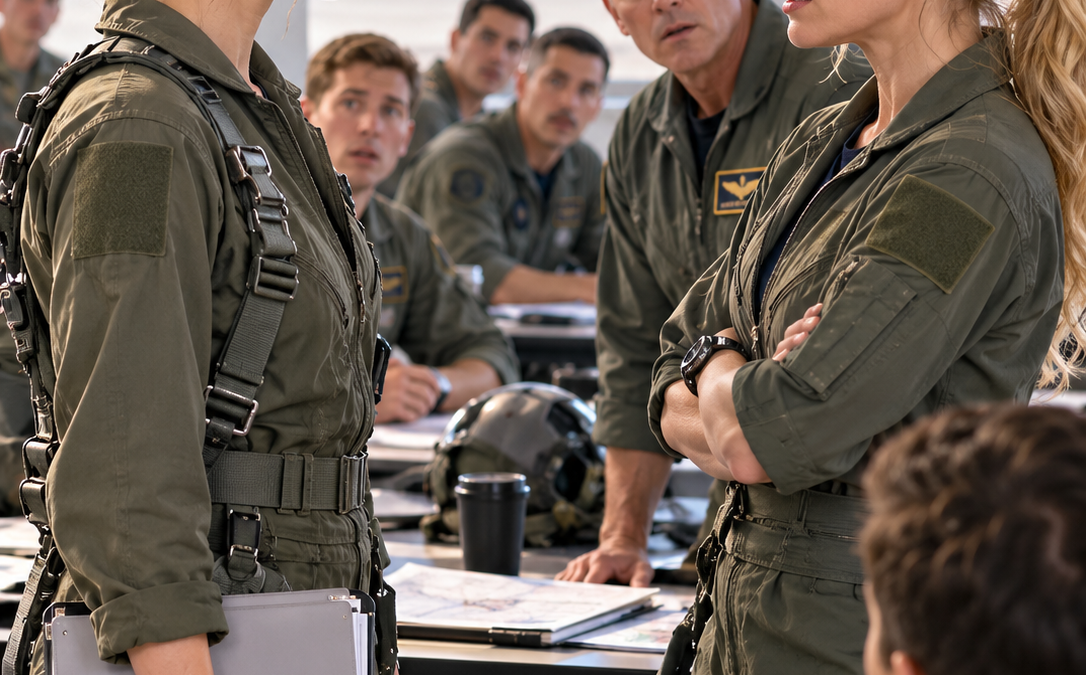
The first thing I heard when I walked into the briefing building at Naval Air Station Fallon was my sister laughing. Not talking. Not briefing. Laughing. Meredith had always had one of those laughs that carried farther than it needed to. Even when we were children, I could find her in a crowded room without seeing her. Now, surrounded by flight suits, kneeboards, coffee cups, and people trying to figure out who belonged to which squadron, that familiar laugh found me before I made it through the doorway.
Someone had asked her a question. “Bennett, you two related?”
I stopped just inside the hall. Meredith was leaning against the edge of a table with three other aviators gathered around her. She was thirty-six then, six years older than me, already a lieutenant commander and thoroughly comfortable in the kind of room where everybody seemed to know somebody. She smiled when she spotted me. “That’s my little sister.”
One of the pilots glanced in my direction. I kept walking, but Meredith didn’t lower her voice. “Don’t let the flight suit fool you. Clare’s always been the shy one.”
A couple of people laughed. Not hard, not cruelly. Just the polite laughter people offer when they think they’ve been invited into a family joke. By the time I reached the table, Meredith was looking directly at me.
“We used to call her Mouse.”
That brought another short laugh. A lieutenant standing beside her smiled and repeated, “Mouse?”
Meredith nodded. “Barely said a word when she was little. Hid behind Mom whenever strangers came over.”
I set my helmet bag down. “I still hate that nickname.”
“Really?” Meredith asked, laughing again. “See? Still sensitive.”
That earned one more chuckle. I remember noticing exactly who laughed, not because I intended to get even with anyone, but because noticing people was something I had always done. One pilot looked down at his notes instead. Another gave Meredith an uncomfortable half smile and changed the subject. The lieutenant who had repeated the nickname looked at me as though he was beginning to realize he had stepped into something he didn’t understand.
His name was Jake Mercer. He was in my squadron, and I had known him for less than two weeks. Meredith had known me for thirty years. That difference should have mattered more than it did.
I was new to the squadron, but I wasn’t new to flying. That distinction had a way of disappearing whenever Meredith told the story. I had already completed a fleet tour. I had hundreds of hours in the F/A-18 Super Hornet. I had flown at night over open water, in bad weather, and on days when the airplane seemed determined to turn a routine mission into a lesson.
Meredith didn’t mention any of that. To her, I was still the shy little sister who had somehow wandered into a flight suit. And the worst part was that I let her tell it that way.
I told myself I was being professional. We were at Fallon to train, not to settle family arguments. Starting a confrontation in front of people I had barely met would accomplish exactly nothing. So I picked up my materials and took a seat. The briefing started, and Meredith sat three rows ahead of me. She never looked back.
The following afternoon, Jake caught me near the planning spaces.
“Hey, Mouse, are you on the afternoon turn?”
“Don’t.”
He stopped immediately. No argument. No smirk. Just a quick nod.
“Got it.”
That was all. And strangely, that almost bothered me more. Jake, a man who had known me for maybe ten days, needed one word. Meredith had been hearing the same answer for most of our lives.
The flying helped. It always did.
Once the canopy came down, nobody cared who talked the loudest at dinner or who had been the favorite child at home. The jet didn’t care about any of that. It cared whether you were prepared, whether you knew where your fuel was going, whether you understood the plan well enough to recognize when the plan stopped making sense.
On one of my first training sorties at Fallon, I had a clean opportunity to stay aggressive against a simulated threat. I could have pushed it a few seconds longer and maybe forced a better result. Instead, I broke away.
During the debrief, the instructor froze the replay.
“You had more time here.”
“Yes, sir.”
“Why didn’t you press?”
“Fuel was starting to move in the wrong direction for what came next.”
He studied the display. “You probably still had the shot.”
“Probably.”
“So why leave?”
“Because the mission wasn’t to make me look good.”
Nobody reacted dramatically. No one leaned back in sudden realization that I was brilliant. That wasn’t how those rooms worked. The instructor nodded, made another point about timing, and continued. But Jake looked across the table at me for a second.
Later, while we were packing up, he said, “Your sister made you sound like you’d apologize to the airplane before pulling Gs.”
I looked at him. He raised both hands.
“I’m saying she oversold it. Meredith does that.”
He seemed as though he wanted to ask more, but he didn’t. I appreciated that.
What I didn’t appreciate was hearing Meredith later that same evening.
I was heading down a hallway toward another planning room when her voice came through an open doorway. She was talking to two aviators I recognized from another squadron. One of them asked something about me, and Meredith answered before I reached the room.
“Clare’s fine. She just gets quiet when she’s overwhelmed.”
I stopped walking.
There was a difference between telling someone your sister had been shy as a child and telling military aviators that she got quiet when she was overwhelmed. One was annoying. The other could become a professional judgment.
“Has she always been like that?” someone asked.
“Pretty much,” Meredith answered.
I stood there with one hand wrapped around the folder I was carrying. All I had to do was step through the doorway. I could have told them she was wrong. I could have explained that being quiet and being overwhelmed were not the same thing. I could have asked my sister why she was discussing my ability to handle pressure with people who might eventually fly beside me.
Instead, I kept walking.
For years, I had called that restraint. Standing there at Fallon, I was beginning to suspect there was another word for it.
I had spent enough time in airplanes to know exactly what happened to me when something went wrong. My breathing slowed. My attention narrowed. I stripped away anything that didn’t matter and worked the problem directly in front of me.
But Meredith had always been different.
When she pushed, I still felt seventeen. I still heard my mother telling me, “Just let it go.” I still heard my father saying, “You know how your sister is.” I still had the old instinct to wait for somebody else to decide she had crossed the line.
Nobody ever did.
The next morning, I arrived at the planning space early. The flight schedule had already been posted, and I ran my finger down the page until I found my name.
Bennett, C.
Beside it was the same call sign I had carried for years.
Beacon.
I was checking the rest of the event when an instructor walked past, glanced at the schedule, and stopped. He looked at the page again, then at me. His eyes returned to the word beside my name for one extra second before he continued down the hall.
I folded the schedule under my arm and walked into the next briefing. I slid into a seat near the back before the instructor could look at me again long enough to make the moment feel like a question. The room filled quickly. Boots scraped against the floor, kneeboards opened, and conversations rose and fell around me.
I told myself the glance at the schedule meant nothing. Maybe he knew another Beacon. Maybe I was doing what Meredith had always accused me of doing, thinking too much.
That thought irritated me enough to force my attention back to the briefing. It was an old reflex, doubting my own interpretation of something before I questioned hers.
Meredith had trained me well.
Not in airplanes. At home.
In my family, Meredith had always been the strong one. Nobody ever announced it. There was no family meeting where my parents sat us down and divided us into roles. It happened through smaller things, repeated so often they eventually stopped sounding like opinions.
When Meredith argued with our father, he called her determined. When I argued, he told me not to take things so personally. When Meredith took over a room, Mom said she had presence. When I stayed quiet until I knew what I wanted to say, Mom said I needed to come out of my shell.
By the time I was ten, everybody knew who we were supposed to be.
Meredith was bold. I was sensitive. She led. I followed.
The nickname started at a family cookout when I was nine. There were neighbors in the backyard, cousins I barely knew, and adults asking the usual questions.
How’s school? What do you want to be when you grow up? Why are you so quiet?
I hated that last question because there was never a good answer. If I said I wasn’t quiet, they laughed. If I said nothing, I proved them right.
Meredith was fourteen and already good at finding a weak point.
“Because she’s Mouse,” she announced.
Everybody around the patio laughed.
I looked at my mother, not because the nickname hurt that much, but because I expected her to tell Meredith to stop.
Instead, Mom smiled. “Oh, leave your sister alone.”
Meredith grinned at me.
“Mouse.”
Later, I told Mom I hated it. She was standing at the kitchen sink, rinsing dishes.
“She’s just teasing you.”
“I told her to stop.”
“You know how Meredith is.”
That sentence became background noise throughout my childhood.
You know how Meredith is.
As if her personality were weather, something the rest of us were simply expected to dress around.
Dad had his own version.
“Learn to take a joke, Clare.”
So I did. Or at least I learned to stop showing when one landed.
Meredith joined the Navy first. Our father had served years earlier, and his pride became much louder when she received her commission. Her commissioning photograph went on the wall, followed by her flight school picture, then the photograph from the day she earned her wings of gold.
Dad could tell relatives where Meredith was training and what she was working toward next. Mom knew the dates, the ceremonies, and even the names of people Meredith had mentioned once during a telephone call months earlier.
I admired my sister then. I didn’t grow up hating her. When she earned her wings, I thought she was the most impressive person I knew. For a while, Meredith liked that version of me, the little sister who watched, asked questions, and made her feel larger.
Things changed when I stopped watching and started moving in the same direction.
When I told my parents I wanted to pursue naval aviation, Dad looked surprised. Meredith looked amused.
“You sure?”
“Yes.”
“It’s not exactly a quiet-person job.”
Dad laughed. I didn’t.
Meredith tilted her head. “I’m serious. There’s a lot of pressure.”
“I know.”
She smiled as though she had already decided I didn’t.
I made it through training. Not perfectly. Nobody does. There were flights I walked away from feeling ten feet tall and others when I wanted to disappear beneath the debrief table. I made mistakes. I learned. I kept going.
When I earned my wings of gold, my parents threw a dinner. I thought the old family roles had finally become too ridiculous to survive.
Then one of my uncles asked what flight training had been like.
I opened my mouth, but Meredith answered first.
“She had some confidence issues early on, but she got through it.”
I looked at her.
There was enough truth in the sentence to make correcting it difficult. I had struggled on certain flights. I had second-guessed myself sometimes. Every student pilot does. But Meredith had taken the ordinary friction of flight training and turned it into proof of something she had been saying about me since I was nine.
My uncle nodded. “Well, you made it.”
“I did.”
Dad raised his glass to both his pilots, and everybody smiled.
Just like that, my accomplishment became a family set. Meredith, the original. Clare, the second one.
When I later moved into the F/A-18 community, the pattern continued.
“You’ll have Meredith to help you.”
“Must be nice having your sister ahead of you.”
What they didn’t know was that Meredith and I almost never compared anything. She liked telling me what she had done. She rarely asked what I had done.
If I mentioned a good training event, she had completed a harder one. If I talked about a difficult period, she had survived worse. After a while, I stopped bringing much home.
Three years before Fallon, I returned from an operational tour carrying a story I still hadn’t told my family.
At Thanksgiving, Dad spent nearly twenty minutes asking Meredith about a deployment she had completed earlier. Which port had been the worst? How had the schedule been? Who was moving where?
Meredith talked easily. When there was finally a break, Dad looked at me.
“How about you, Clare? Everything good?”
I had a dozen answers.
One of them began with a night over open water, inside a cockpit that had suddenly become much busier than it was supposed to be.
I looked at him.
“Yeah,” I said. “Everything’s good.”
“Good.”
He turned back to Meredith.
Years later, sitting in that briefing room at Fallon, my phone buzzed against my leg. It was a message from Mom.
Meredith says Fallon is going well. Proud of you girls.
I stared at the screen. She had already spoken to Meredith. She hadn’t asked me how Fallon was going.
I locked my phone and slipped it back into my pocket while the instructor at the front of the room kept talking. Somewhere beneath my irritation sat the familiar realization that my parents usually knew what Meredith thought about my life before they knew anything from me.
I kept my eyes on the briefing slide and let the irritation settle where I had learned to put most things I couldn’t use yet.
There was no point calling Mom. Not then, not from Fallon, not with Meredith somewhere in the same building, probably already giving my parents a version of the week that included me without requiring anything from me.
So I focused on the schedule in front of me.
Beacon.
The name had been mine for years, though it hadn’t started with anything dramatic. Call signs rarely did.
Mine came from planning.
I was the person who always knew the alternate field, the backup frequency, and the fuel number we needed before somebody else asked for it. During training, I had a habit of marking contingency points so thoroughly that one pilot finally stared at my kneeboard and asked, “What are you? Some kind of human beacon?”
A few people laughed, and the name stayed.
At first, Beacon was mostly a joke about how much I planned for things I hoped would never happen.
Then, three years before Fallon, something happened.
We were flying at night over water.
Nothing about the mission had felt unusual when we launched. That is one of the things people misunderstand about emergencies. They imagine you can feel them coming, some change in the air or some warning in your gut. Most of the time, the day starts like any other. The jet works. The briefing makes sense. Everybody expects to come back and complain about food or paperwork.
Then one voice changes on the radio.
The other aircraft in our flight began reporting intermittent electrical and avionics problems. Not a complete failure. That would have been simpler in some ways. Instead, systems began behaving inconsistently. One display became unreliable. Then another indication appeared. Something came back. Something else dropped out.
The pilot was still flying the aircraft. He was still talking. But I could hear his workload climbing.
Controllers were involved. Flight leadership was involved. People on the ground and in the air were doing exactly what they were supposed to do. Nobody needed a hero. What we needed was discipline.
That sounds obvious when you say it afterward. It feels different at night over black water, when a pilot beside you is trying to decide which information he can still trust.
I was afraid. I remember that clearly. My mouth went dry, and my shoulders tightened. For a few seconds, I became intensely aware of how dark the world outside the canopy was.
Being calm never meant I didn’t feel fear. It meant I had learned not to give fear the microphone.
Radio calls started stacking up. One person asked for a status update. Another transmitted information at almost the same time. The pilot answered, then corrected himself.
I had something useful to say, but I waited.
Two seconds can feel irresponsible when your instinct is to help. Yet every extra voice was another task the pilot had to process. I watched our position, checked the fuel, listened, and then transmitted the fuel figure.
“Copy,” he answered.
Nothing else.
A little later, when he needed a heading correction, I gave it to him. Short and clear. Then I stopped talking again.
I wasn’t directing the entire recovery, and that mattered. Other people were coordinating the larger problem. My job was to stay where I was useful, keep my own aircraft under control, maintain awareness of him, and avoid turning concern into noise.
At one point, his voice changed. Not panic, exactly. Something thinner, the sound of a person using nearly all the attention he had available.
“I lost it again.”
I knew what he meant.
“Copy. Stay with me.”
That was all. No speech about trust. No promise that everything would be fine. I couldn’t promise that. We simply kept working.
Eventually, a recovery plan came together, and the aircraft made it back safely. Nobody ejected. Nobody got hurt. There was no dramatic rescue photograph afterward. Mostly, there was exhaustion, the kind that arrives once your body realizes the problem is over and finally sends you the bill.
In the debrief, we walked through everything. What worked? What didn’t? What information had arrived too late? What had been unnecessary? Where had we gotten lucky?
That last part mattered. Professional aviation does not improve by turning every good outcome into evidence that every decision was good.
One of the officers reviewing the event stopped at a section of the radio timeline.
“You had information here,” he said to me. “Why didn’t you transmit immediately?”
“The frequency was already busy.”
“You thought yours could wait?”
“Yes, sir.”
“What if you were wrong?”
“Then that would have been mine to own.”
He looked back at the timeline. Another aviator farther down the table said, “Beacon fits tonight.”
There were a few tired smiles.
That was it. No ceremony. No legend being born. But among the people who had been there, and a few who later sat through the safety discussion, the call sign carried a little more meaning afterward.
I never told my family.
Not because I was hiding it. Not because anything about the night was some secret I was forbidden to mention. I simply never found the right opening.
A few days later, Mom called. I remember standing outside with the phone against my ear while she talked about Meredith.
“Your sister just found out she might get another opportunity. Your dad is so excited. Meredith thinks this could really help her career.”
I listened until she finally asked, “How are things with you?”
I looked out across the base. For once, I almost answered honestly.
“Something happened the other night.”
“Oh, yeah?”
“One of the jets had—”
“Hold on,” she interrupted. “Your dad wants to tell you what Meredith just heard.”
There was movement on the other end of the line. Then my father’s voice came through.
“Clare, did your mother tell you about your sister?”
I stood there with the sentence unfinished in my mouth.
“No.”
He told me. I listened. When he was finished, he asked if I had been saying something.
“Nothing important.”
That part was my fault. I knew it even then. My parents had created the pattern, but I had become very good at helping maintain it.
By the time I returned to Fallon three years later, Beacon was simply part of my professional life. My squadron knew it. People I had flown with knew it. A few others had heard the old safety discussion.
My parents still didn’t.
Meredith still didn’t.
I had just finished another morning briefing when I stepped into the hallway and nearly walked into the senior instructor who had paused over the schedule earlier. He looked at my name patch first.
“Bennett.”
“Yes, sir.”
His eyes stayed on me. “What did you say your call sign was?”
I opened my mouth.
“Beacon.”
Before I could say anything else, Meredith’s voice came from behind me.
“Clare.”
The instructor shifted his attention past my shoulder as Meredith walked toward us. I watched his expression change from casual recognition into the look of someone trying to connect a name with a memory.
Meredith stepped into the space between us before he could ask whatever had just occurred to him.
“There you are,” she said to me. “I’ve been looking for you.”
The instructor glanced at her name patch.
“Another Bennett?”
Meredith smiled. “Unfortunately for her, yes. I’m the older one.”
He gave a short nod, but his attention returned to me.
“Beacon,” he repeated, almost to himself.
Meredith looked at me. It was small, just a flicker, but I knew my sister well enough to recognize the moment she realized there was something about me she didn’t know.
Before either of us could say more, someone called the instructor from inside the planning room. He pointed at me once.
“I’ll catch you later.”
Then he walked away.
Meredith watched him go before turning back to me.
“Beacon?”
I adjusted the folder under my arm. “That’s my call sign.”
“I know what a call sign is.”
“Good.”
Her eyes narrowed. “How long have you had it?”
“A while.”
“What’s it supposed to mean?”
I looked at her. From most people, that would have been a normal question. From Meredith, it sounded like an accusation.
“It’s a call sign. It doesn’t have to mean anything.”
She gave me a strange smile. “You really do love making everything mysterious.”
“I wasn’t.”
“You could have mentioned it.”
“You could have asked.”
That landed harder than I expected. She stared at me for a second, then shook her head.
“Whatever.”
I walked past her. I should have felt satisfied, but I didn’t. Mostly, I felt tired.
The next training event gave Meredith something much easier to understand.
I made a mistake.
Not a dangerous one. Not the kind that damages an aircraft or puts somebody’s life at risk. It was an ordinary tactical mistake in training, the kind instructors want you to make there rather than somewhere the consequences matter more.
I recognized an opportunity too late.
The picture had been developing in front of me, and I waited for one more piece of confirmation before committing. By the time I had it, the moment was mostly gone.
In debrief, the instructor rolled the tape back.
“Right here.”
The display froze.
“What are you seeing?”
I answered. He let me talk through it, then asked, “When did you know enough?”
I pointed at the timeline. “Probably here.”
“That’s about twelve seconds earlier than when you acted.”
“Yes, sir.”
“What were you waiting for?”
“One more confirmation.”
“Did you need it?”
I looked at the screen again. “No.”
He nodded.
“So?”
“I saw it late.”
There was no reason to dress it up. I had hesitated. Not because I was afraid or because I couldn’t handle pressure. I had simply wanted more certainty than the situation required.
That was the lesson. I wrote it down, and the debrief moved on.
By dinner, Meredith had turned those twelve seconds into a personality profile.
I heard about it from Jake first. He sat across from me with his tray and looked uncomfortable before he even started talking.
“Your sister was asking about the sortie.”
I kept eating. “Okay.”
“She heard about the missed window.”
Of course she had.
“She said that’s kind of your thing.”
I stopped eating. “What thing?”
Jake hesitated.
“Hesitating.”
There it was. A real mistake. A false conclusion. Meredith’s favorite combination.
“What exactly did she say?”
“That you’ve always needed extra time when things get fast.”
I looked at him. “You believe her?”
“I don’t know.”
At least he was honest.
He leaned forward slightly. “She’s your sister. I figured maybe she knows something I don’t.”
That sentence followed me for the rest of the evening.
I’m her sister. I know her.
Meredith had been using some version of that argument my entire life. Nobody questioned it because it sounded reasonable. Family knows you.
Except sometimes family knows a version of you so old that every new fact gets forced into the same shape.
The next morning, I heard Meredith doing it again. She was talking with two pilots near the ready room.
“Clare was always like that,” she said. “She wants to be a hundred percent sure before she moves.”
One of them asked, “Even as a kid?”
Meredith laughed. “You should have seen her trying to give a presentation in high school. She froze in front of the whole class.”
That was true.
I had been fourteen. I had forgotten half of a presentation after another student laughed at me.
Apparently, Meredith had preserved the moment for sixteen years.
“She hated speaking in public,” Meredith continued. “Still does, honestly.”
I stepped around the corner.
“Meredith.”
She looked over. The two pilots went quiet.
“Can I talk to you?”
She smiled at them. “See?”
Nobody laughed.
I waited until we were several feet away before speaking.
“Stop telling people things about me that have nothing to do with flying.”
Her expression changed immediately.
“I didn’t say anything that wasn’t true.”
“That’s not the point.”
“You froze during that presentation.”
“I was fourteen.”
“You still overthink things.”
“I made one mistake yesterday.”
“I didn’t say you were a bad pilot.”
“No. You just keep giving people reasons to wonder whether I am.”
Her eyes hardened.
“That sounds like insecurity, Clare.”
I took a breath.
“You’re taking things from our childhood and using them to explain things that happen here.”
“Because people don’t magically become different people when they put on a flight suit.”
“And you don’t magically become an expert on my career because you’re my sister.”
For once, the sentence came out before I could talk myself out of saying it.
Meredith stared at me. Then she smiled, but there was nothing warm about it.
“There it is.”
“What?”
“That thing you do when somebody hits a nerve.”
I felt my jaw tighten. She saw it.
“Now you’re proving my point.”
I walked away before I said something I would have to explain to my own chain of command later.
That afternoon, I flew again. Same general problem set, different conditions. This time, the picture started developing and I felt the old instinct rise.
Wait. Confirm. Make sure.
Then I remembered the frozen debrief display.
Twelve seconds.
I acted with the information I had. Not recklessly. Not early. Just on time.
During the debrief, the instructor rolled through the same point.
“You waited last time.”
“Yes, sir.”
“Today?”
“I had enough information.”
He nodded once. “That’s the correction.”
Nothing more.
That mattered to me more than praise would have. A mistake had become a lesson instead of an identity. Meredith had never understood that distinction.
Later that day, I saw her talking to one of the more senior aviators in the building. I wasn’t close enough to hear the beginning, but I caught my name.
Then Meredith said, “She’s always been cautious. Sometimes too cautious.”
The senior aviator looked past her and saw me.
“Your sister’s Bennett?”
Meredith nodded. “Clare Bennett.”
He glanced toward me again.
“Beacon?”
Meredith’s expression stalled.
“What?”
“Your sister. Her call sign’s Beacon, right?”
For half a second, she didn’t answer. Then she recovered.
“Of course.”
The man studied her.
“You don’t know her call sign?”
“I just said I did.”
He gave her a look I couldn’t read and returned to his paperwork. Meredith turned and saw me standing there.
Neither of us said anything.
The next morning, the combined briefing room was already filling when I walked in. I took my usual seat, opened my notes, and heard someone across the room call out, “Beacon, you’re on the second event, right?”
At the front of the room, the senior instructor lifted his head. His eyes moved from the man who had called my name to me.
For a second, the room around us seemed to keep moving without him.
“Beacon?”
I looked up from my notes.
“Yes, sir.”
He took two steps away from the front table.
“Beacon Bennett?”
A few conversations nearby faded.
“Yes, sir.”
He stared at me as though he were trying to match my face to something he had seen years earlier.
“What squadron were you with before this?”
I told him.
That did it.
His expression changed.
“Wait.”
He pointed at me, not dramatically, but with the sudden certainty of somebody who had found the missing piece.
“You’re Beacon.”
This time, more people heard him.
The room didn’t become completely silent all at once. That would make a better movie than a memory. Instead, conversations died in pieces. The pilot beside me stopped flipping through his kneeboard. Someone two rows ahead turned around. Jake looked from the instructor to me.
Meredith, standing near the opposite wall with a coffee cup in her hand, stopped smiling.
The instructor came closer.
“You were the wingman on that electrical emergency off the coast a few years ago.”
“Yes, sir.”
“You stayed with the aircraft through the recovery.”
“I was part of it.”
He gave me a look that suggested he noticed the wording.
“I sat through the safety review on that event.”
I nodded. There wasn’t much else to say.
A lieutenant near the aisle asked quietly, “What happened?”
The instructor answered before I could.
“Degraded systems at night. High workload. A lot of people did good work.”
Then he looked at me.
“Especially clean radio discipline from the wingman.”
That was all he said.
No story about heroics. No claim that I had saved somebody’s life. No exaggeration.
And because of that, the words carried more weight than they would have if he had tried to turn the night into a legend.
A few of the more experienced people in the room seemed to recognize the event. Most didn’t. That was fine. I had never wanted a room full of strangers to know about it.
What mattered was the expression on Meredith’s face.
Not shock, exactly.
Calculation.
She was realizing that for years she had been telling people what kind of pilot I was while knowing less about my professional life than some instructor she had never met.
Then she laughed. Not loudly, just enough to try to pull the room back toward her.
“Leave it to Clare to keep the one interesting story she has to herself.”
Nobody joined her.
The instructor looked at her.
“That wasn’t an interesting story.”
Meredith’s smile tightened.
He continued, “It was good airmanship.”
Then he turned back toward the front and resumed the briefing.
No applause. No meaningful looks from everyone in the room. Most people went back to the job in front of them, but the joke was dead.
For the first time since we had arrived at Fallon, Meredith had thrown something at me and nobody had helped her carry it.
Jake leaned slightly toward me.
“You seriously never told her?”
“No.”
“Why?”
“She never asked.”
His eyebrows lifted. He looked across the room at Meredith.
“That’s impressive.”
“I’m not sure that’s the word.”
After the briefing, I packed my materials and headed for the hallway. I made it maybe twenty feet before I heard Meredith call my name.
“Clare.”
I kept walking until she caught up.
“What?”
She lowered her voice.
“You let me stand in there looking like an idiot.”
I stopped.
Of everything she could have said, that was the sentence she chose.
Not Why didn’t you tell me? Not Was that night bad? Not Were you okay?
Her first concern was how she had looked.
“You never asked.”
“That’s not an answer.”
“It’s exactly the answer.”
“You’ve had that call sign for how long?”
“Years.”
“And you never thought to mention what happened?”
“I tried to tell Mom once.”
She blinked.
“What does Mom have to do with this?”
“Nothing. Forget it.”
“No, don’t do that.”
“Do what?”
“That quiet little act where you say half of something and make everybody else feel like they missed some huge secret.”
I stared at her.
“There was no secret.”
“You knew what would happen if somebody recognized the name.”
“No, I didn’t.”
“You stood there and let him make me look stupid.”
“He didn’t make you look stupid.”
Her face hardened.
I could have stopped there.
I didn’t.
“You did that yourself.”
Meredith stepped closer.
“You think one good night makes you something special?”
There it was. The adjustment.
For years, the story had been that I couldn’t handle pressure. Now that she had evidence contradicting it, the story changed. One good night. One lucky event. One thing I was somehow exploiting.
“I never said it did.”
“You didn’t have to.”
“I answered his question.”
“You loved every second of it.”
That almost made me laugh.
What I had felt in that room wasn’t pride. It was embarrassment. Not because the incident had been recognized, but because my sister had just discovered something basic about me in front of strangers.
I walked away.
Over the next several days, Meredith changed tactics. She stopped saying I was inexperienced. That argument had become harder to sell. Instead, she started saying people were reading too much into Beacon.
“I mean, it was one safety event. She did her job. Clare’s always been good at looking calm.”
That last one was especially clever. It sounded like a compliment until you heard the implication.
Looking calm was not being calm.
So she began retelling the old stories. The high school presentation. The times I went quiet at family gatherings. The fact that I had always hated being the center of attention.
All true. All irrelevant.
Jake heard one of those conversations and found me afterward.
“She’s really pushing this.”
“I know.”
“She told somebody you shut down under stress.”
My stomach tightened.
That was different.
“Who?”
He told me.
I stood there for a few seconds. The old answer rose immediately.
Ignore it. Fly well. Let the work speak.
I had built half my life around that philosophy. But there was a difference between refusing to defend myself against teasing and allowing somebody from another command to establish a false professional narrative about how I performed under stress.
That afternoon, I walked into my squadron spaces and asked to speak privately with one of my leaders.
I kept it simple.
“My sister is in another squadron in the air wing. She’s been bringing personal family history into conversations about my performance.”
He listened without interrupting.
“Is she making specific claims?”
“Yes, sir.”
“What kind?”
“That I shut down under stress. That I hesitate because of things from childhood. She’s connecting personal stories to how people should interpret my flying.”
He nodded slowly.
“What are you asking me to do?”
That question mattered.
I wasn’t asking anybody to punish Meredith.
“I want it documented, and I want the boundary clear. Personal family material stays out of the professional environment.”
“That’s reasonable.”
He asked a few more questions. Dates. Who had heard what. Whether Meredith was in my chain of command.
She wasn’t.
Whether I had told her directly to stop.
I had.
He wrote things down. No dramatic reaction. No promise to fix my family. Just procedure.
When I stepped back into the hallway, my phone vibrated.
A voicemail from Mom.
I put in one earbud and started walking toward the next planning space while her voice played.
“Clare, Meredith called. She’s very upset. I don’t know exactly what happened, but I really think you two need to talk before this gets blown out of proportion.”
I kept walking, listening as my mother began explaining why Meredith was upset before asking even once whether I was.
She was still explaining Meredith’s feelings when I stopped walking and pulled the earbud out.
For a second, I stood in the hallway with people moving around me. Pilots carried folders past the doorways. Someone was arguing quietly about a schedule change. A maintenance officer headed toward another room.
Normal work. Normal noise.
And in the middle of it, my mother’s voice had managed to put me back in the same place I had been at fourteen.
Clare, don’t make this bigger than it needs to be.
I waited until that evening to call her back. Mom answered on the second ring.
“Clare, hi. I’m glad you called. Meredith is really upset.”
Not hello. Not how are you.
Meredith is upset.
I sat down on the edge of the bed.
“What did she tell you?”
“That you went to your command about her.”
“I talked to someone in my chain of command.”
“That’s what I said.”
“No, Mom. It matters how you say it.”
She exhaled. “I don’t want to get into semantics.”
“It’s not semantics.”
“What did she do that was serious enough to make this formal?”
There it was.
Not What did she do?
What did she do that was serious enough?
The burden was already on me.
“She’s been telling people I shut down under stress.”
There was a pause.
“Well, does she mean professionally?”
“She’s saying it to people I fly with.”
“She probably didn’t mean it the way you’re taking it.”
I closed my eyes.
“She told people I hesitate because of things that happened when I was a kid.”
“Clare, you do overthink things sometimes.”
“That isn’t the point.”
“I’m just saying she knows you.”
“So do I.”
Mom went quiet.
I continued before she could redirect the conversation.
“I told her directly to stop bringing family stuff into work. She didn’t.”
“Couldn’t you have talked to her again?”
“I did talk to her.”
“You know how Meredith gets when she feels attacked.”
That sentence hit harder than I expected. Not because it was new, but because it was so familiar.
“Why is that my responsibility?”
“What?”
“Why is how Meredith reacts always my responsibility?”
Mom’s tone changed.
“Don’t start turning this into something bigger.”
“I’m not.”
“It sounds like you are.”
“No. I’m asking you a simple question.”
She didn’t answer. Instead, she said, “Your father’s here.”
A few seconds later, Dad came on the line.
“Clare?”
“Dad.”
“What’s going on out there?”
I almost laughed. For years, that question had always meant What are you doing? Not What happened?
“Meredith is discussing personal family history with people in my professional environment.”
Dad sighed.
“That sounds dramatic.”
“It’s accurate.”
“She says it was joking.”
“She told people I shut down under stress.”
“You know that’s not what she meant.”
“It’s what she said.”
Dad went silent for a second, then tried a different angle.
“You’re new to this group.”
“I’m new to the squadron.”
“Right. And Meredith has years invested in relationships there.”
I felt something cold settle in my chest.
“What does that have to do with anything?”
“You don’t want people thinking there’s family drama between you.”
I stood up.
“She brought family drama into work.”
“I’m saying you both need to be smart about how this looks.”
“No. You’re asking me to be smart about how her behavior looks.”
Dad’s voice hardened.
“You’re twisting my words.”
“Then tell me what you mean.”
“I mean Meredith talks. She always has. You’re the reasonable one.”
I stared at the wall.
There it was.
The compliment I had spent my entire life paying for.
The reasonable one. The mature one. The one who could take it. The one who could let things go. The one who was supposed to absorb the impact because everybody knew Meredith wouldn’t.
“So being reasonable means I always pay for what she does?”
“That’s not fair, Clare.”
“Isn’t it? No, seriously. She says something out of line, and you call me. She gets embarrassed, and you call me. She gets angry, and somehow I’m the one you expect to fix it.”
Dad didn’t respond immediately. Then Mom came back onto the call.
“Nobody is blaming you.”
“You called because Meredith is upset.”
“We called because we don’t want this hurting either of you.”
“She’s the one doing it.”
Mom sighed.
“Just apologize for embarrassing her.”
The room went completely still around me.
“For what?”
“You know what I mean.”
“No, I don’t.”
“For taking it outside the family.”
I let that sentence sit between us.
Then I said, “She brought it outside the family first.”
Mom didn’t answer.
“She brought childhood stories into conversations with people I work with. She made claims about how I handle pressure. I asked her to stop. She didn’t.”
“We’re not saying she handled it perfectly.”
There was always a phrase like that.
Not perfectly. Too strong. Too blunt. Maybe she shouldn’t have.
Language designed to shrink what Meredith did until my reaction looked larger than the original problem.
“But you’re still calling me.”
“We’re trying to keep the peace.”
I laughed once. Not because anything was funny.
“You’re trying to keep Meredith comfortable.”
“Clare—”
“That’s what this is.”
Mom’s voice got quieter.
“You’ve been different lately.”
I felt the old instinct to apologize before I had even done anything wrong.
I didn’t.
“Maybe.”
The conversation ended badly. Not with shouting. Worse, with disappointment.
Mom said she hoped I would think about what kind of damage I might be doing to my relationship with my sister. Dad told me not to let pride get in the way.
Neither one asked what it felt like to have Meredith question my professional judgment in front of people I depended on.
Later, I sat in the car for nearly twenty minutes, my hands resting on the steering wheel.
That was the part of me Meredith understood better than anyone.
I could handle being corrected by an instructor. I could sit through a bad debrief and write down exactly where I had failed. I could admit I had seen something late. I could admit I was wrong.
But when my family told me I had overreacted, some old part of me immediately started searching for evidence that they were right.
Maybe I had made it too formal. Maybe I should have ignored it. Maybe one more conversation with Meredith would have fixed everything.
A knock on the passenger window made me jump.
Jake stood outside.
I lowered the glass.
“You okay?”
“Yeah.”
He looked at me.
“That sounded convincing.”
I almost smiled.
“Family call.”
“Ah.”
He nodded as though that explained enough, then leaned against the door.
“For what it’s worth, nobody in the squadron thinks you made this weird.”
I looked at him.
“Meredith made it weird.”
I didn’t answer. He shrugged.
“Just thought you should know.”
The next morning, my leadership handled the matter exactly the way I had hoped they would.
No spectacle. No public confrontation. Nobody treated Meredith like a criminal.
The expectation was simply made clear through the appropriate channels. Personal family material stayed out of professional discussions.
That should have ended it.
Instead, Meredith found me outside one of the planning rooms before lunch.
“You actually went to your command.”
“I told you I would if you didn’t stop.”
“You couldn’t just talk to me?”
“I did.”
“No. You lectured me.”
“I told you to stop.”
Her jaw tightened.
“You’ve always needed someone else to fight your battles.”
For a second, she got exactly what she wanted.
I felt seventeen again. I could almost see Mom standing at the sink, Dad sitting at the table, Meredith smiling because she had said something cruel enough to hurt but casual enough to deny.
Then I looked at her.
“No.”
She waited.
“I needed you to respect a boundary.”
“That’s the same thing.”
“It isn’t.”
Her face changed. Not much, but enough.
I had stopped arguing on the terms she understood.
A week later, Fallon was winding down, and the schedule for the next phase of our workup started circulating. I was scanning names and event assignments when I saw Meredith listed in a lead role for a night training evolution.
My eyes stayed on her name a little longer than they should have.
Not because I thought she was a bad pilot.
She wasn’t.
But I had watched her in enough debriefs to recognize one habit that had nothing to do with our family.
Meredith could handle being wrong.
What she couldn’t handle was admitting it before the evidence forced her to.
That habit became harder to ignore once we left Fallon and the work got tighter.
Carrier workup stripped away much of the social noise that had filled the previous weeks. The days grew longer. Schedules became denser. Briefings started earlier, debriefs ran later, and fatigue became something everyone learned to carry without announcing.
Out there, reputation mattered less than repetition. You could talk like the best pilot in the air wing, but eventually people watched enough tapes to know whether you were.
And Meredith was good.
That mattered.
The easiest version of this story would be to tell you my sister was an arrogant pilot who had somehow fooled everybody into thinking she belonged there.
She hadn’t.
Meredith belonged there.
She briefed well. She thought quickly. She had strong tactical instincts, and junior aviators listened when she spoke because a lot of the time she was worth listening to.
I watched her make decisions I agreed with completely. I watched her recognize problems before other people saw them. I watched her carry authority naturally in rooms where I still had to remind myself not to disappear into the back row.
That was exactly what made her flaw dangerous.
Meredith had spent enough years being right that she had started treating correction like an accusation.
During one training event, she held a setup longer than I thought made sense. As the margin started tightening, nothing dramatic happened. Nobody violated a safety limit. Nobody came home talking about a near miss.
It was simply one of those decisions that looked fine in the moment and less convincing once the entire picture was frozen on a screen.
During the debrief, the instructor stopped the replay.
“What were we buying by staying here?”
Meredith answered immediately.
He asked another question. She explained the timing, then the weather, then what the other section had been doing.
Every piece of what she said was technically relevant.
That was the problem.
She was building a defense before anyone had accused her of anything.
The instructor looked around the room.
“Other thoughts?”
I knew better than to look at Meredith.
“You were getting tight on margin,” I said.
She turned toward me.
“Which margin?”
“Fuel and timeline together.”
“We still had both.”
“Yes.”
“So?”
I looked at the screen.
“I think we stayed in the setup after the benefit stopped matching the cost.”
Her expression sharpened.
“Everybody came home.”
I kept my voice even.
“That doesn’t make every decision good.”
The room went quiet for maybe two seconds. Not because I had said something brilliant, but because everyone knew we were sisters.
Meredith leaned back.
“Are you debriefing me now?”
“I’m answering the question.”
The instructor stepped in before it became anything else.
“That’s what the room is for.”
He moved the discussion forward. Meredith didn’t say another word to me.
Later that same week, I got corrected hard on one of my own flights.
I had let my attention narrow too much during a transition and was late recognizing how another piece of the picture had changed.
The instructor stopped the replay.
“Bennett, what are you looking at here?”
I told him.
“And what aren’t you looking at?”
I saw it.
“Too much focus inside my own problem.”
“Exactly.”
“Copy.”
I wrote it down. He moved on.
Meredith was in the room. I caught her watching me.
For a moment, I wondered if she understood the difference.
Correction didn’t feel good to me either. I didn’t enjoy being wrong. I just didn’t think admitting it made me smaller.
My phone buzzed that night with a message from Mom.
Meredith says workups are brutal. Make sure you girls are supporting each other.
I read it twice.
Mom still knew what my workups were like through Meredith.
I typed three different replies and deleted all of them. Finally, I put the phone facedown.
The next afternoon, I heard Meredith talking to two junior pilots near the ready room. One of them mentioned my call sign.
Meredith laughed.
“Beacon gets one safety story, and suddenly she’s the conscience of the air wing.”
I stopped walking.
A month earlier, I would have kept going. Maybe two months earlier, I would have told myself the comment wasn’t worth the energy.
This time, I turned around.
“Meredith.”
She looked over.
“What?”
“Don’t use my call sign when you’re trying to insult me.”
One of the junior pilots immediately found something fascinating on the floor.
Meredith smiled.
“Touchy.”
“No.”
I held her eyes.
The smile faded first.
I walked away before she could turn it into another argument about my personality.
That small moment mattered more to me than I expected. Not because I had won anything, but because, for once, I hadn’t spent the next hour wishing I had said what I meant.
A few days later, the weather forecast for an upcoming night evolution started getting worse.
Not catastrophic. Just the kind of forecast that made everyone pay closer attention. Lower ceilings in some areas. More complicated recovery conditions. Enough uncertainty to increase workload if anything else decided to go wrong.
Meredith was scheduled in a lead role. I was part of a related flight.
A younger pilot named Owen Carter was also on the event.
Carter was competent, but I had noticed that he talked faster when he was nervous.
During the briefing, Meredith glanced at him.
“Relax. Don’t overthink it.”
Carter nodded.
“Yeah, ma’am.”
I watched him for another second. He was tapping a pen against his kneeboard.
After the room cleared, I caught him near the door.
“You good?”
“Yeah.”
I waited.
He looked at me.
“What?”
“Don’t tell me what you think you’re supposed to say.”
That got a reluctant smile.
“I’m good.”
“Okay.”
He hesitated.
“There was an avionics issue with the jet earlier this week.”
My attention sharpened.
“What kind?”
“Intermittent indication.”
“Maintenance worked it?”
“Jet’s released.”
“Any repeat since?”
“No, ma’am.”
“You don’t trust the release?”
He nodded.
I could tell he still wanted reassurance. I didn’t give him fake certainty.
“If anything looks wrong, say it early.”
“I will.”
“Good.”
By the time we walked toward the aircraft that night, the air had cooled and the wind had picked up. Flight deck lighting cut through the darkness in narrow bands while crews moved around the jets.
I climbed the ladder, settled into the seat, and started working through the checks.
The cockpit narrowed the world the way it always did.
Switches. Displays. Fuel. Communications.
The things I could control.
We launched into darkness with the weather offshore already looking less cooperative than it had on the last update.
As the formation settled into the event, Carter’s voice came over the radio, sounding steady enough that I almost stopped thinking about our conversation outside the briefing room.
His voice stayed steady for the first several minutes, which almost made the change more noticeable when it came.
“Lead, Two. I’m getting intermittent display issues.”
The transmission was controlled. Professional. No panic.
But I heard the extra half second before he said display.
Meredith answered first.
“Two, confirm primary flight instruments.”
“Primary good. One display dropped and came back.”
“Copy. Continue.”
The event kept moving.
That was not automatically the wrong decision. Intermittent indications happened. Maintenance had cleared the jet. Carter still had control, usable instruments, and no reason at that moment to declare an emergency.
I checked my own fuel, position, and weather.
The clouds ahead looked thicker than they had twenty minutes earlier.
Then Carter transmitted again.
“Lead, Two. Lost the display again. Getting another electrical caution.”
This time, the frequency changed.
Not literally.
The people on it did.
Controllers wanted status. Meredith wanted specifics. Someone else began coordinating the bigger picture.
Carter answered one question, then another came before he had finished.
“Two, what exactly are you losing?”
“Stand by.”
“Confirm navigation.”
“Nav good. I said stand by.”
His voice was still disciplined, but the edges had changed.
I knew that sound.
Three years disappeared for maybe half a second.
Black water. A different pilot. A different airplane beside me.
The same sense that the cockpit was getting smaller because every new piece of information demanded space in a mind that was already full.
Fear was not always screaming.
Sometimes it sounded like a competent person running out of room in his own head.
Meredith transmitted again.
“Two, if nav is good, maintain present heading and tell me what you’ve got on the left display.”
Carter answered, then corrected himself.
“Actually, disregard. It just came back.”
Meredith immediately responded.
“Good. Continue present heading.”
A controller came over the frequency with updated information. Meredith started transmitting again before the controller was completely finished.
Two voices overlapped.
Nobody had lost control of anything, but the amount of information was rising faster than its usefulness.
I stayed quiet.
My heart was beating harder than I wanted. I checked Carter’s position relative to mine, then fuel, weather, and visual cues.
I could hear my own breathing inside the mask.
Meredith asked another question.
“Two, say status on the electrical caution.”
“Still there.”
“Any other cautions?”
“Stand by.”
A different voice cut in.
“Keep the frequency clean.”
There was silence.
Not complete silence. Operational silence. The kind where everyone stops trying to be the most helpful person for two seconds and lets the person with the problem think.
Then I was told to move in closer and support Carter while the larger recovery picture was coordinated.
I acknowledged.
No speech. No dramatic handoff. Just a task.
I shifted position.
“Two, say fuel.”
He answered.
“Copy.”
I waited.
He transmitted again.
“Display dropped again.”
“Copy. Stay with me.”
Nothing else.
For several seconds, I said nothing.
Meredith came back on the radio.
“Two, if that indication repeats, I want you to—”
The controller interrupted with updated instructions.
Meredith corrected her last transmission.
“Disregard my previous. Follow that.”
Another change for Carter to process.
I could almost feel his attention moving from display to radio to formation and back.
I held my position.
“Two, hold that heading.”
“Copy.”
A few seconds later, I heard him again.
“Visual.”
“Copy.”
That was enough.
The larger team was doing the hard work around us. Controllers coordinated options. Flight leadership adjusted the plan. The ship and the other people involved handled pieces I could not see from my cockpit.
Nobody was waiting for Clare Bennett to save the night.
That would have been ridiculous.
My job was smaller.
Make Carter’s job smaller, too.
His electrical indications continued to come and go. One system remained degraded. Fuel was becoming a more important part of the discussion, and the weather reduced the number of comfortable choices.
The recovery plan shifted toward the option with the cleanest margin.
Carter’s voice came over the radio again.
“Beacon, I lost that page.”
He had used my personal call sign without thinking. Not by procedure. Just instinct.
I answered with the information he actually needed.
“Copy. Stay on me. You’re good.”
Then I stopped.
For the first time that night, Meredith did too.
The frequency became quieter.
Not empty.
Useful.
Carter stopped sounding as though he was chasing the conversation. His responses shortened. His breathing settled. His corrections became cleaner.
The recovery took time.
That was the part stories usually skipped. People imagined aviation emergencies as one brilliant decision followed by relief. Most were long stretches of controlled uncertainty, when nobody knew yet whether the next indication would make the situation worse.
Eventually, Carter got the aircraft back safely under the plan the team had built around him.
When my wheels were finally down and I was clear, the adrenaline did something embarrassing.
My right hand shook.
Not much. Just enough that I noticed it while removing my glove.
Jake saw me after shutdown.
“You good?”
“Yeah.”
He waited.
I looked at my hand.
“Not yet.”
He nodded. No joke. No congratulations. Just enough understanding to leave me alone.
The debrief room was colder than I remembered. Maybe that was the adrenaline, too.
Nobody treated it like a courtroom, and that mattered. The objective was not to decide which Bennett sister had won. The objective was to understand why a manageable problem had become harder than it needed to be.
The timeline went up.
Radio recordings. Aircraft status. Weather. Fuel. Decision points.
Some of Meredith’s calls had been good, the instructor said. That mattered, too.
Then they reached the stretch where the frequency had become crowded.
The recording played.
Meredith asking Carter for one status. A controller transmitting. Meredith beginning another instruction. Carter correcting himself. Then Meredith modifying the instruction she had just given.
The instructor stopped the audio.
“What information did he need here?”
Meredith answered.
“He needed to confirm the system state so we could determine whether the problem was getting worse.”
“That’s part of it.”
She continued.
“He also needed updated recovery guidance because the weather picture was changing.”
The instructor nodded.
“And how much of that did he need in the same ten seconds?”
Meredith went quiet.
The recording moved forward. My transmission came through the speakers.
“Two, say fuel.”
Carter answered.
A pause.
“Copy.”
Another pause.
The instructor stopped the recording again and looked at me.
“You had more information than that.”
“Yes, sir.”
“Why didn’t you pass it?”
“He didn’t need it yet.”
“What made you wait?”
I looked at the timeline.
“Because he didn’t need another voice.”
The room stayed still.
“He needed the right one.”
Nobody reacted.
The instructor simply nodded and restarted the recording while Meredith sat across the table, her eyes fixed on the screen as the next transmission began to play.
Her voice came through the speakers, giving Carter two corrections within seconds of each other.
Nobody commented.
They didn’t need to.
The instructor let the audio run long enough for the sequence to speak for itself, then paused it and moved to the next decision point.
Meredith defended some choices. A few of those defenses were reasonable. Other times, she stopped halfway through an explanation because the timeline in front of her made the problem obvious.
Nobody humiliated her.
Nobody needed to.
That was probably harder for her.
There was no villain in the room she could point to. No one was saying Meredith Bennett was a bad pilot. They were saying something more specific.
Some of her decisions had increased workload when the situation needed simplification.
Mine had helped reduce it.
When the debrief ended, people gathered their notes and left. I stayed behind long enough to finish writing down two corrections I had received.
Meredith passed me without looking over.
The next morning, the schedule changed.
Her name was still on it. She was still flying, but she was no longer listed in one of the lead positions she had been scheduled to hold.
A simulator event appeared beside her name later in the week, followed by another training block.
Nobody announced anything.
I didn’t ask.
It wasn’t my decision, and I didn’t want it to be.
My own commanding officer caught me outside the ready room that afternoon.
“Bennett.”
“Sir.”
“Good judgment last night.”
“Thank you, sir.”
“That doesn’t mean perfect.”
“No, sir.”
He nodded.
“Good.”
Then he walked away.
That was the entire conversation.
A few days later, one of the instructors asked if I had ever considered teaching eventually.
Not next week. Not some dramatic promotion. Just a question.
It stayed with me longer than I expected.
The first real consequence of the night didn’t come from the squadron.
It came from home.
My mother called. I answered because ignoring her would only create another story about why I was being difficult.
“Clare.”
Her voice was tight.
“Hi, Mom.”
“I just talked to Meredith.”
Of course she had.
“She’s devastated.”
I leaned back against the wall outside my room.
“What happened?”
“Do you know what happened?”
“I know what happened in the air.”
“She says they’re questioning her judgment.”
“They’re reviewing decisions from the event.”
“She says you contradicted her.”
“It was a debrief.”
“She says you sat there while everyone picked apart everything she did.”
“That’s what debriefs are for.”
Mom exhaled sharply.
“Couldn’t this have been handled privately?”
I closed my eyes.
“Mom, it was a flight debrief.”
“I know that.”
“Then what are you asking me?”
“I’m saying Meredith has worked very hard for her reputation.”
There it was again.
Not whether Carter was safe.
Not whether I was okay.
Her reputation.
“So have I.”
“That’s not what I meant.”
“It sounds like exactly what you meant.”
Dad came onto the line.
“Clare, don’t start.”
“I didn’t.”
“Your sister was under a lot of pressure.”
“So was everybody else.”
“You know how Meredith gets when she feels cornered.”
I looked down at the floor.
“Why has that always been my responsibility?”
Neither of them answered.
Dad changed direction.
“What is this Beacon thing she keeps talking about?”
For a second, I thought I had heard him wrong.
“What Beacon thing?”
“Meredith said people were making some big deal about it.”
I stared at the wall.
“It’s my call sign.”
There was silence.
“Since when?”
“Three years.”
Another silence.
Longer this time.
Dad knew Meredith’s last major qualification date. Mom knew when she had moved billets. They knew which command had wanted her for what. They knew who she complained about.
They knew the names of people I had never met because Meredith talked about them at Thanksgiving.
But they didn’t know the name the people I flew with had been calling me for three years.
Mom spoke first.
“Well, you never told us.”
I almost laughed.
“I tried.”
“When?”
“After that night over the water.”
“What night?”
That hurt more than I expected.
“The one Meredith is apparently talking about now.”
Dad cleared his throat.
“This isn’t about who knows what.”
“It kind of is.”
“Clare—”
“No. Listen to me.”
I rarely interrupted my father. That alone made the line go quiet.
“Meredith gets angry, and you call me.”
Nobody spoke.
“She crosses a line, and you ask me to understand.”
Mom said my name, but I kept going.
“She gets embarrassed, and I’m supposed to apologize. She tells people who I am, and when I finally correct it, suddenly I’m causing family drama.”
“We’re trying to keep this family together,” Mom said.
“No.”
My voice stayed calm.
“You’re trying to keep Meredith comfortable.”
“That is not fair.”
“It’s what you’ve always done.”
Dad’s tone hardened.
“Be the bigger person.”
I actually smiled.
Not because it was funny. Because of course he said it.
“I’ve been the bigger person every time you asked me to stay quiet so Meredith wouldn’t feel embarrassed.”
Dad started to interrupt.
I didn’t let him.
“All it taught her was that I would absorb the cost.”
Nobody had an answer for that.
Not right away.
Mom eventually said, “So what? You’re cutting us off now?”
“No.”
I surprised even myself with how quickly the answer came.
“I’m setting a rule.”
“What rule?”
“If you want to know something about my life, ask me.”
Silence.
“If Meredith tells you what I think, ask me.”
Mom said nothing.
“If she tells you what happened at work, ask me before you decide who caused the problem.”
Dad finally spoke.
“You’re making this sound like we don’t know our own daughter.”
I looked at the blank wall in front of me.
“You didn’t know my call sign.”
That ended the argument more effectively than anything else I had said.
Meredith found me two days later.
She was waiting outside the squadron space, her arms folded across her chest.
“You happy?”
“No.”
“They pulled me from lead events.”
“I know.”
“You wanted this.”
“No.”
“You’ve been waiting for me to screw up.”
“That’s not true.”
“You sat there while they tore apart everything I did.”
“It was a debrief.”
“You made me look incompetent.”
I held her eyes.
“I didn’t make you look like anything, Meredith.”
She stepped closer.
“You’ve been using Beacon like some badge to make everybody think you’re better than me.”
“I never brought it up.”
“Don’t lie.”
“I didn’t.”
“You loved watching me lose credibility.”
I shook my head.
“No. I just stopped helping you tell people who I was.”
For the first time, she had nothing ready.
Her face changed.
“You’ve changed.”
“No.”
I picked up my helmet bag.
“You just finally had to hear me.”
She stood there while I walked away.
Later that afternoon, Jake heard a new pilot mention the old nickname he had apparently picked up from somebody else.
“Mouse.”
Jake didn’t even look up from what he was doing.
“Her name’s Beacon.”
The pilot shrugged.
“Got it.”
Nobody laughed.
A few minutes later, out on the flight line, someone called across the ramp.
“Beacon!”
I turned automatically toward the voice and kept walking.
I kept walking because, for the first time in my life, hearing the right name didn’t feel like proof that I had finally won.
It felt normal.
And maybe that was the real victory.
For years, I had thought strength meant staying quiet no matter what people said about me.
In the cockpit, that instinct served me well. Silence gave me room to think. It kept unnecessary noise off the radio. It helped me separate fear from the next decision that actually mattered.
But my family had taught me a different kind of silence.
The kind where you say nothing because speaking up will make somebody angry. The kind where you are always asked to be the mature one because everyone already knows the difficult person will refuse. The kind where keeping the peace really means one person gets to cross the line while everybody else learns to live around it.
I spent years confusing that with strength.
I don’t anymore.
If there is one thing I took from everything that happened with Meredith, it is that being calm does not mean being passive.
You can refuse to fight every pointless battle and still defend your name when it matters. You can forgive small things without allowing somebody to build an entire identity for you out of them. And you can love your family without accepting every role they assigned you when you were a child.
My parents never sat me down and said Meredith mattered more.
Favoritism usually isn’t that simple.
Sometimes it looks like one child always being believed first. One child always getting an explanation for bad behavior. One child being allowed to be angry while the other is expected to understand.
If you have lived inside that kind of family drama, you probably know how easy it is to start believing that being the reasonable one means you are responsible for everybody else’s comfort.
You aren’t.
That doesn’t mean revenge has to become cruelty.
The part of this family revenge story that matters most to me is that I never needed to destroy Meredith. I didn’t need her career to fail. I didn’t need my parents to suddenly choose me over her. I didn’t need an apology big enough to erase thirty years.
I needed to stop protecting people from the consequences of the way they treated me.
That is the line I think many revenge stories miss.
Revenge asks, “How do I make them hurt?”
Accountability asks, “Why am I still helping them avoid the cost of their own choices?”
Those are not the same thing.
Meredith made decisions in the air, and those decisions were reviewed. She brought family history into my professional life, and I finally set a boundary. My parents chose to hear her version first, and I stopped pretending that was normal.
None of that required me to become louder than everyone else.
It required me to become clearer.
That lesson reaches far beyond military stories, fighter pilots, or sibling rivalry.
Maybe someone in your life still sees the shy kid you used to be. Maybe your family still talks about the mistake you made at seventeen as though nothing you achieved afterward counts. Maybe a brother, sister, parent, coworker, or old friend has become so comfortable defining you that they get offended the moment you start defining yourself.
You do not have to spend your life arguing with them.
Build your skills. Do your work well. Correct the lies that can damage your career, your relationships, or your reputation. Set boundaries clearly. Then stop explaining those boundaries to people who only ask questions because they want another chance to cross them.
And most importantly, do not turn your entire life into an audition for somebody who has already decided not to see you clearly.
For most of my childhood, Meredith called me Mouse.
Later, other people called me Beacon.
But the biggest change was not the call sign.
It was realizing that neither my sister nor my parents had the authority to decide what my silence meant.
Sometimes silence is discipline.
Sometimes silence is fear.
The real strength is knowing the difference.
So know when to stay quiet, know when to speak, and know who has actually earned the right to tell you who you are.
If you enjoy military family revenge stories, revenge stories built around real consequences instead of empty cruelty, and family drama where underestimated people finally take back control of their own lives, subscribe to the channel.
There are more stories like this ahead. Stories about service, betrayal, family discipline, and what happens when the person everyone underestimated finally stops asking for permission to stand on their own.








