My parents called me “the stray” for 30 years. at their anniversary, mom said into the microphone: “we still haven’t found her real family!” everyone laughed. took the microphone. “actually, i did.” then i pointed to the two people standing by the door. mom went white…
My name is Crystal Carell. I was 34 the night my parents used their 40th anniversary to remind everyone what I was. Not behind my back, but into a microphone. My mother smiled the way she always smiled at church and said, “This is our stray. Nobody else wanted her. She even spit in a DNA tube. We still haven’t found her real family.”
The room laughed until it shook. My father laughed with them. I had booked the hall. I had paid the deposit. That afternoon, my mother had cut every photograph of me out of the slideshow because she said people wanted to see family.
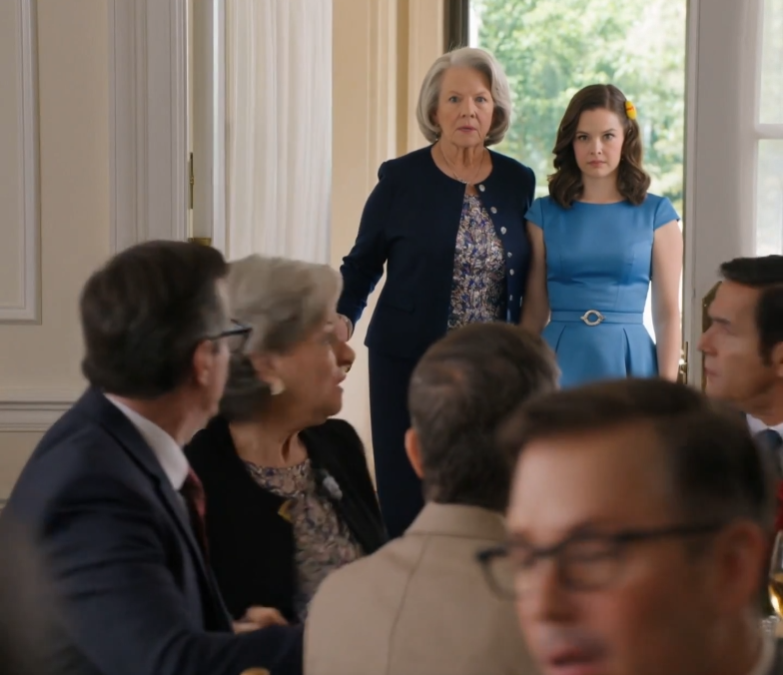
I set my glass down and walked to the front. I took the microphone out of her hand and pointed toward the two people standing by the door. My mother went white before I said a name. She didn’t need me to say one. She had seen that doorway before.
What she did next, in front of the same crowd that had just used my life as a punchline, is the reason I am still the one holding the story. This one is for you.
I was four years old when I came to live with Diane and Glenn Carell in Grove City, Ohio. I was adopted out of the county foster system, and I have never once been allowed to forget it. In most families, a nickname is a small, warm thing. Mine was “the stray.” It was written in glitter pen on my birthday cards. It was how my father asked me to pass the salt. It was how my mother introduced me to new people at church, with a little laugh so they would know it was a joke. And if you didn’t laugh, you were the one who couldn’t take a joke.
My mother had a line she loved. She would pour coffee for her friends from the women’s ministry and say the county had dropped a stray on our porch and forgotten to leave a return address. Everybody laughed, even me. Eventually, you learn to laugh at a joke about yourself when the alternative is being the only person at the table who isn’t laughing.
My father was quieter about it. Glenn Carell was a regional manager for a building supply company, a man who fixed things and didn’t talk much. He never raised his voice at me. He just said it the way other dads said, “Kiddo, pass the salt.” Stray. Nice try, stray. It never sounded cruel coming from him. Somehow, that made it worse. It sounded normal.
My mother liked to tell people exactly when the name was born. It was at their tenth wedding anniversary in May 1996, during a big picnic on the lawn at Grace Fellowship. That was the spring, as she put it, when they got “the stray and the miracle.” The miracle was my sister, Brooke. My mother found out she was pregnant that spring after ten years of trying.
I was the only person in that family who couldn’t remember that picnic. I told myself it was because I had been four. What I did remember came in pieces. My earliest memory isn’t a birthday or a Christmas morning. It’s a pillow. I remember lying on one half of it, and I remember that the other half wasn’t empty. There was a girl there. She had warm feet, and she hummed when she was trying to fall asleep. I called her Cece.
I talked about Cece a lot that first year. I asked where she was and when she was coming back. My mother put an end to it the way she put an end to most things, with a smile that didn’t reach her eyes.
“Strays make things up, Crystal. Eat your cereal.”
So I stopped. By first grade, I didn’t mention Cece at all. I still set out two cups at my tea parties, though. I could never explain why.
There was one other thing I remembered. When I arrived at that house, I had a single yellow plastic barrette shaped like a duck. That was it. That was my inheritance. My mother told the story at dinner parties: the county had sent her a child with a plastic duck and a head full of lice. I kept that barrette anyway. It lived in the corner of every jewelry box I ever owned.
I never questioned why a bear came alone when little things almost always came in pairs. When I was twelve, I found the family photo albums in the hall closet and went looking for pictures of myself as a little girl. The album for 1996 had a lot of empty sleeves. My mother said the basement had flooded that year and some photographs had been damaged by water. I believed her.
Children believe the explanations they’re given, especially when they already know which answers will get them into trouble.
Brooke was born in January 1997, and she was everything my mother had prayed for. She got the embroidered stocking. She got the big Sweet Sixteen party. She got her college paid for. I got a job at a grocery store when I was sixteen, and I paid my own way through Ohio State with loans and double shifts.
I’m not telling you that so you’ll feel sorry for me. I’m telling you because it made me good at something. Today, I’m a senior claims investigator for Buckeye Mutual Insurance. My job is to find what people hide in paperwork: dates that don’t line up, receipts that don’t match the story. I’ve spent eleven years learning one rule.
Never accuse anyone of anything until the documents do it for you.
I married a cabinetmaker named Owen Tyranny in 2019. He has sawdust permanently caught in his eyebrows and the steadiest hands I’ve ever seen. In March of last year, I lost a pregnancy at eleven weeks. In November, my new doctor, Dr. Allison Brandt, sat across from me with a clipboard and asked a question I couldn’t answer.
“Any family history of clotting disorders or pregnancy loss?”
“I don’t have a family history,” I said. “I have a family.”
She looked at me for a moment and wrote something down.
That Christmas, Owen gave me a DNA kit with a health report included.
“For the doctor,” he said gently. “And maybe for you.”
I thanked him, put it in my nightstand drawer, and didn’t open it.
Then came the second Sunday of January. We had dinner at my parents’ house most Sundays. Pot roast, green beans, the same blue plates. That night, my mother tapped her glass and made an announcement. On Saturday, May 16, she and my father would celebrate their fortieth anniversary with a party at Willow Creek Event Hall. There would be about 120 guests: church friends, relatives, and my father’s old coworkers.
The actual anniversary was May 17, but that was a Sunday, and my mother wasn’t about to miss church. Then she turned to me.
“Crystal, you’re good with details. You’ll handle the hall and the slideshow.”
She said it the way you’d hand a clipboard to an employee. The deposit was $6,500.
“Consider it your anniversary gift, sweetheart.”
Brooke, who was twenty-nine and engaged to a nice man named Cole, smiled into her mashed potatoes. She was saving for her wedding.
I should have said no. I know that. But some part of me was still the four-year-old at the tea party, setting out cups for someone who never came. Some part of me still thought that if I was useful enough, long enough, I would finally become family.
“Sure,” I said. “I’ll take care of it.”
My mother nodded once, satisfied.
“Your father and I will sign the contract when we do the tasting. It’s our party. Our names go on it.”
That was when Brooke, trying to be helpful, said, “Oh, Owen got Crystal one of those DNA kits for Christmas. Isn’t that fun?”
The table went quiet for exactly one second. Then my mother laughed, bright and loud.
“Oh, good,” she said. “Let us know when you find your litter.”
Everyone laughed. My father laughed. Brooke laughed. I laughed, too, because that was what I’d been trained to do.
In the car, Owen gripped the steering wheel and didn’t say anything for a long time. Finally, he said, “You know, you don’t have to do any of this.”
“I know,” I said.
I mailed the kit the next morning, partly for my doctor and partly because of the word litter.
The next few weeks were ordinary in the way the weeks right before something big always are. I booked the hall. I put $6,500 on my credit card and got a receipt from a cheerful event coordinator named Pam. I started a folder on my laptop called “40th Slideshow.” I got an email saying my sample had arrived at the lab.
That same afternoon, I got a text from my mother.
Any news on the litter? Lol. The hall needs a headcount by March.
I didn’t answer.
I told myself I wasn’t expecting anything. Most adoptees who take DNA tests find a few third cousins and a lot of question marks. I’d read the forums. I knew the odds. In my line of work, you learn not to trust a single result. One document is a lead. Two documents are a pattern. Three documents are a case.
On the evening of February 12, the email arrived.
Your results are ready.
I didn’t open it. I waited for Owen to get home from the shop. I made tea. I didn’t drink it. When he came in and saw my face, he didn’t even take off his boots. He just pulled out the chair next to mine at the kitchen table.
I clicked the link.
The page loaded slowly, the way pages always load when you need them not to. I expected a list of distant cousins. What I saw at the very top of the list was one name.
Callie L.
Pittsburgh, Pennsylvania.
Shared DNA: 100 percent.
Relationship: identical twin.
I read it once. I read it again. I read it eleven times. Owen counted later because I kept whispering the numbers under my breath without realizing it.
“That’s a mistake,” I said. “That has to be a mistake, Owen.”
He stayed quiet.
“Maybe I made two accounts. Maybe the lab ran my sample twice.”
I was already opening my account settings, looking for the error and doing what I do at work when a claim doesn’t make sense. There was only one account. There was only one sample.
And the profile at the top of my list had been created in 2018, eight years before I ever spit in a tube.
Then I clicked on her picture.
It was my face. Not a resemblance, not a “you could be sisters” kind of thing. It was my face with shorter hair, standing in a classroom full of finger paintings and laughing at something off camera. It was my nose, my chin, and the small crooked front tooth my mother had always told me to fix.
Owen leaned closer. He didn’t say anything for a moment. Then he said the thing I couldn’t ignore.
“Thirty years of nobody knowing where you came from. Thirty years of the county dropping a stray on their porch. And the whole time, there’s been someone with your face living three hours away.”
“Why wouldn’t they tell me?” I asked. “If there was a twin, the county would have known. My parents would have known.”
“Maybe they didn’t,” Owen said.
But he didn’t sound convinced. Neither was I.
The profile had a message button. I opened it and wrote nine drafts that night. Some were too long. One was just the word Hi. One apologized for bothering her, which was exactly the kind of thing I did. I deleted all nine.
Owen went to bed around midnight, kissing the top of my head on his way. At 12:40, I wrote the tenth message. It was short.
My name is Crystal Carell. I was adopted in Ohio. I think the website believes we’re twins. I don’t know what to say, except that I’d like to talk if you would.
I hit send before I could delete it.
I lay in bed without sleeping. At 1:20, my phone buzzed on the nightstand. I read her reply with my heart pounding so hard I could feel it in my wrists.
I’ve been waiting for this notification since I was twelve years old. Can I call you tomorrow? And one more thing. Do you still have the other duck?
I got out of bed and walked to my dresser in the dark. I opened my jewelry box. The yellow plastic barrette was in the corner, where it had always been.
She hadn’t written a duck.
She’d written the other duck.
She called the next evening at seven, exactly when she said she would. I answered on the first ring and then couldn’t make a single sound come out of my mouth.
“Hello?” she said.
Crystal, it was my voice—not similar, but my voice, with a slightly different rhythm, like hearing yourself on a recording. She must have heard the same thing when I finally said hello, because we both laughed at exactly the same moment. It was a startled, helpless laugh. And then we both stopped at the exact same moment, too.
“You sound like my voicemail,” she said. “That is so weird.”
“Hi, Callie.”
“Sorry, Crystal. Hi.”
“Who’s Katie?”
There was a pause.
“You are,” she said gently. “Or you were. Your birth name was Katie Lin Maro. Mine was Callie Lynn Maro. We were born March 9, 1992, in Springfield, Ohio. Our birth mother’s name is Tracy.”
I sat down on the kitchen floor with my back against the cabinets.
I had never heard my own name before. I had never known I had one to lose.
Callie talked, and I listened. She was a preschool teacher in Pittsburgh. She had been adopted by a couple named Doug and Peggy Lynfist when she was six. Doug had passed away in 2021. Peggy still lived fifteen minutes away.
Callie had known she had a twin since she was twelve, when Peggy sat her down and told her the truth. She had taken a DNA test in 2018 and checked it every week for eight years.
“Every week,” she said. “I have an alarm on my phone. Sunday nights, I’d check, and there’d be nothing. Then I’d go to bed and try again the next Sunday.”
Then she asked me a question I wasn’t ready for.
“Can I ask you something weird? When you were little, did you ever have a friend you weren’t allowed to talk about?”
My throat closed for a second. I couldn’t breathe.
“I had an imaginary friend,” I said slowly. “I called her Cece.”
The line went completely silent. Then I heard Callie start to cry. Not politely, not quietly, but the way you cry when something you’ve held for a very long time finally falls out of your hands.
“You couldn’t say Callie,” she said. “You tried, but it always came out Cece. You’re the only one who ever called me that. The only one in my whole life.”
I pressed my hand over my mouth.
Thirty years of my mother saying strays made things up. Thirty years of me believing that some broken, lonely part of my brain had invented a girl on the other half of my pillow.
She had been real. She had been real the entire time. She had warm feet, and she hummed when she was falling asleep. And she was on the other end of that phone call, crying in my voice.
“I thought I made you up,” I said.
“My mother told me I made you up.”
“You didn’t make me up,” Callie said. “I was there.”
We stayed on the phone for a long time after that, not saying much. At one point, I got up, took the yellow barrette out of the jewelry box, and held it in my fist while we talked, as if it might disappear if I let go.
If Cece was real, then my mother had looked at a four-year-old and told her she was imagining her own sister. I didn’t know yet why she had done it. I only knew that she had.
When I could speak again, I asked the question that had been sitting on my chest since the night before.
“Callie, where were we before? Were we ever together?”
“After Tracy, we were together in foster care for a few months,” Callie said. “Then, in the spring of ’96, we were placed together with a couple in the Columbus area. It was supposed to be a pre-adoptive home. They were supposed to adopt us both.”
I stopped moving.
“I don’t remember their names,” she said. “I was four. But I remember the house. It had a red front door, and there was a swing in the backyard that the man built. He pushed us both at the same time. And I remember the last day.”
Her voice changed, becoming careful, as if she were walking across ice.
“The social worker came to get me in the summer. I was standing in the doorway, holding your hand. The lady of the house was inside, holding on to you so you wouldn’t run after me. And she said, ‘Say goodbye to your sister.’ Then she closed the door.”
I couldn’t speak.
“There’s one more thing I remember,” Callie said. “The social worker told the lady I’d probably be placed out of state. I didn’t know what that meant. For years, I thought ‘out of state’ was the name of a place, like a town somewhere really far away. I used to picture it.”
My hands were cold. I hadn’t told Callie my parents’ names. I hadn’t told her where I grew up, and I was trying very hard not to think the thought forming in my head, because it was the kind of thought you couldn’t take back.
“Crystal, are you there?”
“My parents’ front door is navy blue,” I said. “It’s been navy blue for as long as I can remember.”
After we hung up, I went to the bookshelf in our living room. The previous Sunday, my mother had handed me a shopping bag full of family photo albums for the slideshow.
“Pick the nice ones,” she’d said. “Nothing embarrassing.”
I pulled them all out and spread them across the floor.
I found Christmas 1995 first. My parents stood in front of their house in Grove City, bundled in coats, before I ever lived there. The front door behind them was red—bright, glossy, unmistakably red.
In the album for Christmas 1997, I was five, standing on the front steps in a velvet dress. The door behind me was navy.
Then I opened the 1996 album again, the one I’d looked at when I was twelve, the one with the supposed water damage. This time, I looked at it the way I look at a claim file. I counted the empty sleeves. There were eleven of them, and not one of the pages around them had a single stain, warp, or ripple. Every surviving photograph was crisp and clean.
Water damage doesn’t choose which photographs to take.
Owen came out of the bedroom and found me sitting in the middle of the floor, surrounded by albums. He didn’t ask what was wrong. He sat down beside me, and I showed him the two doors, red and navy, and the eleven empty sleeves.
“Paint isn’t proof,” I said. “Empty sleeves aren’t proof. Plenty of houses in Columbus had red doors in 1996.”
“But you think it’s them?” he asked.
“I think I need to find out before I let myself think it. That’s the rule. You don’t accuse. You document. I built a whole career on it, and I wasn’t going to abandon it the one time it mattered most.”
Because if I was wrong—if I walked into my parents’ house and accused them of splitting up twins, and I was wrong—there would be no coming back from that. And if I was right, I needed to be able to prove it to people who had spent thirty years believing my mother.
Around two in the morning, my phone buzzed again. It was Callie.
“I told my mom everything. She kept every piece of paper the agency ever gave her. She says you need to see page three. Can we meet halfway?”
We met on Saturday, February 21, at a diner off Interstate 70 in Cambridge, Ohio. It was about eighty miles from my house and a little over a hundred from hers. Neutral ground, we both said, as if we were negotiating something. I think we were both just scared.
I got there early. I always get there early. I sat in a booth by the window, wrapped my hands around a coffee I didn’t want, and watched the parking lot.
A small silver hatchback pulled in. A woman got out and pushed her hair behind her ear with two fingers. I recognized the gesture before I recognized her face. It was exactly the way I pushed my hair behind my ear.
She walked in and saw me. We both stood up, and then we just looked at each other across the diner, like two people who had walked into a mirror and discovered it was a door.
The waitress, a woman in her sixties with a name tag that said Deb, stopped on her way past with a coffee pot.
“Well, I’ll be. Y’all twins?”
“Yes,” Callie said, and her voice cracked right down the middle of the word.
We hugged. It wasn’t graceful. We bumped heads. We both laughed, and then we both cried. Deb brought us extra napkins without being asked.
When we sat down, we ordered the same thing without meaning to. Callie noticed first and pointed at the menu, and we started laughing again.
Then she reached into her coat pocket and set something on the table between us: a yellow plastic barrette shaped like a duck.
I took mine out of my purse and put it next to hers.
They matched perfectly, except that one duck faced left and the other faced right.
“All my life,” I said, “I thought the county sent me with a plastic duck and lice.”
Callie smiled through her tears.
“My mom always says the county sent me with a plastic duck and a sister. They just forgot the sister.”
She told me more about the years after that summer: three different foster homes in less than two years, a bedding problem that got her moved once, and a foster mother who kept her things in a trash bag by the door. She said it all without self-pity, the way you’d describe the weather in a town you used to live in.
Then she slid a manila envelope across the table.
“Page three,” she said. “I highlighted it.”
It was a non-identifying summary the agency had given the Lynfists in 1998 when they took Callie in. It contained a few pages of social history, birth information, health records, and placement history. On page three, under “Previous Placements,” there was a paragraph that had been highlighted in yellow so many times the paper had gone soft.
I read it twice, the way I read everything important.
It said the twins had been placed together in a pre-adoptive home in Franklin County in March 1996. It said that in August 1996, the pre-adoptive family had requested the removal of one child, citing the pre-adoptive mother’s pregnancy and their inability to manage two children and a newborn.
Then came two sentences I will remember for the rest of my life:
Family elected to retain the quieter child. Family declined ongoing sibling contact.
Retain, like a product. Like a store deciding which item to keep on the shelf.
There were no names in the document. Non-identifying summaries don’t include names, but my claims investigator’s brain was already doing the math before my heart could stop it.
Franklin County. That was Grove City. March 1996. That was when I came to live with my parents. A pregnancy in the summer of 1996. My sister Brooke was born on January 2, 1997.
I set the paper down very carefully, the way you set down something that might break.
“Crystal,” Callie said softly. “Is it them?”
“The dates match,” I said. “Every single date matches.”
Callie nodded slowly. She didn’t look surprised. She looked like someone who had been bracing for a blow for thirty years and had finally felt it land.
“I want to tell you what I remember about the night before,” she said. “Is that okay?”
I nodded.
“I cried a lot back then for Tracy. I didn’t understand where she’d gone. The night before they took me, I was crying in the bed we shared. The lady came in, and she was angry. She said, ‘Crybabies go back.’ I didn’t know what it meant, but you did something. You reached over and held my hand under the blanket. You didn’t say anything. You just held on until I fell asleep.”
I closed my eyes.
“I spent thirty years thinking they sent me back because I cried,” Callie said. “Because I was the bad one, the hard one.”
“They kept me because I didn’t,” I said.
And there it was: the shape of my entire life laid out on a diner table in Cambridge, Ohio. I had been the quiet one, the easy one. I had learned at four years old that being quiet was how you got to stay.
So I stayed quiet at every dinner, through every joke, through every “pass the salt, stray.” I had spent thirty years being grateful to be kept without ever knowing what being kept had cost.
Callie reached across the table and held my hand, the same way, I suppose, that I had once held hers.
After a while, she told me about Tracy. Callie had found her in 2019 through a cousin match on a different DNA site. Tracy had been sober since 2005. She worked the register at a pharmacy in Dayton. Their relationship was careful and slow, and still new.
Tracy had told her something important.
“She wrote letters to both of us,” Callie said. “Every year on our birthday, from 1998 to 2002, she sent them through the agency. My parents got mine. They kept every one. I never got a single letter.”
“Not one?”
Callie was quiet for a moment.
“Then somebody else got them.”
We sat with that. Deb refilled our coffee and patted Callie’s shoulder on her way past, as if she’d known her for years.
“So, what do we do?” Callie finally asked.
“Nothing yet,” I said. “Right now, I have a summary with no names and a lot of dates that line up. In my job, that’s a lead. It’s not proof.”
I tapped the paper.
“I need something that puts the Carell name on 1996. Something my mother can’t explain away.”
“Like what?”
I thought about it. And then I remembered the basement.
My father had shot home videos throughout the nineties on a big, shoulder-mounted camcorder. There were boxes of VHS tapes down there. I’d been planning to go through them anyway for the slideshow. My dad filmed everything back then: birthdays, holidays, church picnics.
“If you lived in that house for five months,” I said, looking at her, “you’re on those tapes.”
Callie’s eyes went wide.
“Are you going to tell them about your parents?”
“Not yet.”
Right then, my phone buzzed on the table between us. We both looked down at it at the same time. It was a text from my mother.
Slideshow photos by April 1st. Nothing embarrassing, please.
Callie read it upside down and let out a breath that was almost a laugh.
“She just asked me to go through every tape in our house,” I said.
On Saturday, February 28, I drove to my parents’ house to pick up the tapes. My mother was in the kitchen, supervising the way she always supervised.
“Only the nice ones,” she said. “Brooke’s christening, the fortieth birthday cruise. Nothing from the basement flood years. Those are all ruined anyway.”
My father carried the boxes up from the basement himself. There were four of them, the cardboard soft at the corners. On his last trip up the stairs, he stopped. He was holding a single tape in his hand, looking at the label.
For a second, I thought he was going to put it back.
Then he set it in the box with the others and carried it to my car without a word. When he closed my trunk, he pulled out his wallet to give me money for the digitizing service. It was the same brown leather wallet he’d carried my whole life, cracked and shiny at the edges.
As he pulled out the bills, I saw the corner of an old photograph tucked behind his driver’s license, faded and worn soft.
He pushed it back down with his thumb before I could see what it was.
“Some of those tapes are old, kiddo,” he said. “You don’t have to use all of them.”
He went back inside.
I sat in my car in their driveway for a long time. He had called me kiddo. He hadn’t called me that since I was in grade school.
Owen found a used VCR at a thrift store in Westerville for twelve dollars. That night, we set it up on the coffee table and started going through the boxes one by one.
Brooke’s christening, a trip to Myrtle Beach, Christmas mornings, my father’s retirement party. There I was, here and there, always at the edge of the frame, holding a coat or handing someone a plate.
The ninth tape had a label in my father’s blocky handwriting: 10th Anniversary Picnic 5/96.
I put it in the machine and pressed play.
The picture was grainy, and the colors had faded toward orange, but it was the lawn at Grace Fellowship: folding tables, paper tablecloths, church ladies in pastel dresses. The camera swung around, and there, sitting on a blanket in the grass, were two little girls in matching yellow sundresses.
They were identical. Same face, same hair, the same crooked front tooth visible when they laughed. Each of them had a yellow duck barrette in her hair. One on the left side, one on the right.
Owen put his hand on my knee. I didn’t move. I couldn’t.
Then the camera turned toward a small wooden stage. There was my mother, thirty-four years old, in a white dress, holding the microphone from the church sound system. My father must have handed the camera to someone else because he was standing beside her, his arm around her waist.
My mother smiled at the crowd. That church smile. I’d know it anywhere.
“Ten years married, two little strays under our roof, and now the good Lord is finally giving us one of our own.”
The crowd on the tape laughed and cheered. People clapped. Somebody whistled.
I pressed pause.
My mother’s face froze on the screen, her mouth open in a laugh.
Two strays.
The name hadn’t been invented for me. It had been invented for both of us.
And thirty years later, almost to the week, I was planning her fortieth anniversary party in a rented hall, and she had no idea what I was holding in my hands.
I pressed play again. I had to see the rest.
Later in the tape, the scene changed to a backyard. The red door was right there in the corner of the frame, glossy and bright. My father, younger and thinner, stood behind a wooden swing he’d built himself. Both girls were on it together, squeezed side by side and shrieking with laughter. He pushed them gently, and his voice came from right beside the camera, soft and warm.
“Hang on, girls. Both hands.”
I’d never heard that voice from him before. He sounded happy. He sounded like a father.
I didn’t know what to do with that. I’d spent my whole life thinking of my father as a man who simply went along with things, a man who never fought for anything. And here he was, pushing two little girls on a swing he’d built for them, sounding like he loved them both.
Then the camera found someone else. An older woman sat in a lawn chair with a girl on each knee, bouncing them and singing. I knew her. It was Hazel Pewitt from church. She’d been in her late fifties then. She was eighty-eight now, and she still sat in the third pew every Sunday.
I watched the rest of the tape in silence. When it was over, the screen went to blue static, and I just sat there looking at it.
Owen said, “Your dad labeled that tape. He kept it for thirty years.”
“I know,” I said.
“People don’t keep things by accident.”
I didn’t answer, but he was right. My mother had thrown away eleven photographs. Someone had made very sure this tape survived.
I digitized the clip that night and sent it to Callie. She called ten minutes later. She wasn’t talking so much as breathing into the phone.
“That’s the swing,” she whispered. “That’s the swing, and that’s the lady. That’s her voice. I’d know that voice anywhere.”
We stayed on the line in silence for a while.
Then Callie asked me something that seemed to come out of nowhere.
“Crystal, did your DNA results come with a health report?”
“Yes. I haven’t opened it.”
“Open it,” she said. “Look for something called factor five Leiden.”
When she was thirty, she’d had a blood clot in her leg. Doctors tested her and found out she carried it. It was a genetic condition that made her blood clot more easily.
She paused.
“And we have the same genes. All of them.”
I felt my stomach drop. I hadn’t told her about the pregnancy. I hadn’t told her about Dr. Brandt, the clipboard, or the question I couldn’t answer.
I opened the report while she waited.
It was there in plain language, halfway down the page. I carried the variant.
On March 10, I sat across from Dr. Brandt again. She read the report, then looked at me. She explained that the condition can raise the risk of clotting during pregnancy and has been linked to pregnancy loss. There were treatment plans for women who carry it and want to try again: blood thinners, close monitoring, a real plan, not just hope.
“This is useful information,” she said. “I’m glad you found it.”
I drove home and sat in the driveway, my hands still on the wheel.
For eleven months, I had blamed myself. My body, my stress, some unknown flaw I couldn’t name. My mother had even said at the funeral lunch for my great-aunt that maybe some people just weren’t built to be mothers.
And now the family I’d been told I didn’t have had just handed me the answer from a Pittsburgh classroom, over a phone call.
The family they said I didn’t have had just told me why I lost my baby.
That night, I made a decision. I wasn’t going to confront my mother. Not yet. But I was going to ask her one question and watch her face when she answered it.
I asked it on Easter Sunday, April 5. The whole family was there: glazed ham, deviled eggs, the good tablecloth. Brooke was showing everyone pictures of the wedding venues she and Cole had toured.
My mother waited until the plates were full before turning to me with a little smirk.
“Find your litter yet?”
Everyone chuckled.
“Some third cousins in Kentucky?” I said. “Nobody close.”
It was the first strategic lie I had ever told my mother. She looked satisfied, almost relieved, I thought, and went back to her ham.
I let a few minutes pass. Then I said as casually as I’d ever said anything, “Mom, can I ask you something funny? When I was little, did I have an imaginary friend?”
The serving spoon slipped out of my mother’s hand and hit the edge of the platter with a loud clank. Brooke jumped.
My mother picked the spoon back up very carefully, set it down, and dabbed at the tablecloth with her napkin. Then she looked straight at me and smiled.
“Strays make things up, sweetheart.”
Brooke laughed. My mother laughed.
Across the table, my father stood up without a word, carried his plate into the kitchen, and didn’t come back. I heard the back door open and close.
In thirty-four years, I had never seen my father leave a plate unfinished. He was a “clean your plate” man, raised by Depression-era parents. That day, he left half a slice of ham sitting on the counter.
I drove home knowing two things.
My mother knew exactly what I was asking about, and my father couldn’t stand to be in the room while she lied about it.
For almost two weeks, nothing happened. Then, on April 18, my cousin Jenna called me. Jenna was my aunt Joyce’s daughter. Aunt Joyce was my mother’s older sister. Jenna and I had grown up together, and she was one of the only people in the family who had never called me “stray.”
“Crystal,” she said, “I need to ask you something, and I need you not to be mad at me.”
“Okay.”
“Your mom’s been calling people. My mom, Aunt Carol, some of the church ladies. She’s saying she’s worried about you. She says you haven’t been yourself since you lost the baby.”
She hesitated.
“She told my mom you’ve been inventing people and asking strange questions. She said she’s praying for you.”
I didn’t say anything. The kitchen was very quiet.
“Crystal, what is going on?”
“I can’t tell you yet,” I said. “But I’m okay. I promise I’m okay.”
After I hung up, Owen came in from the garage and found me standing very still at the counter. When I told him, he was angrier than I’d ever seen him. He was a quiet man, my husband, but he threw his work gloves across the room.
“She’s using the baby,” he said. “She’s using your miscarriage as a weapon.”
“She’s building a wall,” I said.
“People only build walls when they know exactly what’s behind them.”
But I understood what my mother had done, and it scared me. She had asked one question at Easter and seen a problem coming. So she was getting there first.
If I stood up now and said I had a twin sister who’d been sent away in 1996, I’d be the grieving woman who had started imagining things, the one everybody was praying for. My mother had already written the explanation. She was just waiting for me to walk into it.
The truth wasn’t going to be enough. I needed a witness no one could argue with.
On Saturday, April 25, Owen and I drove three hours east to Pittsburgh to meet Peggy Lynfist. She lived in a small brick house on a hilly street, with a porch swing and a flag by the steps. She was seventy years old, a retired school nurse, silver-haired and sturdy, wearing a cardigan with a tissue tucked into the sleeve.
When she opened the door, she looked at my face for a long moment. Then she pulled me into a hug and held on the way my mother never had. She didn’t pat my back. She just held on.
“Oh, honey,” she said into my hair. “Look at you. Look at you.”
Callie made coffee. Peggy made us sit at her kitchen table, which was covered with an oilcloth patterned with lemons, and brought out a plate of cookies. She said they were store-bought and absolutely weren’t.
The kitchen doorway had pencil marks running up the frame, little lines with dates and ages beside them. Callie, six. Callie, nine. Callie, thirteen. All the way up to Callie, thirty-four, from just a few weeks earlier.
“Doug started that the week she came home,” Peggy said, following my eyes. “She was so small. He said we needed proof she was growing because she didn’t believe anything would last.”
Then Peggy told me something I hadn’t known.
“When the agency told us she had a twin sister who’d been kept by another family, I asked if we could arrange a visit. Just a visit. The girls could see each other.”
She shook her head.
“They said, ‘Your family declined.’ I asked again in 2004, when we moved here. Callie was having a hard year. I thought it might help. They said the answer was still no.”
She reached across the table and put her hand over mine.
“I asked twice,” she said. “I’d have taken you both in a heartbeat. I want you to know that somebody would have taken you both.”
That was when I finally cried. Not at the diner. Not over the tape. At Peggy Lynfist’s kitchen table in Pittsburgh, beneath a doorframe with pencil marks on it, because a woman I had just met was telling me that I had been wanted, that somebody somewhere had asked for me twice.
Nobody else wanted you.
My mother had been saying some version of that for thirty years, and the whole time, it had been a lie, too.
Peggy let me cry. She didn’t hurry me or tell me it was okay. She just kept her hand on mine and handed me the tissue from her sleeve.
That evening, after dinner, Callie sat down next to me on Peggy’s back porch.
“There’s someone else who wants to talk to you,” she said. “She’s scared. She’s been scared for thirty years, but she wants to.”
She handed me her phone. On the screen, it said Tracy.
I took the phone and walked to the end of the yard.
“Hello,” I said.
“Katie.”
The voice was rough and small. Then, quickly, she added, “I’m sorry, Crystal. I know that’s your name now. I’m sorry.”
“It’s okay,” I said, and found that it was.
We talked for almost an hour. Tracy told me she’d been twenty-two when we were born. She told me about her drinking plainly, without excuses. She told me the county had been right to take us and that it was the worst and most necessary thing that had ever happened to her.
She’d been sober since 2005. Twenty-one years.
“I wrote you letters,” she said. “Every birthday from 1998 to 2002. Five of them. I sent them through the agency, same as Callie’s. In 2002, the agency called me. They told me your family had asked them to stop forwarding my letters, that they didn’t want contact. So I stopped.”
Her voice broke.
“I thought you didn’t want me. I thought that was your choice.”
“I never saw them,” I said. “I never knew they existed.”
She was quiet for a long time.
When I told her about the anniversary party and what my mother had been saying, she understood before I even finished. When I asked if she would ever want to be there, she said, “No. I don’t get to stand at that door, honey. I’m the one who lost you first. But Callie does, and Peggy does. Peggy earned it.”
When I walked back to the porch, Callie and Peggy were waiting for me. I sat down between them.
“My parents’ anniversary is May 16,” I said. “There will be 120 people there. Most of them believe whatever my mother tells them. If I need you, would you be there? Just standing by the door. You might not even have to come inside.”
Callie didn’t hesitate.
“Yes.”
Peggy took a little longer. She looked at her daughter, then at me.
“I’ve waited twenty-eight years to meet the family that said no,” she said. “Yes.”
That night, two people agreed to drive three hours to stand by a door. I prayed I wouldn’t need them.
The following Sunday, May 3, we had dinner at my parents’ house, two weeks before the party. My mother had news.
“Your father and I met with our lawyer,” she said, passing the green beans. “We’ve updated our wills.”
“The house will go to Brooke. She’ll be starting a family soon, God willing, and it only makes sense.”
Brooke looked a little embarrassed. Cole stared at his plate.
“And you, Crystal,” my mother continued, “we’d like you to be our healthcare power of attorney. You’re practical. You understand paperwork. When the time comes, we’ll need someone to manage our care. Doctors, appointments, all of that.”
She smiled.
“You’ll help us. You owe us that much.”
I set my fork down.
“The house goes to Brooke, and I’m the one who manages your care?”
“Don’t be dramatic, sweetheart. And one more thing, since we’re discussing it. The balance for the hall is $9,000, due the night of the party. It’s on our card, of course, but your father and I were hoping you might help.”
I looked at my father. He was staring at the saltshaker.
Then my mother said it. She said it gently, the way you’d explain something to a slow child.
“We’re asking you because you’re practical. Nobody else wanted you, Crystal. We did. That’s worth something.”
The room didn’t laugh this time. Even Brooke looked uncomfortable.
I thought about Peggy’s hand on mine. I thought about the words, I asked twice.
“I’ll think about it,” I said.
It was the last lie I ever told my mother.
The next Sunday was Mother’s Day, May 10. I went to my parents’ house alone, carrying a bouquet of pink tulips. I had made myself a promise that before anything happened at that party, I would give my mother one private chance to tell me the truth herself. No audience, no Callie, no tape. Just her and me in her kitchen.
She took the tulips, said they were lovely, and set them in the sink without a vase.
My father was standing in the kitchen doorway. He had been reading the paper in the living room and wandered in when he heard my voice.
“Mom,” I said, “is there anything about the summer of 1996 you’d like to tell me? Anything at all? I’m asking you, just you.”
My mother turned off the faucet. She dried her hands on a dish towel very slowly, finger by finger. When she turned around, her face was completely calm.
“We kept you,” she said. “That’s the whole story. Be grateful.”
I looked past her at my father, filling the doorway, his newspaper hanging from one hand.
“Dad.”
He looked at me for a long moment. Something moved across his face and then disappeared.
“Your mother answered you,” he said.
I nodded. I picked up my purse. I walked out through that navy door, down the front steps, and got into my car.
I wasn’t finished. I was done asking.
That week, I handled the party logistics the way I handle a claim: carefully and completely. I sent the final headcount to Pam at the hall. At the bottom of my own section of the guest list, I added a line that read, “Two guests of Crystal and Owen.”
My mother glanced at the list when I emailed it and asked who they were. I said they were friends of Owen’s. She didn’t ask again. She didn’t care who my friends were. She never had.
I called Jenna.
“I need a favor. Can you take over the check-in table for me around 7:30? Two friends of mine might come in late. Just let them in. Don’t ask.”
“Crystal,” Jenna said slowly, “are you okay?”
“Ask me Sunday,” I said.
Then I opened my laptop. My slideshow folder was nearly finished: forty years of photographs set to my mother’s favorite hymns. I created a separate folder outside the slideshow and saved one file inside it. Forty-two seconds of grainy orange video from May 1996.
I named the file Picnic.
On Tuesday night, May 12, Callie, Peggy, Owen, and I had a video call. I laid out the plan the way I would lay out an investigation.
“You’ll arrive around 7:40. The lights will be down for the toast by then. Jenna will let you in. You’ll stand by the entrance, where it’s darker. You don’t sit down. You don’t come forward unless I ask.”
“And then?” Peggy asked.
“If my mother keeps it kind, if she makes it through that night without humiliating me in front of all those people, then I’ll come find you. Afterward, we’ll go out to the parking lot. I’ll introduce you to my father quietly, and we’ll deal with the rest privately.”
“And if she doesn’t keep it kind?” Owen asked.
“Then she picked the room.”
Nobody said anything for a moment.
Then Callie nodded.
“Okay. 7:40.”
On Friday night, May 15, my phone buzzed at ten. A text from my mother.
Tomorrow, try not to make it about you.
I read it twice, then turned my phone face down on the nightstand and slept better than I had in months.
On the afternoon of the party, I arrived at Willow Creek Event Hall at 2:30 to set up the audiovisual equipment. The hall was lovely: white tablecloths, gold-rimmed chargers, and red roses on every table because the fortieth anniversary was the ruby anniversary. My mother had been very specific about the rubies.
She arrived at three to inspect everything. She walked through the room like a general. Then she came to the projector table, where my laptop was connected, and said, “Let’s see it.”
I ran the slideshow for her. She watched with her arms folded. Every time a photograph came up with me in it, she said, “Take that one out.”
Me at Brooke’s christening, holding the baby. Me at their twenty-fifth anniversary dinner. Me at my father’s retirement party, handing him his cake.
“Take it out. That one, too.”
“Mom, there’s barely a picture left from the nineties.”
“People want to see family, honey.”
“You can run the laptop.”
It took her eleven minutes to delete me from forty years. When she was done, she patted my shoulder, told me the roses looked wonderful, and went off to argue with the caterer about the chicken.
She never opened the other folder. She never even looked at it.
By 5:30, I was at the check-in table by the entrance, where my mother had assigned me weeks earlier. Name tags were arranged in alphabetical order. There was a pen on a little chain and a bowl of ruby-red mints.
The guests came in waves: women from my mother’s ministry group in their Sunday best, my father’s old coworkers from the supply company, big men with loud laughs, aunts, uncles, and cousins.
Aunt Joyce came in with her husband, hugged me stiffly, and said I looked tired. My father’s cousin Russ came through the line, a heavyset man with a red face and a bolo tie. He grinned at me.
“Well, if it isn’t the stray handing out name tags.”
He laughed at his own joke the way he’d been laughing at it for thirty years. I handed him his name tag and smiled.
Then came Hazel Pewitt, eighty-eight years old, walking slowly with a carved wooden cane. Her granddaughter held her elbow. Mrs. Pew stopped at my table and looked at me for a long moment, longer than she needed to.
“You look just like you did at that picnic, sweetheart,” she said.
Then she paused, and a small frown crossed her face, as if she were trying to remember something just out of reach. Her granddaughter gently guided her toward her table, and the moment passed.
At a quarter to seven, the lights went down and the slideshow began. Forty years of my parents’ marriage, set to “How Great Thou Art.” Their wedding in 1986. The honeymoon. The red front door in one quick photograph that nobody noticed but me. Brooke as a baby, Brooke’s first steps, Brooke’s graduation, the cruise, the retirement party.
The room sighed and laughed and applauded in all the right places.
When it ended, a woman from the church, someone I didn’t know well, called out, “Diane, where’s Crystal in all this?”
My mother laughed and raised her glass.
“Oh, she’s behind the camera, where she’s useful.”
The room laughed.
I sat at the projector table and kept my face perfectly still.
At 7:40, my phone buzzed.
We’re here by the door. Breathe.
I glanced up. Jenna was at the check-in table now. Just inside the entrance, where the light from the hallway met the dimness of the ballroom, two figures stood in the shadows. One was tall and silver-haired, wearing a navy cardigan. The other was slender, with her hair pulled back and her hands clasped in front of her.
Nobody else noticed them. Everyone was looking at the head table, where my father sat facing the room and the entrance.
Then Brooke stood up and tapped the microphone.
Her toast was sweet. She talked about growing up in a home full of love, about how her parents were her role models, and about how she hoped her marriage to Cole would be half as happy. People dabbed at their eyes. She didn’t mention me once, and I don’t think she even noticed.
My father went next. He kept it short. He talked about the day he met my mother at a church potluck in 1984. He talked about forty years of fixing things around the house.
Then he raised his glass.
“To my wife,” he said, “and to our girls.”
He stopped for just a beat. Something crossed his face. Then he sat down quickly and drank.
Then my mother took the microphone. She was radiant, wearing ruby earrings and a silver dress, her hair done that morning. She told the story of their first date. She told the story of the time my father got the station wagon stuck in a snowbank on the way to church. She thanked the women from the ministry. She thanked God. She thanked Brooke, their miracle, and the room applauded.
Then she turned and found me at the projector table.
She smiled the way she smiled at church.
“And of course,” she said, “we can’t forget Crystal.”
She raised her glass toward me, and 120 heads turned.
“This is our stray. Nobody else wanted her. She even spit in a DNA tube. We still haven’t found her real family.”
The room laughed until it shook. Russ slapped the table. The ministry ladies giggled behind their hands.
My father laughed with them.
I sat very still for a moment, letting it wash over me the way it had my entire life. Then I set my glass down.
I walked to the front. My heels sounded loud on the wooden floor, but not many people noticed. They were still laughing.
My mother was still smiling when I reached her. She held out the microphone, thinking I’d come up to play along, to make a joke at my own expense, to be a good sport the way I always had been.
I took the microphone out of her hand.
“Actually,” I said, “I did.”
The room didn’t quite understand. There was a ripple of confused laughter, the kind people make when they think a joke is still going.
My mother’s smile stayed where it was, but her eyes changed.
I didn’t say anything else. I lifted my arm and pointed across the room, over 120 heads, toward the entrance of the hall, toward the two people standing by the door.
Heads turned. Chairs scraped. Somebody near the front craned their neck.
My father saw them first. He was sitting at the head table, facing the room, facing the entrance. I watched his laugh stop halfway out of his mouth. His hand went flat on the tablecloth.
Callie stepped forward out of the shadow into the soft gold light of the ballroom. She didn’t hurry. She walked about three steps, stopped, and stood there with Peggy at her shoulder.
She was wearing a simple blue dress. Her hair was pulled back, and clipped on the right side was a yellow plastic duck.
The room went quiet in a way I have never heard a room go quiet. Not exactly silence. More like 120 people forgetting to breathe at the same time.
Hazel Pewitt was sitting near the aisle with her cane across her lap. Her voice carried through the whole hall.
“Oh, my Lord,” she said. “There’s two of her.”
I turned and looked at my mother.
She had gone white. Not merely pale, but white. The color drained out of her face so quickly it looked as though someone had pulled a plug. She gripped the edge of the head table with both hands. Her lips parted.
She was staring at Callie, and I knew exactly what she was seeing because I’d heard Callie describe it.
The last time my mother had seen that face, it had been standing in a doorway, too. A little girl in the summer of 1996, holding a social worker’s hand and looking back into a house with a red front door.
My mother hadn’t needed me to say a name. She had closed that door herself.
And then my mother did something I never expected.
She lunged for the microphone.
She grabbed my wrist with one hand and reached for the mic with the other, her nails pressing into my skin. I didn’t let go, and I didn’t pull away. I just held on, and the microphone stayed where it was, a few inches from both our faces.
“She’s not well,” my mother said loudly to the room. Her voice was high and shaking. “Everyone, I’m so sorry. She hasn’t been well since she lost the baby. She’s been confused. She’s been making things up.”
A few people shifted. A woman near the front put her hand over her heart, looking at me with pity.
For one second, I felt it. The old wall, the explanation she’d built weeks ago, standing right there, ready for me to walk into it.
And then my mother looked at Callie again.
Something in her broke. Maybe it was the barrette. Maybe it was simply that face.
She turned toward Callie and spoke directly to her, the microphone still six inches from her mouth.
“They told me you’d be placed out of state.”
Every word went through the speakers. Every word bounced off the walls of Willow Creek Event Hall and landed on 120 people.
My mother froze. Her hand dropped from my wrist.
I watched her understand what she’d just done. You don’t tell a stranger she was supposed to be placed out of state. You only say that to a child you already know, a child you sent away.
Callie didn’t move, but I saw her close her eyes for just a moment.
Out of state.
The faraway place she had pictured as a little girl.
And now she knew who had sent her there.
I lifted the microphone.
“This is my sister Callie,” I said. My voice was steady. “My identical twin. The woman beside her is Peggy Lynfist, the mother who raised her.”
I turned to my mother.
“You didn’t have to find my real family, Mom. You gave half of it back.”
My mother found her voice again, thin and frantic.
“That’s a lie. That was babysitting. That was a relative’s child. We were just watching her for a while, for a few weeks.”
“I thought you might say something like that.”
I walked back to the projector table, still holding the microphone. I clicked open the folder my mother had never looked at and pressed play.
On the big screen above the head table, where my mother’s slideshow had just ended, the lawn at Grace Fellowship appeared. Faded orange colors, folding tables, and two little girls in matching yellow sundresses sitting on a blanket, each with a duck barrette in her hair.
One on the left. One on the right.
Then the camera swung to the stage. There was my mother, thirty years younger, in a white dress, holding a microphone, and her voice came through the speakers at her own anniversary party.
“Ten years married, two little strays under our roof, and now the good Lord is finally giving us one of our own.”
On the tape, the crowd laughed and cheered.
In the room, nobody made a sound.
A few of the older guests slowly turned to look at one another. People who had been on that lawn in 1996. People who had clapped. I could see them trying to remember.
The tape kept playing. There was my father at the swing, pushing both girls.
“Hang on, girls. Both hands.”
There was Hazel Pewitt in her lawn chair, bouncing a little girl on each knee.
I stopped the video on that image and let it stay there.
My mother’s voice was barely a whisper.
“Relatives. We were watching them for relatives.”
Then Hazel Pewitt stood up. It took her a while. Her granddaughter tried to help, but Hazel waved her away. She put both hands on the head of her cane and pushed herself to her feet. Eighty-eight years old, wearing a lavender dress, she looked straight at my mother across the room.
“Diane,” she said.
Her voice was thin, but it carried.
“I held both of those babies at that picnic. You told every one of us you were keeping them both. You stood up at Bible study and asked us to pray for your girls.”
She took a breath.
“Then one Sunday, there was only one. And you said the other one went home to her people.”
Hazel lowered her head for a moment.
“I believed you. God forgive me. I believed you for thirty years.”
My mother opened her mouth, but nothing came out.
At the second table, I saw Aunt Joyce put her fork down and look at her plate. She didn’t look up. She didn’t say a word, but she didn’t look surprised, either.
Then Callie took a few more steps into the room. She stopped at the edge of the dance floor, a few yards from the head table, and looked at my mother.
Her voice wasn’t loud. It didn’t need to be.
“You told me to say goodbye to my sister,” Callie said. “I did. I’m here to say hello.”
The silence stretched.
And then, at the head table, my father stood up.
His chair scraped back loudly. My mother turned to him.
“Glenn,” she said. “Glenn, sit down.”
He didn’t sit down.
He reached into his back pocket, took out that old brown wallet, and opened it with fingers that were shaking so hard I could see it from across the room. He pulled out the photograph I’d glimpsed in my parents’ driveway.
He held it up.
It was small and worn soft, but I could see it. Two little girls asleep on one pillow, their faces turned toward each other. Two yellow barrettes on the nightstand beside them.
“I kept the picture,” my father said.
His voice cracked.
“I should have kept her.”
My mother made a sound I’d never heard her make, a small, choked sound like the air leaving a balloon.
I looked at all of them. My mother, white-faced and shaking. My father, holding up a photograph he’d carried in secret for thirty years. Brooke, sitting frozen with tears running down her face. And 120 people who had laughed at me ten minutes earlier.
I lifted the microphone one last time.
“For thirty years,” I said, “you called me a stray. A stray is something nobody claims. But I was claimed.”
I looked around the room.
“By a woman in Pittsburgh who asked for me twice. By a mother in Dayton who wrote me letters I never got to read.”
Then I looked at my mother.
“You didn’t keep me from being unwanted. You just made sure we never found each other.”
I set the microphone down on the head table, right beside the three-tier anniversary cake with its little ruby roses. Then I walked across the room, past Russ, who wouldn’t look at me, past the ministry ladies, who had gone very quiet, and past Hazel Pewitt, who reached out and squeezed my hand as I went by.
I reached Callie and took her hand. She held on tight. Peggy put her arm around my shoulders.
Owen had come up behind us without my noticing, and he rested his hand on my back.
At the doorway, I turned around once.
My mother was still standing at the head table. She was still white. My father was still holding the photograph. Brooke had her face in her hands.
We walked out through the door together.
The May air was warm and smelled like cut grass. We had barely made it to the edge of the parking lot when I heard heels behind us running on the pavement.
“Crystal! Wait!”
It was Brooke.
She’d kicked off one shoe somewhere and was carrying it. Mascara was running down both cheeks. She stopped a few feet from us, breathing hard, and looked from my face to Callie’s and back again.
“I didn’t know,” she said. “I swear to God, Crystal, I didn’t know. I wasn’t even born yet. Nobody ever told me.”
She pressed a hand to her mouth.
“Mom used to laugh about your imaginary friend. She’d tell it like a funny story at Thanksgiving. I laughed, too.”
“I know you didn’t know,” I said.
And I did know. Brooke had been raised inside the same story I had. She’d just been given the better role in it.
Brooke turned to Callie.
“I’m Brooke,” she said.
Then she laughed a little through her tears, because it was absurd to be introducing herself in a parking lot to a woman who looked exactly like her sister.
“I’m…I guess I’m your…” She stopped. “I don’t know what I am.”
“Your sister,” Callie said gently. “That’s enough for tonight.”
Brooke asked if she could call me. I said yes, but slowly. She nodded as though she understood what slowly meant.
As we stood there, Pam, the event coordinator, came out through the side door looking pale and uncertain. She found me and lowered her voice.
“Mrs. Carell, I’m so sorry to bother you, but the final balance is due tonight, and I wasn’t sure who…”
“The balance is on the card of the people who signed the contract,” I said. “The hosts will be settling it.”
She nodded quickly and went back inside.
Nine thousand dollars due that night on my mother’s card. My $6,500 was already spent.
I decided right there in the parking lot that I would never ask for it back. It was the last thing I would ever pay for that name.
My phone started buzzing before we reached the car. It didn’t stop.
The next day, Sunday, May 17, was my parents’ actual fortieth wedding anniversary. My mother spent it texting me. Forty-one messages in eighteen hours. I read them all once, the way I read hostile statements at work.
They came in stages.
First came rage.
How dare you? You humiliated us in front of everyone we know. You have always been ungrateful.
Then came the victim routine.
My heart is broken. I did everything for you. Your father won’t speak to me.
Then came the bargaining.
We can fix this privately. Just tell people it was a misunderstanding.
And finally, the demands.
You owe us $9,000. You ruined our party. The least you can do is pay for it.
I answered exactly once.
I won’t pay for the party, sign anything, or be your caregiver. Don’t contact me unless it’s to tell Callie the truth yourself.
Then I blocked her number.
That same Sunday morning, for the first time in more than twenty years, Diane Carell did not go to church. Her seat in the fourth pew at Grace Fellowship stayed empty.
Jenna told me later that nobody said anything aloud during the service, but the whispers in the parking lot afterward went on for almost an hour. Hazel Pewitt had told the story to her Sunday school class. Word travels fast through a church prayer chain, and it doesn’t always travel as a prayer.
By Monday, Diane had posted on Facebook:
Some children never learn gratitude. Pray for our family.
Within hours, the comments filled up with women from the ministry group. They weren’t praying. They were asking questions.
Diane, is it true about the twin?
Diane, I remember those little girls. What happened?
She deleted the post by that evening.
On Wednesday, May 20, Diane stepped down as leader of the women’s ministry at Grace Fellowship. She sent an email saying it was for personal reasons. She resigned before the board could meet.
On Tuesday the nineteenth, Aunt Joyce called me. I almost didn’t answer. When I did, she was quiet for a long time before she finally said anything.
“There’s something else you should know,” she said. “And I should have told you a long time ago.”
She told me that in the summer of 1996, she had been at her sister’s house the week before Callie was taken away. She’d heard my parents arguing in the kitchen.
My father wanted to keep both girls. He said they’d manage somehow.
My mother told him flat out, “It’s one or neither, Glenn. You choose, or I’ll call them to take both.”
“She chose you,” Joyce said, “because she said the quiet one wouldn’t remember. She said you’d forget your sister in a year.”
I closed my eyes.
“And there’s more,” Joyce continued. Her voice was shaking now. “In 2002, I was at her house for a cookout. I went out back to get more ice, and she was standing at the grill, not cooking. She had a stack of envelopes. The return address said Dayton. She was putting them on the coals one by one.”
My hand tightened around the phone.
“She burned them on the grill in 2002,” Joyce said. “I stood right there and watched.”
“You watched,” I said quietly.
She started to cry.
“I know. I know. She’s my sister, Crystal. I didn’t know what to do.”
“You knew what to do,” I said. “You just didn’t do it.”
I didn’t tell her I forgave her. I didn’t tell her I didn’t. I told her I needed time, and I hung up.
Then I sat on my kitchen floor and thought about five envelopes with dates and return addresses curling and blackening on hot coals while my mother turned hamburgers for the church crowd.
Five birthdays. Five letters from a woman I’d been told had never wanted me.
On Thursday, May 21, I came home from work to find my father’s truck parked in front of our house. He was sitting on my front steps. He must have been there a while.
He looked older than he had at the party. He looked like a man who hadn’t slept.
I didn’t invite him inside. I stepped out onto the porch, closed the door behind me, and sat down on the steps a few feet away.
For a long time, neither of us said anything. A kid rode by on a bike. Somebody down the street was mowing a lawn.
“I’m staying at your Uncle Dale’s cabin,” my father finally said. “Out at Buckeye Lake, for now.”
I nodded.
“I loved both of you girls,” he said. “I want you to know that. I built that swing for two. I pushed you both every night after dinner.”
He looked down at his hands.
“When your mother got pregnant with Brooke, she changed. She said we couldn’t handle three. She said it was one or neither. We stared at his hands. I fought her for about a week. I fought her, and then I gave up.”
He took a breath.
“The day they came for Callie, your mother scheduled it for a weekday. I knew when it was. I could have taken the day off. I made sure I was at work that day. I told myself it was because I couldn’t stand to watch.”
His voice fell.
“The truth is, I didn’t want to be the one who let it happen. So I let it happen without me.”
I didn’t say anything.
“And after that, your mother started calling you stray. And I did, too. I told myself that if I said it like a joke, it wasn’t true. If it was just a silly nickname, then we hadn’t done anything wrong. We hadn’t sent a little girl back, like a sweater that didn’t fit.”
He reached into his jacket and pulled out the photograph.
The two girls asleep on one pillow.
“I kept this in my wallet for thirty years, and I kept the tape. I labeled it myself. When you asked for the boxes, I stood on those basement stairs holding that tape, and I almost put it back.”
His voice broke.
“I hoped you’d find it because I couldn’t say it. I’ve never been able to say it.”
“You let a four-year-old carry it for thirty years,” I said, “so you wouldn’t have to.”
He flinched as if I’d hit him. Then he nodded slowly.
“Yes, I did.”
He held out the photograph. After a long moment, I took it.
“I’m not asking you to forgive me,” he said. “I don’t know that I’d forgive me. I just want you to know you were never a stray. Not to me. Not ever. I just didn’t have the guts to say it out loud.”
“Maybe someday we can have lunch,” I said. “Someday. I can’t promise more than that.”
“That’s more than I deserve,” he said.
He stood up, his knees cracking, and walked back to his truck. He didn’t look back.
I sat on the steps and watched until his taillights turned the corner. Then I looked down at the photograph in my hand. Two little girls asleep on one pillow.
And I realized something.
I had spent thirty-four years waiting for my parents to tell me I was family. I had set out cups, booked halls, paid deposits, and laughed at every joke.
Sitting on those steps, I understood that I didn’t need them to say it anymore. I didn’t need their permission to know who I was.
He drove away. I went inside and called my sister.
On Memorial Day weekend, Owen and I drove to Pittsburgh. Peggy had invited everyone: Callie’s friends from the school, neighbors from up and down the street, and a couple of cousins from the Lynfist side who had heard the story and wanted to meet me.
There were hot dogs on the grill and a cooler full of lemonade. Owen and Callie’s neighbor argued happily about table saws for an hour. Somebody’s toddler fell asleep in my lap.
On Sunday afternoon, while everyone else was outside, Peggy called me into the kitchen. She was standing by the doorframe with a pencil in her hand.
“Hold still,” she said.
I put my heels against the frame and stood with my back against the wood, the way Callie had stood there dozens of times since she was six years old. Peggy set a cookbook flat on top of my head, and I felt the pencil scratch against the frame.
“There you are,” she said.
I stepped away and looked.
Right beside the line that said Callie, 34, there was a new one at exactly the same height. In Peggy’s neat, nurse’s handwriting, it said:
Katie Crystal, 34.
I touched it with my fingertip.
Callie was standing in the kitchen doorway watching me, her arms folded, crying and pretending she wasn’t.
“Same height,” she said.
“Obviously,” I replied.
For thirty years, doorways had been where I lost things. A red door closing in 1996. A navy door I walked out of on Mother’s Day.
And now here was a doorway where somebody had marked that I was growing, that I was here, that I belonged in the record.
That evening, on Peggy’s back porch, Callie leaned her head on my shoulder and said, “Tracy’s ready, if you are.”
On Saturday, May 30, Callie drove over from Pittsburgh, and the two of us made the seventy-mile drive to Dayton together.
Tracy Maro lived in a small apartment above a hardware store. She was fifty-six years old, thin, with gray streaks in her dark hair and our exact crooked front tooth.
When she opened the door and saw us standing there side by side, she didn’t say anything at all. She put her hand over her mouth and slid down the doorframe until she was sitting on the floor.
We sat down on the floor with her, one on each side.
She hadn’t seen us together since November 1995. She kept looking from one of us to the other as if she were afraid one of us would disappear if she blinked.
After a while, when she could talk, she got up and brought back a spiral notebook, old and worn soft, with a cracked cover. She opened it to a page near the middle. It was a draft of a letter in blue ink, crossed out and rewritten in places.
“I always wrote them out first,” she said, “before I copied them clean. I was scared of spelling things wrong. I kept the drafts.”
She handed it to me.
“This one was for your seventh birthday, in 1999.”
I read the first line.
Dear Katie, I hope you are happy, and I hope somebody is brushing your hair.
I couldn’t read any further. I held the notebook against my chest.
It was the first letter anyone in my family had ever written me.
Then Tracy looked at the barrettes. Callie and I had both worn them that day without planning it. Mine was on the left. Callie’s was on the right.
Tracy smiled for the first time.
“I bought those at the dollar store in Springfield,” she said. “A pack of two. You girls were so identical I couldn’t always tell you apart first thing in the morning, so I made a rule. Left side, Katie. Right side, Callie.”
I thought about that orange-tinted tape. Two little girls on a blanket at a church picnic.
And even then, even after everything, our barrettes had still been on the right sides.
Someone had kept Tracy’s rule going every morning for months.
I would never know if it had been my father.
That night, back home, I found a length of yellow ribbon in a drawer. I clipped both barrettes to it, side by side, left and right, and hung it on the bookshelf in our living room next to my father’s photograph of two girls asleep on one pillow.
Dr. Brandt had called that week. The treatment plan was ready. When Owen and I were ready to try again, we’d have blood thinners, extra monitoring, and a real chance.
For the first time, the question on her clipboard had an answer.
I stood in front of the bookshelf for a long time that night.
For thirty years, I had been called a stray. For thirty years, I had believed it.
But here’s what I understand now.
A stray is something that got lost. Something nobody came looking for.
I was never lost. I was taken from half of myself.
Somebody wrote me letters. Somebody asked for me twice. Somebody kept a picture in his wallet, even if he never had the courage to take it out. And somebody checked a website every Sunday night for eight years, waiting for me to show up.
I did.
And I found her.
If you’ve ever had to find your family outside the one you were given, I’d love to hear where you found them. If this story touched your heart, share it with someone who needs to hear this message. And tell me in the comments: What would you have done if you were in my place?
Thank you for staying with me until the very end. I’ll see you in the next story.








