My daughter called at midnight, her voice trembling: “dad, don’t come home. go somewhere else.” i asked why. she panicked: “no time, please trust me!” and hung up. i listened. minutes later, police cars surrounded my street…
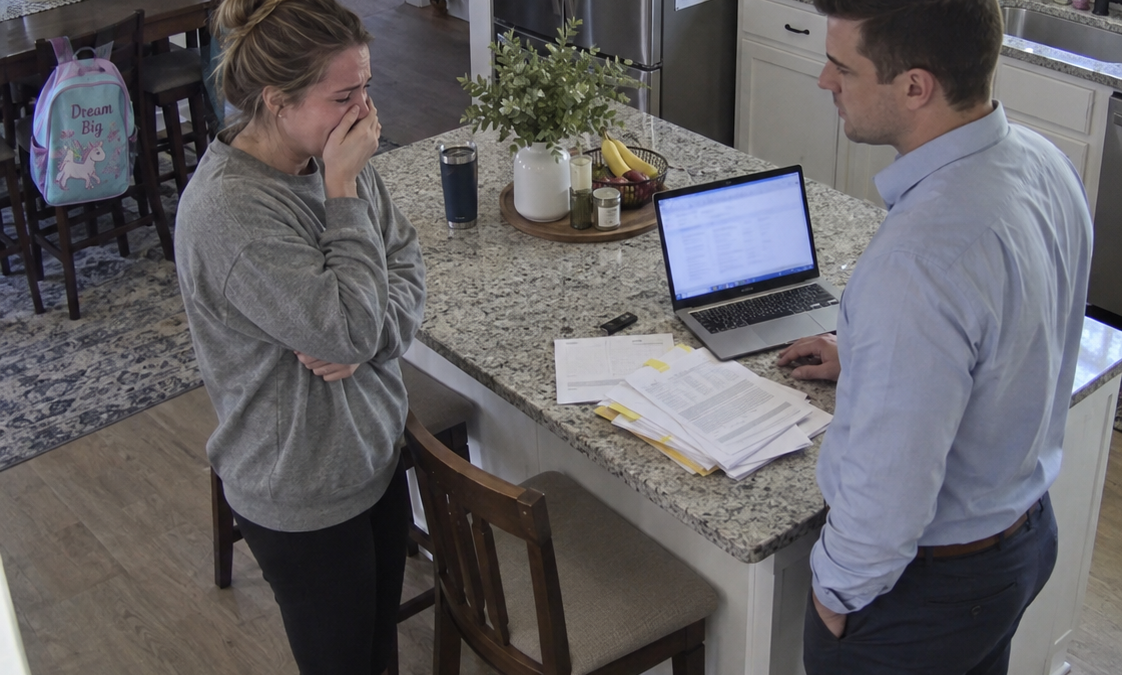
My daughter called me at midnight and said four words I will never forget.
“Dad, don’t come home.”
Then she said, “Go somewhere else.”
Seven minutes later, three police cruisers rolled onto my street, their lights painting my neighbors’ windows red and blue. I watched from a gas station parking lot as officers walked up to my front door with a folder in their hands. My son-in-law stood on the curb, calm as a man waiting for a bus. And when one of the officers turned the folder toward the streetlight, I saw something that made my blood go cold.
My own name was printed across the top.
My name is Julian Carter. I’m 62 years old, and until that night, I believed I had nothing left in this world that could surprise me. I buried my wife, Margaret, six years ago. I sold the last of my construction crew’s equipment the following spring. I had settled into a quiet rhythm of early coffee, a little yard work, and Thursday dinners with my old friends. It was a small life, but it was mine, and I had earned every inch of it.
That Thursday, I had driven across town to eat catfish with Walt Dawson, a man I had known since we were both young enough to think a ten-hour day was a badge of honor. We talked about his knee and the Cardinals bullpen. I remember laughing at something he said in the parking lot. I remember thinking it had been a good night.
I was on the highway a few minutes before midnight, with the radio low and my window cracked, when my phone lit up on the dashboard. The screen said Emily.
My daughter doesn’t call after nine. She texts, usually a photo of my grandson Max with some new bruise from the playground, and she signs off with a row of hearts. A phone call at that hour meant something was wrong, and every nerve in my body understood it before my thumb touched the glass.
“Emily, honey, what is it?”
Her breathing came fast and shallow, like she was holding the phone against her chest and talking into her collar. Somewhere behind her, a door closed.
“Dad, don’t come home.”
I almost laughed. “What? Em, are you hurt? Is it Max?”
“Max is fine. Everyone is fine. Please, just go somewhere else. Don’t ask me why. Just trust me.”
I’ve run job sites in forty-degree rain and talked grown men down off scaffolding. I know the sound of someone choosing words carefully because they’re afraid of who might be listening. My daughter was doing exactly that.
“Emily, I’m turning around right now. Tell me where you are.”
“No, Dad. No.”
Her voice cracked on the second word. Then, so softly I almost lost it under the hum of the tires, she said, “I’m sorry.”
The line went dead.
I called back. It rang four times and rolled to voicemail. I called again and got the same cheerful recording she had made two Christmases ago, her laugh at the end of it. My foot had already pressed the gas harder than it should have, and the exit for my neighborhood was a mile ahead. Every instinct I owned told me to keep driving toward her, wherever she was.
Every instinct but one.
Thirty years of building taught me one thing above all: when someone you trust tells you not to walk under a beam, you don’t walk under it. You ask questions afterward.
I took the exit, but instead of turning onto my street, I pulled into the Sunoco on Maple, four blocks from my house, and parked beside the air pump where the lights were weak. I shut off the engine. My hands were steady on the wheel, which surprised me. My heart was not.
I opened the camera app Emily had installed on my phone last spring, insisting that a man living alone should be able to see his own porch. The porch light was on. For six minutes, nothing moved, and I began to feel like an old fool sitting in a gas station lot, frightening himself over a phone call.
Then my screen buzzed with a motion alert, and the picture filled with light.
A patrol car swung into my driveway, then a second one behind it, then a third parked crooked across the curb. No sirens, just the lights, red and blue rolling over my azaleas and the white siding Margaret had picked out.
I stepped out of the truck and walked to the edge of the lot. From there, I could see the glow pulsing at the end of Maple like a heartbeat. Mrs. Alvarez from next door stood on her steps in a robe, one hand over her mouth.
My hands finally started to shake.
I dialed Marcus Reed, who had spent 26 years with the county sheriff’s department before retiring and who answered on the second ring with the flat, awake voice of a man who once worked nights. I told him everything in about forty seconds.
“Julian, listen to me carefully,” he said. “Do not go home. Do not walk up to those officers. If they’re at your door at midnight, they have paper. And if they have paper, anything you say without a lawyer becomes their story instead of yours.”
“Paper for what? I haven’t done anything, Marcus.”
“I know that. That’s what worries me. Why would anyone come for a man who hasn’t done anything?”
He paused. “Stay where you are. I’m getting dressed.”
I hung up and opened the camera feed again. That was when I noticed the figure at the edge of my lawn.
A man in a pressed jacket stood beside a gray sedan I knew very well because I had helped his wife pick it out.
Ryan. My son-in-law.
He was not pacing or wringing his hands or shouting at anyone to explain. He stood with his arms loosely crossed, nodding at a sergeant the way you nod at a contractor who is telling you exactly what you expected to hear.
I dialed Emily again. Nothing.
Then a tall officer climbed my porch steps and knocked three hard raps while a second man held a thick manila folder against his hip. The camera was good enough to read the tab, and I zoomed until the picture broke into pixels.
There, in black block letters, was my full name.
Julian Thomas Carter.
And beneath it, a case number.
Marcus pulled into the Sunoco twenty minutes later in his old Silverado, a Cardinals windbreaker thrown over his pajama pants. He said nothing until he had looked at my phone.
On the little screen, officers were carrying banker’s boxes out of my front door. Nobody had kicked anything in. Ryan had stepped forward and handed the tall officer a key, the spare Emily kept on a ring, and my door had opened for them as if I had left it unlocked on purpose.
“That’s a search warrant,” Marcus said. “Nobody hauls out boxes on a hunch.”
I wanted to drive down Maple and stand in my own yard until somebody explained themselves. Marcus laid a hand flat on my dashboard the way you steady a nervous horse.
“You walk up there tonight, you’re a man in handcuffs on your neighbors’ phones by morning. Let them finish. Then we find somebody who knows what a warrant is.”
He followed me to the Starlight Motor Inn off Route 40, where a night clerk with a paperback slid a key across the counter without looking up.
Room 114 smelled of bleach and old cigarettes. I had left home with a wallet, a phone, and my reading glasses, which meant my blood pressure pills were sitting in a cabinet that strangers were opening at that very moment.
I sat on the edge of the bed in my shoes until the curtains went gray. I went through my life the way I used to go through a set of blueprints, hunting for the flaw. Taxes paid, no debts, not a parking ticket since the Clinton administration.
I found nothing, and that frightened me more than anything.
Marcus came back at seven with two coffees and a business card.
Daniel Mercer. Attorney at Law. Financial Crimes and Asset Investigations.
His office sat above a title company downtown, a narrow room full of file boxes with a window that stuck. Mercer was somewhere in his fifties, sleeves rolled to the elbow, with the unhurried voice of a man who had delivered plenty of bad news and stopped dressing it up.
He made two phone calls while I drank my coffee, then turned his legal pad around so I could read his handwriting.
“The warrant went out at 12:09 this morning from the county’s financial crimes unit. They took your computers, two external drives, bank statements, tax files, and a filing cabinet from your den.”
He looked up.
“Mr. Carter, do you know a company called Carter Development Consulting LLC?”
“No.”
“It was registered 22 months ago. Your name, your Social Security number, your home address.”
I read the name three times. It was like finding a coat in my closet cut to someone else’s measurements, with my name sewn into the collar.
“I closed my last company,” I told Mercer. “I never started another.”
“Then somebody started one for you.”
He let that sit before asking, “Did you ever sign anything for your daughter or her husband?”
I did not answer right away because the memory was already climbing up.
Emily’s kitchen, a Sunday two years back. Max asleep against my chest with a juice box still in his fist. Ryan sliding a stack of papers across the table, yellow flags marking each line.
“Co-signer pages for the refinance, Dad. Bank needs them by Friday.”
I had signed seven, maybe eight times, one-handed, while Emily watched from the stove with a dish towel over her shoulder. I never read them. I didn’t read them because the man asking was married to my daughter, and reading would have told him I didn’t trust him.
“I signed where he pointed,” I said.
The words tasted like pennies.
Sixty-two years old, and I signed where he pointed.
“Everyone does,” Mercer said, not unkindly. “That’s what people like him count on.”
In Marcus’s truck, I laid the past year out in my head like lumber on a flatbed.
Ryan, over ribs at my place, asking whether I had ever thought about what would happen to my savings if I got sick.
Richard Whitmore leaning back at Max’s birthday party, calling his newest development “the kind of opportunity a man like you shouldn’t leave on the table.”
Barbara patting my wrist at Thanksgiving, telling me it was time to let the younger generation manage the money.
Nathan offering, all teeth, to help me open a business account so my finances stayed tidy.
Each one had felt like a pebble in my shoe. Laid side by side, they looked like a foundation.
Those weren’t offers. They were preparations.
My phone buzzed as Marcus parked outside the motel.
Ryan.
Mercer had told me that if he called, I could listen but should say as little as possible. So I stood beside the ice machine and answered.
“Dad.” His voice was soft and tight, a man who had practiced worry in the mirror. “Thank God. I’ve been trying to reach you all night. You need to understand. Things got complicated.”
“Why were police in my house, Ryan?”
Silence.
I counted four seconds. Behind it, I heard the faint clink of a spoon against a cup, the sound of a man at a kitchen island in no hurry at all.
“You should talk to your lawyer,” he said.
I had never told him I had a lawyer.
A shorter pause followed.
“Everybody has a lawyer, Dad. Look, where are you staying? Emily’s worried sick. We could come get you.”
“I’m fine,” I said, and ended the call.
I stood there with the phone warm in my hand. He hadn’t asked whether I was all right. He had asked where I was.
A man calling to protect you does not count your answers.
Mercer phoned at five while I sat on the motel bed with a vending machine sandwich I had no intention of eating.
“I pulled the incorporation filing from the state,” he said. “If investigators believe you run this company, you’re looking at several hundred thousand dollars in questionable transfers, and a federal prosecutor can be very patient. Indictment is not off the table.”
I closed my eyes.
“But I’ve got that filing next to a signature card from your own bank, and something doesn’t sit right. Your J has a loop at the bottom like a fishhook. This one is a flat line. Whoever signed these was copying you, Mr. Carter, and not well.”
Emily called at six the next morning from a number I didn’t recognize.
I almost let her ring out.
“Dad, it’s me. Don’t say my name.”
She sounded like she had been running.
“I bought a phone at the CVS. Can you meet me? Not in town, please.”
I gave her the Blue Heron Diner out on Route 9, forty minutes east, the kind of place with a pie case by the register and truckers who mind their own business.
Mercer had told me not to contact the Whitmores. He hadn’t said a word about my own daughter, and I was past the point of asking permission to see her.
Marcus drove, then parked his Silverado across the lot with a newspaper he never opened.
She was already in the back booth when I walked in, her hair knotted on top of her head, wearing a gray sweatshirt I recognized as mine, one I had left at her house years ago. No makeup, dark half-moons under her eyes.
When she saw me, she rose halfway, then sat again as if she wasn’t sure she had the right.
I slid in across from her. The waitress poured coffee and left without a word.
Emily’s hands were wrapped around the mug so tightly her knuckles had gone white, and I noticed the pale stripe on her left hand where her wedding ring used to be.
I had rehearsed something on the drive, first angry, then gentle.
What came out was, “You look like your mother after Max was born. Same eyes.”
That did it.
She cried the way she had as a little girl when she knew she’d been caught at something. Silently, shoulders shaking, one hand pressed over her mouth so nobody would turn around.
I reached across the table and covered her other hand with mine. Everything I had planned to say went out of me like air from a tire.
“Tell me everything,” I said. “Start wherever you can.”
She wiped her face with the heel of her palm.
About six weeks earlier, she told me, she had needed to print a permission slip for Max’s field trip, and Ryan had left his laptop open on the kitchen island. An email thread was sitting there between Ryan and Nathan, and one word in the subject line caught her eye.
Carter.
She assumed it was about me, something to do with the house. She opened it, then a spreadsheet, then a list of company names. One of them was Carter Development Consulting LLC, with my address typed beside it like a delivery label.
“I told myself it was a tax thing,” she said. “Some paperwork they did to help you. I made myself believe that for two whole days, Dad. Two days.”
On the third night, she went back and read everything.
She slid the little flip phone across the table and showed me the screenshots she had taken. The images were tilted and slightly blurred, the way a person photographs something while listening for footsteps.
One message was from Nathan to Ryan.
“Once Julian is tied to the LLC, everything points back to him.”
A project called Harbor Ridge Commons was short more than $600,000, and an audit was coming. Somebody had to be left holding the bag, and Nathan had picked who.
“There’s something else,” she said, her voice dropping. “A few Sundays ago, we were at Richard and Barbara’s. I left my phone recording in my purse in the front hall because I didn’t know what else to do. Richard was in his study with Nathan, and the door wasn’t latched.”
She found the file and tilted the speaker toward me, the volume low.
Richard’s voice came through, warm and unhurried, the voice of a man ordering dessert.
“He’ll sign anything if it means helping his daughter. Always has.”
I sat very still.
I’ve been shot at by a nail gun, lost a toe on a job site, and held my wife’s hand while a machine drew a flatline. Nothing in 62 years had gone through me quite like that sentence.
It wasn’t the police or the warrant or even the money. It was the plain, practical way he said it, like a man mentioning a good socket wrench he kept in the garage.
My love for my daughter had been sitting on their books as an asset.
“They found out,” Emily said. “Nathan saw the access log on the laptop. After that, everything changed.”
Barbara started bringing up how expensive Max’s school was and who paid for it. Richard sat Emily down in his study and said, “Family protects family, and you should remember whose roof my son sleeps under.”
“And Ryan?” I asked.
Her mouth twisted.
“Ryan looked right at me across the kitchen and said, ‘You really want to destroy your father’s life over a misunderstanding?’”
“And you knew it wasn’t one?”
“I knew it was never one.”
She drew a shaky breath.
“Last night, I heard him on the phone in the garage. He told someone the police would be at your house by midnight, that Nathan had made a call and it was handled. I had maybe an hour. I locked myself in the bathroom with the faucet running and called you.”
Her eyes filled again.
“I said I was sorry because I was the one who brought them to your table, Dad. I married him. I handed them your Sunday dinners.”
“Emily.”
I waited until she looked at me.
“You are not the reason a man forged my name. You’re the reason I wasn’t standing on my porch when they arrived.”
She nodded, though I could tell she didn’t believe me yet.
Then she reached into the sleeve of the sweatshirt and set a small black thumb drive beside the sugar dispenser.
Emails, photographs of documents, the recording, a list of every shell company she could find.
She had copied it at a public library at nine at night, with Max asleep in a stroller because she hadn’t wanted to leave him alone. Max was safe with her friend Dana now. That was the first thing I asked about, and once I knew, it was the last.
By noon, we were back above the title company, and Mercer plugged the drive into an old laptop that had never touched the internet.
He read for forty minutes without a word. Then he took off his glasses and rubbed the bridge of his nose.
“This helps,” he said. “It tells me where to look. It will not win.”
He explained that their lawyers would say a wife had gone through her husband’s computer in the middle of a marital dispute and pulled sentences out of context. A recording in a hallway, a screenshot with no metadata chain. He needed something nobody could call a grudge.
He tapped the table.
“I need the money, Mr. Carter. Where it came from, where it went, and whose hands were on it.”
I didn’t sleep that night either, but this time I wasn’t staring at the ceiling. I was staring at a legal pad.
Somewhere around three in the morning, I realized that the anger which had carried me out of that motel room was the one tool I couldn’t use, the way you can’t frame a wall with a sledgehammer. Anger would make me loud, and loud men get talked over.
So I put it in a drawer, the same drawer where I once kept the day Margaret died, and I picked up a pencil.
Mercer brought in a forensic accountant, a quiet woman named Priya Nyer, who wore the same gray cardigan three days running and ate almonds out of her purse while she worked.
She spread bank records across the conference table like a surveyor with a plot map and asked me one question at a time.
Had I ever seen this account? No.
This address? No.
This phone number?
It turned out to be a prepaid line registered in my name, and I had never owned it.
By Wednesday evening, she had a chain drawn in red marker on butcher paper.
Whitmore Development paid a vendor called Keystone Site Services. Keystone paid Carter Development Consulting LLC. From the LLC, in neat, round amounts, money flowed to an account at a credit union across a county line, controlled by a signatory named Nathan R. Whitmore.
“It’s clean on paper,” Priya said, capping her marker. “That’s what bothers me.”
Someone had built this to survive a casual look. Every document had a signature, a date, a stamp.
“Stamp?” I said.
She slid a photocopy across the table.
The LLC’s banking resolution, my name typed at the bottom, my flat, fake signature above it, and beside it the round purple seal of a notary public.
Notarized March 8, 2:15 in the afternoon.
The notary attested that Julian T. Carter had personally appeared before her and presented his driver’s license.
I looked at that date for a long time. Then something moved in my memory, slow and heavy, like a truck backing up.
March 8 had been a Tuesday.
I had been at Dr. Okafor’s cardiology office, forty miles away, for the stress test Margaret’s sister had nagged me into scheduling for my first checkup in four years.
I remembered because they had made me walk a treadmill with wires stuck to my chest, and the nurse had called me Mr. Marathon when I finished. I had stopped at a Waffle House afterward because I felt entitled to hash browns.
I kept the receipt.
I keep every receipt.
Margaret used to tease me that I would be buried with a shoebox full of them.
Mercer called the cardiology office himself. By Thursday morning, he had a printed sign-in sheet, a billing record, and the timestamped parking validation, all placing me in a clinic waiting room at the exact hour a notary swore I stood in front of her.
He laid them on the table beside the forged banking resolution, and for the first time in four days, he smiled, just a flicker.
“Somebody got lazy,” he said. “They forged you well enough to fool a bank teller. They didn’t think anybody would check your calendar.”
“They thought I wouldn’t have one,” I said. “A widower, retired. Nothing to account for.”
I did three things after that, and I did them in order, the way you pour a footing before you frame anything.
First, I sat in a bank manager’s office I had been walking into for thirty years and froze every account that might be touched. I put a fraud alert and a credit freeze on all three bureaus. Her hands trembled a little when she processed the papers. I told her not to apologize.
Second, Mercer sent preservation letters to Whitmore Development, Keystone Site Services, the credit union, and the notary herself. Formal demands that nobody delete, shred, or misplace anything, with the legal consequences spelled out in plain English.
Third, he walked my files, my cardiology records, and Emily’s flash drive across the street to the investigator on the case, with a cover letter that described me as a cooperating witness who happened to be the named subject.
I hadn’t realized how much that one sentence would matter until I read it in ink.
Richard called on Friday.
Not Ryan, not Barbara. Richard himself.
His voice was smooth as the hood of a new Lincoln, suggesting we have a conversation, man to man. No lawyers, no drama, just two grandfathers who cared about the same boy.
Mercer didn’t like it. He made me promise to say nothing about evidence, nothing about the investigation, and nothing I wouldn’t want read back in a deposition.
I promised.
Then I put on the gray suit I’d worn to Margaret’s funeral and drove to the Whitmore Development sales office on Saturday morning. It was a glass building out by the new subdivision, with fountains in the retention ponds and a banner reading, “Community. Trust. Legacy.”
He met me in a corner office, standing with a scale model of Harbor Ridge Commons on a table behind him.
Richard Whitmore is a handsome man, silver hair combed back, hands that have never held a shovel. He poured me coffee from a silver pot and talked for ten minutes about Max, about the Cardinals, about how families get through hard patches.
Then he sat, folded his hands, and lowered his voice into something he probably thought was kindness.
“Julian, this has gotten out of hand. Whatever you think you know, I can fix it. A signature here, a quiet conversation there. All it takes is for you to be reasonable.”
I set down the coffee.
“You thought I was the easiest man to sacrifice.”
He laughed, one soft breath through his nose.
“You’re making a mistake.”
“No,” I said. “The mistake was assuming I would panic.”
His smile held, but something behind it shifted, the way a tarp slips when the wind finds a corner.
He told me, almost gently, that I was taking on a family that had friends at the courthouse, in the country club, in the mayor’s office.
I stood up and buttoned my jacket.
“I’m not fighting your family, Richard. I’m documenting what your family did.”
I was almost to the parking lot when Mercer called. His voice had lost its usual evenness.
Priya had found one more entry, a transfer of $118,000 out of the LLC account, timed at 4:52 p.m., barely three hours after the notary stamp on my forged signature.
The bank’s login record showed the device and the IP address that approved it.
“It wasn’t you, Julian,” Mercer said. “It was never going to be you. That transfer was authorized from Nathan’s home computer.”
By Monday morning, the investigator had stopped calling me Mr. Carter in that careful, hand-near-the-holster tone and started calling me Julian.
Her name was Detective Elena Brooks, from County Financial Crimes. She was gray-haired and carried a folder like a hymnal.
Mercer had handed her the IP address, the cardiology records, and Priya’s butcher paper. She sat in his cramped office for two hours without a single remark.
At the door, she paused.
“Don’t talk to anyone in that family. Not because you’ll say something wrong. Because they will.”
It was the nearest thing to an apology I was going to get, so I took it.
Emily had moved into Dana’s spare room with Max and one suitcase.
On Tuesday, she asked me to sit with her in the car outside Dana’s duplex because Barbara had left four voicemails, and she wanted a witness.
I climbed into the passenger seat of her Honda, which smelled of Goldfish crackers and the lavender spray she had worn since high school, and she set the phone on the dashboard on speaker.
Barbara didn’t say hello.
“Your father is destroying your marriage.”
She said every word polished like silverware.
“Families have disagreements, Emily. They do not call the police.”
“You called the police, Barbara. They went to my father’s house.”
“Don’t be dramatic.”
Ice clinked in a glass.
“You can fix this with one phone call to that detective. Say you were confused. Say you were upset.”
Emily’s knuckles had gone pale on the steering wheel, but her voice stayed level.
“I’m not confused. I’ve never been so clear in my life.”
She ended the call and tucked her trembling hands under her thighs like a child.
Ryan rang ninety seconds later, which told me they had been standing in the same room.
He had dropped the polish. He sounded wrecked, and I will admit, he did it well.
“Em, please come home. Max needs his mother and his father under one roof. You have to choose. Me or your dad.”
I expected her to look at me. She didn’t. She watched the sprinkler ticking across Dana’s lawn.
“Ryan, you sat across from my father at Christmas and passed him the potatoes. You knew, and you said nothing. If protecting my marriage means lying about my father, then I already know what I’m choosing.”
He said her name once, low, and the voice underneath it was one I had never heard from him.
Flat and cold as a slab.
“You’ll regret this.”
The line went dead.
She laid her forehead against the wheel, and I put my hand between her shoulder blades the way I used to when she was sick and feverish.
Neither of us spoke. Some silences do more than words, and I had learned that the hard way with Margaret.
On Wednesday, Priya called us into the conference room and didn’t bother with her almonds.
“The Harbor Ridge money didn’t vanish,” she said. “I kept thinking it had to land somewhere, so I followed the round numbers instead of the big ones.”
She uncapped a county deed.
Four months earlier, a company called Lakeshore Holdings had purchased a four-bedroom house on Sear Hollow Lake for $412,000 cash. Lakeshore had been funded through Keystone Site Services.
The deed was titled to one Linda Puit, whom Priya had cross-checked against a wedding announcement.
“Nathan’s mother-in-law,” she said. “Seventy-one years old. Never held a job above minimum wage.”
Mercer stared at the paper a long time.
“That isn’t a bookkeeping error. That’s a plan. Somebody decided where the money would land before they decided who would take the fall.”
I thought about Nathan at my kitchen table last spring, asking after my knees and my garden while he measured my life for a suit that didn’t fit.
He found me Thursday evening.
I had parked in the garage beneath Mercer’s building, and when I came down the stairwell, Nathan was leaning against my truck with his ankles crossed, wearing a charcoal jacket that cost more than my first pickup.
Nathan is 41, with his father’s jaw and none of his warmth.
He didn’t straighten up.
“You don’t understand how this works, Julian.”
“I understand exactly how it works. Do you?”
He studied his cuff links.
“Because here’s how it goes from here. Emily loses her husband. She loses the house, since the mortgage is in Ryan’s name. And the court tends to ask questions about a wife who handed over her family’s files.”
He paused, letting the words settle.
“And there’s a good chance she gets pulled into the investigation, too. Computer access, unauthorized copying. Funny how the law sees that.”
He finally looked at me.
“Is that what you want for her?”
My heart was pounding so hard I could feel it in my teeth.
I thought about Margaret, who once chased a man out of our yard with a garden hose for kicking our dog. I thought about the drawer where I kept my temper.
I kept the drawer shut.
“You already dragged my daughter into this,” I said. “I’m just making sure you don’t get to drag her down with you.”
Something flickered across his face, quick as a bulb dying, and was gone.
He pushed off the truck, brushed a speck of nothing from his sleeve, and walked up the ramp without hurrying.
I stood there until the sound of his shoes faded. Then I sat in the cab with both hands on the wheel until they quit shaking.
Mercer called at nine the next morning while I was on the motel bed, running my thumb over Max’s drawing of a fish taped to the lamp.
“Good news first,” he said, and I could hear paper moving. “The district attorney just widened the investigation. Subpoenas are going out to Nathan, Richard, and Whitmore Development. As of today, you’re a cooperating witness, not a subject.”
I let out a breath I felt I’d been holding since midnight on Maple Street.
“And the bad news?”
“The Whitmores’ lawyer filed a response an hour ago.”
His voice flattened.
“They claim to have a signed authorization for the final transfer. Your signature, Julian, and a date. June 14.”
Mercer read the Whitmores’ response aloud in his office, and every sentence landed like a dropped wrench.
The authorization was a single page on Whitmore Development letterhead, dated June 14, granting final approval of disbursement from Carter Development Consulting LLC.
Beneath it was my name, signed in my own looping, fishhook J.
The real one this time.
They had stopped guessing at my handwriting and found a way to borrow it.
“Where were you that afternoon?” Mercer asked. “Think slowly.”
I closed my eyes.
June 14. Hot, and Max had been out of school for a week.
I had taken him to Dunore Pond at sunrise, and he had caught a bluegill the size of a playing card and refused to let me throw it back until he named it Gerald.
I pulled out my phone and found the photo of Max grinning with the fish held up like a trophy, the corner stamped 7:52 a.m.
Mercer looked at it for a long moment, then shook his head.
“That’s a lovely picture, and it’s useless. They’ll say you fished in the morning and signed in the afternoon.”
The afternoon.
I opened my eyes.
“My truck. The transmission was slipping, and I dropped it at Howal’s Auto Service on Fulton. I sat in his waiting room doing the crossword until almost five because Hal’s coffee machine is the only one in town I trust.”
Mercer sat up.
“Did you pay Visa?”
“I kept the receipt.”
I almost laughed at myself.
I keep every receipt.
By Tuesday, he had Howal’s invoice, the timestamped drop-off at 10:08 a.m. and pickup at 4:46 p.m. He had a card slip, the shop’s payment data, and a signed statement from Howal’s service manager, a heavyset man named Darnell, who remembered me because I’d argued with him over the price of a belt.
Better still, Hal had installed a camera over the waiting room door after somebody stole a tip jar.
Mercer drove out himself and came back with a thumb drive.
On a grainy laptop screen, I watched a gray-haired man in a Cardinals cap fold a newspaper and mutter at a crossword for three hours and 31 minutes.
Not a bad alibi for an old man nobody expected to have an afternoon.
“It’s strong,” Mercer said. “But a lawyer like theirs will say a man can sign a paper at 2:30 and still be in a waiting room by three. I want to prove the signature itself is a lie.”
That’s when the other idea came to me, so quietly I nearly missed it.
After the police took my desktop and drives, I had forgotten about the old Dell in my storage unit on Fairview, the one from my construction days, sitting under a tarp beside Margaret’s sewing machine.
Two years earlier, when Ryan brought me those refinance papers, he had called the next morning to say the bank wanted scans. My newer computer was on the fritz, so I had fed the signed pages through the old all-in-one printer in my garage and emailed them to him from that machine.
It had been dead for months. I had meant to haul it to the dump.
Marcus drove me to the unit that night, and we carried it out like a casket, wiping three years of dust off the lid.
Priya’s contact, a quiet digital examiner named Theo Bannerman, took it apart in a lab and brought it back to life in under a day.
The sent folder was intact.
There was my email to Ryan, timestamped with the scan attached, and beside it sat the original file with its metadata laid bare like the rings of a tree.
Theo spread two printouts side by side on Mercer’s table.
On the left was my scanned signature from that kitchen table afternoon.
On the right was the signature on the June authorization the Whitmores had filed.
He set a transparency over one and slid it onto the other. The lines matched every curve, every hitch, even a tiny ink blot where the pen had skipped at the base of the J.
“Nobody signs the same way twice,” Theo said. “Not even to the pixel. This isn’t a signature, Mr. Carter. It’s a copy.”
Someone had cut it from my scan and pasted it onto a new page.
He tapped the metadata.
The file the Whitmores submitted had been created by a user account tied to Whitmore Development eleven months after I sent that original.
The page I had actually signed said Co-signer Acknowledgment. It said nothing about disbursements.
I sat very still.
Two years of Sundays, and the man I’d led into my family had been keeping my handwriting in a drawer like a spare key.
The interview took place the following Thursday at the district attorney’s office, in a windowless room on the fourth floor with a long table and a water pitcher nobody touched.
Richard, Nathan, and Ryan sat on one side with two attorneys in navy suits. Mercer and I sat across from them, with Detective Brooks and an assistant district attorney at the end.
Emily was in a separate room down the hall, and I had asked them not to bring her in. I did not want her to see this part.
I had spent a week imagining Richard’s face when the evidence came out. I expected rage, or at least that old amused disdain.
Instead, as Theo’s slides came up on the wall one at a time—the invoice, the camera footage, the two signatures laid over each other like a pair of identical fingerprints—I watched Richard Whitmore go quiet.
He folded his hands, unfolded them, and looked at me for the first time without looking down.
It wasn’t respect.
It was recalculation.
The look of a man who has found out the building he’s standing in was inspected by someone he never bothered to meet.
Nathan lost it first.
“This is ridiculous. He could have scanned a thousand—”
His lawyer gripped his forearm, and he stopped mid-sentence, jaw working.
Ryan said nothing at all. He kept looking at the door as though Emily might walk through it. And when the lawyers finally stood and the chairs scraped, he glanced toward the hall one last time.
It was the only moment I felt anything close to pity for him.
Then it passed.
They filed out, and the room emptied until it was only Mercer, the detective, the assistant district attorney, and me.
I was reaching for my jacket when Detective Brooks cleared her throat.
“Mr. Carter,” she said, “for what it’s worth, you weren’t the target we were looking for.”
I turned slowly.
“Then who was?”
She closed her folder and met my eyes.
“The Whitmores.”
The indictments came down in November on a gray Tuesday morning, when the first frost was still on my truck.
Detective Brooks told me later that the county had been building a case against Whitmore Development for fourteen months. A bank compliance officer had flagged Keystone Site Services for round-number payments that didn’t match any real work, and investigators were still hunting for the person at the center when my name turned up, clean and convenient, on a company I never knew existed.
The Whitmores hadn’t picked a stranger. They had picked the one man in their circle they were certain would never check.
Nathan was charged with wire fraud, forgery, and money laundering. Richard was charged with conspiracy and fraud, and his lawyer stopped returning the Gazette’s calls.
Ryan was charged with creating and using falsified documents. Within three weeks, he took a plea and agreed to testify.
Linda Puit’s lake house was seized. The lawn was still green, a child’s kayak turned over beside the dock. Harbor Ridge Commons stood half-built behind a chain-link fence, and somebody had taken down the banner that read “Community. Trust. Legacy.”
I read all of it over eggs at the Blue Heron, and I kept waiting to feel the thing I had imagined feeling.
What I felt was tired and a little careful, like a man setting down something heavy and not yet trusting his back.
Emily was the one I worried about.
She had been living in Dana’s spare room for two months, working mornings at a dental office and sleeping in a twin bed with Max curled beside her. She hadn’t filed for anything.
One evening, I found her on Dana’s back steps, turning the pale stripe on her finger where her ring used to sit.
“I keep thinking I should be certain by now,” she said.
“You don’t have to be anything by now.”
“Everyone expects me to leave him, Dad. You expect it.”
I sat down next to her slowly because my knees had opinions.
“I don’t want you to leave him because I told you to,” I said. “If you walk out of that marriage on my say-so, you’ll spend ten years wondering whose life you were living. I want you to leave because you finally believe what you saw. Or stay if you somehow come to see something else. But you decide it. Not me, not Barbara, not anybody.”
She said nothing for a long time. A dog barked two yards over.
Finally, she leaned her head against my shoulder, and I understood that I was being trusted with something.
She filed in December.
She didn’t tell me until afterward, and I was glad because it meant the choice had been entirely hers.
The civil settlement took longer than the criminal case, as these things do.
Mercer sat across from me with a legal pad and a look I’d come to recognize, the look of a man about to hand a client a bigger number than he expected.
“The Whitmores’ insurers are willing to be generous. You could ask for substantially more than your legal costs, Julian. Damages for the distress, the reputational harm. They’d pay to make this quiet.”
“What would I have to carry to take it?”
He raised an eyebrow.
“Carry?”
“Money from people like that comes with a weight. I spent thirty years building things that stood on their own, and I don’t intend to start living off a foundation I didn’t pour.”
So I asked for four things.
My name removed from every false document, and the LLC dissolved with a court order saying it had never been mine.
My legal and accounting fees repaid down to the last dollar of Priya’s almonds, which she insisted on invoicing at $1.50.
Emily released from every obligation tied to the refinance and every other paper Ryan had ever slid across a table.
And a written finding entered into the public record, stating plainly that Julian T. Carter had committed no fraud.
Mercer read the list twice, then slowly capped his pen.
“Most clients want the villain humbled,” he said. “You want the file corrected.”
“A file is what they used on me.”
In March, I went home.
Marcus drove behind me in the Silverado, partly for company and partly, I think, to make sure I actually walked through the door.
Mrs. Alvarez was already on her steps, holding a foil-covered casserole like a flag of truce. The front door had been repainted a deep, ordinary green, and somebody had trimmed the azaleas.
I found out later it was Walt who had driven across town three Saturdays running with a pair of shears and said nothing to anyone.
I stood in the hallway a good while.
The boxes were gone, the cabinets back in place. Even the pale outline on the den floor where the filing cabinet had stood was fading.
It was only a house again.
It was also, I realized, mine in a way it hadn’t been in years, because this time I knew exactly what it cost to keep.
Emily came by on a Sunday in April, with Max racing ahead of her up the walk, carrying a bucket and a fishing rod nearly twice his height. He was already halfway to the backyard before she could say hello.
She laughed, a real laugh, the first I had heard since the diner.
We took our coffee out to the porch and watched him dig for worms along the fence line.
“I thought that phone call would save you,” she said after a while.
She was looking at the spot in the driveway where the first cruiser had parked.
“That’s all I kept telling myself that night. Just get him out of the way. I didn’t think past that.”
I smiled.
“It did.”
“You did the saving, Dad. You and Mr. Mercer and a shoebox of receipts.”
“I was standing in a gas station lot because my daughter told me to be. Everything else came after.”
She turned the mug in her hands.
“Are you still angry?”
I took my time with that. I owed her the truth, and the truth had gotten complicated.
“I was angry because they thought money made them better than us. That we were a pair of people to be used and tidied away.”
A bird landed on the rail and thought better of it.
“But I never needed them to lose everything. I needed them to stop being able to take it from somebody else.”
“Then what did you want?”
I watched Max hold up a worm, triumphant, and wave it at both of us across the yard.
“I wanted you to know that family isn’t the people who demand your loyalty,” I said. “It’s the people who tell you the truth when the truth is dangerous.”
Her eyes filled, and she didn’t wipe them. She just reached over and took my hand, and we sat like that while the afternoon went gold.
For a long time, I had thought the night the police surrounded my house was the night I lost everything.
It turned out to be the night I found out who was actually standing on my side.
That night, my daughter told me not to come home. I listened, and by morning, I understood why.
Sometimes the person warning you to run isn’t trying to keep you from the truth. They’re giving you one last chance to survive it.
If this story stayed with you, I’d like to hear where you’re watching from. Leave a comment below and tell me whether you would have turned the car around that night or done what Julian did.
And if you’ve ever had to choose between loyalty and the truth, I hope you know you’re not alone.
We share stories like this every day, so please subscribe so you never miss one.
Thank you for spending this time with me.








