My bil manipulated my wife into demanding a divorce, i agreed on the spot, then i stopped paying everything, including $14k tuition for his son and his porsche, three days later…
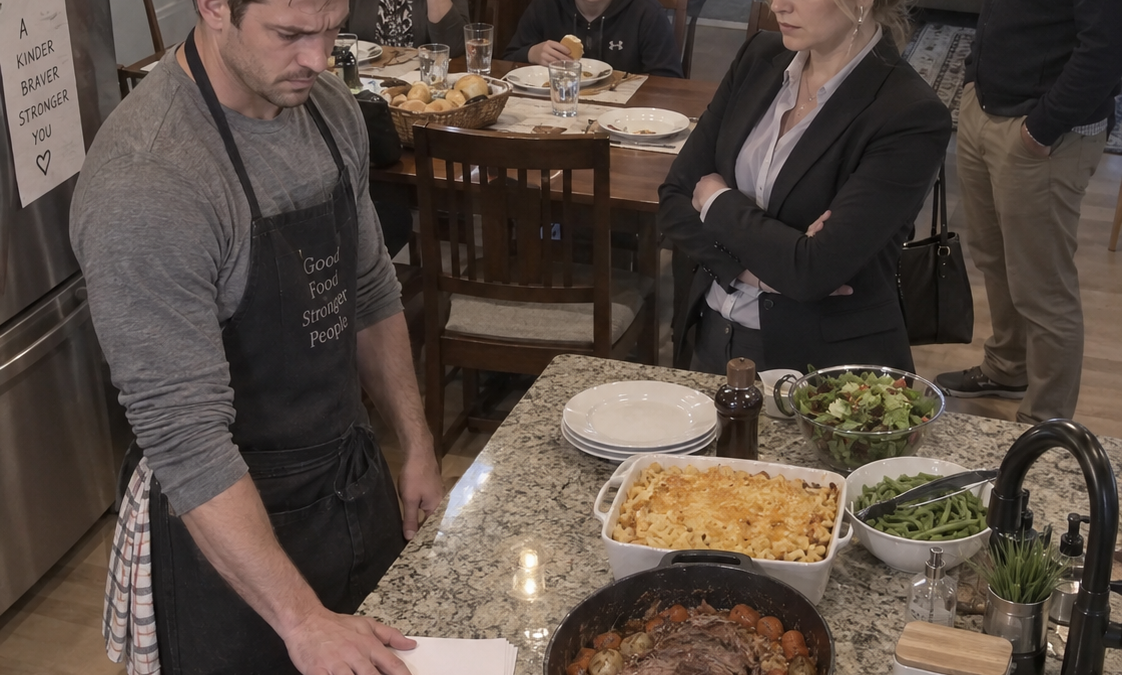
My name is Adrien Voss, and I am 32 years old. After six long, exhausting years of marriage, and after quietly draining $82,000 of my own personal life savings to fund my wife’s entirely ungrateful family, I stood in my own kitchen smelling the dinner I had spent hours cooking and listened to my wife demand a divorce. She did it just to appease her deadbeat brother.
I had spent two hours in that kitchen preparing a massive feast. But more importantly, I was holding a sealed, heavy folder containing the finalized adoption papers for a little orphan girl I was bringing into our home. I wanted to surprise her. I wanted to build our family.
Instead, my brother-in-law, Trent, stood right next to her in the entryway, a sickening smirk plastered across his face, while my wife, Kayla, looked me dead in the eye.
“I think maybe we should consider divorce,” she said, her voice entirely flat. “You’re just not providing for this family the way you should. You’re holding us back.”
They said this in front of Trent’s 12-year-old son, Owen. They said it in front of my mother-in-law, Carol. They practically laughed at my silence like my entire existence was some kind of pathetic, subservient joke.
But there was one major thing they didn’t know.
They had absolutely no idea about the ironclad legal paper trail I had been quietly, meticulously assembling for years. They knew nothing about the secret family inheritance and the trust fund that legally backed every single move I had made.
And right now, as I sit here telling you this story, they’re staring down massive, crushing debts, begging me to answer their desperate phone calls, and finally realizing they’re about to lose absolutely everything they thought they had stolen from me.
Before I tell you exactly how I dismantled their perfect little scam and took back my life, hit that like button if you believe in true justice. And don’t forget to let me know exactly where you’re watching from in the comments below, because your support genuinely means the world to me right now.
Now, let’s go back to the exact moment everything in my life shattered.
The word divorce left my wife’s mouth the same way her brother always entered our home: without warning, without a shred of respect, and with an unbelievable, suffocating sense of entitlement.
It didn’t just hang in the air the way people say it does in the movies. It landed like a heavy, cold stone on the expensive granite countertop I had paid for with my own salary.
I had spent two entire hours in that kitchen. There was a massive pot roast in the oven, the slow-cooked kind, surrounded by root vegetables and a rich red wine reduction that filled our entire Chicago apartment with a smell that felt like warmth, like security, like home.
I made baked macaroni and cheese entirely from scratch. None of the boxed stuff. I grated three different types of expensive cheese because Owen had asked for it three weeks earlier during a passing conversation, and I hadn’t forgotten.
I stood at that stove in a kitchen that was technically mine, inside an apartment that was technically ours, cooking a feast for people who had never once, not in six years, said thank you for a single meal I’d provided.
That was the exact night I had planned to tell Kayla about the adoption.
The pregnancy route hadn’t worked out for us, and the strain had been immense. But I’d taken the initiative myself. I’d gone to the adoption agency alone on a freezing Tuesday afternoon, sat in a cold leather chair in a sterile office, kept my winter coat on because I was shivering from nerves, and signed the final legal documents to welcome a little girl into our lives.
I had been carrying that folder around for a week, turning it over in my hands like something fragile, waiting for the perfect quiet moment to share the greatest news of my life.
I wanted it to be just us.
I had a bottle of sparkling apple cider chilling in the refrigerator. I had even written down on a scrap of paper exactly what I was going to say to her.
But Trent arrived at 5:30.
He walked through the front door of our Lincoln Park apartment without knocking. He never knocked. He believed our home was an extension of his own personal real estate.
He dropped his heavy leather coat—a coat I had paid for the previous Christmas—onto the armchair I had specifically asked him not to use as a coat rack, then settled heavily onto the couch, cranking his phone volume all the way up.
Owen ran straight to the refrigerator and started rummaging through the groceries I had just bought.
My mother-in-law, Carol, was already there. She had arrived at 4:00 under the absolute false pretense of keeping me company while I cooked. Instead of helping, she spent the entire hour seated comfortably at the kitchen island, meticulously cataloging every single imperfection she could find in my home.
She pointed out a tiny water spot on the stainless-steel faucet. She complained about the way I’d sliced the carrots, claiming they were far too thick for her to chew properly. She lifted the heavy lid on the pot roast, lowered it without a single positive comment, and made a sound I had come to recognize as her signature version of intense disapproval.
By the time I was plating everything, my hands smelled like fresh rosemary and rendered fat, and I had a pounding headache behind my left eye that I’d been trying to ignore since noon.
I remember standing at the counter that afternoon, rehearsing the exact tone I wanted to use when I finally told Kayla. Warm, but not overly dramatic. Steady enough that she’d understand how seriously I meant it. Gentle enough that it would feel like a gift and not an ambush.
I had practiced it in the shower that morning, practiced it again in the car on the way back from the grocery store, practiced it a third time while the pot roast browned in the oven.
Somewhere in the back of my mind, I had built an entire small movie of how that evening was supposed to go. The two of us sitting across from each other after dinner, the folder sliding across the table, her hands flying to her mouth, both of us crying the good kind of tears for once instead of the kind we’d been crying separately for years.
I had even picked out the exact words I wanted to open with. Something simple. Something true.
“I have something I need to show you, and I think it’s going to change everything for us in the best possible way.”
I never got to say a single word of it.
The version of that evening I had built so carefully in my head never had room in it for Trent walking through an unlocked door at 5:30. And that, in hindsight, tells you almost everything you need to know about how much space that family had already claimed inside a life I still foolishly thought of as entirely my own.
Kayla came home at 6:15. She looked the way she always looked after a long day at the corporate firm: pressed blouse, expensive shoes clicking on the hardwood, carrying a designer bag she insisted she needed for her image.
Trent intercepted her in the entryway before she could even reach the kitchen island, and I heard him perfectly from where I stood with a serving spoon in my hand.
His voice shifted into that specific register he reserved exclusively for his sister. Softer. A little breathless. Engineered perfectly to sound wounded and deeply concerned.
“Kayla, I really need to talk to you,” Trent said. “Adrien ordered another one of those subscription boxes today. The third one this month. I saw the package downstairs. You work so hard for your salary, and he just… I don’t know. I worry about you. You’re carrying the weight of this whole family.”
I set the serving spoon down on the counter. The metal clinked loudly against the stone.
I had ordered a package of custom nursery decorations, a set of high-end baby monitors, and a book on early childhood development. And I had paid for all of it with my own personal money. Money from the savings account I had built during my years as a logistics coordinator before I ever moved to Chicago and gave up my own career trajectory to support Kayla’s climb.
That massive detail never seemed to make it into Trent’s twisted version of reality.
Kayla walked into the kitchen with a deep crease between her eyebrows. I knew that look. It meant she had already made up her mind about whatever lie Trent had just fed her.
“What did you buy now, Adrien?” she demanded, crossing her arms.
“Things I needed,” I said, keeping my voice completely level. “They were personal items.”
“Three huge boxes of personal items,” she shot back.
Trent called out from the living room couch, not even bothering to lower his voice.
“He’s probably buying more useless junk to guilt you into paying his way again. Every time he wants something, he plays the victim.”
It was a staggering, deeply offensive accusation considering I had funded Trent’s entire pathetic existence. But Kayla didn’t tell him to stop. She rarely did.
Carol, seated at the head of the table as if she owned the place, arranged her napkin across her lap and offered her practiced, toxic version of diplomacy.
“Adrien, sweetheart,” Carol cooed condescendingly, “nobody is accusing you of anything, but you have to think about the whole family. We all share in Kayla’s success. That means you need to be mindful of the budget. We have a lot of expenses.”
Mindful.
The word echoed in my head like a gunshot.
I had been mindful for six years.
I had been mindful when I started quietly covering Owen’s private school tuition—$14,000 a year, straight out of my own pocket—because Trent claimed he was waiting on a big promotion and the late notices were stacking up.
I had been mindful when Carol needed her roof repaired and Kayla said her account was short that month. I’d been mindful of every single grocery run that somehow fed five adult-sized appetites on a rotating basis. I had been mindful of the insurance premiums I started autopaying for Trent because he’d missed two in a row and his policy was about to lapse.
I had been so incredibly mindful that I had completely forgotten to be anything else.
I had forgotten to be a person.
“Maybe,” Kayla said coldly, setting her purse down, “we should talk about your spending separately from the family budget.”
“That’s fine,” I said.
“In fact,” Kayla continued, and something in her tone fundamentally shifted, taking on a sharp edge I immediately recognized as Trent’s direct influence wearing her voice, “I think maybe we should just talk about whether this arrangement is working at all. I think maybe we should consider divorce.”
Absolute silence filled the apartment.
The bubbling of the pot roast suddenly sounded incredibly loud.
Trent looked up from his phone with the expression of a man who had just won the lottery. He had finally done it. He had finally convinced her to cut me loose so he could have full, unfiltered access to her income.
Owen reached across the table and took a dinner roll, completely oblivious. Carol smoothed the tablecloth and said absolutely nothing to defend my marriage.
I looked at my wife.
I had loved this woman deeply since I was 26 years old. I had moved away from my hometown, from my parents, from my friends. I had built a life around her and called it home.
“Okay,” I said.
The word came out quiet, completely steady, and completely devoid of emotion.
Trent’s head snapped up. Kayla blinked, stepping back slightly.
“Okay,” I repeated, louder this time. “If that’s what you really want.”
I reached into the kitchen drawer.
I pulled out the thick, heavy folder containing the adoption papers. I dropped it on the granite counter with a heavy thud right in front of her.
“I finalized the adoption today,” I said, my voice like ice. “I found out three weeks ago we were approved for a little girl. I wanted to tell you tonight we were going to be parents.”
Nobody spoke.
Kayla’s eyes widened, darting from the folder to my face.
Then Trent laughed. A short, sharp, cruel laugh.
“You’re making that up,” Trent sneered. “You don’t have the money for an adoption.”
I didn’t even look at him. I looked directly at Kayla.
“I’ll pack my bags,” I said. “I’ll be out of here in twenty minutes. And, Kayla, you don’t need to worry about Owen’s $14,000 tuition after this month. I’m stopping the autopay tonight. Oh, and Trent, the lease on the Porsche is entirely on you starting tomorrow. I’m done.”
I turned on my heel and walked into the bedroom.
I packed a single large suitcase: my clothes, my laptop, my files, and the locked metal box I kept in the back of my closet.
That box held every receipt, every bank transfer, every screenshot of Trent begging for cash, every record of Carol’s debts.
I hadn’t kept those records because I planned to use them aggressively. I kept them because somewhere deep down, my subconscious knew I would eventually need to prove I had actually existed in this family without being crazy.
When I rolled my suitcase into the hallway, Kayla was standing near the front door. She looked pale.
“You’re really leaving?” she asked, her voice wavering. “Over one argument?”
“Over six years of arguments,” I said, stepping smoothly around her. “Tell Trent the school will be sending the tuition notices to his address from now on. He should plan his finances accordingly.”
Trent yelled something from the living room, but I didn’t care.
I closed the door behind me.
The lock clicked.
It was the sound of my prison door finally opening.
I didn’t look back.
I have spent my entire career in logistics thinking about single points of failure: the one weak link in a supply chain that, if it breaks, brings the whole network grinding to a halt.
I used to build contingency routes for other people’s businesses. Redundant suppliers. Backup carriers. Alternate paths in case the primary one collapsed.
It took me six years to realize I had built my entire personal life with exactly one route in and no route out. A single overloaded corridor running straight from my paycheck to their needs.
No redundancy. No backup plan. No alternate path for me.
Standing in that elevator with a suitcase at my feet, I finally understood that the failure wasn’t a single bad decision. It was a structural one, the kind my father would have flagged on a blueprint before the concrete was ever poured.
You don’t build a system with a single point of failure and call it resilient.
I had for six years, and I was the only load-bearing wall in it.
I took the elevator down to the parking garage, threw my suitcase into the trunk of my car, and drove straight out of Chicago, merging onto the highway heading north toward Appleton, Wisconsin.
The night was pitch black, the highway lines blurring together under the harsh glare of my headlights. The heater blasted warm air, but I felt freezing cold from the inside out.
The drive took nearly four hours, and every single mile marker felt like a physical weight pressing down on my chest.
I spent the entire drive trapped in my own head, calculating the exact horrifying cost of my blind loyalty.
$82,000.
That was the number.
Over six years, I had drained my personal savings—the money I had carefully accumulated before I ever met Kayla—to keep her dysfunctional, parasitic family afloat.
It never started with massive demands. It started small, the way these financial traps always do. A missed utility bill here. A sudden medical expense for Carol there.
When we first got married, I desperately wanted to be the good husband. I wanted to be the reliable rock in the stormy sea of their endless family drama. I thought that by helping them, I was showing Kayla how much I loved her.
But those small favors metastasized.
They grew into massive, unyielding obligations that strangled my own future.
I remembered sitting through agonizing HOA meetings in our upscale building, Kayla standing there holding a glass of wine, boasting to our wealthy neighbors about our investments and her career trajectory while I was secretly skipping lunches and wearing four-year-old shoes just to ensure there was enough cash flow to cover Trent’s extravagant lifestyle.
Trent was the golden child.
At 35 years old, the man had never held a steady job for more than eight months. He was always “between opportunities,” always waiting for a massive payout from some sketchy tech startup that never materialized.
But in Kayla and Carol’s eyes, Trent was a misunderstood genius who just needed a little support.
Then came the college-fund excuse.
Trent convinced Kayla that young Owen needed to attend an elite preparatory academy to secure his future in a competitive world. When Trent inevitably defaulted on the tuition after the first semester, Kayla came to me in tears.
We were sitting in the living room. She was crying, holding my hands.
“It’s for Owen’s future, Adrien,” she’d pleaded. “You can’t let a child suffer because of his father’s temporary setbacks. We have the money.”
But we didn’t have the money.
Kayla’s income went strictly to our mortgage and her lavish lifestyle.
I had the money in my premarital savings, so I paid it.
$14,000 a year, transferred directly to the academy straight out of my own accounts.
Then came the Porsche.
The most infuriating manipulation of all.
Trent convinced my wife that he couldn’t possibly land a high-paying executive job if he drove up to interviews in a beat-up sedan. He needed to project success. He needed leverage.
Somehow, through a masterful campaign of guilt-tripping and screaming matches, Kayla manipulated the narrative so brilliantly that I found myself at a luxury car dealership, co-signing a lease for a man I despised and quietly making the heavy monthly payments just to keep the peace in my own home.
I had funded the illusion of their success while my own dream of being a father was put on indefinite hold.
I didn’t understand until much later, from something Devon Roar mentioned almost in passing one night, exactly where this particular pattern in the family had first taken root.
Carol had raised Trent and Kayla almost entirely alone after their own father walked out when Trent was seven and Kayla was eleven, leaving behind nothing but unpaid bills and a note on the kitchen table.
Devon told me that Carol had spent years afterward convinced that Trent—the younger of the two, the one who’d taken the abandonment the hardest—needed to be protected from ever feeling that same instability again, no matter the cost, no matter how old he got, or how many chances he squandered.
Kayla, older and steadier, had been quietly recruited into that same protective mission almost from childhood. She was praised specifically for being the strong one, the one who didn’t need extra help, the one who could look after herself while all the family’s limited attention and resources flowed toward her brother.
It explained a great deal, hearing that.
It explained why Kayla had spent her entire adult life still performing the role of the strong one who required nothing, right up until she needed someone else entirely—me—to become the family’s actual financial floor instead of her.
It didn’t excuse a single dollar of it.
A grown woman with a corporate salary did not get to blame a wound from childhood for choosing again and again, as an adult, to bankrupt her own husband to protect a man who had never once shown either of them that he deserved that kind of protection.
But I stopped being quite as baffled by the mechanics of it once I understood where the blueprint had originally been drawn, decades before I ever walked into that family, in a kitchen with an unpaid bill and a note nobody ever got to ask questions about.
I pulled into my parents’ driveway in Appleton at 2:00 in the morning.
The familiar porch light was on, casting a warm yellow glow over the old brick house. Before I even cut the engine, the front door opened.
My mother, Grace, stood there in her thick winter robe over her pajamas.
She didn’t say a word.
She just walked out into the freezing cold, took one look at my face and the heavy suitcase in my hand, and pulled me into a deep hug.
It smelled like lavender laundry detergent, the exact same scent she had used on my bedsheets since I was a child.
She didn’t ask questions.
She just guided me inside, made a pot of decaf coffee, and sat with me in the quiet kitchen until I stopped shaking.
I don’t remember most of what either of us said in that kitchen at 2:00 in the morning. Only fragments.
The hum of the refrigerator. The specific way my mother kept refilling my mug even though I’d barely touched the first one. The way she sat close enough that our shoulders were nearly touching without ever once saying the thing I think we both knew she wanted to say, which was some version of, “I told you six years ago that boy’s family was going to bleed you dry.”
She never said it.
She has never said it since.
Not once, not even now.
And I have come to understand that particular restraint as its own quiet form of love: the choice not to make somebody’s worst night about how right you’d been.
At some point past three, she simply said, “You’re safe here, and you’re going to stay as long as you need to, and there’s not one single string attached to that.”
Then she got up and started looking for extra blankets like the conversation had never happened at all.
I think I fell asleep somewhere around four, still fully dressed on top of the covers in my childhood bedroom, with the porch light my mother had left on for me glowing faintly through the curtains.
The next morning, the smell of bacon and eggs pulled me out of a restless, exhausted sleep.
I walked downstairs to find my father, Frank, sitting at the kitchen table.
My dad is a man of few words, a retired structural engineer who built his entire life on logic, blueprints, and unshakable foundations.
I sat down across from him, accepted a mug of black coffee, and told them both everything.
I didn’t hold anything back.
I laid out the $82,000. I told them about the divorce demand. I told them about the finalized adoption that was now in jeopardy. I told them about the Porsche, the tuition, the constant belittling.
My dad listened completely still.
He didn’t interrupt.
He just watched me, absorbing the information.
When I finally finished, out of breath and exhausted, he set his mug down on the wooden table.
“There’s a family law attorney here in town,” my dad said, his voice low and incredibly firm. “I’ve heard exceptional things about him from a former colleague. His name is Nolan Pierce. I’m getting his number right now.”
“Dad, I don’t know.” I sighed, rubbing my temples. “I don’t want a long, drawn-out war. I just want to be free of them. Maybe I should just walk away.”
My father leaned forward, resting his heavy forearms on the table, and looked me dead in the eye with a terrifying intensity.
“Adrien,” he said, “you are going to need someone in your corner who knows the law far better than either of us does, because they are not just going to let you walk away. Parasites don’t let go of the host voluntarily. They will come for your blood, and they will try to take whatever you have left. You are fighting back.”
He wasn’t wrong.
I called Nolan Pierce’s office at 9:00 that morning, and by one that afternoon, I was sitting across from him.
Nolan was in his early fifties.
His office wasn’t flashy. There were no marble columns or expensive modern art, just healthy green plants, floor-to-ceiling bookshelves, and the quiet, lethal authority of a man who had sat across from a great many arrogant people and dismantled them piece by piece.
I handed him my locked metal box and gave him the combination.
For two straight hours, he read through every single document.
The bank statements. The transfers from my premarital account. The receipts with my name on them. The printed screenshots of Trent’s endless texts begging for money.
He didn’t change his expression once.
When he finally finished, he neatly stacked the papers, folded his hands on his desk, and looked at me.
“You spent approximately $82,000 of your premarital savings over six years on your wife’s family’s expenses,” Nolan stated. It wasn’t a question. “$14,000 a year for three years of private school tuition. Consistent premium payments for a luxury vehicle lease. A pattern of financial support for your mother-in-law’s debts. This is remarkably well documented.”
“I wasn’t doing it to build a case,” I said, feeling a sudden need to defend my past stupidity. “I was just trying to survive. I thought I was keeping my marriage together.”
“I know,” Nolan said steadily. “But it builds a case anyway.”
He pulled a specific document out of the stack: the lease agreement for Trent’s Porsche.
“Here is the detail they overlooked,” Nolan continued, tapping the paper with his pen. “You co-signed this, but because you made every single payment directly from a sole proprietorship account you maintained strictly before the marriage, and because we have documented text messages where Trent explicitly calls this arrangement a loan that he promises to pay back when he gets a job, this changes everything.”
I sat up straighter.
“What do you mean?” I asked.
Nolan smiled. A cold, sharp smile.
“We have massive leverage. The law differentiates between a marital gift and a legally binding personal debt. They think you’re a victim they can discard. We’re going to classify these payments as a debt, and we’re going to collect.”
Right at that exact moment, my phone buzzed violently on Nolan’s desk.
The screen lit up with a text message from Trent.
Hey man, Owen’s school just sent a final notice. The autopay bounced. You need to fix this today or they won’t let him attend classes on Monday. Stop acting like a child and pay the bill.
I stared at the screen.
My blood boiled.
I looked up at Nolan.
“What is our first move?” I asked.
“Our first move,” Nolan said, leaning back in his chair, “is absolute silence. We wait for them to make a mistake. And judging by the panic in this text message, they are about to make several.”
The storm didn’t just break over the next few days.
It completely shattered the foundation of whatever residual respect I had left for my wife.
Three days after I arrived in Appleton, sitting safely in my childhood home, the first official legal strike landed.
Kayla’s attorney, an aggressively slick Chicago lawyer named Grant Ashworth, sent over a draft settlement agreement via email.
It was a masterpiece of absolute, unfiltered greed.
I printed it out and read it at my parents’ kitchen table.
The document was designed to ensure I walked away completely financially ruined.
Grant Ashworth was demanding a wildly disproportionate split of our assets. He wanted me to waive all rights to our shared real-estate equity in the Chicago apartment, claiming Kayla needed it to maintain her established standard of living. He wanted a massive chunk of my retirement fund.
And most insultingly, buried on page nine, the draft included a clause suggesting I remain responsible for ongoing outstanding familial obligations, a thinly veiled legalistic attempt to force me to keep paying Owen’s tuition and transportation long after the divorce was finalized.
They literally wanted me to walk away with nothing but the clothes on my back while legally binding me to continue funding their luxurious delusions.
My phone rang.
It was Kayla.
I watched her name flash on the screen and let it ring until it went to voicemail.
A minute later, a text came through.
Adrien, Grant sent the draft. Just sign it. It’s totally fair considering you abandoned us. Also, the school called me at work today because the tuition deposit failed. Can you just handle this one last time? You know the process. It’s confusing for me to set up the portal.
I felt a cold, hard knot form deep in my stomach.
I realized in that moment she wasn’t just brainwashed by her brother.
She was actively, willingly participating in the extortion.
She actually believed I owed them this money.
I immediately logged into my banking portal.
With a few clicks, I officially froze every single joint credit card. I removed her as an authorized user on all my primary accounts. I transferred my remaining personal funds to a new secure account at a local Wisconsin bank.
I cut the financial cord completely.
“We are absolutely not signing this garbage,” I told Nolan on a conference call an hour later.
“Of course not,” Nolan confirmed, his voice vibrating with professional anticipation. “We file our own petition. We don’t wait for them to set the terms. We’re going to aggressively countersue for the recovery of the premarital funds used for her family’s expenses, citing financial coercion.”
That afternoon, I got a call from Cory Hastings.
Cory was a mutual friend, a guy I used to play golf with in Chicago, always playing the role of the neutral peacemaker who just wanted everyone to get along.
“Hey, man, I heard what happened,” Cory said, his voice dripping with heavy, forced sympathy. “I’m so incredibly sorry. I’m actually passing through Wisconsin tomorrow for a regional sales meeting. Let me buy you a cup of coffee. We really need to talk. I want to hear your side.”
I agreed, desperately needing a familiar face that wasn’t a lawyer or a parent.
We met at a quiet diner just off the highway.
Cory arrived in a sharp suit, ordered black coffee, and immediately leaned in across the booth, his eyes darting around the empty diner.
“Listen, Adrien. Kayla is an absolute mess right now,” Cory began, lowering his voice. “She’s talking about taking you to the cleaners, man. She’s telling everyone you hid money from her. Did you? I mean, between us guys, did you siphon off the joint account before you left? Because if you did, you can tell me. I won’t judge.”
Something in Cory’s tone felt entirely wrong.
Too polished.
Too leading.
Like a script.
I glanced down.
His phone was sitting face down on the table, but the edge of the case was tilted slightly, propped against a sugar dispenser. The tiny microphone port at the bottom pointed directly at me.
The betrayal hit me like a physical punch to the gut.
Cory wasn’t here as a friend checking in.
He was a rat sent by Kayla and her lawyer to secretly record me and bait me into admitting financial misconduct they could use in court.
I gripped my coffee mug so hard my fingers ached.
I wanted to yell, to flip the table and drag him outside, but I didn’t.
I took a slow breath, letting the anger crystallize into something much more useful.
I leaned in closer, dropping my voice to a conspiratorial, panicked whisper.
“Cory, honestly,” I said, watching his eyes light up with eager anticipation, “I left the joint accounts completely untouched. I would never steal from my own wife. You can check the records. But you know what’s really crazy? You know what I’m actually terrified of?”
“What?” Cory asked, practically leaning over the table.
“Trent has been sending me threats,” I lied smoothly, weaving a story out of thin air. “He texted me last night. Told me if I don’t keep paying for his Porsche, he’s going to trash the Chicago apartment, smash the windows, and blame it on me so the police arrest me for destruction of property. I have it all in writing. He’s actually terrifying. The guy is unhinged.”
Cory’s face completely fell.
That wasn’t the confession he was looking for at all.
That was evidence of a felony against the brother of the woman paying him to spy.
“Wait. Trent threatened to frame you?” Cory stammered, his eyes wide.
“Oh, absolutely,” I continued, pressing the advantage. “I’m actually handing all those threatening texts over to the police tomorrow morning. Extortion and conspiracy to commit fraud or felonies, right? I’m pressing charges. I just hope Kayla isn’t involved in his scheme, because she could go to jail as an accomplice.”
Cory swallowed hard.
His face went pale.
He quickly grabbed his phone and awkwardly tapped the screen, desperately trying to stop the recording without making it obvious.
“Wow, that’s… that’s really intense, man,” Cory said quickly, sliding out of the booth. “I gotta go. Actually, my meeting got moved up. Stay safe, Adrien.”
He threw a ten-dollar bill on the table and practically ran out of the diner.
As soon as his car pulled out of the parking lot, I pulled out my own phone.
I’d started a voice memo the absolute second I sat down, suspecting something was off.
I’d captured his entire leading interrogation, the clicking of his phone, and his panicked retreat.
I attached the audio file to an email and sent it directly to Nolan Pierce with the subject line: They’re trying to manufacture evidence.
The betrayal was total and absolute.
My wife, my brother-in-law, my mother-in-law, and now even my friends.
They had all aligned against me for the sake of protecting their ATM.
But they had fundamentally underestimated me.
I wasn’t the soft, compliant doormat they thought I was.
I was a man with nothing left to lose, backed by a lawyer sharpening his knives for a slaughter.
The silence from Chicago over the next three weeks was deafening.
It wasn’t a peaceful silence. It was the tense, suffocating quiet that happens right before a massive hurricane makes landfall.
Back in Appleton, I focused entirely on rebuilding the foundation of my life.
I officially launched my own remote logistics consulting firm, working from a small desk in my childhood bedroom, staring out the window at the old maple tree in the yard.
And for the first time, I finally felt a profound sense of control over my own income.
I was taking on clients, writing contracts, building something that belonged entirely to me.
I wasn’t grinding away in a miserable cubicle just to hand my paycheck over to a man who openly mocked me.
My first client was a small furniture manufacturer two towns over, a company struggling with a chaotic shipping schedule that was costing them thousands every month in late penalties and wasted warehouse space.
I spent a full week mapping their entire distribution network from scratch, identifying exactly where the bottlenecks were forming and exactly which routes could be consolidated without sacrificing delivery windows.
It was, in its own small way, the same work I had failed to do for six years in my own life: tracing a system back to its actual points of strain instead of simply throwing more resources at whatever complained the loudest.
The owner called me two weeks after I delivered the new routing plan just to tell me his late fees had dropped to nearly zero.
It was a small thing, a modest contract, nothing close to what I’d once made at the corporate firm in Chicago.
But it was entirely mine, built on my own judgment, answerable to no one but the client and the math itself.
Word spread slowly through a small circle of manufacturers in the Fox Valley area.
One referral led to another.
And within four months, I had more client work than I could comfortably handle alone.
I turned down two clients that first year. Both of them referrals. Both of them profitable. Both of them the kind of contract I would have grabbed without a second thought back in Chicago.
One wanted me to redesign a distribution schedule in a way that technically complied with labor law while quietly squeezing unpaid overtime out of warehouse workers who had no union and no leverage to push back.
The other wanted me to falsify a delivery timeline to help him win a bid he hadn’t actually earned.
I said no to both, cleanly, without agonizing over the lost income the way the old version of me would have.
Because I had learned something expensive and permanent about what happens when you let somebody else’s convenience become your own compromised foundation.
A business built on cutting the wrong corner is no different from a marriage built on quietly funding somebody else’s dysfunction.
It might hold for a while.
It is not built to last.
And I had already paid enough tuition to recognize a bad blueprint the moment it landed on my desk.
I hired a part-time assistant, a sharp recent graduate named Priyanka, who handled scheduling while I focused on the actual routing analysis.
And for the first time in years, I ended most days feeling something close to simple, uncomplicated pride instead of quiet, grinding resentment.
But behind the scenes, far away from my quiet window, Nolan Pierce was systematically, ruthlessly turning the screws on Kayla and Trent.
And without my automated payments constantly rescuing them, their financial reality collapsed spectacularly.
Nolan formally notified the luxury auto financing company that my financial backing for the Porsche lease was terminated immediately due to pending divorce litigation.
Two days later, my phone blew up.
I received a frantic, completely unhinged voicemail from Trent.
“You absolute piece of trash!” Trent screamed into the phone, the background noise sounding like a busy street, cars honking loudly. “They’re trying to repo my car. The tow truck is literally right here. You call them right now and fix this, Adrien. You owe us. Kayla is crying her eyes out because of you. You ruined our lives.”
I didn’t delete the voicemail.
I saved it directly to the legal evidence folder on my encrypted hard drive.
I didn’t respond.
I let him scream into the void.
The immense financial pressure was causing massive fractures in their toxic alliance.
I knew this for a fact because Devon Roar called me late one night.
Devon was Kayla’s cousin, a mild-mannered accountant who occasionally helped Carol sort out her chaotic taxes. The reluctant witness to their family chaos, a guy who hated conflict but apparently hated injustice more.
“I probably shouldn’t be telling you this,” Devon said over the phone, his voice hushed as if he was afraid of being overheard, “but you need to know what you’re walking into. Trent is completely out of his mind right now.”
“He’s got massive debts. And I don’t just mean the car or the credit cards.”
“What kind of debts?” I asked, pulling out a notepad.
“Shady debts,” Devon whispered. “Online casinos. Sports betting. He’s in debt to some very bad people. He manipulated Kayla into filing for divorce because he convinced her she could force a rapid sale of the Chicago real estate, take her half of the equity, and invest it in his fake new business. He just wants your house money to pay off his bookies before they break his legs. And Kayla is so desperate to keep the peace that she’s going along with it.”
I closed my eyes, pressing my fingers hard against my temples.
The sheer, terrifying scale of the manipulation was breathtaking.
Trent didn’t just want my monthly auto payments.
He wanted to cannibalize my entire life’s work to cover his crippling gambling addiction.
And Kayla, my highly educated, supposedly intelligent corporate wife, had fallen for it completely.
She was willing to destroy me to save him.
“Thanks, Devon,” I said quietly, the anger turning into a cold, hard resolve. “If this goes to trial, if it gets ugly in front of a judge, would you be willing to testify to that?”
Devon hesitated for a long time.
I could hear him breathing heavily.
“If I get a legal subpoena, Adrien, I won’t commit perjury. I won’t lie for them. That’s all I can promise.”
It was enough.
It was more than enough.
There was a point about two weeks before the hearing when Nolan raised an option I hadn’t considered.
Given what Devon had told me about Trent’s gambling debts and the pressure campaign he’d run on Kayla to liquidate the equity, Nolan believed we likely had enough circumstantial material to refer Trent for a criminal fraud investigation on top of the civil debt collection, potentially exposing him to actual prison time rather than just a payment plan.
I sat with that option for two full days.
Some part of me—the part that had spent six years quietly absorbing every insult at that dinner table—wanted it badly.
Wanted to watch Trent lose not just the car and the lifestyle, but his freedom, too.
Wanted the maximum possible collapse delivered to his front door.
I told Nolan no.
Not because I’d found some deep well of forgiveness for the man. And not because I thought he deserved mercy in any traditional sense.
But because I recognized, the same way my father recognized when a design had more safety margin built into it than the load actually required, that pursuing criminal exposure on top of the civil judgment would have kept me tethered to that family for another two or three years of hearings and depositions and appeals.
All in service of a satisfaction I suspected wouldn’t actually arrive even if I won.
I wanted my money back legally, cleanly, provably.
I wanted the marital debt correctly assigned to the people who’d actually incurred it.
I did not want to spend the next several years of my new life as the architect of Trent Bishop’s prison sentence.
Nolan respected the decision immediately, though I could tell it wasn’t the one he personally would have made in my position.
“Build to the spec the situation actually requires,” my father always used to say, standing over some engineering drawing at the kitchen table when I was young, “and not one ounce more, because every ounce past what’s needed is dead weight you end up carrying yourself.”
I let the civil case run its course exactly as far as it needed to go, and not one inch further.
The night before the preliminary court hearing, the air in Appleton was freezing.
I sat in Nolan Pierce’s office at eight in the evening, the room dark, illuminated only by the warm glow of his brass desk lamp and the streetlights filtering through the blinds.
The air was thick with anticipation as we reviewed the final binders of evidence, ensuring every single tab was perfectly aligned.
“Grant Ashworth is going to come out swinging tomorrow morning,” Nolan warned, adjusting his wire-rimmed glasses. “He’s aggressive. He’s going to try to paint you as a financially abusive, controlling husband who abandoned his family and cut off their survival funds out of pure spite. He’s going to demand immediate spousal support and petition for the forced, expedited sale of the apartment to liquidate the assets.”
I stared down at the thick stack of papers detailing my $66,000 in loans to Trent and the $16,000 in gifts to Carol.
I thought about the stress, the sleepless nights, the sheer disrespect.
“Let him swing,” I said, my voice barely above a whisper, completely void of fear.
Nolan looked at me for a moment, analyzing my posture, then reached into his bottom drawer and pulled out a separate, remarkably thin blue folder.
He placed it gently in the center of his desk and tapped it with his index finger.
“And we’re entirely ready to introduce the nuclear option. Correct?” Nolan asked.
I nodded slowly.
I thought about the adoption papers sitting in a locked drawer at my parents’ house.
I thought about the family I had tried so desperately to build, the love I had tried to give, and the family that had treated me like a disposable walking ATM.
“Yes,” I said. “Drop the bomb.”
The blue folder contained the documentation for a secret trust fund, an inheritance from my late grandfather established well before I ever met Kayla.
The trust was structured ingeniously.
The principal amount was locked tight, inaccessible for daily spending, but I had access to a specific line of credit drawn against it for life emergencies.
I had never told Kayla about it because my father had warned me on my wedding day to keep it as an emergency failsafe, a parachute in case the plane ever went down.
Every single dime I had spent on Owen’s expensive tuition, on Trent’s luxury Porsche, on Carol’s endless debts hadn’t just come from a standard checking account. It had been legally drawn as a line of credit from that specific trust.
Which meant that, under the strict letter of the law, the trust was the creditor, and Trent, Carol, and Kayla were the debtors.
I wasn’t just going to family court the next morning to defend my assets or beg to keep my house.
I was going to court to legally collect a massive debt.
I drove home that night feeling a strange, absolute, terrifying calm.
The storm was finally here, but I was no longer the victim caught in the freezing rain.
I was the one controlling the lightning.
The morning of the preliminary hearing, the Chicago sky was the color of bruised, heavy iron, freezing rain coming down in thick sheets, the kind of aggressive, relentless weather that cuts right through your winter coat and chills you straight down to the marrow of your bones.
I rode down in the painfully slow elevator of my downtown hotel, wearing a dark navy, perfectly tailored suit I hadn’t touched in over a year.
I felt fundamentally different wearing it.
I didn’t feel like a compliant corporate employee grinding out a miserable salary to feed someone else’s insatiable greed.
I didn’t feel like the tired, beaten-down husband who cooked gourmet meals for people who despised him.
I felt like a man walking into a battlefield to decisively, permanently reclaim his stolen life.
I met Nolan Pierce in the sprawling, echoing marble lobby of the Cook County Courthouse.
He looked incredibly sharp, carrying a thick, scuffed leather briefcase heavy enough to sink a battleship.
He didn’t offer any meaningless small talk.
He just gave me a curt professional nod, handed me a black coffee that tasted like hot tar, and we walked silently through the metal detectors.
We found them waiting in the harshly lit hallway outside the courtroom.
Kayla was standing near the drinking fountain, wearing an impeccably tailored beige dress, holding a designer purse I had paid for three Christmases earlier.
She looked absolutely perfect, exactly like the tragic, wronged, heartbroken corporate wife she had completely convinced herself she was.
Trent was standing right next to her, wearing a cheap suit a full size too tight across the shoulders, leaning casually against the wall with that signature infuriating, deeply arrogant smirk.
And sitting on a hard wooden bench, like she was preparing to watch a theatrical performance, was my mother-in-law, Carol.
They had brought the whole audience, treating this incredibly serious legal proceeding like a spectator sport, fully expecting to watch me get financially and emotionally slaughtered for their entertainment.
Trent caught my eye as we approached the heavy wooden doors.
He actually had the audacity to chuckle, leaning over to whisper something in Kayla’s ear while pointing subtly in my direction.
Kayla looked at me, her expression a masterfully crafted mix of practiced, victimized sadness and cold, calculating superiority.
I didn’t break stride.
I didn’t offer a polite greeting.
I just followed Nolan straight through the heavy oak doors and into the arena.
Judge Desmond Faraday was a man who looked like he had absolutely zero patience for nonsense, drama, or perjury.
Thick silver hair. A stern, unforgiving jawline. A specific way of peering sharply over his reading glasses that made you feel like he could see every lie you’d ever told in your entire life.
We took our seats at the heavy mahogany defense table.
Grant Ashworth, Kayla’s high-priced, slick-haired attorney, immediately went on the aggressive offensive the exact second the gavel banged.
Grant stood up, buttoning his expensive suit jacket with a theatrical flair.
For the next painfully agonizing twenty minutes, I had to sit there in total silence and listen to a complete stranger absolutely assassinate my character for the public record.
He painted a picture of a man I didn’t even remotely recognize.
He told the judge with complete conviction that I was a financially controlling, deeply manipulative, emotionally abusive husband. He claimed I had abruptly abandoned my marital duties, walked out on my family in the dead of night, and maliciously cut off vital, life-saving funds simply to punish my wife for bravely asking for basic boundaries.
He spoke endlessly about Kayla’s severe emotional distress and trauma.
And he actually had the sheer audacity to bring up Owen’s $14,000 private-school tuition, framing it as a sacred familial obligation I had maliciously and abruptly terminated to intentionally harm an innocent child’s future.
“Your Honor,” Grant concluded, his voice vibrating with incredibly fake, heavily rehearsed righteous indignation, “my client is merely asking for what is fair under the letter of the law. She is asking for immediate substantial temporary spousal support to maintain her established standard of living during this devastating divorce process. Furthermore, we are petitioning for an immediate court order to force the rapid liquidation of the shared real estate, specifically the Lincoln Park apartment, so she can access her rightful equity, secure alternate housing, and move on from this traumatic, shocking abandonment.”
Kayla pulled a perfectly folded white tissue from her designer purse and dabbed delicately at her perfectly dry eyes.
Trent nodded solemnly from the gallery behind her, playing the role of the protective, deeply concerned older brother.
It was a masterclass in psychological manipulation.
Judge Faraday turned his intense, heavy gaze to our table.
“Mr. Pierce, what is your response to these rather severe allegations regarding your client’s conduct?”
Nolan stood up slowly.
He didn’t rush.
He didn’t raise his voice.
He opened his massive briefcase and deliberately pulled out the first thick stack of impeccably organized documents.
“Your Honor,” Nolan began, his voice completely calm, resonant, and entirely clinical, “opposing counsel has painted a highly dramatic, incredibly tragic picture of financial abandonment and cruelty. But the stark reality is that my client, Adrien Voss, was not the provider of a shared marital standard of living. He was the targeted, exhausted victim of a systematic, relentless six-year campaign of extreme financial coercion, emotional blackmail, and outright extortion by his wife and her extended family.”
Grant Ashworth scoffed loudly, waving his hand dismissively.
“Objection, Your Honor. That is an outrageous, completely baseless characterization meant to deflect from Mr. Voss’s clear abandonment.”
“I have the meticulous documentation to support the outrage, Your Honor,” Nolan fired back smoothly, never losing his terrifyingly calm composure.
He walked over to the clerk and handed over a massive, heavy binder.
“Exhibit A, Your Honor. This is a comprehensive, line-by-line forensic accounting of my client’s personal premarital savings account. Over the course of exactly six years, my client transferred $82,150 to cover the purely personal, nonessential expenses of his brother-in-law, Trent Bishop, and his mother-in-law, Carol Bishop.”
The courtroom grew incredibly quiet.
The only sound was the heavy rain beating against the high windows.
Judge Faraday flipped open the binder, his eyes scanning the highlighted lines of bank transfers.
“Counsel,” Judge Faraday said, his brow furrowing deeply, “are you stating for the record that these were marital funds generated during the marriage?”
“Absolutely not, Your Honor,” Nolan stated firmly. “These funds were generated entirely before the marriage took place. They were never commingled. Furthermore, we have hard, undeniable evidence proving that my client was actively bullied, threatened, and emotionally blackmailed into making these endless payments to maintain the peace.”
Nolan pulled out a blown-up, professionally printed poster board, a highly magnified screenshot of a text message I had saved.
The exact text Trent had sent Kayla regarding my psychological weaknesses.
“Exhibit B,” Nolan announced, tapping the board. “A text message sent directly from Trent Bishop to the petitioner, Kayla Voss, regarding my client’s finances. I quote directly: ‘Just cry a little, Kayla. Turn on the waterworks. He’s way too soft to ever actually cut us off. Tell him Owen is going to get kicked out on the street. The idiot will write the check like he always does.’ End quote.”
Kayla’s head snapped up violently.
All the color instantly drained from her face, leaving her looking like a ghost.
If you have ever sat across a room from someone reading their own cruelty back to them in someone else’s voice, you already know the specific silence that follows.
It isn’t satisfaction exactly.
It’s closer to watching a structure that was already cracked finally visibly give way.
She looked back at Trent, who suddenly looked like he was desperately trying to sink into the wooden bench and disappear from the face of the earth.
“And here is another, Your Honor,” Nolan continued relentlessly, pulling out the printed transcript of my diner conversation with Cory Hastings. “A documented attempt by a mutual acquaintance, actively directed and compensated by the petitioner, to secretly record my client in a public diner and manufacture fraudulent evidence of financial misconduct. An attempt that failed completely because my client realized what was happening.”
Judge Faraday took off his reading glasses and placed them deliberately on the bench.
The deep irritation on his face was now entirely directed at Grant Ashworth.
“Mr. Ashworth, is your client in the regular habit of extorting her husband to secretly fund her brother’s luxurious lifestyle?”
Grant looked incredibly flustered, rapidly shuffling his papers, sweat forming on his brow.
“Your Honor, those text messages are taken completely out of context, and regardless of the family dynamics, any money spent during the marriage to aid family members, even from a separate account, is generally considered a commingled marital gift under state law. Mr. Voss willingly, repeatedly paid those bills. He cannot retroactively demand a massive refund just because he’s currently angry about the pending divorce.”
Grant thought he had the ultimate winning legal argument.
He thought he had established law on his side regarding marital gifts and precedent.
That was the exact, beautiful moment Nolan Pierce went straight for the jugular.
“Your Honor, opposing counsel is technically correct about the general nature of marital gifts,” Nolan said, a dangerously polite, razor-sharp smile forming on his face. “However, the $82,000 in question was not a gift. It was never a gift. It was a legally binding, heavily documented corporate loan.”
The silence in the room was absolute, heavy, and suffocating for the other side.
You could hear the faint hum of the courtroom ventilation system.
“Explain yourself, Mr. Pierce,” Judge Faraday commanded, leaning forward.
Nolan opened the thin, unassuming blue folder and pulled out the original notarized documents my father had reminded me about, the absolute core of my defense.
“Before this marriage ever took place, my client was the sole named beneficiary of the Voss Family Heritage Trust, a substantial inheritance,” Nolan explained, projecting his voice so every word hit the gallery like a hammer striking an anvil. “The principal of this trust is legally locked and managed by an independent executive. However, my client had explicit authority to draw a line of credit from the trust for specific approved life purposes. Every single payment made for Owen’s tuition, for Carol’s mounting debts, and specifically for the luxury Porsche currently driven by Trent Bishop was directly drafted from this trust account.”
Nolan walked smoothly over to Grant Ashworth’s table and dropped a heavy stack of papers right in front of him.
“Under the strict, unyielding terms of the trust, which is a completely separate legal entity from Mr. Voss himself, any money drawn and distributed to a third party is automatically, undeniably classified as a collateralized loan. Furthermore, we have thirty-four separate text messages from Trent Bishop explicitly calling these payments loans and promising to pay them back with interest once he secures employment. He established a binding verbal and written contract with the trust itself.”
Kayla’s mouth actually fell open in sheer, unadulterated shock.
She turned to look at her incredibly expensive lawyer, absolute, terrifying panic in her wide eyes.
Grant Ashworth was furiously, desperately reading through the trust documents, his face turning an incredibly ugly, blotchy shade of red.
He knew instantly that he had been completely, thoroughly outplayed on a level he had never anticipated.
“What exactly does this mean for the divorce petition before me, Mr. Pierce?” the judge asked, highly engaged, watching the panic unfold at the plaintiff’s table.
“It means,” Nolan said, turning to look directly at Kayla’s terrified face, “that the marital estate has absolutely zero claim on those funds. It also means that Kayla Voss, as a legal co-signer on several of those large transfers, and Trent Bishop, as the primary beneficiary of the funds, owe the Voss Family Heritage Trust exactly $82,150, payable immediately with standard legal interest compounded annually.”
We didn’t just defend the money.
We didn’t just protect my assets.
We aggressively, beautifully reversed the massive debt back onto them.
Trent jumped up from his seat in the gallery, his face purple with rage, completely ignoring all basic courtroom protocol.
“That’s a complete lie! I never signed a formal contract! You can’t do this to me! You owe us that money!”
“Bailiff, have that man sit down and remain completely silent immediately, or physically remove him from my courtroom and hold him in contempt!” Judge Faraday barked, his voice cracking like a whip.
Trent slammed back onto the hard wooden bench, looking absolutely terrified as the armed bailiff stepped toward him.
Judge Faraday looked back down at the files, then at Grant Ashworth, who was still staring blankly at the trust documents.
“Counsel, do you have any immediate evidence to refute the existence of this trust or the strict legal nature of these disbursements?”
Grant swallowed hard, his throat clicking.
“We would need substantial time to review these incredibly complex documents, Your Honor.”
“You have all the time you need to review them on your own time,” Judge Faraday said coldly, picking up his gavel. “But based on the overwhelming preliminary evidence presented today, I’m completely denying the petitioner’s request for immediate spousal support. I am also unequivocally denying the request to force the sale of the property. This court is adjourned until a full independent forensic audit of these massive debts can be completed. We are done here.”
The gavel banged against the wood.
It was the loudest, most incredibly beautiful sound I had ever heard in my entire life.
The massive adrenaline crash that inevitably hits you after leaving an intense, high-stakes courtroom is an incredibly strange, hollow, floating feeling.
We packed up our heavy briefcases in total, victorious silence.
Grant Ashworth wouldn’t even look in our direction, far too busy aggressively, angrily whispering to Kayla, who looked exactly like she was about to be sick right there on the highly polished floor of the courtroom.
Her entire world, built on manipulation and my stolen money, had just collapsed entirely.
Nolan and I walked out of the heavy double oak doors and down the long, echoing marble hallway toward the main elevators.
I felt physically lighter.
The suffocating, agonizing weight I had been carrying in the center of my chest for six brutal years was completely, totally gone.
I wasn’t just free from a toxic marriage.
I was entirely, legally vindicated.
We pressed the glowing call button for the elevator and waited.
Before the metal doors could even slide open, I heard the frantic, desperate clicking sound of expensive high heels rushing down the hallway behind us.
“Adrien! Adrien, wait. Please, just wait.”
I turned around slowly, my face completely impassive.
Kayla was practically running toward me, her perfect, icy corporate composure completely and utterly shattered into a million pieces.
Her expensive makeup was slightly smudged under her eyes, and the arrogant, cold, superior exterior had entirely melted away, replaced by pure, unadulterated primal panic.
Trent was trailing a few paces behind her, looking furious, emasculated, and completely lost. Even Carol had waddled out of the courtroom, hovering in the background like a frightened vulture.
“Adrien, please. We need to talk about this right now,” Kayla pleaded, stopping just a few feet away and reaching out with a trembling hand, desperately trying to grab my forearm.
But I took a deliberate, calculated step back, entirely out of her reach.
“There’s absolutely nothing left to talk about, Kayla,” I said.
My voice wasn’t angry.
It wasn’t shouting.
It was just incredibly, permanently, terrifyingly cold.
The voice of a man talking to a complete stranger.
“You can’t actually do this,” she stammered, her eyes incredibly wide, darting between me and Nolan. “$82,000, Adrien. I don’t have that kind of liquid cash. You know I don’t. If the trust demands immediate repayment, they’ll garnish my entire corporate salary. They’ll ruin my credit score. You’re going to destroy my career. You’re going to destroy me over a petty grudge.”
“I didn’t destroy you,” I replied evenly, feeling absolutely zero pity. “I just finally stopped being your human shield. You made your own choices. You chose to listen to him.”
I raised my hand and pointed a firm finger directly at Trent, who flinched physically.
“You chose to believe that my endless patience was a sign of pathetic weakness. You chose to demand a divorce because you arrogantly thought you could just take my house, take my retirement money, and walk away without a single consequence. This lawsuit is just the absolute, unyielding legal consequence of your own limitless greed.”
Trent stepped forward, his face flushed, his fists clenched tightly at his sides in a pathetic display of fake bravado.
“You’re a massive coward. You know that? Hiding behind some secret daddy trust fund because you aren’t man enough to provide for a family on your own. You set us up.”
Nolan Pierce stepped smoothly, seamlessly between us, adjusting his heavy briefcase with one hand.
“Mr. Bishop, I highly, strongly suggest you lower your voice immediately. You’re currently standing in a county courthouse actively harassing the man who holds the crushing financial debt on your entire life, unless you want me to file a permanent restraining order on top of the massive financial liens I’m about to place on every asset you own. You will turn around and walk away right now.”
Trent’s jaw tightened dangerously, a vein throbbing in his forehead, but he didn’t take another step forward.
He was a quintessential bully, and exactly like all cowards who prey on the kindness of others, he folded instantly the absolute second he faced actual, undeniable structural power he couldn’t manipulate.
“Adrien,” Kayla tried one last time, her voice cracking painfully, real tears finally spilling over her cheeks and ruining her makeup. Not a fake, rehearsed courtroom cry this time. The very real, visceral fear of a woman watching her life burn to the ground.
“I was wrong. Okay? I admit it. I was manipulated. Trent got into my head. He told me things. He heavily pressured me. I didn’t want this divorce. Please, can’t we just sit down with a private mediator? Can’t we just cancel the lawsuit and go back to how things were?”
I looked deeply at the woman I had once promised to spend the absolute rest of my life with.
I searched my heart, my mind, my soul for any lingering trace of affection, any tiny desire to rescue her one last time from the consequences of her own terrible actions.
There was absolutely nothing.
Just vast, empty, quiet space.
“You sat at that dinner table,” I said quietly, leaning in slightly and looking directly into her panicked eyes so she would hear every single word. “You sat there while I had the finalized adoption papers for our daughter in my hand. You looked me dead in the eye in front of your brother and your mother and told me I was holding you back. You didn’t just cross a boundary, Kayla. You poured gasoline on the entire bridge and burned it to ash. We are far, far past mediation. If you want to talk to me, talk to my lawyer.”
The elevator doors finally opened with a soft, cheerful chime that felt entirely out of place.
Nolan and I stepped inside.
I turned to face them one last time.
I didn’t say another word.
I didn’t look back as the heavy metal doors slid shut, completely cutting off the pathetic sight of my ex-wife openly sobbing in the courthouse hallway while her brother stared uselessly at the floor.
We walked out of the massive courthouse doors and into the freezing, relentless Chicago rain, heading toward the multi-level parking garage across the busy street.
As we approached the main exit, I saw a large, heavy-duty flatbed tow truck completely blocking the exit lane, bright amber lights flashing intensely against the gray, gloomy sky.
And there, securely hooked up to the heavy steel chains, its rear wheels lifted completely off the concrete, was a beautiful, completely pristine, incredibly expensive black Porsche SUV.
Trent’s precious car.
The ultimate symbol of his fake, manufactured success.
I stopped walking.
I just stood there in the freezing rain, completely ignoring the cold, and watched.
A moment later, the side doors of the parking garage flew open violently, and Trent came sprinting frantically out into the rain, his cheap suit instantly getting soaked, waving his arms wildly, screaming at the top of his lungs at the tow-truck driver.
“Hey! Stop! What the hell do you think you’re doing? Put the car down! That’s my car! I have the keys right here!”
Trent shrieked, running directly up to the heavy metal door of the truck cab and pounding on the glass.
The tow-truck driver, a massive, burly guy in a high-visibility yellow jacket, calmly rolled down his window a few inches.
“Vehicle is flagged by the primary financing company for immediate mandatory recovery due to complete termination of the guarantor lease. Step away from the truck right now, buddy, or I’m calling the Chicago PD.”
“I’ll pay it!” Trent screamed, his voice cracking hysterically, all his arrogance completely gone. “Just give me a week. I swear to God, I’ll get the money. You can’t take it!”
“Not my problem, man. Take it up with the bank,” the driver said indifferently.
He rolled the window back up tight, engaged the heavy gears with a loud grinding sound, and the massive truck pulled forward, hauling the black Porsche smoothly out into the busy Chicago traffic, taking Trent’s entire fake identity, his pride, and his leverage away with it forever.
Trent stood alone in the pouring rain, completely drenched, watching the bright red taillights of his precious car disappear into the distance.
He literally dropped to his knees right there on the wet concrete of the exit ramp, burying his face in his hands, completely broken.
I watched him for a long, quiet moment.
I didn’t feel a single ounce of pity for him.
I didn’t feel any guilt.
I just felt a profound, incredible sense of absolute justice finally settling into the universe.
Nolan patted me firmly on the shoulder.
“Come on, Adrien. Let’s go home. You’ve got a new business to run, and they’ve got a massive debt to figure out.”
I called my parents from the hotel room that same night, still in my damp suit, and my father picked up on the second ring, which told me he’d been sitting by the phone waiting.
I told him everything.
The binder.
The trust.
The tow truck.
Trent on his knees in the rain.
He was quiet for a long moment after I finished, and then he said in that same low, steady voice he’d used the night he first mentioned Nolan Pierce’s name, “Good. That’s a structure that’ll hold.”
I asked him what he meant.
He said, “Any fool can win an argument for an afternoon, son. What matters is whether the thing you built to win it is still standing a year from now. And from what you just told me, that trust of your grandfather’s was built to outlast every single one of them.”
I sat on the edge of that hotel bed for a long time after we hung up, looking out at the wet Chicago skyline, thinking about how strange it was that the two men who mattered most to me—my father and my grandfather—had both quietly spent their lives building things designed to hold weight long after they themselves were gone.
One in steel and concrete.
One in trusts, documents, and legal instruments.
And neither of them had ever once needed to raise his voice to do it.
Six long, incredibly transformative months later, the freezing, oppressive gray skies of Chicago were a distant, fading memory, replaced by the brilliant, warm, golden summer sun of Appleton, Wisconsin.
It’s truly amazing how much a human life can change in six short months once you finally stop spending all of your finite energy trying to fix, fund, and rescue fundamentally toxic people.
The divorce was finalized rapidly and brutally.
Once Grant Ashworth truly reviewed the trust-fund documentation and realized the absolute legal trap they had walked into, he advised Kayla to surrender immediately to avoid total bankruptcy.
She gave up all claims to my retirement fund without a fight.
She agreed to the immediate, expedited sale of the Chicago real estate.
My half of the equity was transferred directly back into my secure accounts.
Most importantly, the $82,000 debt was legally cemented by court order.
Kayla and Trent were ordered by the judge to set up a massive, crippling monthly payment plan to reimburse the trust, draining their salaries for the foreseeable future.
But the money, the assets, the legal victories—they weren’t the most important part of those six months.
I stood on the wide, wraparound wooden porch of my parents’ house, holding a large cup of hot black coffee, watching the gentle morning breeze rustle through the giant green leaves of the ancient maple tree.
Inside the house, drifting through the open screen door, I could hear the absolute best, most beautiful sound in the entire world.
A sharp, joyful, completely uncontrollable giggle.
I walked back inside, leaning casually against the wooden doorframe of the living room.
My father, Frank, the stern, serious, incredibly practical structural engineer who rarely showed deep emotion to anyone, was lying flat on his back on the carpet.
And sitting squarely on his chest was a tiny, incredibly energetic two-year-old girl with wild, bouncing dark curls and bright, fiercely curious eyes.
Her name was Nora.
When the divorce chaos finally settled and the dust cleared, I went straight back to the adoption agency.
I sat down with the director and explained everything with complete transparency.
I proved my new financial stability, my safe living situation, and my absolute, unwavering determination to be a father, even as a single man.
The process was exhausting.
It took an agonizingly long time.
Mountains of endless paperwork, background checks, and extensive home visits.
But a month earlier, the final custody and adoption approval had come through.
I wasn’t just a logistics consultant anymore.
I wasn’t a walking ATM.
I was a dad.
I finally had my daughter.
“Grandpa, up!” Nora demanded loudly, patting my father’s weathered face with her little hands.
My dad chuckled, a deep, resonant sound I hadn’t heard in years, and lifted her straight up into the air, making a loud airplane noise while she shrieked with pure delight.
My mother, Grace, was sitting comfortably on the couch, folding a pile of tiny pink laundry, openly wiping a tear of pure, unadulterated joy from her eye.
I had built a completely new life from the ashes.
I had formally launched my remote logistics consulting firm, heavily leveraging my old corporate industry contacts.
And it turned out that when you aren’t severely depressed, constantly manipulated, and chronically stressed by financial abuse, you can actually run a highly profitable, successful business.
The income was fantastic, surpassing my old salary.
The hours were entirely mine to control, and my daily commute was exactly fifteen steps down the hallway from my bedroom to my home office.
My phone buzzed aggressively in my pocket, breaking my reverie.
I pulled it out and looked at the screen, and the joy in the room faded into the background for one brief, tense second.
It was a text message from a number I hadn’t saved, but I immediately recognized the Chicago area code.
It was Kayla.
I hadn’t spoken a single word to her directly since that day in the courthouse hallway.
All necessary communication had gone strictly through our respective lawyers.
I unlocked the phone, hesitated for a second, and opened the message.
It was a massive, desperate block of text.
I read it slowly, absorbing the incredible downfall of the people who had tried to destroy me.
Adrien, I know I have absolutely no right to ever contact you again. But I didn’t know who else to talk to. Everything is gone. Trent ruined absolutely everything. After the apartment sold, he completely convinced me to let him manage my half of the equity to start a real-estate flipping business. He swore up and down it would generate enough massive profit to pay off the trust debt we owe you and get us back on our feet.
He lied.
He lied about everything.
He didn’t start a business.
He took every single dime of my equity and dumped it into shady offshore sports-betting accounts, trying to win big to pay off his old bookies. He lost it all in three weeks. He is totally, completely bankrupt. Owen’s elite school expelled him permanently for massive nonpayment, and his college fund is entirely gone.
Mom had to take out a predatory reverse mortgage on our house just to keep the lights on and pay for Trent’s legal fees. I’m living in a terrible tiny studio apartment, drowning in credit-card debt, and facing wage garnishment.
Yesterday, Trent actually had the nerve to ask me if I could call you and beg you for a job at your new company. He said you owed him for family loyalty. I screamed at him to get out of my life forever.
I just wanted to say you were right about all of it.
I’m so incredibly sorry.
I threw away the only real, decent thing I ever had.
I stared at the glowing screen for a long, silent time.
The only part of that message that actually cost me something to read was the single line about Owen’s school.
Whatever I felt about Trent and Kayla and Carol—and by then, I felt very little beyond a distant, clinical sort of closure—Owen had never asked to be born into a family that used him as a bargaining chip.
He had never asked Trent to spend his tuition money on offshore betting accounts.
He had never asked to be the twelve-year-old standing in a kitchen, taking a dinner roll while the adults around him detonated an entire marriage over his own school fees.
I thought about the boy who used to ask me shyly, almost apologetically, whether I could make the macaroni and cheese with the fancy cheese again sometime, and I felt something that wasn’t quite guilt but sat uncomfortably close to it.
I considered briefly reaching out just to him, maybe offering to help with a community-college fund down the road, once he was old enough to make his own choices separate from his father’s.
I decided against it.
Not out of coldness, but because I understood by then exactly how these things worked in that family, how any gesture of goodwill toward Owen would immediately become a wedge Trent or Carol would try to pry open into something larger.
If Owen ever wanted to find me on his own someday, as an adult, outside the reach of anyone else’s manipulation, that door would still be there.
Until then, the kindest thing I could do for a boy I had once fed dinner to every week was to stay far enough away that nobody could ever use my name as leverage against him again.
It was the ultimate, completely crushing twist of fate.
Trent, the golden boy, the untouchable prince of the family who could do no wrong, had finally managed to entirely consume the very people who enabled him.
Like a parasite cannibalizing his own sister’s financial future to feed his endless addiction.
Kayla had willingly sacrificed her marriage, her beautiful home, and her personal integrity to protect him.
And he had rewarded her loyalty by leaving her entirely destitute, begging a ghost for forgiveness.
A year ago, reading a desperate message like this would have sent me into a full-blown panic attack.
I would have felt that toxic, deeply conditioned urge to reach for my wallet, to fix the problem, to play the noble hero and save them from their own catastrophic, reckless decisions.
I would have felt incredibly, deeply guilty for their suffering.
Now, I felt absolutely nothing.
Nothing but a cold, clinical, profound sense of final closure.
I didn’t feel the need to gloat.
I didn’t feel the need to send back a mocking, cruel reply.
They had engineered their own personal hell brick by brick, and I had absolutely no intention of ever opening the door to let the flames touch my peaceful life again.
I typed out a single, incredibly brief, emotionless response.
Thank you for finally telling the truth. You need to focus entirely on yourself and your own survival now. Do not ever contact me again.
I hit send.
Then I went deep into the settings of my phone, clicked on her contact information, and firmly hit Block Number.
I did the exact same thing for Trent.
I did the same for Carol.
I meticulously, permanently severed the very last lingering digital thread connecting me to the absolute nightmare of my past.
I slipped the phone back into my pocket, feeling a massive weight I didn’t even know I was still carrying completely vanish.
“Daddy!” Nora yelled at the top of her lungs, spotting me standing in the doorway.
She wriggled violently out of my dad’s grasp, stumbled across the carpet on her slightly unsteady, rapidly moving toddler legs, and crashed safely into my shins.
I bent down, scooped her up into my arms, and held her tight against my chest.
She smelled like baby lotion, warm milk, and morning sunshine.
She wrapped her tiny, strong arms around my neck and rested her head securely on my shoulder.
“Hey there, little bug,” I whispered, kissing the top of her dark, messy curls. “You ready to go to the park and hit the swings?”
“Park! Swing fast!” she cheered, clapping her hands excitedly.
I looked over at my parents.
They were watching us with looks of profound, absolute, unshakable peace.
The brutal storm was completely over.
The wreckage had been cleared away.
The foundation was rock solid.
We were finally moving forward, and we were never looking back.
October arrived in Appleton with a truly breathtaking, cinematic display of colors.
The giant ancient maple tree outside my bedroom window turned a brilliant, fiery shade of orange and deep red, dropping its dry leaves across the wide front lawn exactly the same way it had done every single autumn since I was a little boy playing in the dirt.
I sat on the wide wooden porch steps in the late golden-afternoon sun, wearing a thick, comfortable flannel shirt, just watching Nora furiously try to rake the fallen leaves with a bright plastic toy rake.
Every single time she managed to get a small, pathetic pile together, she would immediately, joyfully jump right into the absolute center of it, laughing hysterically as the dry leaves scattered into the crisp autumn wind, completely undoing her own hard work.
I took a slow sip of my hot coffee, letting the rising steam warm my face, and I allowed myself to really, truly, deeply think about the incredible, impossible distance I had traveled over the last year.
I thought about the man I used to be.
The pathetic, exhausted man who stood in that high-end, sterile Chicago kitchen, nursing a terrible, blinding headache, desperately cooking a gourmet meal from scratch for people who actively despised him.
I thought about the man who swallowed his pride daily, who swallowed his nausea, who kept his incredible, world-changing secret about the adoption entirely to himself because he was absolutely terrified of his own wife’s toxic reaction.
I thought about the man who had completely convinced himself, for six agonizing, soul-crushing years, that endless, brutal, self-sacrificing patience was the exact same thing as true love.
I understand that man now.
I really do.
I don’t hate him for being so incredibly weak.
I have deep, profound compassion for him because I was him.
I was a guy who just wanted a functional, loving family so badly that he was entirely willing to literally buy one, subsidizing the lives of terrible people just to avoid being alone.
But sitting here on this peaceful porch, breathing in the crisp, clean autumn air, I also understand a fundamental, unshakable truth about human nature and relationships.
At some point in your life, if you aren’t incredibly careful, patience stops being a noble, beautiful virtue and dangerously transforms into a permission slip.
It becomes a glowing, flashing neon signal to the toxic, deeply selfish people around you that the actual tangible cost of treating you terribly is absolute zero.
When you constantly absorb the blow, when you always write the check, when you never enforce a real, painful consequence, people will inevitably push your boundaries until you have absolutely no territory left to stand on.
They will take and take until you are entirely hollowed out.
The actual cost of my endless patience was definitely not zero.
It turned out the literal documented cost was $82,000 in premarital savings.
It cost me a marriage.
It cost me years of my youth, years of my sanity, and a subservient version of myself I will never, ever get back.
It was massive, incredibly painful tuition to pay for a life lesson.
But in the grand, complicated calculus of life, some devastating losses are actually the most profound, beautiful kind of freedom.
I know that now in a way I simply could not have comprehended from inside the suffocating, windowless walls of that marriage.
When you’re deeply trapped in a relentless cycle of emotional and financial abuse, the utter chaos becomes your normal baseline.
You can’t see the horizon because you’re far too busy looking straight down at your feet, desperately trying not to trip over the landmines they keep laying out for you.
You have to get far enough away from the massive explosion, far enough away from the smoking wreckage, before you can finally turn around and see the actual terrifying shape of the disaster you just survived.
And from here, from this quiet, peaceful, entirely safe corner of my own life, holding my beautiful daughter, surrounded by parents who actually love and respect me, I can see it all with absolute crystal clarity.
I made my own choices.
I deeply regret some of them.
I chose to stay when I should have absolutely left.
I ignored the glaring red flags.
I paid my heavy financial and emotional costs.
And then, one random Tuesday evening, standing in a kitchen smelling of slow-cooked pot roast and rosemary, I simply chose to stop paying costs that were never mine to carry in the first place.
I dropped the incredibly heavy bags.
I walked out the door.
I hired a ruthless lawyer.
I deployed the absolute truth.
And in doing so, I bought my entire life back.
The locked metal box that once held every receipt and screenshot and bank transfer from those six exhausting years still sits on the top shelf of my closet.
But it doesn’t hold what it used to hold anymore.
Once the case closed and Nolan returned the originals, I sat on my bedroom floor one evening and slowly emptied it out, folder by folder.
And for a long moment, it sat there completely empty, a strange, hollow little vault with nothing left to guard.
I didn’t throw it away.
A few weeks later, I found myself putting a single curl of dark hair from Nora’s first haircut inside it.
Then a hospital bracelet from the day the adoption was finalized.
Then a crayon drawing of what she insists is our house but looks mostly like a triangle balanced on a square.
The box that once held the evidence of exactly how much a family can quietly take from you now holds the small, specific proof of exactly how much one is worth building instead.
My father spent his career making sure buildings could bear precisely the load they were designed for and never an ounce more.
Because a structure asked to carry more than its rating will eventually fail, no matter how well it was poured.
I spent six years letting people stack weight onto a foundation that was never rated to hold it.
And I called that love because I didn’t yet know the difference between capacity and self-destruction.
I know the difference now.
I know exactly what I can carry, exactly what I owe, and exactly when the honest answer to somebody else’s demand is simply no.
That is the whole inheritance, really—the trust fund aside.
Not the money my grandfather left me, but the specific, hard-won clarity of knowing where my own foundation ends and somebody else’s demand begins, and never again confusing the two just to keep a room quiet for one more evening.
Some debts are worth paying in full, and some were never mine to owe in the first place.
I finally, permanently know the difference between the two.
Nora suddenly abandoned her plastic rake, ran over to the wooden porch, and climbed awkwardly up onto the step right next to me.
She leaned her little head against my arm, exhausted from her leaf-jumping adventures, her chest rising and falling softly.
I wrapped my thick flannel jacket gently around her small shoulders, pulling her close to keep the autumn chill away from her.
She looked up at me and smiled.
A smile worth every single horrible moment I had endured in Chicago.
I’m Adrien Voss.
I’m a father.
I’m a son.
I’m a highly successful business owner.
I am a survivor of financial abuse.
And I’m finally completely, incredibly free.
Mindful is a word I still use more than I probably should.
An old habit worn smooth from years of repetition.
But it means something different to me now than it did in Carol’s mouth at that kitchen island.
I am mindful now, too.
Mindful of exactly what I owe myself.
Mindful of exactly how much weight I am willing to carry for another person before it stops being love and starts being erosion.
Mindful of the difference between generosity and disappearing.
Nobody handed me that particular kind of mindfulness.
I built it slowly out of $82,000 of tuition I never wanted to pay.
And I plan on keeping it for the rest of my life.
The same way my father keeps every set of blueprints he ever drew, filed carefully away, ready to be pulled back out the instant anybody tries to convince me that a structure built to fail was somehow built for me.
Have you ever faced something similar with your own family?
Have you ever had a moment where you suddenly realized that your endless, selfless patience was just allowing someone else to completely take advantage of you and drain you dry?
It is easily one of the hardest, most painful lessons a person can ever learn, but it is also one of the most absolutely necessary ones for your own survival.
Tell me where you’re watching from tonight.
And if any part of this reached you, hit subscribe because I have more of these stories to tell.
And I would like you here for the next one.








