“It’s 7 am and you’re still in bed? Get up and make me breakfast!” — my mother-in-law yelled in my own apartment, then slapped me across the face. That’s when i knew… it was time to teach her a lesson.
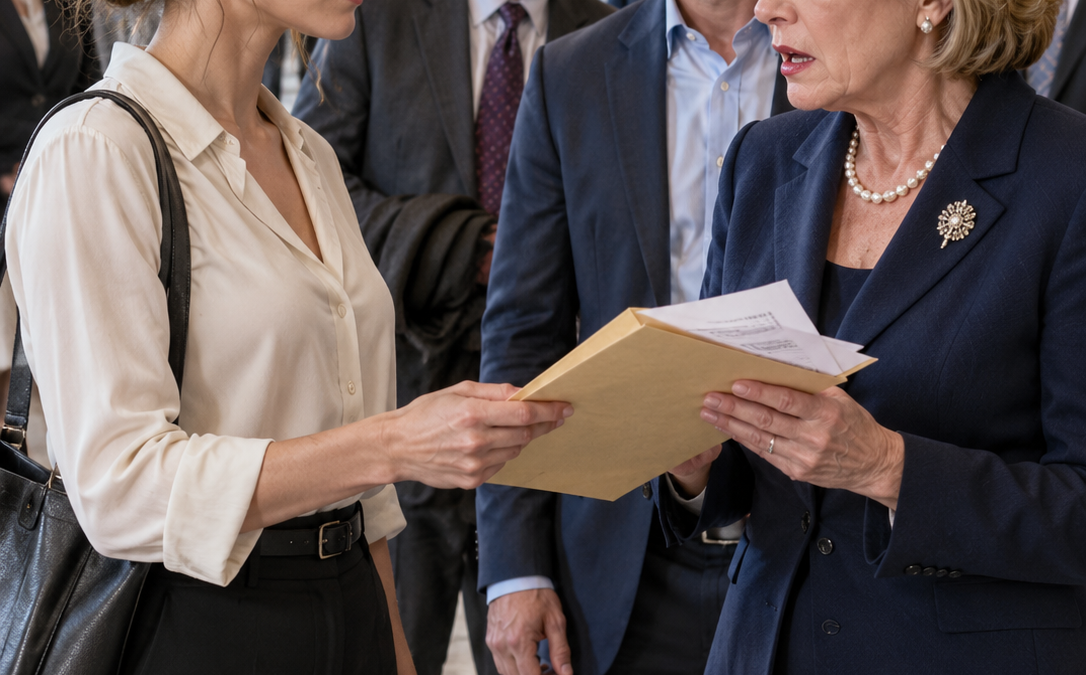
At 7:02 on a Tuesday morning, my mother-in-law threw open my bedroom door in the apartment I had bought before I ever met her son and told me to get up and make her breakfast.
“It’s seven a.m. and you’re still in bed,” Diane said, yanking the curtains apart. “Get up and make me breakfast.”
I had closed my laptop at 3:40. I told her I’d worked until almost four and that there was oatmeal in the pantry. She slapped me across the face hard enough that my ear rang. My husband was standing in the doorway holding his toothbrush. He had seen all of it.
“Ra,” Mark said. “Just get up.”
I didn’t scream. I didn’t cry. And I didn’t go to the kitchen. I looked at the clock, which said 7:04, and picked up my phone from the nightstand. Mine was the only name on the deed. Diane had hit me with the confidence of a woman who believed she’d paid for the right. By then, I knew exactly who she had paid.
“Don’t,” Mark said.
Welcome back to Calm Drama Stories. This is the place for long, slow-burning family stories about women who were told to stay quiet and finally decided not to. Each one is told gently enough to keep you company while you cook, drive, or wind down for the night, and each one ends with a line being drawn. Drop a comment and be sure to subscribe.
Five months earlier, on the second Saturday in May, a rented moving truck double-parked on Walcott Avenue, and my husband went down to meet it without telling me how much was inside. What Mark had told me was this: six weeks, two suitcases. His parents had sold their house in Rockford, and they needed somewhere to land until their condo in Florida was ready. I had said yes before he finished the sentence. I wanted to be the kind of daughter-in-law who said yes.
The truck held a china cabinet, Walter’s recliner, and fourteen boxes. I counted them from the third-floor window, and then I counted them again on the sidewalk because I was sure I’d gotten it wrong. Diane came up the stairs first. She didn’t say hello. She walked past me into my kitchen and started opening cabinets, one after another, the way you’d inspect a rental.
Walter came up behind her, out of breath, and took my hand in both of his. “We’re sorry to put you out, Rachel,” he said. “It’s no small thing, taking in two old people.” I liked him for that.
Down on the sidewalk, I asked Mark about the boxes. “Storage units cost a fortune,” he said. “It’s just easier.” He kissed my forehead and handed me a lamp. So I carried boxes. The fourth one I picked up had Diane’s handwriting across the top in black marker. It said, “Kitchen Keep.”
By Wednesday, I couldn’t find my own coffee filters. I found them eventually in a bottom cabinet, along with my spices, my good skillet, and every mug I owned. Diane’s dishes were on the shelves at eye level. Her canisters were on the counter. Her dish towel hung from the oven door.
“I organized,” she said without turning around from the stove. “You’ll thank me.”
I said the kitchen had been working fine. She let that sit for a moment, and then she asked me why the mailbox downstairs still said Novak.
“You’ve been a Hartley for three years,” she said. “People will think my son is renting a room from you.”
I had kept my name because it was on my degree, my work, and my mortgage. I started to say so. Mark was at the table eating her eggs, and he laughed before I got three words out.
“She runs a tight ship, Ra. Let her have the kitchen.”
I looked at him, at the back of his mother’s head, and at my skillet down by the floor.
“Of course,” I said.
It was the first time I said it to her. I remember because of how easy it was.
That night in bed, Mark asked about the second bedroom. The second bedroom was my office. It had my desk, two monitors, and a door I closed at eight every evening when my workday began. His parents were on the pullout couch in the living room, and Walter’s back was bothering him.
“It’s six weeks,” Mark said. “Give them the room. You can work in here.”
I told him my calls ran until two in the morning. I told him I’d be talking three feet from his pillow, four nights a week. He smiled in the dark.
“So you’ll be quiet,” he said. “You’re good at quiet.”
I moved it myself the next afternoon. I unplugged the monitors and carried them down the hall one at a time. I dragged the desk out, and when it scraped the floor, I heard myself call, “Sorry,” toward the living room. In my own home, I was apologizing for the sound of my own furniture.
There was no space for a desk in the bedroom, so I set up the ironing board at the foot of the bed and put my laptop on it. “Of course,” I’d told him twice in one week. I lay awake that night wondering where I’d learned to say it so fast.
I learned it when I was eleven.
My mother, Lorraine, cleaned houses, and on Thursdays in the summer, when there was no one to watch me, she took me along to a big brick house in Hinsdale. The rules were simple. I sat on the step in the laundry room with my workbook. I didn’t touch anything. I didn’t make noise.
My mother didn’t make noise either. She did that family’s hardwood floors on her hands and knees with a rag because the lady of the house had once mentioned that the vacuum gave her a headache, and my mother had never turned it on again.
One Thursday, I was thirsty. I had been thirsty for an hour, looking at the kitchen faucet through the doorway, working out whether a glass of water counted as touching something. The lady came home early through the garage. She saw me on the step and jumped, her hand flying to her chest. Then she laughed.
“You two are so quiet, I forget you’re here,” she said.
She meant it kindly. She gave my mother an extra ten dollars that day.
In the car, my mother was happier than I’d seen her all month. She split her sandwich in half on the dashboard and gave me the side with more turkey in it, the way she always did.
“You hear what she said?” she asked me. “That’s the best thing anybody can say about you, Rachel. People keep you around when you’re no trouble.”
I nodded with my mouth full. I never did get the water.
I want to be fair to my mother. She was thirty-eight, raising me alone, and that rule had kept a roof over us. She gave it to me the way you’d hand a child a coat. So I decided in that hot car that I would be the least trouble of anyone alive.
I was good at it. I was thirty-one before anybody asked me to prove it with a signature.
It was the week before our wedding, three years ago that September. Mark and I were at the kitchen table with the seating chart, and he said it like a joke.
“You know what I want for a wedding present? My name on the deed, so it’s ours.”
I had bought that apartment at twenty-nine, a year before I met him. Two bedrooms on the third floor, with a radiator that knocked and a view of somebody else’s maple tree. It took me six years to save the down payment. On the day I got the keys, my mother came up from Joliet in her good wool coat and vacuumed the empty living room in the coat because she said a home ought to start out clean. Then she stood in the middle of the room and cried.
All of that went through my head in about one second.
“Not yet,” I said. “Let’s be married first.”
“Sure,” Mark said.
Then he barely spoke to me for two days.
The rehearsal dinner was at an Italian place in Rockford, with forty people at one long table. Diane stood up with her glass. She had a school secretary’s voice, the kind that carries to the back of a gym.
“To my son,” she said, “and his beautiful new home in the city.”
People clapped. I felt my mouth open. Under the table, Mark’s hand closed on my knee and squeezed once. It meant, Don’t. Don’t correct her. Not tonight.
I looked down the table at Walter, who was smiling at his plate, and at my own mother, who was looking straight at me, and I closed my mouth. I lifted my glass with everyone else and drank to my husband’s new home.
I told myself it was one sentence at one dinner, but I’d felt those two days of silence, and I wanted to make up for them. So the week after the wedding, I did something nobody asked me to do. I opened a joint checking account, and I moved my mortgage payment over to it so that every month, the money for my apartment would come out of an account with both our names on it. I wanted it to feel like ours.
I thought I was being generous. I kept the deed and gave away everything around it. It didn’t occur to me that a gift like that could be counted up later by lawyers.
Diane’s wedding present to me, incidentally, was an apron. It was white with blue embroidery across the chest. It said, “Mrs. Hartley.”
For three years, I tried to earn my way into that family. Twice a month, we drove ninety minutes to Rockford, and I cooked Sunday dinner in Diane’s kitchen wearing the apron. Pot roast, her recipe. Scalloped potatoes, her recipe. She would taste whatever I’d made, set down the spoon, and say, “Almost.”
Walter always took seconds and thanked me twice. Mark watched football. On the drive home, he’d tell me his mother was warming up to me, and I believed him because I wanted to, and because believing him was less trouble.
Two years ago, Mark wanted to invest in a taproom his college roommate was opening in Logan Square. He asked for twenty thousand dollars out of our joint savings. Most of that savings was mine. My paycheck made up about three-quarters of everything that went into our accounts, and I never once said so out loud.
I said yes to the twenty thousand because it was his dream and because a wife who says no to a dream is a certain kind of wife.
The taproom closed the following winter. Mark came home, sat on the edge of the bed, and said, “We lost the twenty. That’s all.”
I held him. I told him it was only money.
I notice now how much of my marriage I spent making things smaller. A toast was only a toast. Twenty thousand dollars was only money. An apron was a joke if you decided to take it as one.
I wasn’t a fool. I knew what I was doing each time. I thought each small surrender bought me a little more room in that family. What it bought was the next request.
That April, Mark told me his parents had sold the house in Rockford and needed a place for six weeks. I said, “Of course,” before he’d finished asking.
Six weeks ended in the middle of June. The day came and went. Nobody packed a box, and nobody said the word Florida.
By July, I was working off that ironing board every night.
I should explain my job because nobody in that apartment thought I had one. I’m a senior researcher for a software company. My team builds a banking app for a client in Singapore, and my part is to sit with the people who use it and find out where they get lost.
Singapore is thirteen hours ahead of Chicago, so my workday started at eight in the evening and ended around two in the morning, four nights a week. I slept from three until ten. I had done it for two years, and it suited me.
Nobody handed me that job.
At twenty-three, I was waiting tables at a diner on Lincoln Avenue and taking night classes at the community college, two a semester, paid for in tips. My first offer in this field came with a salary I assumed was a typo. I asked them to confirm it in writing.
Then I went six years without a vacation, and I bought two bedrooms on Walcott Avenue.
One night that July, I was running an interview at eleven p.m. with a retired schoolteacher in Singapore who couldn’t find the button to pay her electric bill. My laptop sat on the ironing board. I was wearing a headset and whispering. Mark was asleep three feet away.
At 11:30, a fist hit the wall behind my head three times.
“Some of us sleep,” Diane called through the plaster.
I apologized to the schoolteacher. I finished at two, and I was asleep by three.
At seven, the bedroom door opened. She didn’t knock. It was the first time she did that, and I remember thinking there must be an emergency. Diane stood in the doorway in her robe with her arms folded.
“Everyone’s up,” she said. “Everyone’s waiting on breakfast.”
Mark’s side of the bed was empty. I could hear the television. I had slept four hours. I lay there for a few seconds, and I’d like to tell you I thought it over.
I didn’t.
I got up and made scrambled eggs for four people, and I apologized that the toast was a little dark.
That afternoon, Diane taped a sheet of paper to my refrigerator. It was written in blue ballpoint, in her neat office printing, with a ruled line under each entry. Breakfast, 7:00, R. Tuesdays and Fridays, R. Dinner, 6:00, R.
I read it through twice, looking for an M. There wasn’t one. There wasn’t a D or a W either.
I found her in the living room and told her, as pleasantly as I could, that I worked until two in the morning and that on the nights I worked, I couldn’t be up at seven.
“Worked?” Diane said. “Typing in your pajamas is not work. I ran a school office for thirty years, and I never once slept past six. Not when I had the flu. Not the morning after my own mother’s funeral.”
I went to Mark. He was in the bathroom trimming his beard, and he didn’t put down the scissors.
“It’s her way of feeling useful,” he said. “She’s lost her whole house. Ra, just give her breakfast.”
I said I was the one making it, so I didn’t see how it made her useful. He looked at me in the mirror as if I were being difficult on purpose.
“It’s eggs,” he said. “It’s twenty minutes.”
So I kept making breakfast. Four hours of sleep, eggs, then back to bed if she let me, which she often didn’t. There was always a reason to run the vacuum outside my door at nine.
But I did one other thing that August, and I did it without thinking much about it.
In my work, there’s a rule we drill into new researchers: Write down what people do, not what they say. People will tell you they love a product while their hands are trying to close it. So you keep notes with the time and the date, in plain words.
One night, I opened a note on my phone and copied the refrigerator schedule into it word for word. Then I added the fist on the wall in July. Then the door.
I told myself it was just to keep from losing my mind. I didn’t think of it as evidence, but it was the first time I’d looked at my husband’s family the way I look at strangers, as people whose words and actions didn’t match.
Mark said his mother was warming up to me. His mother had put my initial on every chore in the house.
I wrote down the second one, and the only person in that apartment who ever thanked me for breakfast was Walter.
Walter and I had a kind of arrangement. On the mornings Diane went to the grocery store, he made a pot of coffee around ten and poured me the first cup, and we sat at the table like two kids hiding from the same teacher.
I fixed his tablet when it froze. He told me about thirty-one years as an insurance claims adjuster. He kept every receipt he’d ever been handed in a brown accordion file with an elastic band around it.
“You learn to keep paper,” he said. “The person with the paper is the person they believe.”
He never said a word against his wife, but when she came through the door, he stopped talking mid-sentence if he had to.
Around the same time, my friend Priya, who runs the product side of my team, caught sight of the ironing board on a video call.
“Whose house is that?” she asked.
I laughed. She didn’t.
An hour later, she texted me a name, Joanne Feld, and a phone number.
“Family lawyer. For someday,” she wrote.
I didn’t answer the text. I did save the number.
And one evening in early September, my neighbor across the hall, Gloria Petraus, who is seventy-two and misses nothing, stopped me at the mailboxes and put her hand on my arm.
“Honey,” she said, “these walls are thinner than you think.”
I went upstairs with my face burning. I was ashamed, as if I were the one who’d been shouting.
Then, one morning in the last week of September, Walter said something he wasn’t supposed to say.
Diane and I had argued the night before about a load of towels. I came into the kitchen around ten to apologize to Walter for the noise, which tells you where my head was.
He waved it off and poured my coffee.
“Don’t mind Diane,” he said. “After what we put into this place, she feels it’s partly hers to run. She’ll settle.”
I had the cup halfway to my mouth.
“Put into it?” I said.
He smiled at me the way you’d smile at someone being modest.
“The sixty,” he said. “Mark told us how grateful you both were. We were glad to do it, Rachel. It’s what a home is for.”
Ten years of interviewing strangers has taught me one useful thing. When somebody tells you something that makes no sense, you don’t argue, and you don’t let your face move. You ask an open question, and then you wait.
So I set down my cup and said, “Tell me how you two decided on that.”
Walter was happy to. He liked telling it. They’d closed on the Rockford house in June, he said, and it only seemed right to buy into the family home instead of throwing money at some stranger’s condo. Mark had put it all in writing.
“Hold on,” Walter said, getting up. “I’ll show you. You’ll feel better seeing it’s all in order.”
He set the accordion file on my kitchen table and went to the pocket marked House.
There was the closing statement from the sale in Rockford, dated June 5. There was a photocopy of a cashier’s check for sixty thousand dollars made out to Mark Hartley. And there was a sheet of yellow legal paper in my husband’s handwriting, dated June 10.
I read it with Walter looking on proudly.
“Received from Walter and Diane Hartley $60,000 toward our home on Walcott. Mom and Dad have a home with us for life.”
He had signed it with his full name.
My voice came out normal, and I don’t know how.
“Can I take a picture?” I said. “So we both have it.”
“Sure,” Walter said.
He smoothed the page flat for me.
While I held my phone over it, he told me the rest. There was no condo in Florida. There never had been. That was a story for the neighbors, he said. Diane didn’t want Rockford knowing they’d moved in with their kids.
I thanked him for the coffee. I washed both cups.
It was one of my nights off. After Mark fell asleep, I went through the paper recycling he kept beside his desk in the hall, and I found it under a stack of catalogs.
It was a letter from a commercial lender I’d never heard of. It said that a personal guarantee in the amount of $58,400 had been satisfied in full on June 24, and it thanked Mr. Hartley for his payment.
We hadn’t lost twenty thousand dollars on that taproom. He had signed for the rest of it alone and never told me.
At one in the morning, I sat up in bed with my laptop and pulled up the county’s property records. I typed in my own address with my heart pounding.
The deed was the same one I’d signed five years earlier. One name. No new loans against it.
My apartment was still mine.
So now I had the money, the lie, and the paper.
I closed the laptop and looked over at my husband, asleep on his side with one hand under his cheek.
I didn’t sleep. I lay there and went back over five months, and all of it looked different. The kitchen, the schedule on the refrigerator, the toast to her son’s new home.
Diane had never behaved like a guest because she didn’t believe she was one. As far as she knew, she had bought her place at that table with a good part of what she had left in the world, and I was a daughter-in-law who slept half the morning in a home she’d helped pay for.
It didn’t excuse one thing she’d said to me, but it explained the way she said it.
And six weeks had never been six weeks.
They had come to stay until they died.
The part that kept me awake was Walter.
If I told them the truth, two people in their sixties would learn in my kitchen that their house was gone and their sixty thousand dollars was gone, and the home they’d been promised had never been their son’s to promise.
I would be the one who told them. I knew who they’d blame.
So I decided to give Mark one chance to fix it himself. I would ask him on Saturday, alone.
And on Saturday, he asked me to ride along to pick up his mother’s birthday cake, and I got in the car.
We were parked outside the bakery on Lincoln with the engine off. I took out my phone, opened the photograph of the yellow page, and set it on the dashboard between us.
Mark looked at it for a long time.
The first thing he said was, “You went through my dad’s things.”
“He showed me,” I said. “He thinks I said thank you.”
Mark rubbed his face with both hands. Then it all came out, and what I couldn’t get over was how reasonable he sounded.
He’d signed a personal guarantee for the taproom. When it folded, the lender came after him for fifty-eight thousand dollars.
“I was drowning, Ra. I couldn’t tell you. You’d have looked at me the way you’re looking at me now.”
His parents had wanted to help. He said they had the money from the house and nowhere they wanted to go.
“So it’s a win for everybody. They get family. We get out of the hole. Nobody’s hurt.”
I said, “They think they bought part of my home.”
“Our home,” he said. “We’re married. It’s the same thing.”
“It isn’t. You know it isn’t. You wrote ‘for life,’ Mark.”
He didn’t raise his voice. He never did, and it’s part of why it took me so long.
He turned in his seat and said very quietly, “Okay, then go upstairs and tell them. Tell two old people they’re out sixty grand and out on the street because you want your office back. Go ahead. See how that feels.”
I didn’t have an answer. I’d spent four days hunting for one. He watched me not have one.
Then he reached into the back seat and came up with a manila envelope.
Inside was a single form, already typed.
I had to read the heading twice.
Quitclaim Deed.
It had my name on one line as the person giving and both our names on the next line as the people receiving. He’d even filled in the legal description of the property, which meant he’d had it a while.
“Sign it,” Mark said. “And nothing I told them is a lie. It’s our home. They bought into it. Everybody’s telling the truth. It’s one signature, Ra.”
He wanted it before his mother’s sixty-fifth birthday dinner a week from Sunday. He planned to stand up and make a toast to the family home.
I asked what happened if I didn’t.
He looked out the windshield.
“Then I tell them you want them gone,” he said. “And that their money is gone because of you. Who do you think they’ll believe?”
We went in and picked up the cake. It was lemon, with her name on it.
That evening, Diane made two announcements at dinner.
The second bedroom, my office, was from now on Walter’s den, and my monitor had been put in the hall closet where it wouldn’t be in his way. And breakfast at seven would be every day from here on, not just the days I felt like it.
“A household runs on a schedule,” she said. “I don’t care what time you finished typing.”
Walter studied his plate. Mark passed the potatoes.
Later in our room, Mark said, “Well?”
And I heard myself say, “I need to think.”
I’ve turned that sentence over many times since. It wasn’t a yes. I knew by then that I couldn’t sign, but it wasn’t a no either. It was what a person says when she can’t yet stand to be the villain in somebody else’s kitchen.
And it had a price.
It bought me another week of living under Diane’s rules in my own home, with my desk in a closet.
I folded the deed in quarters and put it in my nightstand drawer under my phone charger.
Our app launch was nine days away, on a Monday night.
A launch is the one night of the year I can’t be offline.
The app was going live to four hundred thousand customers in Singapore at noon their time, eleven at night mine, and my job was to watch the first users come through and flag anything that broke.
At ten, an hour before my connection dropped, I came out into the hall. Diane was standing by the bookshelf with the router’s power cord in her hand.
“Decent people sleep,” she said. “In this house, the lights go off at ten.”
Six months earlier, I’d have explained. I looked at the cord and at her, and I understood there wasn’t a thing I could say that she’d hear as anything but back talk.
So I said good night.
I went into the bathroom, shut the door, and ran the whole launch off my phone’s hotspot, sitting on the edge of the bathtub with my laptop on the lid of the laundry hamper so the light wouldn’t wake anyone.
For five hours, I whispered into a headset. Two things broke, and we fixed both.
At 3:40 in the morning, it was done, and the team lead in Singapore, a woman I’ve never met in person, sent me a private message.
It said, “We couldn’t have done this without you.”
I read it three times sitting on a bathtub.
I’m not sure I can explain what that did. I’d just done something difficult and done it well, and I’d done it hiding in my own bathroom so I wouldn’t disturb the people living in my home for free.
Both of those things were true at once, and I couldn’t make them fit.
I went to my room, opened the nightstand drawer, and looked at the folded deed. And I knew plainly, the way you know you’re tired, that I wasn’t going to sign it.
Not on Sunday. Not ever.
I’d tell Mark in the morning after I’d slept.
I closed the drawer. I closed the bedroom door.
Three hours and twenty-two minutes later, it flew open.
“Don’t you dare call the police on my mother,” Mark said.
My cheek was hot, and my ear was still ringing. I had the phone in my hand. Diane hadn’t moved from beside the bed. If anything, she looked satisfied.
“Go ahead,” she said. “Call them. Tell them a grown woman had to be woken up for breakfast.”
I got out of bed. I walked between the two of them and down the hall.
Walter was standing outside the den in his undershirt, and he looked at my face and then at the floor. The kitchen was on my left. For five months, I had turned left.
I kept walking into the bathroom, and I locked the door.
In the mirror, the mark was coming up red, and I could make out the edge of her fingers. I took a photograph. The time on it was 7:09.
Then I stood there with my thumb over the screen, and I couldn’t press it.
I could hear my mother in that hot car.
“People keep you around when you’re no trouble.”
I thought it was one slap. I thought, She’s sixty-four years old. I thought about Walter’s name in a police report, and Gloria across the hall, and what kind of woman calls the police on her husband’s mother over breakfast.
Every one of those thoughts was a reason to go make eggs.
Then I had a different thought.
Tomorrow it would be seven again. And the day after that. The door would open every morning for the rest of her life, and she had just found out that she could hit me and my husband would tell me to get up.
I pressed the button.
A woman answered, and I gave her my address slowly, with the unit number, the way you’d spell a name.
“My mother-in-law hit me in the face in my home,” I said. “I own the apartment. I’m in a locked bathroom, and I’m not badly hurt.”
She asked if the person was still there.
“Yes,” I said.
She said officers were on the way.
Mark had started pounding on the door by then. He said I was destroying his family. He said it over and over, and under it, I could hear Diane telling him to stop begging.
I sat down on the edge of the tub where I’d worked all night, and I waited.
At 7:31, the buzzer rang downstairs.
There were two officers. The one who did the talking was named Ruiz, and she was younger than I was.
Diane had gotten dressed and fixed her hair in the time it took them to climb the stairs. She used her front-office voice.
“I tapped her on the cheek to wake her,” she said. “She’s dramatic. She always has been.”
Mark stood beside his mother with his arms crossed.
“It’s a family misunderstanding,” he said. “My wife works strange hours. She’s overtired.”
Officer Ruiz looked at my cheek for a moment and didn’t comment on it. She asked whose apartment it was. I said it was mine and that my name was the only one on the deed.
Diane made a sound like a laugh.
Then Ruiz turned to the one person in the room who hadn’t spoken.
“Sir, were you here?”
Walter was standing by his recliner with one hand on the back of it. He looked at his wife. Forty-one years of marriage, I found out later.
He looked at her for what felt like a full minute, and she looked back at him, sure of him.
Then he looked at the carpet.
“She slapped her,” he said.
I was standing in the hall. Nobody said anything.
Diane said his name once, very low.
Officer Ruiz asked if I wanted to sign a complaint. I’ve thought about how small that moment was. It was a clipboard and a pen.
I signed it.
They let Diane put on her coat and get her purse. Then they walked her down the hall to the stairs, one officer in front and one behind.
Across the hall, the door to 3B was open, and Gloria stood in it in her housecoat, watching without a word.
Diane kept her chin up the whole way.
Before she left, Officer Ruiz handed me a card with a report number written on the back. She told me that if I wanted an order of protection, I could ask for one that same day at the courthouse on Harrison Street.
I stood in the hall holding the card until I heard the street door close.
When I came back inside, Mark was pulling a suitcase down from the top of the closet.
I asked him to stay and talk to me.
I actually did that.
He packed for himself and for his father without looking up. And when the bag was zipped, he said, “We’re not coming back until you fix this.”
Walter went out last. He stopped in the doorway with his hat in his hand and his eyes on my cheek.
“I’m sorry about your face, Rachel,” he said.
Then Mark called him from the stairs, and he went.
The apartment was quiet for the first time since May. I sat on the couch in my pajamas and listened to the radiator.
Within the hour, my phone buzzed twice.
The first text from Mark said, “She barely touched you. Drop it. Apologize to her and I’ll forget you humiliated my mother.”
The second came four minutes later.
“You don’t get to throw my family out of our house. They paid sixty grand for it.”
I read them both and felt something I’d only ever felt at work when a test user finally says the true thing out loud.
He had just put it in writing.
“She barely touched you” meant she had touched me. “Sixty grand” meant sixty grand.
I took a screenshot of each message, and this time, I didn’t tell myself it was to keep from losing my mind.
I knew what I was collecting and why.
Walter had said it months before over coffee.
“The person with the paper is the person they believe.”
Then I scrolled through my contacts to a number I had saved in August and never called.
I didn’t call it yet. I called Priya first.
She picked up on the second ring, and I said, “Can you drive me somewhere?”
Priya drove me to Harrison Street and sat with me on a bench for three hours.
That afternoon, a judge read my statement, looked at the photograph, and signed an emergency order. Diane was not to contact me, and she was not to come to my apartment. There would be a full hearing in three weeks.
The next morning, I sat in Joanne Feld’s office, and she told me three things.
The apartment was mine because I’d bought it before the wedding, but three years of mortgage payments out of a joint account meant I’d likely owe Mark something back.
I couldn’t change the locks on him. Not yet. He was still my husband, and it was still where he lived.
And I was not to sign anything for anyone.
On Thursday, I filed for divorce.
That night, I called my mother. I told her all of it, and then I waited for her to ask why I’d had to make it so big.
She was quiet for a while. I could hear her kitchen clock.
“I taught you wrong about one thing,” she said. “Being no trouble is for other people’s houses. I never meant for you to do it in your own.”
I cried then for the first time that week.
Nine days later, a letter arrived from a lawyer representing Mark. It demanded half the value of my apartment, and it said that if I withdrew my petition before the hearing, he might be willing to discuss the rest.
The hearing was on a Tuesday in November, twenty-one days after the slap.
Joanne and I were on a wooden bench in the courthouse hallway by 10:09.
For three weeks, I had slept behind an old lock that my husband still had a key to. He hadn’t come home. He’d texted every day instead. Some days he was sorry. Some days I was a thief.
His lawyer had put a number on it by then.
Half the equity. About seventy thousand dollars.
They came down the hall together.
Diane wore the navy suit she’d bought for Mark’s college graduation, with a pin on the lapel, and she didn’t look at me once. She had a lawyer of her own, a tired man with a rolling briefcase.
Walter sat down on their bench, and I noticed he left an empty seat between himself and his wife.
Joanne leaned toward me.
“Remember what today is,” she said. “The apartment, the money, all of that belongs in the divorce. Today is about one morning and whether you’re safe. If the judge says no, she can walk back in your door tonight.”
I nodded.
I was counting floor tiles the way I count questions before an interview.
In my bag, there was an envelope with three sheets of paper in it. I’d had copies made and I’d carried them for a week, and I still hadn’t decided what they were for.
Joanne didn’t need them for the hearing.
Then Mark stood up, straightened his jacket, and walked toward me alone.
“Ra,” he said. “Five minutes before we do something we can’t undo.”
I went with him to the end of the hall by the window.
He looked tired, and he looked like the man I’d married, and he knew it.
He kept his voice low.
Here was the offer.
I would withdraw the petition this morning. I’d sign the deed. His parents would be out by Christmas, he swore, into a place of their own. He’d go to counseling with any counselor I picked.
“And we go back to how it was,” he said. “We were happy, Ra. You know we were.”
For about one breath, I wanted it to be true.
I wanted it badly. I’m not proud of that, but I won’t leave it out. Three years is a long time to love someone.
I hadn’t answered when Diane got up from the bench.
She came down the hall with her purse on her arm, and she spoke to me for the first time in three weeks, loudly enough for both lawyers and everyone waiting on the benches to hear.
“I paid sixty thousand dollars for my room in that home,” she said. “And I intend to sleep in it tonight.”
“Mom, not now,” Mark said.
And that was when I knew what the envelope was for.
I could have kept quiet. Joanne would have told me to. The truth about that money was Mark’s problem, and saying it out loud would make me the woman who broke up the Hartleys for good in front of witnesses.
I took out the envelope and handed it to Diane.
She took it the way you’d take a dirty dish.
On top was a certified copy of my deed, with one name on it, recorded five years ago. Under that was the yellow page in her son’s handwriting. Under that was the letter from the lender.
“Diane,” I said, and my voice was steady. “Mark has never owned any part of that apartment. Not one inch. Your sixty thousand dollars didn’t buy a room. It paid off his bar.”
She read the first page fast. She read the second page with her lips moving. She read the third page twice.
I watched it happen, and I’ll tell you, it didn’t feel the way I had imagined.
She got older while I stood there.
Her hand found the pin on her lapel and held on to it. Then she lifted her head and looked at her son.
She didn’t ask him anything. She turned back to me.
“These are forged,” Diane said.
She held the pages out from her body.
“She’d say anything to be rid of us. She’s wanted us gone since May.”
Her lawyer had come up behind her and was trying to read over her shoulder.
From the bench, without getting up, Walter spoke. He had to clear his throat first.
“That’s my copy, Diane,” he said. “The yellow one. I gave it to her myself. I thought she knew.”
Mark stepped in then, between his mother and me.
“It doesn’t matter whose name is on a piece of paper,” he said. “We’re married. Half of everything is mine by law. So it is our home, Mom. I didn’t lie to you.”
Diane looked at him.
In thirty years of running a front office, she had probably heard every kind of excuse a child can make.
She asked him one question.
“Is your name on it?”
Mark opened his mouth. He looked at his lawyer and then at the window, and he didn’t answer her.
I thought that might be the end of it.
But she wasn’t a woman who could stand in a public hallway and be wrong. She turned on me with the pages crushed in her fist.
“Then you let us move in knowing all this,” she said. “You let us unpack.”
“I found out in September,” I said. “You hit me in October.”
It was all I had, and it was only the dates.
I didn’t win that argument or any argument in that hallway. I just didn’t back up.
Her lawyer took her by the elbow and walked her a few steps away, talking fast and low. I saw her shake her head at him.
Then a clerk opened the courtroom door and called my name and hers.
The judge was a woman in her sixties with reading glasses on a chain. I was sworn in, and my hand shook.
And then I did the thing I know how to do.
I told her what happened in order, in plain words.
What time I shut my laptop. What time the door opened. What Diane said, word for word. The slap. The photograph at 7:09. The report number.
Joanne handed up the schedule from my refrigerator and my notes with their dates to show what the five months before had looked like.
Then she handed up a screenshot.
The judge read it aloud.
“She barely touched you. Drop it. Apologize to her.”
She looked over her glasses at Mark, and then she set it down.
Diane’s lawyer did what he could. His client was sixty-four, with no record of any kind. She had contributed sixty thousand dollars to the residence, he said, and had every reason to believe she lived there by right.
The judge asked him two questions.
Whose name was on the deed?
And who had the sixty thousand dollars been paid to?
He answered both truthfully.
There wasn’t much left after that.
She asked whether Mr. Walter Hartley was present, and Walter stood holding his hat and said the same thing he’d said to Officer Ruiz.
Then the judge asked Diane if there was anything she wanted to say.
Her lawyer touched her sleeve.
She stood up anyway, very straight.
“In my day,” she said, “a daughter-in-law got up.”
The judge took off her glasses.
“In this courtroom, ma’am,” she said, “nobody gets hit for sleeping.”
The order was for two years.
Diane was to have no contact with me, and she was to stay away from my apartment. Her belongings could be collected once, on a set day, with a police officer present.
Then the judge spoke to Mark’s lawyer. Any claim about the property, she said, belonged in the divorce case, not in her courtroom.
I didn’t feel like I’d won anything.
I felt like someone had finally listened to all of it.
For the first time in five months, who came through my door was up to me, and I had it in writing.
When Joanne and I got to the elevators, Mark was standing there, and this time he’d left his lawyer behind.
He didn’t bother with sorry this time.
“Fine,” he said. “You won. Now fix it.”
I asked him what he meant.
“Pay them back the sixty. Take it out of your equity. You can afford it, and you know you can.”
He pointed down the hall with his chin.
“Look at my father, Rachel. Look at him.”
I looked.
Walter was standing by the window with his wife’s coat over his arm, waiting for her to come out of the restroom.
He was sixty-seven years old. He had made me coffee on the mornings nobody else would speak to me, and he had told the truth twice when it cost him.
Mark knew me. I’ll give him that.
Of everything he’d tried, the deed and the threats and the counseling, this was the only one that reached me.
I stood there and did the arithmetic I’d been doing since I was eleven.
What would it cost to be the good one?
I had the equity. A loan against my own apartment, one signature, and Walter would be made whole. Everyone in that family would have to admit I’d been decent to the end.
I could have bought my way out of being the villain.
I wanted to.
I could feel the words “Of course” sitting in my mouth.
“No,” I said.
Mark blinked.
“No. I’ll pay you what the law says I owe you, and not one dollar of what you owe them.”
He started to say something about what kind of person that made me.
I turned to Joanne and asked her to give it to him now.
She had the settlement proposal in her folder. We’d drawn it up the week before.
The apartment was mine, bought before the marriage. I would pay Mark $15,500 for his share of the mortgage payments that came out of our joint account.
His debt stayed his, and mine stayed mine.
Joanne held it out.
He took it without looking down.
Then I walked over to Walter, which was harder.
I had a second envelope. In it were copies of the yellow page and the lender’s letter.
“This is yours,” I told him. “He signed it. He owes you sixty thousand dollars, Walter. Don’t let him tell you it was me.”
Walter looked at the envelope for a moment. Then he folded it in half and put it in the inside pocket of his jacket, next to his glasses.
He didn’t thank me, and he didn’t blame me.
He nodded once.
I rode the elevator down with Joanne and didn’t say a word until the lobby.
That night, I was alone in the apartment.
I took my monitor out of the hall closet. I dragged my desk back down the hall into the second bedroom, and I didn’t apologize to anyone for the noise.
I folded up the ironing board and put it behind the door, where an ironing board goes.
Then I took the deed out of my nightstand, still folded in quarters, still unsigned, and fed it through the shredder.
At eight, I sat down for a call with Singapore at a desk in a room of my own.
The rest was paperwork, and it took until summer.
On the day set by the court, Walter came with a nephew and a police officer, and I watched fourteen boxes go back down the stairs, along with the china cabinet and the recliner.
Walter carried the accordion file himself.
After they left, I noticed the schedule was still taped to my refrigerator.
Breakfast, 7:00, R.
I took it down and stood there holding it, and then I threw it away.
Mark held on to his demand for half the apartment until February. Then he signed the same proposal Joanne had handed him by the elevators, word for word.
The divorce was final in June.
I sent him $15,500 that week.
It was the most expensive payment I ever made and the only one I’ve never regretted.
I had paid exactly what I owed.
As for Diane, her case ended with a class she was required to attend and a year in which she was not to get into any more trouble.
I didn’t go to watch.
On the afternoon the divorce came through, a locksmith changed both locks on my front door. It took him twenty minutes.
He handed me two keys.
I put one on my ring, and I drove the other one to Joliet and gave it to my mother.
Sunday dinner is with my mother now.
We have rules.
She sits. Nobody wears an apron.
Some weeks I cook, and some weeks we order Thai food and eat it out of the containers, and she still tries to get up and wipe the counter.
And I still tell her to sit down.
In August, I got a letter from Walter, handwritten on lined paper.
He and Diane were renting a one-bedroom in Rockford near Mark’s sister.
Mark was paying him four hundred dollars a month under an agreement Walter had made him sign at a kitchen table with a witness. He kept the original in the accordion file.
Diane hadn’t sent any message, and he didn’t pretend she had.
At the bottom, he wrote, “You made good coffee, and I should have said more sooner.”
I wrote back.
I never heard from Diane, and I found I didn’t need to.
In September, Gloria knocked on my door and announced that I was coming up to the roof to help clean out the garden beds because I’d been indoors for a year.
There was a man up there hauling bags of soil, a music teacher named Daniel Reyes, who lived on the first floor.
He asked what I did for a living.
When I told him, he asked a second question and a third, and he listened to all of the answers.
I noticed that I’d gotten used to explaining my work to people who were waiting for me to finish.
I wasn’t looking for anyone, and I took my time.
He didn’t seem to mind the pace.
It’s a Saturday in April now, a year and a half since that Tuesday.
I worked until two last night.
This morning, the clock turned over to seven, and nothing happened.
Nobody came down the hall.
At 10:20, I woke up on my own to the smell of coffee.
My bedroom door was open.
It was open because I’d left it that way.
From the kitchen, Daniel called out, not coming any closer than the stove.
“Eggs whenever you’re ready. No rush.”
I thought about getting up.
Then I pulled the blanket to my chin and lay there another ten minutes, listening to someone else crack eggs in my kitchen for no reason except that I could.
Nobody in my home has to earn their sleep anymore, least of all me.
If you had been standing by those elevators, would you have paid back the sixty thousand dollars to keep the peace, or left the debt with the man who signed for it?
Tell me in the comments. And if this story stayed with you, subscribe to Calm Drama Stories for the next…








