“if you leave now, don’t bother coming back,” my sister warned when i said my baby needed a doctor; then i lifted my daughter’s dress and saw enough, i walked straight past the cake, the photographer, and 200 guests while dialing 911, and by midnight, my sister was the one begging me to answer her calls.
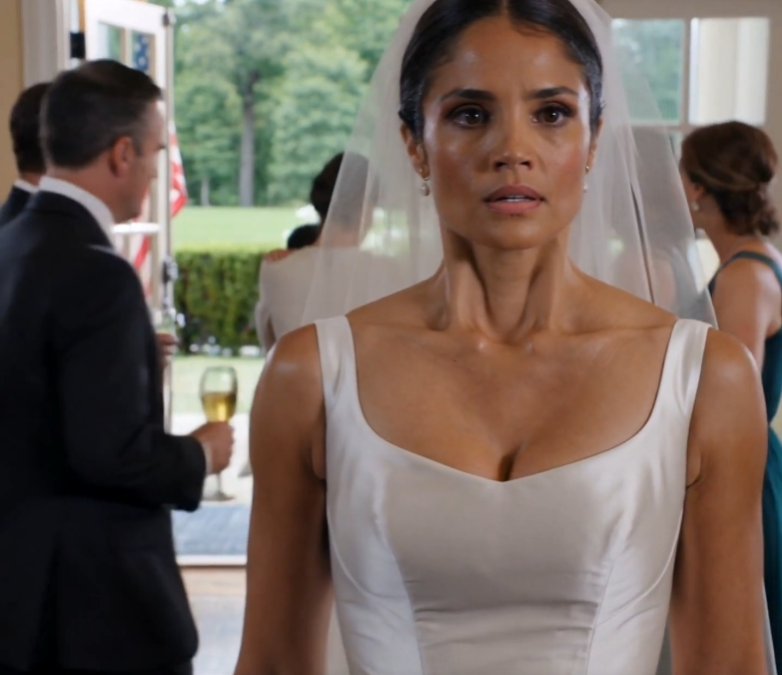
My 15-month-old daughter had been screaming against my shoulder for nearly ten minutes when I finally stopped listening to everyone telling me she was tired.
Maisie was usually easy to soothe, especially with me, but that afternoon every shift of my arm made her cry harder. My mother kept saying the noise and the crowd had overwhelmed her, while my father stood beside her looking pale and repeating, “She just had a little bump.”
Then my sister Lena, still in her wedding dress with two hundred guests waiting for her first dance, looked at me and said, “If you leave now, don’t bother coming back.”
I didn’t answer her right away.
I sat down, lifted the skirt of Maisie’s little dress, and saw swelling around one knee and the top of her shin, with bruising already beginning underneath. When I touched her leg, she screamed so sharply that every doubt disappeared.
I pulled out my phone and called 911 as I carried her straight past the wedding cake, the photographer, and a room full of people turning to stare.
Lena had given me a choice between her wedding and my daughter.
She just hadn’t understood that there was never going to be a choice.
Before I take you back to what happened that afternoon, I hope you’re doing well wherever you’re listening from today. Stay with me, because what I eventually learned about the twenty-seven minutes before Maisie was handed back to me changed the way I saw my sister, my parents, and the role I had played in my family for years. And if you enjoy family stories where the truth has a way of catching up with people who think they can control it, please subscribe to the channel and stay with me until the end.
This happened on June 13, a little less than three months ago, at Lena’s wedding outside Richmond, Virginia.
If you had seen us that morning, you probably would have thought we were a close family having one of those rare, perfect days. Lena was thirty-two, six years younger than me, and she had spent more than a year planning every detail of the wedding.
I was thirty-eight, married to Caleb for seven years, and mostly relieved that, for once, I wasn’t the person everyone expected to organize the event.
Lena had even printed small ivory timeline cards for the immediate family, listing everything almost to the minute. She handed mine to me that morning and laughed as she said, “My only wedding request is that nobody freelances today. If the card says pictures at three, we take pictures at three.”
I told her I could follow instructions for one day, and she smiled.
At that point, I meant it.
Lena and I had never hated each other. That mattered later, because it would have been easier if we had. We had shared holidays, bad haircuts, breakups, inside jokes, and plenty of ordinary sister moments that didn’t fit neatly into a story about betrayal.
The tension between us came from something quieter.
Our mother, Marianne, had spent years treating me like the family problem solver, sometimes without realizing she was doing it. If a reservation was wrong, she asked me to fix it. If Dad misplaced paperwork, she called me. If Lena was overwhelmed, everyone seemed to assume I would know what to do.
I had stopped automatically accepting that role years earlier, but habits in families could survive long after the people inside them changed.
That afternoon, just before the family photographs, Mom came over holding a place card and asked if I could speak to someone about a seating issue.
I glanced at the card, then at Camille, the venue coordinator, standing twenty feet away with a headset and a clipboard.
“Camille can handle it,” I said. “I’m supposed to be in pictures.”
Mom looked surprised for half a second, as though I had declined a job no one had officially assigned me. But Camille immediately stepped in and took care of it.
Lena watched the exchange while a makeup artist touched powder along her cheek. She gave a small laugh and said, “For once, can everyone just let the plan be the plan?”
Her tone was light enough that nobody challenged it, including me, but I noticed the edge underneath.
I assumed she was stressed and let it go.
Maisie had been cheerful most of the day, fascinated by flowers, ribbons, and anyone willing to make faces at her. Before Caleb and I joined the photo lineup, I handed her directly to my mother, who was standing beside my father, Douglas.
My parents had watched Maisie many times before without a problem. Dad could get her laughing faster than almost anyone, and Mom knew her nap and feeding routines well enough that I had no reason to treat thirty minutes with them as a risk.
Caleb glanced toward Tori, one of the venue’s childcare assistants, and asked whether we should have her stay close. I told him my parents were fine and that Tori was already helping several families with children that afternoon.
It was an ordinary decision, and even now I don’t punish myself for making it.
Nothing in our history told me I was handing my daughter to people who would hide an injury from me.
The photographer began moving us through combinations quickly—bride with parents, bride with siblings, couples, grandparents, then the wider family group—because the light was shifting and Lena was worried about falling behind schedule.
Once Caleb and I stepped onto the lawn, we stayed in the lineup.
At one point, while someone adjusted where Gavin’s uncle was standing, I looked toward the house and saw Dad carrying Maisie near a side corridor. She was resting against him, and nothing about the sight alarmed me.
I remember seeing Lena check her ivory timeline card again and ask the photographer how many groups were left.
He told her we were nearly done.
“Good,” she said, “because we’re already pushing the entrance.”
What I didn’t know then was that the service corridor Dad had walked toward connected to a narrow stairwell.
I didn’t know he was trying to save a few minutes instead of going around to the elevator.
I didn’t know that at 3:47, he would miss a step while holding my daughter, keep her from falling out of his arms, but allow her leg to strike the edge of a stair hard enough to fracture the bone near the top of her shin.
I learned those details later from people who had actually been there and from the venue record.
At the time, I was outside smiling for photographs while several adults inside the building were deciding how much I needed to know.
Mom brought Maisie back to me at about 4:14.
I didn’t know that time yet either.
I only knew my daughter was crying and my mother was moving too quickly through an explanation.
“She’s overtired,” Mom said as she transferred Maisie into my arms.
Dad added, “She bumped her leg a little, but she’s okay.”
I looked at him because “bumped her leg” could mean almost anything when a toddler was involved.
“What happened?”
Instead of answering directly, he said she had gotten frightened and started crying.
Lena appeared almost immediately, glanced at Maisie, and told us they were waiting for the wedding party before announcing the first dance.
I tried the normal things first. I held Maisie against my chest, rubbed her back, offered her water, and carried her several steps away from the speakers.
Nothing helped.
More importantly, when I shifted her weight, she kept one leg strangely still.
I asked Mom again whether Maisie had fallen.
“Your father slipped a little,” she said. “He caught himself.”
Dad nodded too quickly.
“She never hit the floor.”
That answer bothered me because it wasn’t the question I had asked.
A child didn’t have to hit the floor to get hurt, and Maisie’s crying sounded less like fear and more like pain.
I told Caleb I wanted to take her somewhere quiet and look at her leg. Lena heard me and followed us several steps, reminding me that the first dance was about to start.
“I don’t care about the first dance right now.”
That was when I lifted Maisie’s dress and saw enough to know this wasn’t something I was going to monitor through dinner. There was visible swelling around her knee and upper shin, and when I tried to see whether she would straighten the leg, she screamed again.
I stood up.
“She needs a doctor.”
Lena’s expression changed before anyone else’s did.
“Audrey, come on. You don’t even know what happened.”
“That’s exactly the problem.”
She said Caleb could take Maisie if I was determined to have her checked because family introductions and the first dance were already delayed.
I stared at her for a moment, not because I was considering it, but because I couldn’t believe we were discussing a wedding schedule while my daughter was clearly in pain.
Then Lena said the sentence I would remember long after I forgot what flowers were on the tables.
“If you leave now, don’t bother coming back.”
“My daughter needs a doctor,” I said.
And that was the end of the discussion.
I called 911 because I had a fifteen-month-old who would not move one leg, obvious swelling, intense pain, and three adults giving me versions of an accident that somehow contained almost no actual information.
Caleb grabbed our things while I carried Maisie toward the entrance. Gavin’s mother, Valerie, saw us coming and moved two guests out of the doorway without asking me to explain myself.
I remember her looking from Maisie to my face and saying, “Go. We’ll clear the way.”
It was one of the only uncomplicated things anyone said to me that afternoon.
By the time the paramedics arrived, Lena had gone back toward the reception room, and my parents were standing several feet apart as though neither wanted to be the person closest to me.
One of the paramedics knelt beside Maisie and asked me what had happened to her leg.
I looked at my father.
Then I looked at my mother.
Neither answered.
“I don’t know,” I said.
He asked who had been with her when she was hurt, and I told him my parents had been watching her while Caleb and I were taking photographs.
Then he asked one more question, so routine that I don’t think he had any idea what it would eventually uncover.
“How long has she been crying like this?”
I opened my mouth and realized I had no answer.
My parents had been with my daughter. My sister had been nearby. Venue staff had apparently seen at least part of what happened.
Yet I couldn’t tell a paramedic whether Maisie had been hurting for five minutes or fifty.
Suddenly, that frightened me almost as much as the injury itself.
As the ambulance doors closed, I looked back at the wedding estate and understood that there was something my family had not told me.
I just had no idea yet that the missing answer was exactly twenty-seven minutes long.
The ambulance ride felt longer than it actually was because I had nothing useful to tell the paramedics. Maisie calmed a little once they stabilized her leg, but every time someone had to move her, she started crying again.
Caleb followed us in the car and met me at the emergency department, where a doctor named Leah Foster asked the same question the paramedic had asked.
“What exactly happened?”
I told her the only truthful answer I had. My father had apparently slipped while holding Maisie, my daughter had hurt her leg somehow, and nobody had given me a clear explanation beyond that.
Doctor Foster didn’t react dramatically.
She examined Maisie, ordered imaging, and asked ordinary questions about whether Maisie had hit her head, lost consciousness, vomited, or acted unusually sleepy.
I couldn’t answer some of them with certainty because I hadn’t been there when she was hurt.
And that bothered me more every time I had to say it.
Caleb stayed beside me, asking about pain control and what we should expect over the next few days, while I kept thinking about the way Dad had said, “She never hit the floor,” as if avoiding the floor somehow meant nothing serious could have happened.
The scans finally gave us the first good news of the evening.
Maisie had a nondisplaced fracture near the top of her tibia, but the bone had stayed aligned. There was no evidence of a head injury. No emergency surgery was waiting for us.
Doctor Foster told us the prognosis was very good.
They immobilized the leg, gave us instructions for pain medication and follow-up, and within a few hours Maisie was exhausted more than frightened.
I remember putting my forehead against hers and feeling some of the panic drain out of me because, whatever else had happened at that wedding, my daughter was going to be okay.
Once the immediate fear eased, though, the questions became harder to ignore.
Doctor Foster asked when the crying had started and how much time had passed between the fall and my decision to seek care.
“I don’t know.”
She asked who had witnessed the fall, and again I had to explain that my parents had been watching Maisie while Caleb and I were taking photographs, but I hadn’t been told exactly when the accident occurred.
Nothing in her tone suggested accusation. She was simply trying to understand the injury.
Yet every routine question exposed another blank space in what my family had told me.
I called Mom from the hallway while Caleb stayed with Maisie. She answered immediately and started by asking whether the fracture was serious.
I told her Maisie would recover.
Then I asked, “What time did Dad fall?”
Mom hesitated before saying it hadn’t been long before they brought Maisie back to me.
“Was it five minutes? Ten minutes? Half an hour?”
“Audrey, I wasn’t looking at a clock. Your father just slipped. Maisie cried right away, and we brought her to you as soon as we could.”
The answer sounded reasonable until I noticed that she still hadn’t given me a time.
I didn’t argue with her.
I opened the Notes app on my phone and typed exactly what she had said:
Dad slipped. Maisie cried immediately. Not long before Mom returned her to me.
I wasn’t building a case against my family at that point. I still believed there was probably an ordinary explanation buried underneath everyone’s panic.
My job had taught me one useful habit, though.
When several people were describing the same event, I wrote down the details before memory and emotion started rearranging them.
A little later, Camille called from the venue. She sounded genuinely concerned and asked how Maisie was doing, then told me the venue would preserve its incident log because an injury had occurred on the property.
When I asked who had been near Maisie afterward, Camille said my parents and Lena had all been around the service corridor, along with Tori Mason, one of the childcare assistants working the reception.
Tori had apparently left the area for several minutes to retrieve something from the bridal suite.
That detail caught my attention because a bridesmaid had already texted Caleb saying she remembered seeing Tori hurrying away from the nursery corridor around the time everything happened.
I called Tori once.
It went to voicemail.
I sent a message asking her to call me when she could.
There was no response.
I had never handed Maisie to Tori that afternoon. I had placed my daughter directly in my parents’ care.
Still, the fact that a childcare employee had been near the corridor, had left for several minutes, and now wasn’t answering made her the first piece of the story that looked obviously wrong.
Caleb warned me not to make that into more than it was. He reminded me that avoiding a phone call could mean guilt, fear, confusion, or simply not knowing what to say.
We were discharged a little after ten that night.
Maisie fell asleep in the car and stayed asleep when Caleb carried her inside, her injured leg protected exactly the way the hospital had shown us.
I changed clothes, sat beside her crib, and thought I might finally have ten quiet minutes to process the day.
Instead, my phone lit up with Lena’s name.
I watched it ring until it stopped, partly because I was exhausted and partly because I still remembered the last thing she had said to me at the venue.
A few minutes later, she called again.
Then came a text telling me to call her as soon as possible.
Another call followed.
Then another message that simply said:
Please answer.
I assumed she had finally realized how badly she had behaved and wanted to ask about Maisie.
But when I opened the next message, I understood that wasn’t why she was calling.
Please just tell Gavin and Camille that Mom told you she bumped her leg before the first dance.
I read the message twice.
Mom had not told me that before the first dance.
Mom had handed Maisie back to me crying, given me a vague explanation about her being overtired, and only admitted Dad had slipped after I kept asking questions.
I showed the phone to Caleb.
He read the message without saying anything for several seconds.
Then he asked the same question forming in my mind.
“Why does Lena care what Camille believes?”
The calls kept coming.
As eleven became eleven-thirty, Lena’s messages changed from impatient to nervous, then from nervous to pleading.
I learned later that Gavin had spoken with Camille that evening and heard something from the venue incident note that Lena apparently hadn’t expected him to hear.
According to Camille’s record, someone had told her I already knew Maisie had been hurt.
Near midnight, Lena left me a voicemail asking me to call her back.
“Audrey, please just tell them you knew she bumped her leg. That’s all I need you to say.”
I didn’t call her back because it wasn’t true, and I wasn’t going to lie simply because my sister sounded frightened.
I sat beside my sleeping daughter with my phone in my hand and realized the question had changed.
Earlier that evening, I had wanted to know how Maisie got hurt.
Now I wanted to know why Lena needed everyone to believe I had known about it before I actually did.
A few minutes after midnight, another message appeared on my screen.
But this one wasn’t from Lena.
It was from Tori.
I’m sorry, she wrote. I shouldn’t have left her.
I woke up Sunday morning with Tori’s message still sitting unanswered on my phone.
I’m sorry. I shouldn’t have left her.
Maisie had slept better than I expected. Her pain medication was working, her leg was protected, and the hospital had already arranged follow-up with pediatric orthopedics.
Watching her sleep took some of the fear out of the room, which left more space for anger.
I showed Tori’s message to Caleb over coffee.
“She knows something.”
He read it once, then handed the phone back.
“She said she shouldn’t have left. She didn’t say she hurt Maisie.”
I started to argue, then stopped.
He was right.
I had taken six words and filled in everything that came after them because I wanted the blank space from yesterday to have a simple answer.
Around nine, Camille called from the venue.
She explained that she couldn’t send me their entire internal insurance file, but because Maisie had been the injured guest, she could provide the basic incident summary and read me the portions directly related to what staff had documented.
I grabbed a notebook.
The incident had been logged at 3:47 p.m. in the service stairwell.
Maisie had been reunited with me at 4:14.
Staff had recorded crying, concern about her leg, and a note saying:
Parent had reportedly been informed, per family.
I stared at those two times.
3:47.
4:14.
Twenty-seven minutes.
It was the first time I understood that the gap I had been feeling since the ambulance wasn’t vague at all.
It had a beginning and an end.
I asked Camille who “per family” meant.
She said she didn’t want to paraphrase something she hadn’t personally written and would need to confirm which staff member entered that line.
I respected that.
What interested me more was that someone had apparently told venue staff I knew Maisie had been hurt.
I hadn’t known.
Not at 3:47.
Not at 3:50.
Not while I was outside smiling for photographs.
When I ended the call, I wrote the two times at the top of a fresh page and drew a line between them.
Caleb looked over my shoulder.
“Don’t turn that line into a conclusion yet.”
“I’m not planning to.”
This time, I meant it.
Tori finally called just before noon.
She sounded nervous enough that I made myself slow down before asking questions. I told her first that Maisie was going to recover, then asked her to explain exactly what she meant by her message.
Tori immediately said, “You never left her with me.”
That confirmed something I already knew but needed stated clearly.
I had handed Maisie directly to Mom and Dad before the photographs. Tori was helping several families with children around the reception area, but she had never been Maisie’s assigned sitter.
A few minutes before the accident, Mom had asked her to run upstairs to the bridal suite and get Maisie’s diaper bag because they had left it there.
Tori said she was gone only a few minutes.
When she came back toward the service corridor, she heard Maisie crying before she reached the stairwell.
Dad was sitting on the landing holding her.
Mom was crouched beside them.
Tori saw no fall and made that clear more than once. She only saw what happened afterward.
She said Dad looked shaken and kept saying he had slipped.
Maisie was crying hard, but there was no obvious deformity to her leg, so everyone seemed to be treating it as though she had been badly frightened rather than seriously hurt.
Then Lena came down the corridor.
According to Tori, Lena was there almost immediately after Tori returned.
I asked why Tori had disappeared afterward and why she hadn’t answered me the night before.
She took a long breath before answering.
“Because I was scared they were going to say I was supposed to be watching her.”
Tori was twenty-six, working for a venue full of people she barely knew, and suddenly there was an injured child in a corridor where she happened to be the only childcare employee nearby.
She said Mom had sent her for the diaper bag, so she had assumed Mom and Dad remained responsible for Maisie.
When Tori returned and offered to help, Lena told her, “We’ve got it. Go back upstairs.”
Tori did exactly that.
Then she corrected the message that had kept me awake.
“When I said I shouldn’t have left her, I meant I shouldn’t have left her with your father. I knew he was carrying her around, and I should have stayed close after your mom sent me upstairs. But I didn’t see him fall. I didn’t touch her when it happened. I swear.”
I believed the part she could actually know because she was careful about the part she couldn’t.
More importantly, her explanation fit the chain of custody I already knew.
I had given Maisie to my parents.
Tori had briefly left the area because my mother asked her to retrieve something.
Whatever happened in that stairwell happened while my parents still had my daughter.
I apologized for the suspicion I had carried toward her overnight. I didn’t make it dramatic. I just told her I had read too much into an incomplete sentence.
She sounded relieved.
But before we ended the call, I asked one last question.
“How soon after you returned did Lena appear?”
“Almost immediately. Maybe a minute. Possibly less.”
That meant Lena hadn’t first learned about the accident when Mom brought Maisie back to me at 4:14.
Lena had seen the aftermath nearly twenty-seven minutes earlier.
I called Dad next.
I didn’t tell him what Tori had said.
I simply asked whether he had slipped while holding Maisie.
There was a pause.
Then he said, “I stumbled. Her leg bumped the step, Audrey. She never fell out of my arms.”
“Why didn’t you tell me that clearly at the wedding?”
He said he thought she was only bruised, then added, “I didn’t want it turning into a whole scene before we even knew she was hurt.”
The phrase bothered me.
A whole scene.
Not an emergency.
Not a frightened granddaughter.
Not a daughter who deserved to know.
A scene.
I could hear the shame in his voice, but shame didn’t answer the question I was now asking.
Before I called anyone else, Tori sent me one more message.
She said there was something she had forgotten to mention because she hadn’t known whether it mattered.
Right after she returned to the stairwell, Camille had looked toward the lawn and said someone should go get me.
Tori remembered it because Lena answered immediately.
I read the next line twice before handing the phone to Caleb.
Camille wanted to go get you. Lena told her not to.
I didn’t call Lena after Tori told me she had stopped Camille from coming to get me.
By Sunday night, I had learned enough to know that calling my sister while I was angry would probably give me more noise than information.
Maisie was comfortable, her pain was controlled, and our pediatric orthopedic follow-up was scheduled for Monday morning.
I decided to focus on my daughter first and ask the rest of my questions when I could do it without letting somebody else’s panic determine the pace.
The appointment Monday gave Caleb and me more reassurance.
The fracture was stable and properly aligned, and the orthopedic specialist expected it to heal with conservative treatment and follow-up.
Maisie hated having strangers examine her leg, but otherwise she was already acting more like herself, reaching for toys and getting frustrated when we wouldn’t let her move the way she wanted.
Hearing that she was likely to recover completely took away the last excuse I had for avoiding the family part of what happened.
I wasn’t trying to solve a medical emergency anymore.
I was trying to understand why three adults who loved my daughter had let twenty-seven minutes pass without telling me she had been hurt.
I asked Dad to meet me alone that afternoon at a coffee shop near my parents’ house.
I chose somewhere public because I didn’t want Mom stepping into the conversation every time he became uncomfortable, and I didn’t want Lena hearing about every question before I finished asking it.
Dad arrived early and looked as though he hadn’t slept much.
He started telling me again how sorry he was before he had even sat down, but I stopped him gently.
“Dad, I’m not asking whether you’re sorry. I’m asking you to tell me exactly what happened.”
He stared at the table for a moment, then nodded.
I asked the question as simply as I could.
“Did you fall while you were holding Maisie?”
This time he didn’t say he stumbled a little or that her leg bumped something.
“Yes.”
After the photographs started, he had been carrying Maisie back toward the reception rooms because Mom wanted her diaper bag and because Maisie had begun getting restless.
He knew the elevator route, but it meant going farther around the main corridor.
The service stairwell was much quicker, and Lena had been reminding everyone that the entrance and first dance were already running behind schedule.
Dad told me he took the stairs because he thought it would save a few minutes.
Halfway down, the sole of his dress shoe caught the edge of a step.
He lost his balance and twisted his body toward the wall so he wouldn’t drop Maisie.
His shoulder hit first, and he managed to keep both arms around her, but her lower legs struck the edge of a stair as he went down onto one knee.
She started screaming almost immediately.
There had been no dramatic fall, no blood, and no obvious bend in her leg, so Dad convinced himself she had been badly frightened and bruised but not seriously injured.
I asked him directly whether he had been drinking.
His face tightened, but he answered without hesitation.
“No.”
He had toasted with champagne earlier, but he hadn’t been drinking throughout the afternoon and said that wasn’t why he missed the step.
I believed him because nothing else I had heard suggested alcohol, and I wasn’t interested in adding a worse explanation just because I was angry.
His decision to use the stairs while carrying a toddler because everyone was rushing was careless enough on its own.
Mom reached the stairwell first after hearing Maisie cry.
Tori returned seconds later with the diaper bag, and Lena came down almost immediately after that.
Dad said Mom looked at Maisie, saw that she was moving her toes, didn’t see an obvious deformity, and said, “We should get Audrey.”
According to Dad, Lena answered, “Give her five minutes. They’re almost done with pictures.”
He admitted that he agreed.
He was embarrassed.
Maisie was still in his arms, and he desperately wanted to believe that if they waited a few minutes, she would settle down and prove he hadn’t really hurt her.
That first five minutes was the part I could almost understand.
Not approve of.
But understand.
A child falls. There is no obvious major injury. Adults panic and convince themselves everything will be fine in a minute.
The problem was that Maisie did not stop crying.
Dad said Mom took her from him and tried rocking her. Maisie calmed for seconds at a time, then cried again whenever her position changed.
Mom looked toward the lawn and said they should probably go get me.
But Lena said, “Not yet. They’re almost finished.”
“What did you do then?” I asked Dad.
He rubbed both hands over his face before answering.
“Nothing.”
That word carried more weight than any excuse he could have offered.
He didn’t stop Lena.
He didn’t go get me himself.
He told himself Maisie was probably tired and frightened, and he was ashamed enough of what had happened that another few minutes felt easier than walking onto the photo lawn and telling me he had fallen while carrying my daughter.
Mom didn’t escape responsibility either.
Dad said she kept trying to soothe Maisie and began repeating the same logic Lena was using.
If they had already waited five minutes, waiting until the photographs ended wouldn’t change much.
Lena kept checking the schedule and saying the family was almost done.
At some point, the original decision stopped being “Give her five minutes” and became “Not yet,” over and over, with nobody willing to be the person who ended it.
By the time Mom finally carried Maisie back to me, twenty-seven minutes had passed since Dad fell.
For several minutes after Dad finished, I thought I understood the whole story.
It was ugly, but it made sense.
Dad made a stupid shortcut.
Mom enabled the delay because she wanted everyone calm.
Lena panicked about her schedule and kept asking for another few minutes.
All three of them had made bad decisions, but I could see the chain that connected one mistake to the next.
I hated it, but there was something almost comforting about finally having a cause that didn’t require a larger secret.
When I told Caleb that evening what Dad had admitted, he listened without interrupting.
“I think I finally understand why nobody came to get me. Shame. Wedding pressure. Three people repeatedly deciding that another few minutes wouldn’t matter.”
Caleb was quiet long enough that I knew he disagreed with something.
Then he asked, “If that’s all it was, why was Lena begging you before midnight to tell everyone you already knew?”
That question broke the explanation apart almost immediately.
Nothing Dad had told me required Lena to invent a conversation with me.
She could have admitted she asked everyone to wait.
She could have blamed panic, bad judgment, even Dad’s reassurance that Maisie seemed okay.
Instead, hours later, she was still trying to establish that I had been informed before the first dance.
That wasn’t embarrassment about a mistake.
That was an attempt to move responsibility onto me.
I called Dad again and asked one final question.
“During those twenty-seven minutes, did anyone actually call me, text me, or come out to tell me what happened?”
“No.”
“Who kept making the decision not to?”
Dad didn’t answer immediately.
Eventually he said, “At first, all of us went along with five minutes. After that, Lena kept saying, ‘Not yet.’”
I wrote the sentence down because I didn’t want my anger changing the wording later.
Then I asked the question Tori’s message had left hanging since Sunday.
“Did Lena ever tell Camille that I already knew?”
Dad looked away from the phone camera and went completely still.
I could tell he knew more than he wanted to say, but I refused to guess for him.
After several seconds, he finally looked back at me.
“You need to ask Camille what Lena said.”
By Tuesday morning, I had stopped expecting any single conversation to give me the whole truth.
Dad’s confession had answered how Maisie got hurt, but it had opened a worse question about what happened afterward.
His last words to me had been, “You need to ask Camille what Lena said.”
So after breakfast, while Caleb sat on the floor helping Maisie stack blocks without putting weight on her injured leg, I stepped into the kitchen and called the venue.
Camille answered on the second ring.
I told her I wasn’t asking for anyone’s opinion or for private information about other guests. I only wanted to understand the line in the incident summary saying I had reportedly been informed.
Camille was quiet for a moment.
Then she said she had checked the staff notes because she knew that wording mattered.
“When I asked whether someone should go get you, Lena told me, ‘Audrey already knows.’”
I leaned against the counter.
“Can you repeat that?”
She did, word for word.
Camille explained that she had written it down because it was the reason she didn’t leave the corridor and interrupt the photo session herself.
That changed the nature of what Lena had done.
Until then, I could still imagine a chaotic group of relatives making bad decisions for a few minutes at a time.
Dad was ashamed.
Mom wanted everyone calm.
Lena was obsessed with the schedule.
None of that excused twenty-seven minutes, but panic and bad judgment were at least recognizable human failures.
Telling venue staff that I already knew was different.
Lena had taken a decision that belonged to me and pretended I had already made it.
I thanked Camille and asked whether she remembered exactly when that conversation happened.
She said it was shortly after the fall had been logged at 3:47, but she didn’t want to give me a minute she couldn’t personally verify.
I appreciated that more than she probably realized.
By then, I had heard enough people turn uncertainty into certainty when it suited them.
Camille’s willingness to say, “I don’t know exactly,” made the things she did remember more credible.
After the call, I opened my phone history and checked the period from 3:47 until 4:14, when Mom handed Maisie back to me.
There were no calls or texts from Lena, Mom, or Dad.
That proved less than I wanted it to prove, and I knew it.
Someone could still claim they had spoken to me face to face.
So I wrote beside the phone log:
No electronic contact only.
I didn’t want to become so angry that I started treating incomplete evidence as complete simply because it supported me.
The wedding photographer became the next obvious source.
Not because I expected his camera to solve anything, but because I wanted to know whether I had left the lawn during those twenty-seven minutes.
I emailed him and explained that I was trying to reconstruct where I had been during the family portraits because of Maisie’s injury.
He called me later that afternoon and said he remembered the sequence fairly well because Lena had been watching the schedule so closely that everyone had been moved through the groups without much downtime.
He remembered Caleb and me staying in the family lineup almost continuously from around 3:46 until after four.
He also sent me a small contact sheet from the photos we had already paid for.
There were shots of me at 3:49.
Another sequence around 3:53.
Then several more at 3:56.
I didn’t pretend the camera clock was some perfect forensic instrument, but the images matched his memory and my own.
In every one of them, I was outside with Caleb, smiling because I had no idea my daughter was crying inside.
That detail hurt more than I expected.
There was something obscene about seeing my own relaxed face frozen inside minutes that had felt completely different to everyone who knew what had happened.
By then, I had enough to ask Lena one narrow question.
I didn’t call to accuse her of lying, and I didn’t tell her what Camille had already confirmed.
When she answered, her voice was guarded from the first hello.
“How did you tell me Maisie had fallen?”
There was a pause.
Then Lena said, “Mom told you.”
“When?”
“I don’t know exactly. Everything was happening at once.”
“Mom did not tell me before she returned Maisie at 4:14.”
Lena shifted immediately.
“Okay, then I thought Mom had told you. That’s what I meant.”
I let that sit for a second.
“Then why did you tell Camille I already knew?”
Lena stopped talking for the first time since the wedding.
I could hear her trying to decide which version of the story was safest instead of simply reacting.
When she answered, she sounded angry rather than frightened.
“Because you were finishing pictures, Audrey. There were only a few minutes left, and Dad said she was probably fine.”
“Camille wanted to come get me.”
“The photographer had already rearranged the whole schedule twice. Guests were waiting for the entrance.”
“Why did any of that give you the right to tell someone I had been informed?”
Her voice sharpened.
“Because I knew what would happen if somebody ran out there and told you. You would storm off. Mom would follow you. Dad would fall apart. And suddenly my wedding would become another Audrey emergency.”
The words landed differently than an apology would have.
For years, I had known Lena resented the way our family turned toward me whenever something went wrong.
But I had never understood how deeply she had built that resentment into her idea of me.
In her version of our family, I didn’t respond to emergencies.
I created them by being the person everyone expected to handle them.
That afternoon, she had looked at her injured niece and seen not only a frightened child, but the beginning of yet another moment when the family’s attention might shift toward me.
“I can understand hating that pattern,” I said. “That doesn’t make what you did acceptable.”
Lena snapped that I was proving her point by turning a mistake into an investigation.
“A mistake was asking for five minutes. Telling Camille I already knew was a choice.”
She tried to return to Dad’s reassurance that Maisie had looked fine, but I didn’t follow her there.
Whether she had correctly judged the injury was no longer the only issue.
She had claimed to speak for me when no one had even asked me.
Lena told me she had been under enormous pressure and accused me of acting as though she had deliberately hurt Maisie.
“I never said that. Dad caused the accident, and I know it was an accident. What you did came afterward.”
She could have sent Tori outside.
She could have told Camille to get me.
She could have walked onto the lawn herself.
Instead, she had said the one thing that guaranteed the staff would believe no intervention was necessary.
The child’s mother already knows.
She became quieter after that.
I asked again whether she had ever personally spoken to me between 3:47 and 4:14.
“Not personally, no.”
“Did you have any reason to believe Mom had?”
“Mom was supposed to.”
That was another shift, and I heard it clearly.
First, Mom had told me.
Then Lena thought Mom had told me.
Now Mom had been supposed to tell me.
I ended the conversation before it became another hour of moving words around.
“I’m not asking you to confess to something you didn’t do. I’m asking you not to assign me a decision I never made.”
“You’re being cold.”
“I’m being precise.”
The angrier I became, the less interested I was in arguing about anyone’s feelings around the facts.
When Caleb got home that evening, I laid out what I had without dramatizing it.
Camille had personally heard Lena say I already knew.
My phone showed no electronic contact from anyone during the twenty-seven-minute gap.
The photographer remembered me remaining in the continuous lineup, and the photo sequence supported that.
None of those pieces alone proved every possible conversation had been impossible, but Lena’s own explanation had changed three times in less than ten minutes.
Caleb looked at the notes.
“So now what?”
“The question isn’t how Maisie got hurt anymore. We know that. Dad slipped on the stairs. The question is why Lena needed strangers to believe I had approved the delay.”
“Do you think she planned the whole thing?”
“No.”
That would have made the story simpler than it was.
I thought Lena made one selfish decision, then another decision to protect the first one, and by the time the ambulance arrived, she had created a version of events she couldn’t afford to abandon.
That was the midpoint I didn’t recognize until much later.
For the first few days, I had been reconstructing twenty-seven missing minutes because I wanted to understand what my family had failed to tell me.
After my conversation with Lena, I understood that the bigger problem was what they were beginning to tell other people instead.
If Lena’s version became the accepted story, I wouldn’t just be the mother who had been kept in the dark.
I would become the mother who knew her toddler had been injured and chose to finish wedding photographs anyway.
My phone buzzed while Caleb was still sitting across from me.
The message was from Gavin.
He had been careful with me since the wedding, polite but distant, and I understood why.
Lena was his wife of three days, and everything I was saying threatened the way he understood the beginning of their marriage.
His message contained one question:
Lena says you knew Maisie had fallen before the first dance. Is that true?
I read it once.
Then again.
Until that moment, Lena’s lie had lived in a service corridor, a venue note, and a desperate series of calls after midnight.
Now she had carried it into her marriage.
I looked at Caleb and handed him the phone because, for the first time, I understood that finding the truth was no longer enough.
I was going to have to make sure I didn’t let someone else rewrite my part in it.
I answered Gavin the next morning because by then I had decided silence could become just as dangerous as anger.
His message had been simple:
Lena says you knew Maisie had fallen before the first dance. Is that true?
I wrote back that it wasn’t.
I told him I first learned Dad had slipped only after Mom handed Maisie back to me at 4:14, when she was already crying hard and refusing to move one leg normally.
I didn’t tell him what to think about Lena, and I didn’t send him every note I had collected.
I only gave him the part I could personally verify.
A few minutes later, he called.
Gavin sounded exhausted.
He said Lena’s version was that everyone had understood Maisie had taken a small bump, that Mom had either told me or was supposed to tell me, and that I had chosen to finish the photographs because nobody thought the injury was serious.
I asked him one question.
“How does Lena say I was told?”
He went quiet.
Then he said she hadn’t been specific.
“When does she say I was told?”
Another pause.
I could hear him realizing that the story he had been given contained a conclusion but no mechanism.
“I’m not asking you to choose between your wife and me three days into your marriage,” I told him. “Just ask her how I knew. Ask her who told me, where it happened, and what time.”
He thanked me, but there was no relief in his voice.
By lunchtime, I could tell Lena’s version was already moving beyond Gavin.
Mom called and used the word miscommunication four times in ten minutes.
According to her, everyone had been upset. People were rushing. Different adults thought somebody else had spoken to me, and I was making the situation sound more deliberate than it had been.
“I agree that the first few minutes might have been confusion. What I do not accept is anyone saying I had been informed when I had not.”
Mom sighed.
“Audrey, you know what Lena meant.”
“That’s exactly the problem. Everyone keeps asking me to interpret what Lena meant instead of dealing with what she actually said.”
An hour later, one of Lena’s bridesmaids sent me a cautious message asking how Maisie was doing.
After I told her Maisie was recovering well, she added that she was sorry the wedding had ended so badly and said she had heard I had wanted to wait until photos were finished so there wouldn’t be a scene.
I stared at that sentence for a long time.
I didn’t blame the bridesmaid.
She was repeating something she had heard, and I had no interest in starting a campaign to correct every guest.
But the wording mattered.
The story was becoming cleaner each time it traveled.
Dad slipped.
Maisie seemed fine.
Audrey knew.
Audrey chose to wait.
Then Audrey suddenly called 911 and ruined the reception.
It was a version that removed the twenty-seven minutes almost completely.
That afternoon, while Maisie napped beside me on the couch, I found myself remembering something Lena had said years earlier during an argument over paperwork for a lease.
Mom had called me because Lena had missed a deadline and didn’t understand one of the forms.
I fixed it in fifteen minutes, mostly because Mom had sounded stressed and the problem was easy.
Lena had thanked me at first.
Then later she snapped, “You get to be the competent one, and I get to be the problem.”
At the time, I thought she was being unfair.
I hadn’t asked for that role.
Dad had spent years saying, “Ask Audrey,” whenever a reservation went wrong or some form confused him.
Mom leaned on me because I usually knew how to get things done.
What I hadn’t understood was that every time the family used my competence as a convenience, Lena heard it as a comparison.
The wedding had been the first event in a long time where Lena controlled everything.
The schedule.
The rooms.
The photographs.
The order of events.
Even the tiny ivory cards telling us where to stand and when.
For one day, nobody was supposed to ask Audrey what to do.
They were supposed to follow Lena’s plan.
I could finally understand why the sight of another crisis forming around me might have touched every old resentment she carried.
Understanding it did not make the choice acceptable.
It simply gave the choice a shape.
Caleb asked me that evening what I actually wanted.
He had watched me answer calls, write down times, and reread messages for three days, and I think he wanted to know whether I was building toward some kind of family war.
“I’m not interested in destroying Lena’s marriage. I don’t want Gavin to leave her because I said so, and I don’t want relatives dividing into teams. Dad has already admitted the fall. Maisie is healing.”
If Lena had simply said she panicked, waited too long, and lied to Camille because she was afraid of what would happen next, I could at least understand the path from one bad decision to another.
What I could not accept was a version of events that made me part of the delay.
If the story became that I knew my fifteen-month-old daughter had been injured and chose to stay on the lawn for photographs, that was no longer about Lena’s embarrassment.
It was about my own judgment as a mother.
“I don’t need everyone to agree that Lena was wrong,” I told Caleb. “I need the record to stop saying I agreed with her.”
He nodded.
“That’s the first thing you’ve said all week that sounds like a goal instead of a reaction.”
Camille called later that same evening.
She explained that the venue was completing its follow-up documentation and wanted to close the gap between two conflicting accounts.
Their original note recorded that Lena had said I already knew.
I had now told Camille directly that I had not learned about the fall until Maisie was returned to me.
She wasn’t asking me to sign a legal statement or accuse anyone of anything.
She simply wanted a short email confirming the first moment I personally became aware there had been a fall.
I appreciated the narrowness of the request.
I wrote exactly what I knew and nothing more.
I stated that I had been outside participating in scheduled family photographs; that at approximately 4:14 p.m., my mother returned Maisie to me while she was crying; that I was then told my father had slipped while holding her; and that I had not received any phone call, text, or face-to-face notification about the fall before that point.
I didn’t write that Lena deliberately endangered my daughter.
I didn’t speculate about anyone’s motives.
I didn’t even use the word cover-up.
I reread the email twice, sent it, and saved a copy.
Then I started preserving what I already had instead of collecting new material indiscriminately.
I saved screenshots of my call log showing no contact from Mom, Dad, or Lena during the twenty-seven-minute window, but I labeled them for myself as proof of no electronic contact, not proof that a face-to-face conversation had been impossible.
I saved the photo sequence the photographer had sent me.
I asked Tori if she was comfortable with me keeping the messages she had already written about what she saw after returning to the stairwell.
She said yes and added that she would repeat the same account if the venue ever asked her directly.
That was the point when I stopped thinking of myself as someone investigating my sister.
I was simply refusing to let uncertainty swallow facts I already possessed.
My work had taught me that memory became less reliable the more people argued about it.
People didn’t always lie consciously.
Sometimes they repeated a version often enough that the edges softened and the parts they disliked disappeared.
If I was going to deal with my family later, I wanted to remember what everyone had actually said before miscommunication turned into the only word left.
Camille called again just after eight.
I assumed she had a question about my email, but her voice sounded different.
More careful.
She said my statement was clear and that she had attached it to the venue’s follow-up record.
Then she said there was one additional detail she thought I should know because it related directly to the dispute over what had been documented.
“After the ambulance left, Lena came to me about the incident note.”
“What did she want?”
Camille said Lena had been upset and wanted to know exactly what had been written about the delay.
Camille told her that the note reflected what staff had observed and what had been reported to them at the time.
Lena then asked whether Camille could change the wording so it would say the family believed I had already been informed rather than recording that Lena herself had said I already knew.
For a moment, I didn’t say anything.
The distinction was small enough to sound harmless if you weren’t paying attention.
Lena told me, “Audrey already knows,” placed the statement on Lena.
The family believed Audrey had been informed spread it across a group and turned it into confusion.
One sentence described a person making a claim.
The other described a misunderstanding with no owner.
“Did you change it?”
“No.”
The original entry stayed as it had been written because that was what staff recorded at the time.
Then Camille added, “I documented Lena’s request separately.”
That was when the last piece of my hesitation disappeared.
I had spent days trying to decide whether Lena remembered the wedding differently because she had been frightened and overwhelmed.
Frightened people could misremember.
They could rationalize.
They could insist they had meant something other than what they said.
What Lena had done after the ambulance left was different.
By then, Maisie was on her way to the hospital.
The immediate panic was over.
Lena had time to think.
And the thing she chose to do was ask whether a record could be rewritten so responsibility belonged to everyone instead of her.
I thanked Camille and ended the call.
Caleb was sitting at the kitchen table watching my face.
I told him what she had said and watched his expression harden.
“Are you going to call Lena?”
I shook my head.
Calling her would only give her another chance to explain before I understood exactly what she was trying to protect.
Instead, I opened my notebook and added one line beneath the others:
After ambulance departure, Lena asked Camille to change wording of original incident note. Original not changed. Request documented separately.
Then I closed the notebook.
Until that moment, Lena could still claim the wedding had been chaos and everyone remembered it differently.
Now I knew that after the chaos ended, she had tried to change the way the chaos was recorded.
Camille emailed me Wednesday morning.
The message was short, careful, and exactly what I needed it to be.
She confirmed that the original incident note remained unchanged, including the line documenting that Lena had told staff I already knew Maisie had been hurt.
She also confirmed that after the ambulance left, Lena asked whether the wording could be changed so it reflected that the family believed the parent had already been informed.
Camille had declined to alter the original note and instead added a dated follow-up stating that Lena had requested the change after the event.
There was no accusation in the email.
No dramatic language.
Just two facts separated by time.
And the second one made the first much harder to explain away as panic.
I printed the email and set it beside the notes I had already made on our kitchen table.
Maisie was nearby on the rug, surrounded by stacking cups and two stuffed animals she kept pushing toward Caleb as if he were supposed to entertain them for her.
Her leg was immobilized, but she was otherwise acting more like herself every day.
That helped me keep the situation in proportion.
My daughter was healing.
I wasn’t trying to turn the worst afternoon of Lena’s wedding into a permanent family war.
I was trying to stop one false version of it from becoming the version everyone remembered.
I wrote down four points.
At 3:47, Dad slipped in the service stairwell while holding Maisie.
A few minutes later, Camille wanted someone to get me, and Lena told her I already knew.
During that same period, Caleb and I were still outside in the continuous photography block.
At 4:14, Mom finally handed Maisie back to me.
I stared at those four points until Caleb asked what I was trying to prove.
“I’m not trying to prove that every clock in the building was synchronized to the second. I’m trying to see whether the explanations I’ve been given can all be true at the same time.”
They couldn’t.
If Mom had already told me, Lena should have been able to say when and where that happened.
If Lena merely assumed Mom had told me, then she had no basis for telling Camille I already knew.
If everyone truly believed I had been informed, Lena wouldn’t have needed to ask Camille to soften the wording after the ambulance left.
Each explanation worked only until I placed it beside the others.
The problem was no longer that memories differed.
The problem was that the mechanism kept changing while the conclusion stayed conveniently the same.
Audrey knew.
Gavin called before noon.
His voice had the flat, exhausted quality of someone who had spent too many hours arguing without getting closer to an answer.
He said he had asked Lena exactly what I suggested.
“How did Audrey know?”
At first, Lena said Mom told me.
Gavin asked whether she had seen Mom do it.
Lena said no.
Then she said she had thought Mom told me because Mom was supposed to.
Gavin asked why she told Camille I already knew if she hadn’t actually confirmed it.
Lena answered that everybody was confused and she had been trying to keep the wedding from falling apart.
I didn’t tell Gavin what conclusion to draw.
“That’s almost exactly what she told me.”
He was quiet.
Then he asked whether Camille had really documented Lena’s request to change the incident wording.
“Yes.”
I didn’t forward the email.
If he wanted to ask Lena about it, he could.
I wasn’t going to become the person feeding him evidence one piece at a time in hopes of damaging his marriage.
The facts were becoming strong enough that I didn’t need to push them.
Mom called that afternoon.
She started with Maisie, asking how the orthopedic follow-up had gone, and for the first few minutes we managed a normal conversation.
Then she said, “Your father admitted what happened. Maisie is going to be fine. Lena made a bad decision. What exactly are you still trying to accomplish?”
“Dad admitted the accident. That answered how Maisie got hurt. It does not answer why Lena told people I knew, why she kept repeating that story afterward, or why she asked Camille to change the incident note.”
Mom’s voice tightened.
“She was terrified, Audrey. Her wedding had just turned into a disaster.”
“The accident was Dad’s mistake. The lie came after it.”
She told me I was splitting hairs because I wanted someone to blame.
“I’m separating two different things because you keep trying to combine them. Dad slipping on a stair was an accident. Waiting too long was bad judgment shared by several adults. Telling staff that I had already been informed was something else entirely.”
Mom said the family had already suffered enough.
Dad felt terrible.
Lena was barely sleeping.
Gavin was angry.
She asked whether I understood what would happen if I kept forcing everyone to revisit every sentence from that afternoon.
I understood exactly what she meant.
She wasn’t asking me whether the story was true.
She was asking whether truth was worth the disruption it was causing.
That had always been Mom’s standard.
If the cost of correcting something felt too high, she preferred everyone live with a softer version.
Dad called me less than an hour later, and I knew before he explained that Mom had spoken to him.
He sounded worn down.
He said she had accused him of taking my side and warned that if he kept helping me, he might destroy Lena’s marriage before it had even begun.
Dad told me he had already admitted responsibility for the fall and didn’t know what else I wanted from him.
Then he said, almost pleading, “Please don’t use what I told you to destroy your sister’s marriage.”
I felt my patience thinning, but I kept my voice even.
“Dad, I’m not asking you to choose between your daughters.”
“That’s exactly what it feels like.”
“It only feels that way because our family has spent years treating accuracy as betrayal whenever accuracy makes someone uncomfortable. I’m not asking you to attack Lena. I’m asking you not to change what happened because Mom is scared of what the truth might cost.”
Dad didn’t answer immediately.
I could hear a television somewhere behind him and the faint sound of Mom moving around in another room.
Finally, he said he hadn’t changed his story.
He still remembered Lena repeatedly saying, “Not yet,” and he still remembered nobody telling me before Mom brought Maisie back.
But he also said he didn’t want to sit in a room and watch Lena’s marriage collapse over one terrible afternoon.
“Neither do I. If Gavin stays, leaves, postpones the honeymoon, or decides none of it matters, that’s Gavin’s decision. My only concern is that he make that decision knowing what actually happened.”
After the call, I told Caleb I was tired of conversations where everyone treated me as though I were carrying a weapon simply because I refused to agree with them.
“That’s probably because the truth has finally become more dangerous to Lena than the original accident,” he said.
Then he asked something I hadn’t thought about.
“Who was running the wedding logistics chat?”
I knew immediately what he meant.
Lena had created a private group for the people handling schedule details—Mom, Dad, Gavin, a few attendants, and some family members with assignments.
I hadn’t been included because Lena had specifically told me she wanted me to “just be family” that day instead of managing anything.
At the time, I had been relieved.
Now I wondered what had been said in that group after I left in the ambulance.
I called Dad back.
He sounded surprised to hear from me again so quickly.
“Does the wedding logistics group still exist on your phone?”
“Yes.”
“Did anyone post about Maisie after the ambulance left?”
There was a silence so long that I checked the screen to make sure the call hadn’t dropped.
“Dad?”
“I’m here.”
“Is there something in the group chat about what happened?”
He exhaled slowly.
“There’s something in there I should have shown you.”
I didn’t demand that he send it immediately.
I asked whether he was sure he remembered what he saw.
He said he had read it again that morning after arguing with Mom.
He sounded less frightened than he had ten minutes earlier and more ashamed.
“Why didn’t you tell me before?”
“Because once I showed it to you, I knew I couldn’t pretend anymore that all of this was just confusion.”
My phone buzzed a few minutes after we ended the call.
It was a message from Dad.
But there was no screenshot attached yet.
Just one sentence:
There’s something from the wedding group chat you need to see. I should have sent it sooner.
Dad sent the screenshot Friday morning.
I was sitting at the kitchen table while Caleb helped Maisie fit wooden animals into a puzzle on the floor, and for a few seconds I just stared at the image without opening it.
All week, every new piece of information had made the wedding look slightly worse.
But I had reached the point where I no longer expected one dramatic message to explain everything.
When I finally enlarged the screenshot, I saw the private wedding logistics group Lena had created.
The message had been sent after the ambulance left the venue.
Lena had written:
Dad slipped. Maisie is OK. Audrey knew she bumped her leg. Please don’t give people different versions. We’ll talk tomorrow.
There was no accusation.
No panic.
No confusion in the wording.
She had stated my knowledge as a fact and then asked everyone else to keep their accounts consistent with it.
I called Dad immediately, but the first thing I asked was not why he had hidden it.
“Does the original thread still exist on your phone?”
“Yes.”
He hadn’t deleted anything, and the message was still visible in context with the time, the names of the people in the group, and the replies that followed.
“Don’t delete it, and don’t forward it around the family.”
A screenshot was useful for showing me what he meant, but I didn’t want Lena later claiming it had been cropped, altered, or stripped of context.
Dad surprised me.
“If we sit down together, I’ll open the original thread on my phone. Everybody can read it themselves.”
That sounded different from the man who had asked me two days earlier not to use his words to damage Lena’s marriage.
“What changed?”
Dad was quiet for a while before answering.
He said he had reread the conversation after arguing with Mom and kept coming back to the words Audrey knew.
“I fell,” he said. “I agreed to wait. I was ashamed, and I should have gone to get you myself. I have enough of this that belongs to me.”
Then his voice dropped.
“But you didn’t know. If I stay quiet while everyone says you did, I’m letting my part land on you too.”
For the first time since the wedding, Dad wasn’t trying to reduce his guilt or protect somebody from consequences.
He was simply identifying which part was his and refusing to hand it to me.
I didn’t praise him for finally telling the truth.
He should have done it sooner, and we both knew that.
I did tell him I appreciated him preserving the original conversation.
Before we hung up, he admitted there had been replies underneath Lena’s message, but none of them contradicted her.
Some people responded with variations of “Understood” or “Okay.”
Dad himself had said nothing.
That silence bothered him now because, as he put it, “I knew you hadn’t been told, and I let the message sit there anyway.”
It was the first time he described his silence as an action rather than an absence of one.
Mom arrived at my house that afternoon without Lena.
I let her in because I wanted to hear what she had to say before the family meeting everyone was suddenly suggesting.
Maisie was on the living room rug near Caleb, happily pushing a toy bus backward because she still hadn’t accepted the concept of wheels having a preferred direction.
Mom’s face softened when she saw her, and for several minutes she focused entirely on her granddaughter.
Then she sat across from me and said she knew Dad had sent the screenshot.
“Is anything in the screenshot inaccurate?”
Mom didn’t answer directly at first.
She said everyone had been frightened, that the wedding had been moving too fast, and that the situation had gotten away from them.
I stopped her.
“When Dad fell, did you want someone to come get me?”
This time, she said yes.
She had looked at Maisie, heard her crying, and initially thought they should bring me inside.
Then Lena asked for five minutes because the photographs were nearly finished.
Mom agreed.
She said she honestly believed Maisie was frightened and bruised, not seriously injured.
“What happened after the five minutes?”
Mom looked down at her hands.
She said that was the part she had been avoiding.
Once they had already waited, admitting they should have called me immediately became harder.
Maisie would calm for a moment, then cry again.
Lena kept saying the pictures were almost over.
Dad kept insisting he hadn’t dropped her.
Mom kept hoping the next minute would make the decision look reasonable.
“Nobody sat there planning to hide an injured child from you, Audrey. We just kept making the same bad decision one minute at a time.”
“I believe that about the delay. I don’t believe it explains what happened afterward.”
Lena had told Camille I knew.
After the ambulance left, she asked Camille to change the wording of the incident note.
Then she posted in the wedding group that I knew and told everyone not to give different versions.
Mom’s eyes filled with tears, but I didn’t look away.
“We were trying to stop one accident from blowing up two families.”
“Which two families?”
“Ours and Gavin’s.”
That answer told me how quickly everyone had begun treating Lena’s marriage as something that needed protection from the truth.
Then Mom used the argument I had been expecting all week.
“How many people have to lose their family because you need someone punished?”
The sentence hit exactly where she intended it to.
I had grown up being the person expected to calculate the emotional cost after somebody else made the mistake.
If I refused to fix a problem, the consequences somehow became evidence that I was cruel.
For a moment, I genuinely wondered whether going to another confrontation would accomplish anything.
I already knew the truth.
I had protected my own record.
Maybe the smartest choice was to step away and let them tell each other whatever version they needed.
After Mom left, I told Caleb I was considering skipping the meeting.
He didn’t tell me to fight harder or punish anyone.
He just asked, “If this were anyone else’s baby and that mother asked you what to do, what would you tell her?”
I knew the answer before he finished asking.
I would tell her to keep the facts straight, document what mattered, and stop allowing people who crossed a boundary to redefine the boundary afterward.
I wouldn’t tell her to destroy anyone.
I also wouldn’t tell her to disappear just because the truth made other people uncomfortable.
That evening, I agreed to meet at my parents’ house, but I made the terms clear.
Caleb was coming with me.
I wasn’t going to debate whether Maisie had been hurt enough to justify leaving.
We were going to discuss one question:
When and how did anyone claim I had been informed?
Gavin said he wanted his mother, Valerie, there too.
She had seen me leave the reception carrying Maisie and had been one of the few people who understood immediately that I hadn’t expected anything to be wrong.
More importantly, Gavin wanted someone in the room who wasn’t part of the Bennett family habit of smoothing things over.
I agreed.
Dad texted me before we left.
I’m going to tell them exactly what happened even if your mother never forgives me.
I believed he meant it, though I still didn’t know whether he would hold that position once Mom and Lena were sitting across from him.
On the drive over, Caleb reminded me that I didn’t need to win an argument.
I only needed to keep the conversation attached to facts whenever Lena tried to turn it into something else.
When we walked into my parents’ house, Gavin and Valerie were already there.
Dad stood near the fireplace with his phone in his hand, and Mom looked as though she had spent the last hour crying.
Near the front hall were two large suitcases with luggage tags attached.
Lena and Gavin were supposed to leave for their honeymoon the next morning.
I looked at the bags, then at Lena, and understood that everyone in the room knew this conversation could change whether those suitcases went anywhere at all.
Lena stood beside the dining table, folded her arms, and looked directly at me.
Her face was tired, but there was something determined in it too, as if she had spent the day preparing for a battle.
“Fine,” she said. “Everybody’s here. Let’s end this tonight.”
Lena’s opening line made it sound as though she expected a fight.
But I had no intention of giving her one.
I sat down at the dining table beside Caleb and placed my notebook in front of me.
Dad stayed near the fireplace with his phone.
Gavin and Valerie sat across from us while Mom took the chair nearest Lena.
“I only want to establish four things. Dad fell at 3:47. Mom brought Maisie back to me at 4:14. Somewhere in between, Camille wanted someone to get me. Lena told her I already knew. So my question is simple. How did I know?”
Lena immediately said, “Mom was supposed to tell you.”
“Did you see Mom speak to me?”
“No.”
“Did Mom later tell you she had spoken to me?”
Again, no.
“Then why did you tell Camille as a fact that I already knew?”
Lena leaned back.
“Everyone believed Mom was handling it.”
“That wasn’t my question. How did I know?”
Her face tightened because there was no answer that matched the version she had repeated all week.
Mom stepped in and said the first few minutes had been confusion.
“I agree.”
I even said I understood how five minutes could happen when everyone believed Maisie was only frightened.
Then Dad spoke before Mom could continue.
“It wasn’t only five minutes.”
He unlocked his phone and opened the original wedding logistics thread.
He turned the screen toward Gavin first, then Valerie, then me.
Lena’s message was still there exactly as Dad had described it:
Dad slipped. Maisie is OK. Audrey knew she bumped her leg. Please don’t give people different versions. We’ll talk tomorrow.
Lena said she had only been trying to stop rumors from spreading among two hundred guests.
Valerie asked, “Then why include that Audrey knew?”
“Because I believed she had.”
“Based on what?”
Lena looked at Mom.
But Mom no longer had an explanation ready.
The silence was different this time because nobody rushed to fill it for her.
I told Gavin about Camille’s follow-up record.
Lena had not only told staff I knew.
After the ambulance left, she asked Camille to change the wording so it sounded as though the entire family merely believed I had been informed.
Lena accused me of making a misunderstanding sound calculated.
Dad shook his head.
“Audrey didn’t know.”
Mom told him not to make things worse.
He looked at her.
“She didn’t know, Marianne. I was there. Nobody went out to tell her.”
Lena stared at him as though he had betrayed her.
Dad didn’t look away.
He admitted the fall again.
Admitted agreeing to wait.
Admitted being too ashamed to come find me himself.
Then he said, “Those are my mistakes. I’m not putting them on Audrey because we’re scared of what happens to you.”
Mom started crying quietly.
But for once, Dad didn’t change his words to comfort her.
Lena turned on me instead.
She said this was what I had wanted all along.
Everyone looking at me while she became the irresponsible younger sister again.
“I never wanted that role any more than you wanted yours,” I told her. “But you hated the pattern so much that when my daughter got hurt, you decided the worst thing that could happen was everyone turning toward me again.”
“You have no idea what it feels like to spend your entire life hearing that Audrey would know what to do.”
“You’re right about that resentment. What you’re wrong about is believing it gave you the right to make a medical decision for my child.”
Gavin finally asked the question none of us could answer for him.
“Did you knowingly tell Camille something that wasn’t true?”
Lena tried to explain the pressure.
The schedule.
Dad saying Maisie seemed okay.
The fear that the whole reception would collapse.
Gavin stopped her.
“I’m not asking why. Did you know Audrey had not actually been told?”
Lena’s eyes filled.
After a long silence, she said, “I knew I hadn’t told her myself.”
It wasn’t a full confession.
But it was enough.
Valerie sat back.
“Panic explains what you do before you have time to think. It doesn’t explain what you keep doing after the ambulance leaves.”
Lena looked toward Mom for help.
Mom opened her mouth, then closed it.
For the first time I could remember, Lena was standing inside a family crisis and nobody was stepping forward to translate her behavior into something easier to forgive.
Gavin stood and walked toward the front hall.
Lena followed him with her eyes as he stopped beside the two suitcases packed for their honeymoon.
He picked up his phone, looked at the luggage tags, then turned back toward her.
“I’m not getting on that plane tomorrow. I don’t know what happens after that, but I’m not starting our marriage by pretending this week didn’t happen.”
Lena began crying.
Mom rose halfway from her chair before stopping herself.
Nobody celebrated.
I certainly didn’t.
I looked around the room and realized the thing that had changed was not that I had finally convinced everyone to choose me.
It was that, for once, nobody was asking me to save Lena from the consequences of something she had chosen to do.
For several seconds after Gavin said he was not getting on the plane the next morning, nobody moved.
Lena stared at him as if she had expected anger, maybe even a fight, but not an actual consequence she could not control.
Then she turned toward me.
“Is this what you wanted?”
I knew what she meant.
She wanted me to admit that I had spent the week collecting facts because I wanted her honeymoon canceled, her marriage damaged, and everyone in the room finally convinced that she was the bad sister.
But that had never been the point.
“No. I wanted you to stop saying I made a decision I never made.”
Gavin looked back at Lena.
“Did you knowingly tell Camille that Audrey already knew Maisie had been hurt?”
This time, Lena did not immediately reach for Mom, Dad, or the schedule.
She sat down slowly.
“Yes.”
Once she started talking, the story finally stopped changing.
When Dad first slipped in the stairwell, Lena honestly believed Maisie had only been frightened and bruised.
Dad kept saying he never dropped her.
There was no blood, no obvious deformity, and Mom had been able to calm her for short stretches.
The photographs were almost finished.
The reception entrance was already late.
Lena thought waiting five minutes would solve everything.
“I thought she was okay,” Lena said. “I really did.”
I believed that part.
The first decision had been selfish and reckless, but I could understand how she had made it.
The problem was what happened after those five minutes passed.
Maisie kept crying, and instead of admitting that the first decision had been wrong, Lena became more afraid of what would happen if someone came to get me.
She knew I would ask why nobody had told me immediately.
She knew Dad would have to admit the fall.
She knew the first dance would be delayed.
Most of all, she knew the attention would shift away from her wedding and toward my daughter.
Then Lena finally said the thing underneath all of it.
“I knew what would happen. Everybody would run to you. Mom would forget the reception. Dad would panic. Gavin would be helping you. It would be another thing where Audrey knows what to do and everyone else is just standing there.”
Hearing that hurt more than I expected because it explained something I had never fully understood about our relationship.
Lena had not simply been protecting a schedule.
She had been protecting the one day when she believed nobody was supposed to need me.
For years, Mom had called me when something went wrong because I was practical.
Dad had said, “Ask Audrey,” whenever paperwork or reservations became complicated.
I had never asked to be the competent sister.
But Lena had spent years hearing those small moments as comparisons.
At her wedding, she had finally built a day where every minute belonged to her plan.
When Maisie got hurt, Lena saw more than an injured child.
She saw another crisis that might make the whole family turn toward me again.
That did not excuse anything.
It simply explained why, when Camille suggested getting me, Lena said I already knew.
She admitted she had not spoken to me.
She had not seen Mom speak to me.
She had said what she needed Camille to believe so the photographs could continue.
Once she had said it, every later choice became about protecting that statement.
After the ambulance left, she asked Camille to change the incident wording so it sounded as though the family collectively believed I had been informed.
Later, she posted in the wedding group that I knew Maisie had bumped her leg and told everyone not to give different versions.
Gavin asked her why she kept going after we knew Maisie had a fracture.
Lena lowered her eyes.
She said by then she was terrified that if everyone compared stories, she would look like she had deliberately delayed telling me.
She was afraid Gavin would think differently about her.
She was afraid the venue would blame her.
She was afraid I would never forgive her.
“That fear might explain why the lie started,” I said. “It doesn’t explain away every chance you had to stop it. You could have told Gavin the truth after the ambulance left. You could have apologized when you called me before midnight. Instead, you asked me to say I already knew.”
Lena turned toward Mom.
“You agreed to wait too.”
Mom looked devastated, but she did not deny it.
She said she had agreed to the first delay because Dad insisted Maisie had not fallen out of his arms and because she could not see anything obviously broken.
She admitted she should have come to get me when Maisie did not settle.
Then Mom tried to separate herself from what Lena did afterward by pointing out that she never told Camille I knew and never asked for the report to be changed.
I stopped both of them.
“Mom, Lena being worse doesn’t make you innocent. Lena, Mom agreeing with you doesn’t make your choices hers.”
The room went quiet again.
That was the pattern I had finally learned to recognize.
When consequences appeared, everyone immediately started sorting blame into smaller pieces so they could argue that someone else owned the larger one.
I was no longer interested in deciding who deserved which percentage.
Dad had caused the accident.
All three of them had participated in the delay.
Lena had lied afterward.
Mom had helped minimize it.
Those truths could exist at the same time.
Dad spoke next.
He said the shortcut through the service stairs had been his mistake.
Shame had made him willing to accept another five minutes, then another, because he desperately wanted Maisie to stop crying and prove he had not really hurt her.
“I should have carried her straight to Audrey.”
Then he looked at Lena.
“But Audrey didn’t know. I knew she didn’t know. I should have said that immediately instead of letting everyone protect me and you at the same time.”
Lena asked whether he understood what he was doing to her marriage.
Dad’s expression changed.
“I understand what I already did to Audrey’s trust. I’m not fixing that by lying again.”
It was the first time that week he had sounded less concerned with forgiveness than with responsibility.
Gavin sat across from Lena and told her that if the only thing she had done was ask everyone to wait five minutes because she genuinely believed Maisie was fine, they would be having a very different conversation.
He might still be furious.
He might question her judgment for a long time.
But he could imagine eventually forgiving one terrible decision made in a chaotic moment.
What he could not ignore was everything afterward.
“You let me think Audrey might be exaggerating,” he said. “You let me contact her and ask whether she knew. You knew the answer when I asked her.”
Lena started crying again.
Gavin did not raise his voice.
“You made me part of the lie.”
She asked whether he was leaving her.
Gavin said he did not know.
He was not announcing a divorce in my parents’ dining room days after their wedding.
He also was not going on a honeymoon and pretending the previous week had not happened.
He planned to stay with Valerie for a while.
If Lena wanted the marriage to have a chance, they would need counseling and complete honesty.
He said he needed time to decide whether he could trust what she told him when telling the truth cost her something.
That consequence felt more real than an instant divorce ever could have.
Lena had wanted one perfect wedding day.
Instead, she was starting her marriage with the person closest to her unsure whether her word meant anything.
Then she looked around the room for someone to rescue her.
I had seen that look before.
Dad stayed where he was.
Gavin did not move closer.
Mom looked as though every instinct in her wanted to cross the room and make the pain smaller, but even she understood that comforting Lena could not include changing the facts again.
Valerie finally said, “Nobody is turning against you. They are refusing to repeat something they know is false.”
Lena looked back at me.
“You’re happy now, aren’t you? Everybody finally thinks I’m the terrible one and you’re the perfect sister again.”
I was too tired to be angry.
“No. I’m relieved I don’t have to carry this for you.”
She stared at me, so I explained.
“For most of my adult life, every family crisis came with an extra assignment for me. Fix the reservation. Help Dad with the paperwork. Calm Mom down. Explain why Lena was upset. Be reasonable because being reasonable supposedly cost me less.”
This week had been the same pattern in its ugliest form.
They wanted me to absorb one false detail so everyone else could live with a more comfortable story.
“I’m done doing that.”
Gavin asked what I thought he should do.
I shook my head.
“That isn’t my decision.”
I told him I would answer factual questions if he had them, but I would not tell him whether to stay married to my sister.
Lena had already crossed one boundary by assigning me a decision about my daughter.
I was not going to cross another by making decisions about her marriage.
Before Caleb and I left, I told Mom and Dad what would happen next.
Maisie would not be alone with either of them for the foreseeable future.
Dad’s fall had been accidental, but the twenty-seven minutes afterward meant I no longer trusted either parent to make the right call if family pressure and my daughter’s safety ever collided again.
Lena would not have unsupervised contact with Maisie either.
And for a while, I did not want direct contact with Lena at all.
Mom asked how long those boundaries would last.
“I don’t know. Trust doesn’t come with a calendar.”
Dad said he understood.
That difference mattered.
Mom still wanted to know when everything would return to normal.
Dad was beginning to understand that the old normal was part of the problem.
The next several weeks were quieter than I expected.
Dad respected every rule.
He called before visiting, never asked to take Maisie anywhere alone, and never suggested that admitting the truth should have earned him immediate forgiveness.
Mom struggled more.
Sometimes she called and said she missed having the whole family together.
At first, I felt myself wanting to solve that sadness for her.
Then I remembered something I should have learned years earlier.
My mother being uncomfortable was not an emergency.
By early September, almost three months after the wedding, Maisie was walking normally again.
Her follow-up appointments had gone exactly as her doctors expected, and watching her run across our living room after a stuffed rabbit made the hospital feel strangely distant.
Caleb and I stopped discussing the wedding every evening.
My notebook went into a drawer.
I kept the records, but I no longer needed to look at them.
Their purpose had never been revenge.
They had simply protected reality until everyone else stopped trying to change it.
Lena and Gavin were still living separately.
The last time Mom mentioned them, they had started counseling, but I did not ask what happened there.
Maybe they would repair the marriage.
Maybe they would not.
I realized I did not need either outcome to prove anything.
Lena’s real consequence was not just losing a honeymoon or risking her marriage.
It was losing the system that had always softened the consequences of her choices.
Dad was no longer willing to lie for her.
Valerie did not accept excuses as facts.
Gavin had stopped automatically trusting the easiest version.
Even Mom, slowly, was learning that protecting Lena could not mean asking everyone else to deny what happened.
One Sunday afternoon, Caleb and I took Maisie to a small gathering with his family.
She had been moving around for nearly an hour before finally climbing into my lap and resting her cheek against my chest.
One of Caleb’s aunts smiled and reached toward her.
“Can I steal her for a minute?”
My old reflex appeared immediately.
Be easy.
Be agreeable.
Don’t make anyone feel rejected.
I nearly handed Maisie over before I looked down and realized she was perfectly happy where she was.
“Not right now. She can stay with me.”
Caleb’s aunt smiled and lowered her hands.
“Of course.”
Then she went back to her conversation.
Nobody became offended.
Nobody asked me to explain myself.
Nobody accused me of making the afternoon difficult.
The room simply kept moving.
That small moment stayed with me longer than any photograph from Lena’s wedding.
I had spent years believing peace meant making my answer easy for everyone else to accept.
What I finally learned was much simpler.
In a healthy family, saying no does not have to become a declaration of war.
A boundary does not need a group vote, a long defense, or somebody else’s permission.
I could forgive Dad for falling.
I could even understand how frightened adults convince themselves that five minutes would not matter.
What changed me were the choices that came afterward.
Because every one of those twenty-seven minutes contained another opportunity to come find me.
And every lie afterward contained another opportunity to tell the truth.
A mistake can be forgiven.
What destroys trust is when someone keeps choosing the lie long after the mistake is over.
You can forgive an accident without excusing the choices that follow it.
When someone hides facts, delays help, or asks you to repeat a lie, protect the truth, set clear boundaries, and document what happened.
Trust is rebuilt through accountability, not pressure.
Subscribe for more stories and lessons like these.








