I found my daughter, eight months pregnant, curled up asleep in a freezing car in the corner of a supermarket parking lot. she had no blanket. and the only thing on the seat beside her was a bag of baby clothes. but the first thing she said when she saw me wasn’t: “dad, help me.” she was: “dad… please don’t call my husband.” that was when i started to realize something wasn’t right.
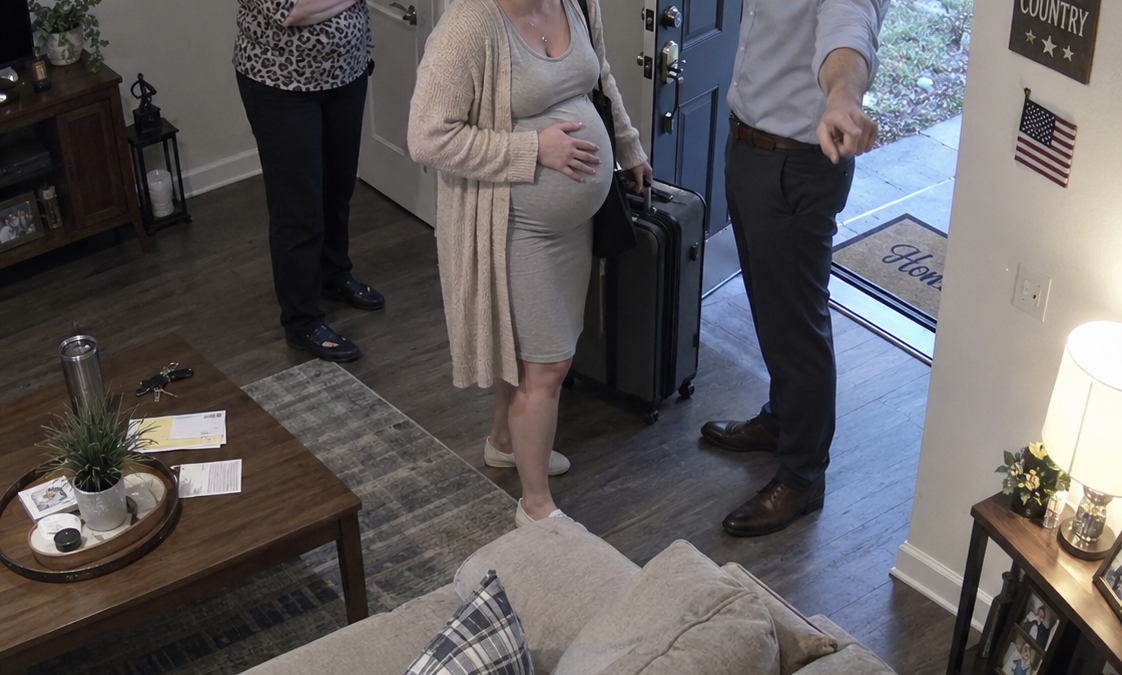
I found my daughter, eight months pregnant, curled up asleep in a freezing car in the far corner of a supermarket parking lot. She had no blanket, no money for a room, and the only things on the seat beside her were a bag of baby clothes and a few crumpled bills. I knocked on the window, and she jolted awake. The moment she recognized me, she burst into tears. But the first words out of her mouth weren’t “Dad, help me.” They were, “Dad, please don’t call my husband.”
That was when I began to realize something was terribly wrong. What I didn’t know was that just three days earlier, the very man I had once trusted to protect my daughter had watched his pregnant wife walk out of their home and locked the door behind her. I stared at her through the window and asked, “What did he do to you?” She lowered her eyes to her swollen belly and remained silent for a long time.
Welcome back to Dad’s Real Life Revenge. My name is Grant Holloway, and I’m fifty-eight years old. If you saw your daughter being treated this way, what would you do? As for me, I can tell you that the truth turned out to be far more horrifying than anything I could have imagined. Leave a comment with the number one so we can begin the story, and hit like because I believe you’re going to enjoy hearing what happened.
I pulled open the car door, and the smell of dampness and stale air immediately hit me. My eyes dropped to my daughter’s feet. They were terribly swollen. Her eyes were bloodshot, and her dry lips had cracked. I took off my thick coat and wrapped it around her trembling body, feeling something tighten painfully in my chest. Every instinct I possessed as a father told me that something had gone very wrong.
“Why didn’t you come home?” I asked, struggling to keep my voice steady.
Tessa lowered her head and avoided my eyes. Her fingers tightened around the edges of my coat as though she were afraid someone might take it away. “I’m okay, Dad. I just wanted to rest for a little while.”
“Rest? For three nights in a parking lot?” I interrupted. “Where is Caleb? Where is he while his wife is curled up out here?”
Tessa said nothing. Tears began sliding down her cheeks, and somehow that silence was worse than any explanation she could have given me. I could feel the heat rising in my chest. Until that moment, I had assumed the young couple had simply gotten into an argument. I had thought Caleb might be a thoughtless, immature husband who needed someone to set him straight. But the way my daughter sat there, unable to look at me, made me afraid the truth was something much worse.
“Tell me,” I said, my voice rough with anger. “Did you and Caleb have a fight?”
Tessa shook her head and drew a trembling breath. When she finally spoke, her voice was so faint that I had to lean closer to hear her.
“He said that house wasn’t my home anymore.”
For a moment, I thought I had heard the worst of it. I was wrong. The cruelty of the son-in-law I had once treated like my own son went far beyond anything I could have imagined.
“He threw you out of the house?” I asked, hardly believing what I was hearing. “In your condition?”
Tessa grabbed my hand. Her fingers were ice-cold. “Dad, don’t go there. Please don’t make a big scene.”
“What right does he have to throw you out?” I shouted, finally losing the restraint I had been desperately trying to maintain. “You both live in that house. You’re carrying his child!”
Tessa closed her eyes, and another tear escaped. “He said the money for the house was his. He said I haven’t contributed anything since I stopped working.”
I stood there frozen, my thoughts spinning. I wanted to drive straight to Caleb’s house, grab him by the collar, and demand to know whether he had any humanity left. But when Tessa began telling me what Caleb had done with the money meant for their baby, I had to step away from the car. I stood in the bitter cold of that five o’clock morning and forced myself to breathe because I was genuinely afraid I might do something I would regret.
When I turned back, my daughter was watching me with frightened eyes. “It all started three days ago,” she whispered.
I leaned against the cold metal of the car while the early morning wind blew directly into my face. Inside, Tessa sat with her head lowered over the steering wheel. I took another breath, struggling to contain the anger threatening to overwhelm me, and thought about how completely I had misjudged the man she had married.
Three years earlier, Caleb had entered my daughter’s life wearing what seemed to be the perfect face of a dependable young man. He was the kind of son-in-law almost any father would have welcomed. He dressed well, spoke softly, and had a stable job at a financial company. Whenever he visited my house, he brought gifts, and he always took the initiative to address me respectfully as Dad. I had been proud of the relationship we were building.
My wife had died young, leaving me with our only daughter. For years, my greatest concern had been whether Tessa would eventually find a husband who understood how to care for her and protect her. Watching Caleb attend to her needs, remembering the smallest details and seeming to anticipate what she wanted before she even asked, I had reassured myself that she had chosen the right man. I believed I could finally stop worrying.
But I had been terribly naive. What I had mistaken for devotion was actually a trap, carefully constructed one step at a time.
Standing beside that freezing car, I began remembering the warning signs I had overlooked. Tessa had gradually stopped seeing her friends as often. Whenever I called and invited her to dinner over the weekend, her first response was almost always the same: “Let me ask Caleb first.” At the time, I had interpreted that as mutual respect between a husband and wife. I had even praised my daughter for understanding the boundaries of marriage.
By the sixth month of her pregnancy, Tessa had suddenly quit her job. Caleb called me personally to explain, and his voice sounded so sincere that I never thought to question him.
“Dad, Tessa’s job is too stressful. I want her to rest completely and focus on the pregnancy. My income alone is enough to take care of the whole family.”
It sounded like a beautiful promise from a caring husband. Only later did I understand the cruel manipulation hidden beneath those reassuring words. Once Tessa stopped working, she lost her independent source of income. Caleb kept all the bank cards and controlled every household expense. Even when she wanted to buy a maternity shirt or a bottle of supplements, she had to ask him for money.
I remembered one occasion when she had texted me to borrow a small amount. She explained that she needed additional supplements that weren’t covered by insurance. I had been surprised and asked why she didn’t simply tell Caleb. Her answer was brief.
“He’s busy dealing with some expenses for the house.”
I transferred the money immediately and thought little more about it. I had convinced myself that Caleb was simply being inconsiderate about certain things, the way some husbands could be. I had no idea what he was actually doing with my daughter’s money.
Now, standing beside that old car, the pieces were beginning to come together. I blamed myself bitterly. Some of the warning signs hadn’t been small at all, but when we trust someone too completely, we can always find a harmless explanation for behavior that should frighten us. Without realizing it, I had welcomed a betrayer into my daughter’s life.
I opened the passenger door and climbed into the seat beside Tessa. She quickly lifted her thin hands to wipe the tears from her cheeks, trying to compose herself before looking at me.
“Tell me,” I said, holding her gaze. “What happened these past few days?”
Her eyes trembled in a way that made my heart ache. “Dad, do you remember the money Mom left me before she died?”
I nodded. Of course I remembered. It was the personal savings my wife had spent her entire life putting aside. Before she closed her eyes for the last time, she had held my hand and repeatedly reminded me that the money belonged to Tessa. It was meant to be our daughter’s safety net, something she could depend on so that no matter what happened, she would never be forced to endure humiliation because she had nowhere else to turn.
Tessa swallowed hard. What she said next made the blood in my veins seem to freeze.
“Caleb took all of it.”
I sank back against the passenger seat. Suddenly the cramped interior of the car felt suffocating. The money my wife had left Tessa wasn’t an enormous fortune, but it represented a lifetime of sacrifice and all the love of a mother who knew she was leaving her daughter behind. She had wanted Tessa to have something to depend on during childbirth, during the months when she couldn’t work, and whenever life became difficult. Above all, she wanted our daughter to have the freedom and security to make her own choices.
And my precious son-in-law had drained that money until almost nothing remained.
“How did he take it?” I asked, my voice reduced to a hoarse whisper.
Tessa turned toward the window. The dim streetlights cast a faint glow over her gaunt face as she began explaining what had happened. After she stopped working, Caleb started talking constantly about their future. He reminded her that they were about to welcome their first child and insisted that there shouldn’t be such a thing as his money or her money anymore. He said combining their accounts would make it easier to manage the family’s finances.
I clenched both hands. That coward had exploited the emotions of a pregnant woman who trusted her husband and wanted to build a stable home for their child.
Tessa believed him. She agreed to transfer all the savings her mother had left her into a joint account under Caleb’s name. At first, everything appeared normal. Caleb used some of the money to pay small bills and purchase a few things for the baby. Those ordinary transactions helped reassure her that he was doing exactly what he had promised. Then the balance began dropping much faster than she expected.
Without telling Tessa, Caleb withdrew money to pay off credit card debts he had accumulated before their marriage and concealed from her. He used more of it to buy himself a new car. He also poured money into a risky investment project with his friends. Every one of those decisions was made behind Tessa’s back. By the time she discovered what had happened, the account was almost completely empty.
“I asked him,” Tessa said, shuddering at the memory. “I asked him where Mom’s money had gone. Do you know what he said?”
I remained silent. Part of me was afraid to hear the answer.
“He screamed in my face,” she continued, breaking into tears. “He said I was living in his house, eating food bought with his money, and carrying his child. He said I was selfish and that all I knew how to do was count every last penny.”
Anger erupted inside me. My chest felt as though it might burst. How could an educated man speak that way to his wife while she was carrying his own child? I reached across the seat and wrapped my arm around Tessa’s shoulders. Her entire body trembled with the sobs she was trying so hard to suppress.
“Come home with me,” I said firmly. “Pack your things. I’m taking you home.”
Tessa shook her head and looked at me through swollen eyes. “That’s not all, Dad.”
I frowned. “What else happened?”
“That money was only the beginning,” she whispered. “What he and his mother did three nights ago was even worse.”
My hands tightened around the steering wheel. I had believed stealing her savings was the absolute limit of Caleb’s cruelty, but once again, I was wrong. Everything I thought I understood about my daughter’s marriage seemed to be breaking apart.
“Then why did you have to sleep in the car?” I asked through clenched teeth.
Tessa lifted her head. The fear in her eyes was haunting. “Because I asked him to show me something he never wanted me to see.”
“What did you demand to see?” I asked, feeling a chill run down my spine.
Tessa clasped her hands so tightly that her thin knuckles turned white. “I asked him for the bank statements. I wanted to know exactly where every dollar had gone. I demanded access to the joint account again.”
It had happened three nights earlier, during a heavy rainstorm. Caleb had just returned home from work, taken off his suit jacket, and tossed it carelessly onto the sofa. Tessa approached him with the bills for her upcoming delivery in her hands. The medical costs were expensive, and there wasn’t a single dollar left in the joint account to cover them.
The moment she mentioned the bank statements, Caleb’s attitude changed completely. The courteous husband disappeared, and the man standing in front of her became cold and cruel. Instead of answering her questions, he began attacking her emotionally, making her feel as though she had done something wrong merely by asking where her own money had gone.
“You don’t trust me!” Caleb shouted. “You’re pregnant, so there’s something wrong with you mentally, isn’t there? You’re too emotional and crazy.”
He stepped closer and pointed directly in the face of his wife, who was eight months pregnant. “I do everything for this family. You quit your job and stay home, living off me. What right do you have to interrogate me?”
Tessa was trembling so badly that she could barely remain standing. But beneath her fear, there was still enough resentment and hurt for her to answer him.
“That wasn’t your money,” she protested. “That was the money my mother left me.”
Just then, Maryanne walked into the apartment. She was Tessa’s mother-in-law and lived directly across the hall. She had her own access code and used it to let herself in without waiting for permission. She didn’t ask Tessa how she was feeling or whether anything was wrong. Instead, she stood in the living room with her arms crossed, looking at her pregnant daughter-in-law with unmistakable contempt.
“Caleb works ten hours a day,” Maryanne said sharply. “He provides every meal you eat. Meanwhile, you sit around enjoying an easy life. What gives you the right to interrogate my son?”
Tessa looked at her, tears spilling down her face. “Maryanne, that was the money my mother left me before she died.”
Maryanne raised her chin. Her next words came with such casual indifference that they seemed even more vicious. They were the kind of words capable of crushing someone who was already barely holding herself together.
“Your mother is dead. You have a new family now. What money is yours?”
As Tessa repeated those words to me, I slammed my fist against the driver’s seat. The sharp sound echoed through the cramped car, and my chest heaved with rage. Those two people, those impostors who pretended to be family, had joined forces to corner a woman who was only weeks away from giving birth. They had used her grief, her dependence, and her love for her unborn child against her.
Caleb had looked at his mother and then back at Tessa. A cold smile crossed his face.
“If you think I’m so terrible, then leave.”
Tessa stared at him in disbelief. At first, she thought he was simply speaking in anger and would calm down. Instead, Caleb walked into the bedroom, pulled out an old suitcase, and grabbed several sets of her clothes. He threw them inside, dragged the suitcase through the apartment, and left it beside the front door. Then he flung the door wide open, letting the cold wind and rain blow into their home.
“Come back when you’ve learned how to respect your husband,” he told her.
Tessa stood in the doorway, holding her heavily pregnant belly. Tears streamed down her cheeks as she looked at the man she had married.
“What about your child?” she asked. “Are you throwing your own child out too?”
Caleb looked directly into his wife’s eyes. There wasn’t the slightest trace of tenderness or hesitation in his expression.
“Don’t use the baby to manipulate me.”
Then he slammed the door shut. The lock clicked with a cold, dry sound, and Maryanne, who was still standing inside, turned it once more. Through the narrow crack in the door, she delivered one final insult.
“If you can’t contribute anything, don’t expect to live under my son’s roof for free.”
Tessa stood alone in the dark hallway, one hand supporting her belly and the other gripping the handle of her suitcase. She didn’t dare call me. Caleb had spent months manipulating her until she had begun to believe she was a failure, a freeloading wife who contributed nothing and a daughter whose behavior would only bring shame to her father. Even after being thrown out, those poisonous beliefs kept her from reaching for the help she desperately needed.
She slowly made her way to the parking lot, climbed into the old sedan, and remained there for three nights.
Then Tessa told me about the last thing Caleb had said before closing the door. To this day, I remember every word of what she described, and the thought of that night still makes my blood boil. Yet as I sat beside her, my anger gradually hardened into a frightening coldness. I no longer wanted to rush over to Caleb’s house and punch him in the face. Doing that would only dirty my hands.
I looked at my daughter and knew I had already heard enough to make me want to confront him immediately. But just as I was deciding what to do next, Tessa said something that stopped me.
I took her hand. “That’s not all, is it?”
She looked up at me with fear filling her eyes. “Dad, I signed something.”
My voice dropped. “What did you sign?”
Tessa lowered her head and wiped another tear from her cheek. Then she reached into her old handbag and began searching through its contents. After a moment, she pulled out a stack of crumpled documents, several black-and-white printed pages whose corners were creased and stained by rainwater. She held them in her trembling hands as though she were afraid even to look at them.
“Two months ago,” she began, her voice shaking, “Caleb gave me these papers. He said they were for renewing the mortgage. He told me to sign as a dependent so we could reduce the taxes.”
I took the documents from her, my hands trembling with anger. I opened them one page at a time and began reading the dense legal language. What I discovered made my stomach turn. Tessa hadn’t simply signed an ordinary power of attorney. Caleb had slipped a separate property agreement into the paperwork, turning all the savings her mother had left her into what appeared to be a voluntary contribution to his private business.
And that wasn’t all. He had also used the agreement to falsify a private credit application with a third party, arranging things so that the debt obligation could be shifted onto Tessa if he successfully moved the assets. As I read, my fingers tightened around the pages until the paper crackled and began to tear. That coward had calculated every step of his plan.
First, he had drained Tessa’s savings. Then he had arranged for her to share the burden of his debts. And once everything was in place, he had thrown her out onto the street as though she were something he no longer needed.
The anger that had been raging inside me suddenly disappeared. In its place came a frightening calm. I understood that shouting, threatening Caleb, or losing my temper wasn’t going to help my daughter. What she needed now was a father who could think clearly and protect her from whatever he had planned next.
I turned toward Tessa. She was sitting with her shoulders hunched, still clutching the edges of my coat. I looked directly into her eyes.
“From now on, you don’t call him. You don’t text him. And you don’t delete a single message from your phone.”
Tessa blinked, startled by the firmness of my voice. “Dad—”
“Don’t listen to his explanations,” I interrupted. “I’m taking you home immediately.”
She took my hand, her fingers still ice-cold. The fear in her eyes hadn’t disappeared. “I don’t want to destroy the family,” she sobbed. “If this becomes a big scandal, the baby will be born without a father.”
I looked down at my daughter’s heavily pregnant belly. For a moment, my heart tightened with sorrow, but I knew I couldn’t allow that feeling to weaken my resolve.
“Sweetheart,” I told her firmly, “the man who forced his pregnant wife to sleep in a car already destroyed the family.”
Tessa fell silent. My words seemed to break through the last of the beliefs Caleb had forced upon her. She nodded slowly, leaned her head against the seatback, and closed her exhausted eyes. There was nothing left in her body to resist with. She had been cold, frightened, and alone for three nights, and now that she was finally safe with me, the exhaustion was overwhelming.
I started the engine, its sound echoing through the silent supermarket parking lot at five in the morning. I turned the car around and drove Tessa back to my house. Once we were inside, I persuaded her to eat a little something before helping her settle down to rest. She was so exhausted that she fell asleep almost immediately.
As soon as I was certain she was sleeping, I went straight into my study. I spread the crumpled documents across my desk, photographed every page, and sent the images to a close friend of mine who was a lawyer. I knew I needed someone who understood exactly what those papers meant before I made another move.
Ten minutes later, my phone rang.
“Grant,” my friend said, his voice unusually serious. “Are you sure this is everything you found?”
“Is something wrong?” I asked.
He sighed. “If what I’m looking at is correct, then your son-in-law didn’t just take the money. He’s setting up a much bigger financial fraud.”
His words sent a chill through me. That very morning, I gathered the entire stack of documents and hurried to his office. Together, we began reviewing everything we could find: every bank account, every transaction history, and every message exchanged between Tessa and Caleb over the previous two years. We examined page after page, working through the evidence like detectives trying to reconstruct a carefully concealed crime.
The more we uncovered, the more brutal the truth became.
When my lawyer friend synced the family iCloud account data that Tessa had previously shared on the laptop at my house, we discovered a conversation that hadn’t yet been deleted. It was a direct exchange between Caleb and his mother, Maryanne. One particular message confirmed what I had begun to fear: none of this had happened overnight. They had been planning it for months.
I slid my finger across the screen and read the messages one by one. Every line felt like a bucket of ice water being poured over my head.
Four months earlier, Caleb had written to his mother, “She doesn’t know how much is left in the joint account. Don’t worry, I’ll tell her it’s for emergency expenses for the baby.”
Maryanne had replied without the slightest hesitation. “You need to control all the money before she starts thinking it’s hers alone. Don’t let her get tied to the house assets.”
I gripped the phone so tightly that my knuckles turned white. Caleb and Maryanne had been plotting against Tessa since she became pregnant. They had deliberately taken advantage of the time when she was most vulnerable, when she was preparing for motherhood and depending on the people she believed were her family.
They had isolated her from her friends and made her financially dependent on her husband. They had transformed her personal savings into money they could control, then convinced her that she was a freeloader who ought to feel grateful for whatever they gave her. The messages made it impossible to dismiss what had happened as an unfortunate disagreement between a married couple.
This was organized asset theft, accompanied by cruel psychological manipulation.
I turned toward the lawyer. “Can we sue him?” I asked, my voice hardening.
He looked at me with the measured expression of a man who had spent many years practicing law. I could almost see him weighing the evidence, considering the documents, and deciding which arguments would be strongest.
“We have transaction evidence,” he said. “We have messages showing intent. But if we want to recover everything and make him pay the price, we need one final piece.”
“What piece?”
The lawyer pulled the property file into the middle of the table and opened it to the section dealing with the house where Caleb and Tessa had been living. He pointed to the line confirming the original down payment.
“Grant, do you know who actually paid the down payment on that house?”
I stared at him without speaking. Of course I knew. I had personally handed Tessa the check for that down payment shortly before her wedding day. At the time, it had been my way of helping the young couple begin their married life with a little more security. I had given it freely because I wanted my daughter to have a stable home.
The lawyer gave a cold smile.
“He thinks that because the house is in his name, he has the right to throw his wife out. But he’s forgotten that the down payment that created that asset came from you. And the documents he tricked Tessa into signing are the key to turning his own trap against him.”
The implications of his words were still settling over me when I closed the file. Before long, a sharp ringing interrupted the silence at my house. Someone was at the front door, pounding on it repeatedly with such force that the sound seemed to shake the walls.
I stepped into the hallway and looked through the small window beside the door. Caleb was standing on the porch.
He wore a perfectly pressed business suit, and his hair was neatly slicked back with gel. His expression was calm, almost pleasant, as though the events of the previous three nights had never happened. There was no trace of worry about his pregnant wife, no visible shame, and certainly no indication that he believed he had done anything wrong.
I pulled the door open, and he immediately put on that familiar polite smile. Caleb had arrived at my house smiling. Ten minutes later, there would be nothing left of that smile.
“Dad,” he said gently, “is Tessa here? I came to take her home. We just had a small argument. She’s too emotional, so she ended up bothering you.”
He spoke with the casual confidence of a man describing a minor private misunderstanding, and the way he minimized what had happened made my blood boil. He had forced his eight-months-pregnant wife to sleep in a cold car for three nights, yet he was presenting the situation as nothing more serious than a childish tantrum.
I stood in the doorway, blocking his path, and looked straight into his eyes.
“Where is my daughter’s money?” I asked in a low, cold voice.
Caleb froze for a fraction of a second. His smile faded, but he recovered quickly, smoothing his expression into one of practiced patience.
“Dad, that’s our money,” he explained. “I used it to invest in our family’s future. Tessa stopped working, so she tends to worry too much.”
“Invest?” I repeated, stepping closer. “Or pay off your personal debts? Or transfer it to your friend’s company?”
His expression changed immediately. For the first time, Caleb seemed to understand that I was no longer the trusting father-in-law he could manipulate with a polite smile and a few reassuring words.
He changed tactics. He sighed deeply and looked at me as though I were being unreasonable.
“You don’t understand. Tessa hasn’t been emotionally stable lately. She packed her things and left on her own. I never threw her out. I came here because I want what’s best for her and the baby.”
Just then, Tessa appeared in the living room doorway. She steadied herself against the wall, looking pale and weak from everything she had endured. Caleb noticed her immediately and stepped forward, filling his eyes with an expression of concern that I now knew was completely false.
“Tessa, come home,” he said softly. “Don’t let this go too far. You’re hurting the baby. Are you really going to let your father destroy our family?”
Tessa stopped moving. I saw uncertainty flicker across her face. Caleb’s manipulation had become so deeply rooted in her mind that even after everything he had done, his familiar words could still make her question herself. She looked at me, then back at Caleb, caught for a moment between what she knew had happened and what he was telling her to believe.
If you’ve stayed with us this far, this story must be at least a little interesting. Please help us with something quick and simple: like and subscribe. Leave a comment with the number five so I know you’ve made it this far, along with the name of your beloved city. A lot of people watch without doing it, but it costs nothing and means a great deal to us.
I didn’t raise my voice at Caleb. I didn’t rush forward and punch him, although a part of me wanted to. Instead, I remembered what my lawyer had told me: never let a manipulator turn himself into the victim.
I reached into my pocket, took out my phone, and opened the messages between Caleb and Maryanne. Then I placed the screen directly into Tessa’s hand.
“Read it, sweetheart,” I told her evenly.
Tessa lowered her eyes and began scrolling. She read each line slowly, taking in the messages that described the plan to control her money, move the assets, and make her believe she was nothing more than a burden. With every sentence, another part of the false picture she had held of her husband fell away.
The moment Caleb realized what she was reading, the fake tenderness vanished from his face. He lunged forward to snatch the phone from her hand, but I reacted immediately and knocked his hand away.
Tessa’s face changed from stunned disbelief to a ghostly pallor. Then something even more remarkable happened. Her tears stopped. The confusion and weakness in her eyes disappeared, replaced by a sorrow so deep that it seemed to quiet every other emotion. She lifted her head and looked directly at the man she had loved and trusted for years.
“You never intended to give my money back, did you?” she asked.
Her words were quiet, but they were as cold as ice.
Caleb said nothing. He couldn’t answer. In that silence, the mask of the perfect husband finally collapsed in front of both of us. His jaw tightened, and he turned toward me with open hostility.
“You’re teaching your daughter to turn against her husband, aren’t you?” he shouted. “That house is in my name. The baby in her belly is my child. You have no right to interfere!”
I smiled, although there was no warmth in it.
“You’re right,” I replied slowly. “I’m not interfering with words. At two o’clock this afternoon, we’ll meet at the lawyer’s office, along with your mother.”
At precisely two that afternoon, harsh sunlight streamed through the windows of the conference room at my lawyer’s office. A long table occupied the center of the room. On one side sat Tessa, the lawyer, and me. Across from us sat Caleb and Maryanne, both of whom had arrived with the self-assured expressions of people who believed they had been dragged into a completely unnecessary confrontation.
Maryanne was elegantly dressed, sitting with her back perfectly straight. Her eyes swept over Tessa with contempt. She didn’t ask a single question about the grandchild growing inside her daughter-in-law, or whether Tessa had recovered from the three nights she had spent sleeping in a car. Instead, she slammed her hand onto the table.
“This is between a young husband and wife. Older people shouldn’t interfere,” Maryanne declared arrogantly. “It’s just a small argument. Why is your father making such a big deal out of it? Is he trying to extort money from my son?”
Caleb sat beside her, smiling confidently. He believed he had already won. The house was in his name, the account was in his name, and he had spent months convincing Tessa that she had no power of her own. In his mind, she was still the weak, frightened woman who would never dare challenge him.
I didn’t bother answering Maryanne. I wasn’t going to waste my strength on insults, accusations, or tears. Instead, I gave my lawyer a slight nod.
He opened his leather briefcase and began removing the files. One after another, he placed them on the conference table. He handled each one gently, but to me, every document seemed to carry the weight of a thousand pounds.
The first file contained the complete history of Tessa’s savings account.
“This was separate money left to Tessa by her late mother,” the lawyer explained firmly. “And here are all the transfers into Caleb’s personal account, along with receipts showing payments toward his personal credit card debt from before the marriage.”
Maryanne’s expression changed. She glanced at her son, who pressed his lips together and shifted uneasily in his chair. For the first time that afternoon, he didn’t look entirely comfortable.
“So what?” Maryanne snapped. “She’s Caleb’s wife. Isn’t her money family money, too?”
I remained silent.
My lawyer placed the second file on the table. It contained printouts of the messages exchanged between Caleb and Maryanne, including the conversations about controlling Tessa’s finances and the lies they had planned to tell her about childbirth expenses. The pages lay beneath the bright conference room lights, every word plainly visible.
“So you’re admitting that you knew about these transactions?” the lawyer asked Maryanne calmly. “This is evidence of deliberate asset misappropriation.”
Maryanne’s face flushed red, then rapidly turned pale. For a moment, she seemed unable to find anything to say. Finally, she turned and struck Caleb sharply on the arm.
“What have you done?” she hissed.
Caleb began losing his composure. He leaned forward, his voice trembling with anger.
“This is blatant interference! I can absolutely sue all of you for invasion of privacy!”
Beside me, Tessa sat quietly, watching him. When she finally looked straight into his eyes, I saw something I had almost forgotten was possible. There was no fear left in her expression, no desperate need to gain his approval, and no trace of the emotional dependence that had once kept her silent. I had never seen my daughter look so strong.
“Go ahead and sue,” Tessa said coldly. “Let’s see what the court and your company think of a man who took his wife’s money and then threw her out to sleep in a car.”
Caleb froze. I could see that he was beginning to understand how completely he had lost control of the situation. But there was still one document left to place on the table, and it was the document that would finally strip the color from his face.
I slowly reached into my coat pocket and pulled out the final file. Inside were the documents Caleb had tricked Tessa into signing two months earlier, along with backup copies of the messages discussing the transfer of assets. I placed everything on the table and watched Caleb’s eyes follow my hands. He had no idea what was about to happen, but the uneasiness in his expression told me he was beginning to suspect that the situation had moved far beyond his control.
My lawyer tapped the file lightly and looked directly at him.
“Caleb, the fact that you tricked Tessa into signing a property agreement while she was being manipulated, combined with falsifying a private loan application and deliberately moving your wife’s separate savings, is enough to constitute financial fraud and fraudulent misappropriation of assets. We have completed the litigation file.”
Caleb stared at the documents. His eyes widened, and all the confidence he had displayed only moments earlier vanished. The color drained from his face until he looked almost deathly pale. He slowly raised his head, his eyes vacant, the arrogance that had always defined him suddenly gone. The paper in his hand trembled so violently that he could barely hold it.
“What? What is this?” he stammered.
My lawyer smiled with the calm confidence of someone who knew exactly what the evidence meant.
“The clause you slipped into the documents for Tessa to sign contains false information about the collateral,” he explained coldly. “You used the down payment on the house paid by Grant and falsely declared it as your separate property. This isn’t just civil fraud. It contains sufficient elements to constitute fraudulent misappropriation of property under criminal law.”
Maryanne suddenly lunged forward and snatched the paper from her son’s hand. She scanned the first few lines, her eyes moving rapidly across the page. Then she froze. All the arrogance that had filled her face when she entered the conference room disappeared, replaced by something much closer to panic.
“No, this can’t be,” she whispered.
Her hands began trembling. She turned toward me, and for the first time since I had known her, there was no contempt in her voice.
“Grant, why bring the police into a family matter?”
I looked at her without flinching. My anger had long since settled into something colder and far more determined.
“Maryanne,” I said slowly, “when my daughter, eight months pregnant, stood outside your door in the rain that night, did you remember that she was family?”
Maryanne fell silent. Her face turned ashen, and she lowered her eyes. There was nothing she could say that would erase what she and her son had done. For months, they had treated Tessa as though she were undeserving of basic kindness, yet now that they faced consequences, Maryanne suddenly wanted to remind everyone that they were family.
Caleb understood the implications of the evidence far better than his mother did. He worked in finance. He knew what could happen if those documents reached investigators. His career, his professional reputation, and everything he had worked so carefully to build could collapse. He could lose his job, the respect of his colleagues, and the assets he had schemed so hard to control.
For a few seconds, he sat perfectly still. Then, without warning, he slid out of his chair and dropped to his knees in front of Tessa.
“Tessa, please,” he begged.
He grabbed the hem of her clothes, clutching the fabric as though holding on to her might somehow prevent everything from falling apart.
“I was wrong. I’ll give all your money back. I’ll withdraw the documents. Please, don’t destroy my career.”
Tessa looked down at the man she had once considered her entire world. This was the husband she had trusted with her future, her mother’s savings, and the life of their unborn child. Only days earlier, his anger had terrified her so completely that she had spent three nights sleeping in a freezing car rather than ask anyone for help.
Now he was the one begging.
Not a single tear fell from her eyes. The fear and confusion that had once made her hesitate were gone. In their place was a quiet disgust that seemed far more powerful than anger. She reached down, pulled the hem of her clothes free from his fingers, and looked at him steadily.
“You won’t pay it back,” Tessa said, carefully pronouncing every word. “The law will force you to pay it back.”
Over the next two weeks, everything unfolded exactly as Caleb had feared. Tessa officially filed for divorce and brought a lawsuit against him. Our lawyer arranged for all the related accounts to be frozen, and the money Caleb had transferred away was required to be returned to Tessa. The house registered in his name was seized for disposition because the original down payment had come from me.
The image of the perfect husband Caleb had so proudly maintained on social media and in front of his coworkers began to crumble. For years, he had carefully presented himself as a successful professional, a devoted family man, and someone who could be trusted. But once the truth about his financial manipulation and the way he had forced his pregnant wife to sleep in a car reached the people who needed to know, that carefully constructed reputation shattered.
He was suspended from work pending the investigation. The financial consequences began falling on Caleb and Maryanne one after another, and neither of them could stop what they had set in motion.
One afternoon, Maryanne called Tessa. The sharp, commanding voice my daughter had grown accustomed to hearing was gone. In its place was a pleading softness that sounded almost desperate.
“Tessa, everything can be worked out, sweetheart,” Maryanne said. “The baby will be born soon. If you let this happen to Caleb, how will your child grow up?”
Tessa held the phone in her hand and looked out the window. Afternoon sunlight was filtering through the leaves outside, filling the room with a quiet warmth. She listened to the woman who had once stood behind a locked door while her pregnant daughter-in-law was left alone in the rain.
“During the three nights I slept in the car,” Tessa asked calmly, “did you ever call me even once?”
There was complete silence on the other end of the line.
Maryanne had no answer. She hadn’t called to check whether Tessa was safe, whether she had somewhere to sleep, or whether the baby was all right. She had done nothing when her help could have mattered, yet now she expected Tessa to protect Caleb from the consequences of his actions.
“Then there’s no need now either,” Tessa replied.
She ended the call and blocked every phone number belonging to Caleb and his mother. There were no more arguments, no desperate explanations, and no further opportunities for them to twist her words or make her question her own judgment.
Caleb, however, wasn’t ready to accept that he had lost control.
He came all the way to my house one evening. The man standing outside my iron gate looked nothing like the polished, confident son-in-law who used to arrive at my door carrying gifts. He had grown thin and disheveled. His eyes were sunken, his clothes looked neglected, and the desperation on his face had hardened into unmistakable hatred.
He stood on the other side of the gate and stared at me.
“You destroyed my life!” he screamed.
I stepped outside and stopped in front of him, the iron bars separating us. I didn’t insult him, raise my voice, or threaten him. I had no desire to give him another opportunity to pretend he was the victim.
“I didn’t destroy your life,” I replied evenly. “I just stopped protecting you from the consequences of what you did.”
Caleb stood frozen. For several seconds, he seemed unable to understand how little power his anger had over me. Then he turned away in a daze and slowly walked down the street, disappearing into the fading evening light.
At last, Caleb had lost the thing he valued most: control.
I went back inside and found Tessa preparing supplies for the baby. She was moving carefully around the room, arranging the things her daughter would need when she arrived. Watching her, I felt a measure of relief I hadn’t experienced in weeks. She was safe, she had a home, and she was beginning to make decisions about her own life again.
But our journey wasn’t over.
That night, Tessa suddenly clutched her belly and collapsed to the floor. Her face turned deathly pale as one intense contraction followed another. She gasped for breath, struggling through the pain, and for a terrible moment, I was afraid something was happening that I couldn’t protect her from.
Panic seized me. I hurried to her side, lifted her into my arms, carried her out to the car, and raced through the darkness toward the emergency room.
The hospital lights were blazing when we arrived. Doctors and nurses moved quickly around us, and before I could fully understand what was happening, Tessa had been taken away for examination. I stood in the hallway with my back pressed against the cold wall, my hands still trembling from the frantic drive.
When the doctor came out, his expression was serious. He explained that Tessa was at risk of giving birth three weeks early. The severe emotional stress and physical exhaustion she had suffered, especially after spending three nights curled up in a freezing car, had placed an enormous strain on her body.
I listened, feeling the familiar weight of helplessness settle over me. I had spent so much time trying to make sure Caleb was held responsible for what he had done that the possibility of losing my daughter or her baby terrified me. All I wanted in that moment was to know that they would both survive.
The hurried footsteps of doctors and nurses echoed through the hallway. Doors opened and closed. Medical staff passed me carrying equipment, and every sound made me look up, hoping someone was coming to tell me how Tessa was doing.
Several hours passed, but they felt like an entire century.
I looked down at my hands. They were the same hands that had trembled when I opened the door of that old car at five in the morning and discovered my daughter curled up in the cold after three straight nights without a proper place to sleep. I remembered her swollen feet, her cracked lips, and the way she had begged me not to call her husband.
Then, from somewhere beyond the doors, I heard the piercing cry of a newborn baby.
I lifted my head.
A moment later, the door opened, and a medical worker came out carrying a tiny, rosy baby girl. I stepped forward, almost afraid to breathe, and looked at my granddaughter for the first time.
Tears streamed down my cheeks. Heartache and relief rushed through me all at once, so powerfully that I could barely speak. In that small face, I saw the beginning of something Tessa had nearly been denied: a future in which she and her child could live without fear.
Only a short time earlier, my daughter hadn’t known where she would sleep the following night. She had been abandoned in a parking lot, frightened of her husband and ashamed to ask her father for help. Now she was lying in a warm hospital room with her newborn daughter in her arms, surrounded by people who genuinely cared about her.
Tessa was beginning a new life.
But nothing happened like a fairy-tale miracle. She didn’t suddenly become a perfect winner, untouched by everything she had endured. There were still nights when she woke with a start, overwhelmed by memories of the things Caleb had said and done. There were moments when fear returned without warning, even though she knew she was safe. The emotional wounds he had left behind would take time to heal.
She still needed therapy. She still had to deal with complicated legal procedures connected to the divorce, and there were countless practical matters to settle before she could completely separate her life from Caleb’s.
But she was free.
She no longer had to live under the cruel manipulation of people who pretended to be family while treating her independence as something they had the right to take away. She could make decisions about her money, her future, and how she wanted to raise her daughter without begging anyone for permission.
As I sat beside her hospital bed, Tessa held her baby close to her chest. She looked down at the little girl for a moment before lifting her eyes to mine. They were filled with gratitude, and when she spoke, her voice trembled.
“Thank you, Dad,” she whispered. “If you hadn’t found me that day—”
“You saved yourself,” I interrupted gently. “You were brave enough to tell the truth.”
I wanted her to understand that she wasn’t weak because she had trusted her husband, and she wasn’t helpless because she had been frightened. It had taken tremendous courage for her to tell me what Caleb had done, to confront the evidence, and to stand up to the people who had spent months convincing her that she had no right to question them.
Looking at my daughter and granddaughter together, I realized that I had learned a bitter lesson of my own.
I had made mistakes. I used to believe that if my child wasn’t asking for help, it meant she was doing fine. I assumed that silence meant everything was all right, or at least that whatever difficulties she faced were things she could manage on her own.
I had also believed that once my daughter got married, she needed to handle the private matters of her marriage herself. I thought respecting her independence meant keeping my distance and trusting that the husband she had chosen would look after her.
I was wrong.
Some people remain silent not because they are okay, but because someone has manipulated them into believing they don’t deserve help. They can become so accustomed to being blamed and belittled that they begin to accept suffering as something they have brought upon themselves. Even when someone who loves them is standing close enough to offer a hand, they may no longer believe they have the right to reach for it.
Through everything that happened to my family, I want to share a few things with everyone listening to this story. These aren’t lessons from a man who believes he knows everything. They are lessons from a father who almost lost his daughter and who now understands how easily cruelty can hide behind the appearance of a respectable marriage.
First, financial control is one of the cruelest forms of control in a relationship. When someone deliberately cuts off your means of support, takes away your independence, and makes you depend on them for every basic necessity, that isn’t love. It is possession. It is a way of convincing another person that they cannot survive without permission from the one who holds the money.
Second, never confuse sacrifice with surrendering all your personal freedom. Marriage and family require compromise, patience, and the willingness to care for one another. But none of those things should demand that a person give up their dignity or the ability to make decisions about their own life. A family should never become a place where someone is forced to endure pain simply to preserve the appearance of happiness for other people to admire.
Third, if you notice someone you love beginning to change in unusual ways, pay attention. If they stop contacting you as often, withdraw from friends, or suddenly seem frightened whenever their partner is mentioned, don’t always accept the first harmless explanation that comes to mind. Ask one more question. Take one step closer. Let them know that your door is still open, even if they have been told otherwise.
They may be waiting for someone to reach into the darkness and pull them out of the ashes.
And finally, I learned that the best revenge isn’t grabbing a knife, giving in to rage, or rushing out to destroy the person who hurt someone you love. Anger can consume you without restoring a single thing that has been taken away. Violence won’t give back lost security, erase painful memories, or rebuild the trust that has been broken.
The right kind of revenge is breaking free from the control of people who believe they own you. It means using the law to hold them responsible for their choices and refusing to allow their cruelty to determine the rest of your life. Above all, it means continuing to live with dignity, independence, and your head held high.
Thank you for staying with Dad’s Real Life Revenge. Subscribe to the channel for more heartfelt family stories, a place where the truth may arrive late, but consequences always find the right person.
I looked at my granddaughter sleeping peacefully in Tessa’s arms. Her tiny face was relaxed, her breathing soft and steady. She knew nothing about the fear her mother had endured before she was born or the people who had tried so hard to make her feel powerless.
I leaned closer to the little girl and whispered into her ear.
“I can’t undo the three nights your mother spent sleeping in that car. I can’t take away the fear she felt or give her back the time she lost. But I can make sure of one thing.”
I looked at Tessa, then back at the sleeping child.
“This little girl will grow up knowing that love never asks us to make ourselves smaller so someone else can feel bigger.”








