He threw my eight-year-old grandchild against the wall just because the child accidentally spilled a glass of wine; what horrified me even more was that not a single person stood up; the whole family kept eating as if nothing had happened; i stood up, looked him straight in the eyes, and made a phone call; 18 minutes later, his face turned pale
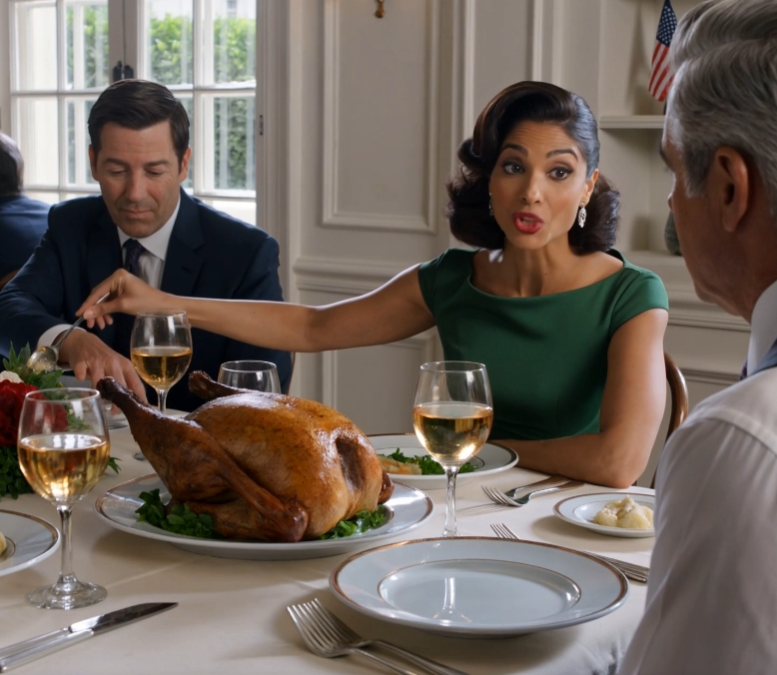
I can still remember the sound of my grandson’s back hitting the wall. It wasn’t loud like it would have been in the movies. There was no dramatic crash, no shattering glass, no scream that filled the room. Just a dry, dull thud, followed by the terrible, choked sound caught in the throat of an eight-year-old boy who was struggling to breathe through the pain. What frightened me even more than that sound was what happened afterward. Nobody stood up. His mother remained seated with her fork in her hand. His maternal grandmother continued cutting the meat on her plate. My own son rose halfway from his chair, then slowly sank back into it, as though something invisible had forced him down.
Quinton looked at the little boy curled up on the floor and spoke with the cold satisfaction of a man who believed he had done nothing wrong. “Next time, you’ll remember not to spill my wine.”
That little boy was my grandson.
Welcome back to Dad’s Real Life Revenge. My name is Wendell Carter. I’m sixty-eight years old, and this is the story of how I dealt with the people who mistreated my grandson. Leave a comment with the number one so we can begin the story, and hit like, because I believe you’re going to enjoy what happened next.
The dining room had fallen into a silence so cruel that I could hear the faint hum of the heating system. Beneath the table, I pressed my hands together until my fingernails dug into my palms. My fingers were trembling, but not because I was afraid. A wave of anger unlike anything I had felt in years was rising through my chest, tightening my throat and making every breath seem too shallow. I wanted to cross that room and smash the smug expression off Quinton’s face. I wanted him to experience even a fraction of the helplessness he had just inflicted on a defenseless child. But thirty-one years of working in financial investigations had taught me a painful lesson. Anger makes people careless. It makes them destroy evidence, make mistakes, and give guilty people opportunities to escape responsibility. Calmness, on the other hand, is what puts the guilty where they belong.
If I turned that magnificent dining room into the scene of a physical confrontation, Quinton would use every dollar and every connection he possessed to make me the villain. He would have me thrown out of his house, and once the door closed behind me, August would be left alone with the same people who had been hurting him. I could not allow that to happen. I forced myself to breathe slowly until my fingers loosened. Then I raised my eyes to Quinton and spoke in a voice so controlled that even I was surprised by it. “I need to use the bathroom.”
Quinton leaned back in his chair, his expensive wineglass still balanced between his fingers. A mocking smile twisted his lips. “Be careful, old man. Don’t slip and make us call an ambulance.”
I stood without answering him. I did not look at Tobias, Maragold, or Penelope. I walked across the luxurious living room, past furniture that probably cost more than my Buick and over thick rugs that swallowed the sound of my footsteps. Every step was an exercise in restraint. At the end of the hallway, I entered the bathroom and locked the door behind me. Only then did I approach the sink and look at the man staring back from the mirror. His hair was silver, the crow’s-feet around his eyes were deep, and the whites of those eyes were streaked with red. His hands had not stopped shaking.
I turned on the faucet, gathered cold water in my palms, and splashed it across my face. I needed my mind clear. I needed to think like the investigator I had once been, not like a grandfather whose heart was being torn apart. I took my phone from my coat pocket and searched through the contacts until I found a name I had not used in years. For a moment, I simply stared at the screen. Then I pressed the call button. The phone rang twice before someone answered. It was a deep, alert male voice, familiar despite the three years that had passed since I had last dialed that number. The man on the other end said exactly four words.
“Boss, what is it?”
Forty-five minutes before that phone call, I had driven my old 2008 Buick into an affluent suburban neighborhood in Connecticut. Quinton’s mansion stood alone on a hill, illuminated by an elaborate lighting system that made the sprawling property look like something out of a luxury real estate advertisement. A brand-new Range Rover and an expensive Mercedes were parked near the entrance. Nothing about the place was modest. Quinton had never been the kind of man who allowed his wealth to speak quietly. He wanted everyone who approached his property to understand exactly how much money he possessed.
I switched off the engine and stepped out into the bitter evening air. Before I reached the front steps, my son Tobias opened the door. At thirty-eight, he should have been in the prime of his life, but there were lines across his forehead that belonged to a much older man. His face looked tired, and his shoulders carried a heaviness I did not remember from the years before his marriage. He greeted me with a strained smile, but before we could exchange more than a few words, August appeared from behind him.
“Grandpa!”
The boy ran forward and threw his arms around my waist. Normally, August hugged me with such enthusiasm that I had to brace myself to keep from losing my balance. That evening, his embrace was strangely light. His little body felt rigid, and when I bent down to rub his head, he seemed distracted, as though he was listening for something happening elsewhere in the house. I reached for his forearm, and he flinched. It was slight, almost imperceptible, but I noticed. I gently lifted the folded edge of his T-shirt sleeve and saw a pale yellow bruise stretching across his small arm.
Before I could say anything, a car door slammed somewhere outside. August jumped as though someone had shouted directly into his ear. His head turned toward the living room, where Quinton was sitting, and only after checking that direction did he dare look back at me. I lowered my voice. “August, what happened to your arm?”
He immediately pulled his sleeve down and stared at his shoes. “I bumped it against the edge of a table, Grandpa.”
The answer came too quickly. There was no hesitation, no searching for the right words, no ordinary confusion of a child trying to remember how he had hurt himself. It sounded rehearsed, like a sentence he had been instructed to repeat and had practiced many times before. I had spent more than three decades watching criminals lie in federal interrogation rooms. I knew the difference between a spontaneous answer and a carefully prepared explanation. Eight-year-old children did not naturally develop that kind of reflex for concealing injuries. I looked toward Tobias, but his expression gave me no reassurance. He merely guided us inside.
The dining room was as extravagant as the rest of the mansion. A long ashwood table dominated the space, polished until its surface reflected the chandelier overhead. Every plate, glass, and piece of silverware had been arranged with meticulous precision. Quinton sat at the head of the table like a monarch presiding over his private kingdom. His wife, Penelope, occupied the chair beside him, wearing a smile that seemed more dutiful than warm. Maragold, my daughter-in-law, moved around the table arranging the serving dishes while Tobias quietly took his seat. August settled beside his mother, his eyes already lowered toward his plate.
Quinton glanced through the living room window at my Buick. He raised his glass, took a deliberate sip of bourbon, and turned toward me with a look of undisguised contempt. “Remind me, Mr. Carter. What did you do for a living again?”
“Accounting,” I replied.
He burst into laughter, the loud, self-satisfied laughter of a man who enjoyed making other people feel small. “You spent your whole life counting other people’s money, and you call that a career?”
I let him enjoy his joke. He knew almost nothing about the work I had actually done, and I saw no reason to explain it to him. For Quinton, money was the only measure of a person’s worth, and he was always eager to remind the people around him of the difference between his fortune and theirs. He began boasting about his three car dealerships, the twelve million dollars in annual sales they generated, and the forty-two employees who worked under him. He described his business achievements as though we were attending a conference where he had been invited to deliver the keynote address.
When he finally tired of celebrating himself, he directed his attention toward Tobias. “My daughter married a man who works in logistics. Nine years, and all he still knows how to do is count a few boxes in a warehouse.”
Tobias lowered his head. His shoulders slumped, and he stared at his dinner plate as though the pattern around its rim had suddenly become fascinating. Maragold did not defend her husband. She simply continued arranging the food. Penelope smiled along with Quinton, her expression suggesting that this was an ordinary family exchange, something too insignificant to deserve a response.
I looked toward August. He was eating with extraordinary care, lowering his fork and spoon onto his plate so gently that the silverware made almost no sound. He seemed to calculate every movement before making it. There was nothing relaxed or carefree about him. Most children his age would have been talking about school, asking questions, or impatiently waiting for dessert. My grandson was concentrating on one thing: not attracting attention.
I set down my fork and looked directly at Quinton. “Some people can build three stores but cannot build a dinner table where a child feels safe.”
His laughter stopped. For a moment, his smile remained fixed in place, but the warmth disappeared from his eyes. His expression hardened until he was looking at me with open hostility. “Are you teaching me how to run my family?”
“No,” I answered evenly. “I’m only trying to understand this family.”
The tension in the room tightened immediately. August flinched at the change in Quinton’s voice, and in his nervousness, his foot accidentally tapped against one of the table legs. Quinton’s expensive glass wobbled. A few drops of bourbon spilled over the rim and spread across the polished wooden surface. It was such a small accident that, under ordinary circumstances, no one would have given it a second thought.
Quinton’s expression changed so abruptly that I understood something terrible. The bruise on August’s arm had not come from a table. I saw in Quinton’s eyes the practiced cruelty of a man who was accustomed to controlling people through fear. He slammed his glass onto the table, sending more liquor splashing onto the carpet. Then he barked, “Come here, August.”
Tobias looked up, his voice thin and trembling. “It’s only a few drops of liquor, Quinton.”
Quinton turned toward him and thrust a finger in his face. “I’m teaching your son. If you can’t do it, let another man do it.”
My son froze. Whatever he had been about to say disappeared. He lowered his head and remained silent. Across the table, August released his fork and spoon. His shoulders rose toward his ears, his hands clasped tightly over his stomach, and his whole body seemed to stiffen. Slowly, he pushed back his chair and walked around the long table.
What disturbed me most was that he did not cry. He did not apologize or ask what he had done wrong. He did not even attempt to explain that the spill had been an accident. An eight-year-old boy should have been able to make a harmless mistake without fearing the consequences. August, however, moved with the grim resignation of someone who already knew that speaking would only make things worse. He had learned that resistance brought punishment, explanations invited anger, and silence was sometimes the only way to survive.
He stopped in front of Quinton. Without warning, the man lunged forward, grabbed the front of August’s shirt, and lifted him by the collar. Before anyone could react, Quinton shoved the boy backward with tremendous force. August’s feet left the floor. His back and head struck the brick wall behind him with a horrible, dull impact. He collapsed onto the floor, his small body folding beneath him. A choking sound escaped his throat, and for a moment, he appeared unable to draw a proper breath.
Penelope calmly wiped her mouth with a napkin. “He needs to learn discipline.”
Maragold looked toward her father. “Thank you, Dad. Tobias spoils him too much.”
Tobias sprang halfway to his feet, but Quinton turned his contemptuous gaze on him. My son stopped moving. Slowly, he lowered himself back into his chair, his face pale and his eyes fixed on the floor. I was furious with him. In that moment, I was so angry that I could barely stand to look at my own son. Yet I also recognized the expression on his face. It belonged to someone who had learned, through years of intimidation, that every act of resistance came with a price. Understanding his fear did not excuse his silence, but it told me how deeply Quinton’s control had reached into this family.
I forced my attention back to August. I would have plenty of time to confront the adults later. Right then, the only thing that mattered was the child lying on the floor. I knelt beside him and watched the rise and fall of his chest. I did not pull at his neck, lift his head, or try to sit him upright. A blow involving the head and cervical spine could become far more dangerous if the injured person was moved incorrectly. I looked around the table and spoke with a firmness that left no room for argument. “Leave him where he is.”
Quinton raised his chin as though he had not heard me. “Come back and sit at the table. Keep eating.”
August lay on the floor with both hands clutching his head. His body trembled in waves, and his breathing was rapid and shallow. His face had gone pale with pain and dizziness. He tried to lift his head, but his neck seemed unable to support it. Quinton looked at him without a trace of concern and repeated his command in an icy voice. “Get up. Come back to the table right now.”
The boy tried to push himself upright. His arms shook, and he collapsed again. He folded forward, his head sinking toward his knees, unable to climb back into his chair, much less pick up his spoon and continue eating as though nothing had happened. I moved closer, keeping him as still as I could, and raised my head toward Quinton. “I said leave him where he is. Anyone who touches him right now could make the injury worse.”
It took every ounce of restraint I possessed to keep my voice steady. I knew that if I allowed Quinton to provoke me into a fight, I could lose control of what happened next. That was why I had gone to the bathroom, splashed cold water on my face, and made the phone call I had not expected to make again. The man on the other end had understood enough from my voice to listen carefully. Now, when I opened the bathroom door and returned to the dining room, my expression was calm. Quinton was still sitting at the table, sipping his bourbon, apparently convinced that he remained in complete control of the evening.
I walked toward him and asked, “Do you discipline August that way often?”
Quinton sneered. He slapped his palm against the table, openly irritated that I was questioning his authority. “If his parents aren’t tough enough, I have to do it. Children need to know fear before they can grow into decent people.”
He had no idea that the phone in my coat pocket was recording his words. Every arrogant sentence, every admission, every expression of his belief that frightening a child was an acceptable form of discipline was being preserved. I said nothing more than necessary. I had spent too many years investigating fraud to interrupt a man who was voluntarily giving me evidence.
Eighteen minutes later, the doorbell rang.
Quinton barely reacted at first. He had ordered expensive liquor earlier that evening and assumed the delivery had arrived. When the bell rang again, more insistently this time, he curled his lips in irritation and motioned for Tobias to answer it. My son rose and crossed the room, still looking shaken. Quinton seemed to expect nothing more complicated than someone carrying bottles to his front door. But the people Tobias admitted into the mansion were not delivery workers.
Two uniformed police officers entered, accompanied by two paramedics carrying an emergency stretcher. They moved directly toward the dining room, their expressions serious and their movements purposeful. The atmosphere changed instantly. For the first time that evening, Quinton looked genuinely surprised. He sprang from his chair, his face twisting with anger. “What is this? Who gave you permission to barge into my house?”
One of the officers stepped forward. “We received an emergency call reporting an assault on a child and a serious injury.”
The paramedics immediately knelt beside August. They checked his responsiveness, examined him carefully, and secured his neck with a specialized soft brace while instructing him not to move. Tobias dropped to his knees beside his son and took one of his small hands. His face had lost its color, and the reality of what had happened seemed finally to be breaking through the fear that had paralyzed him at the table.
Maragold hurried forward and tried to interfere. She pushed a paramedic’s hand away. “There’s nothing wrong with my son. He doesn’t need a hospital. My father was only teaching him a family lesson.”
The paramedic looked up at her with a stern expression. “A child being slammed into a wall is not a disciplinary matter. This is a medical emergency. His safety comes first.”
Quinton advanced toward the officers. Alcohol had flushed his face, and his anger appeared to grow with every second that he was not being obeyed. “Do you know who I am? I own the largest chain of car dealerships in this area!”
Then another officer stepped out from behind the others. He surveyed the room briefly before his eyes settled on me. The sternness in his expression gave way to recognition and surprise. “Mr. Carter?”
Quinton froze. He looked from the officer to me, then gave a derisive laugh. “You know this old accountant?”
The officer was Vance Brooks, commander of the state police investigative unit. We had known each other through years of professional work, and he understood that I was not a man who made accusations carelessly. Vance looked directly at Quinton and spoke in a deep, commanding voice. “Mr. Carter helped build financial cases in investigations where the evidence had to withstand challenges from dozens of defense attorneys. When he says he witnessed an act of abuse, I listen very carefully.”
I watched the first crack appear in Quinton’s confidence. Until that moment, he had believed that his money, his property, and his position in the community would be enough to control everyone inside the house. Now, for the first time, he was facing people who did not seem impressed by any of those things.
Vance did not simply accept my account or Quinton’s explanation. He instructed his officers to separate everyone present and take individual statements so no one would have an opportunity to coordinate their stories. The police photographed the small dent in the brick wall where August had struck it. They collected my phone, which contained the recording of Quinton’s admission, and secured the glass from which he had been drinking. They also documented the older, discolored bruise on August’s forearm. Each detail was entered into the scene report as part of the evidence collected that evening.
Quinton watched the process with increasing agitation. Finally, he pointed a finger directly at my face. His voice shook with rage. “You walked into my house, ate my food, and then called the police to arrest me?”
I met his eyes without raising my voice. “No, Quinton. You threw a child into a wall. I only made sure someone outside this house saw what you did.”
A short time later, the paramedics transferred August to the ambulance. Tobias went with his son, sitting close to him as the medical team prepared to leave. I walked outside, climbed into my old Buick, and followed the emergency vehicles toward the central hospital, with the ambulance ahead and the police car accompanying us. Quinton’s magnificent mansion disappeared behind me, its bright exterior lights still shining against the dark Connecticut sky. For all the money he had spent making that house look impressive, there had been nothing inside it capable of protecting a little boy from the people who were supposed to love him.
At the hospital, the harsh fluorescent lights made Tobias look even more exhausted. He sat on a row of plastic chairs outside the emergency department, his elbows resting on his knees and his trembling hands covering his face. I stood nearby, waiting for news from the doctors. Neither of us spoke for several minutes. Finally, Tobias lowered his hands and looked at me. His eyes were wet.
“Dad, I knew August was afraid of him. I just didn’t think—”
I stepped closer and interrupted him. My voice was stern, but I kept it controlled. “Don’t tell me you didn’t think he would do that. Tell me the truth. What were you afraid would happen if you stood up to them?”
The question broke something inside him. Tobias began to cry, helpless tears rolling down the cheeks of a man approaching forty who had spent years pretending he could endure anything for the sake of his marriage. “I was afraid of losing my wife,” he whispered. “I was afraid she would leave me.” He pressed a hand against his mouth, struggling to steady his breathing. “But tonight, I almost lost my son.”
Before I could answer, the door to the X-ray and CT scanning area opened. A specialist emerged carrying the imaging films. His expression was grave, and I felt my stomach tighten before he spoke. “With just a little more force, your grandson might never have been able to walk on his own again.”
The doctor held the scans toward the light and showed us the small fracture in one of August’s cervical vertebrae. The sight of that delicate bone, damaged by the force of a grown man’s anger, nearly shattered what remained of my composure. I had spent my career facing people who stole fortunes, falsified records, and ruined innocent lives for money. Yet nothing I had seen in those investigations prepared me for the feeling of looking at an image of my grandson’s injured neck and understanding how close we had come to an irreversible tragedy.
August was admitted to a special observation room and required to wear a neck brace. Two representatives from Child Protective Services arrived at the hospital and asked to take a preliminary statement from Tobias. They brought him into a private room flooded with cold white light. I stayed nearby as my son began speaking, and gradually, the secrets that had been buried inside that wealthy household came into the open.
Tobias admitted that the incident at dinner had not been the first time Quinton had hurt August. On one occasion, Quinton had squeezed the boy’s shoulders hard enough to leave bruises. Another time, he had locked the eight-year-old inside a dark room for hours. He had also forced August to stand facing a wall until the child’s legs buckled beneath him. Tobias had never reported any of these incidents to the police. Every time something happened, Maragold had told him that her father was simply trying to teach their son to be strong. She repeated the explanation so often that Tobias had begun using it to silence his own doubts.
As he described those incidents, my son’s voice grew weaker. His eyes were bloodshot, and his face was filled with an anguish that could no longer be hidden. Eventually, he turned toward me. “Do you think I’m a terrible father, Dad?”
I looked directly into his eyes. I did not want to humiliate him, but neither could I allow him to escape the truth. “Tonight, you failed that boy,” I said. “But one failure does not determine who you are. What you do from this moment forward will.”
He looked lost, like a man who could see the road in front of him but was afraid to take the first step. “But what if Maragold takes her father’s side?”
I placed a hand on his shoulder and tightened my grip. “You cannot protect the person who hurts your child and still call yourself his father. Tonight, you have to choose.”
Tobias turned toward the glass wall of August’s hospital room. His little boy lay asleep in the white bed, looking painfully small beneath the blankets. The neck brace seemed too large for his thin body, and even in sleep, his eyebrows remained drawn together with fear. For a long time, Tobias simply watched him. Then he drew a deep breath. I saw the helplessness in his expression begin to give way to something steadier. It was the look of a father who had finally understood that losing a marriage was not the worst thing that could happen to him.
“I choose August,” he said.
That same night, Tobias signed a formal statement agreeing to cooperate fully with the police. He requested an emergency protective order separating August from Quinton and Maragold, and he made the decision to bring his son to live with me. There would be legal complications, difficult conversations, and consequences neither of us could yet predict. But Tobias had made his first decision in years without asking himself how Quinton might react.
People often say they tolerate mistreatment because they want to keep their families together. They convince themselves that preserving a marriage or maintaining appearances is worth almost any sacrifice. But can a home where a child must live in constant fear truly be called a family? If you believe protecting children should always come before reputation, money, and family ties, hit like so this story can reach the people who need to hear it.
Tobias’s phone began vibrating while we were still at the hospital. Maragold’s name appeared on the screen. He stared at it for a moment, then answered and switched on the speaker so I could hear. Her voice came through sharp and frantic, trembling with anger and panic. “What are you doing? You called the police and had my father arrested! How are we supposed to survive? Do you realize that if my father goes down, this entire family will lose everything?”
Tobias tightened his grip on the phone, but this time, his voice did not tremble. “An accident is when a child slips and falls. Your father picked up our son and threw him into a wall.”
Maragold made a choking sound, fighting back tears. Beneath her anger, I could hear something familiar: fear of what her father might do if the family stopped obeying him. “If you testify against Dad, he’ll destroy both of us. This marriage will be over.”
My son looked at me. For a brief moment, I saw the old fear pass across his face, but he did not surrender to it. “It ended the moment you stood there and watched our son being abused because all you cared about was losing your father’s money.”
He ended the call, placed the phone on the table, and slowly released a breath. It was as though he had finally set down a burden he had been carrying throughout the nine years of his marriage. The pain had not disappeared, and neither had his uncertainty about the future. But the decision had been made, and for the first time that night, Tobias did not look as though he was waiting for someone else to tell him what he was allowed to do.
The following morning, the first pale rays of sunlight slipped through my kitchen window. Tobias was preparing breakfast for August, moving quietly around the familiar room. I watched him for a moment before going into the living room and opening an old address book I had kept for years. The first phone call I had made was intended to protect my grandson and ensure that the people responsible for hurting him could not simply explain away what they had done. The second call had a different purpose entirely. It was not about sending Quinton to prison for child abuse. It was about a question that had been troubling me since the moment I sat down at his dining table: Could a man who so casually distorted the truth within his own family be trusted to tell the truth in his business dealings?
I found the number for Bernard Stone, a former colleague from my years in the federal financial fraud investigation division. We had worked together long enough to understand each other’s methods, and I trusted his judgment. But I also understood the boundaries of the law. I had no intention of using our personal relationship to persuade Bernard to target Quinton’s dealerships. That would have been an abuse of the very system I had spent my career serving. When Bernard answered, I presented the facts as objectively as I could. I explained that I had witnessed Quinton Vexley violently assault my grandson. I also mentioned that, over the years, Quinton had frequently bragged about complicated cash transactions and intermediary companies associated with his dealerships.
“I’m not asking you to investigate him as a favor,” I said. “I want to know which official channel I should use if I have legitimate grounds for concern. I don’t want to cross any legal boundaries.”
Bernard listened without interrupting. When he answered, his voice was serious. “If you have specific information, document the sources, the dates, and the records. Don’t draw conclusions you can’t support. Don’t speculate. Submit everything through the proper authorities.”
It was exactly the advice I would have given someone else. After hanging up, I began an independent review, limiting myself to information that was publicly available or legally obtainable. I had no access to Quinton’s private accounts, and I made no attempt to obtain anything improperly. Over the next several days, I examined the public financial reports and tax-related records associated with his dealership chain. I compared the reported revenues against vehicle registration information available through the state motor vehicle agency. Years of forensic accounting experience had taught me that numbers often revealed patterns the people manipulating them believed nobody would notice.
Before long, I discovered an unusual discrepancy between the dealerships’ reported revenue and the number of vehicles registered through the state system. It was not enough by itself to establish wrongdoing, but it deserved a closer look. As I continued reviewing the records, another pattern emerged. An intermediary company located in a neighboring state appeared repeatedly in connection with divided cash transfers. The transactions were structured in a way that raised questions about their purpose. Even more interesting was the name appearing on the company’s legal documents: Penelope Vexley. Quinton’s wife was listed in connection with the business, although she had never participated in its daily operations.
Those irregularities were consistent with warning signs I had encountered in earlier investigations involving concealed revenue and potential federal tax evasion. I did not assume they proved a crime. I carefully recorded the dates, the relevant entities, the reported figures, and the sources supporting each observation. Then I assembled the information into a professional report, separating what I could establish from what remained only a reasonable suspicion. When it was complete, I submitted it through the Internal Revenue Service reporting hotline.
Bernard called me after learning about the initial leads I had submitted. He did not congratulate me or encourage me to pursue Quinton more aggressively. Instead, he spoke with the caution of someone who understood how easily personal anger could contaminate a legitimate investigation. “Wendell, don’t turn this into personal revenge.”
“I don’t need him to lose his business to make myself feel better,” I replied. “I need to know how many other people he might be hurting.”
Bernard was silent for a moment. Then I heard him sigh. “Let the evidence lead the way, Wendell. Not your anger.”
I knew he was right. I had no desire to manufacture wrongdoing or manipulate the outcome. If Quinton’s business records were legitimate, an investigation should establish that. If they were not, the people responsible should answer for whatever the evidence revealed. I had done my part by presenting the information through the proper channel. What happened afterward belonged to the authorities.
Meanwhile, life inside my house was slowly beginning to find a new rhythm. August returned home wearing a soft neck brace, but his physical injury was only part of what he carried with him. Fear had settled deep inside that little boy. Whenever the microwave beeped unexpectedly, his shoulders would jerk upward as though he expected someone to shout at him. If a door closed too loudly, he went still and searched the room with frightened eyes. At night, he struggled to sleep alone. More than once, Tobias woke to find his son creeping into his room, asking if he could lie beside him. Tobias always made space without complaint.
I wanted August to have something to look forward to, something that belonged to the ordinary, uncomplicated world of childhood. One afternoon, I bought him a small fishing rod and quietly placed it in the corner of his bedroom. He noticed it immediately. He stood looking at it for a while, then turned toward me with an expression I had not seen in weeks: genuine curiosity.
“Grandpa, were you a spy?”
I knelt beside him, smiled, and rubbed his hair. “No, buddy. I only looked at numbers that bad people thought nobody cared about.”
He blinked thoughtfully. “Can numbers catch bad people?”
I looked into his innocent eyes. “No. The truth does that. Numbers only help us find the truth.”
He considered my answer with the seriousness only a child can give to something that sounds simple but feels important. I could not tell him everything I was doing, and I did not want his recovery to become another burden of my investigation. He needed ordinary days, warm meals, quiet nights, and the reassurance that the adults around him would protect him. Tobias and I did our best to give him those things while the legal process continued beyond our front door.
The following weeks passed in a silence that often felt more threatening than noise. I continued documenting additional irregularities and submitting supplementary information through the appropriate channels. I worked patiently, one record and one discrepancy at a time, resisting the urge to draw conclusions before the evidence justified them. Nearly four months after the first reports were submitted, Bernard called again. There was a gravity in his voice that made me straighten in my chair before he finished his first sentence.
“Wendell, the Federal Inspector’s Office has officially opened the case. This is much bigger than you ever imagined.”
I stared at the phone after the conversation ended. His words were not a promise of victory. They were a warning that the investigation had entered territory far more complicated than anything I had originally suspected. Quinton had spent decades building his business empire, and men who accumulated that much wealth rarely surrendered their power without a struggle. I knew the coming months would not be easy.
By then, Quinton had posted bail and been released while awaiting trial on the charges connected to August’s injuries. He had shown no genuine remorse. Instead, he hired an expensive legal team and began fighting every allegation against him. His attorneys insisted that he had never intentionally abused the boy. According to their version of events, Quinton had merely pulled August away from the table to keep him safe. They challenged the admissibility of the audio recording on my phone and questioned the circumstances under which it had been obtained.
At the same time, Maragold filed a petition with the court. She accused me of psychologically manipulating Tobias and claimed that the two of us were deliberately destroying the family bond. She argued that we were interfering with her rights as a mother and preventing her from maintaining a relationship with her son. Reading the accusations was painful, not because I believed them, but because they revealed how determined she was to defend her father rather than confront what had happened to August.
One evening, Tobias’s phone vibrated while we were sitting together. Quinton’s name appeared on the screen. Tobias looked at me, then answered with the speaker turned on so I could hear. Quinton did not bother with a greeting. His voice filled the room, arrogant and threatening. “Your father is using the boy to steal my family and destroy my business.”
Tobias’s expression hardened. Months earlier, those words would have reduced him to frightened silence. This time, he answered without hesitation. “No one can steal something you destroyed with your own hands.”
Quinton continued trying to intimidate him, but Tobias no longer responded the way his father-in-law expected. I watched my son listening, his back straight and his breathing steady. He was still frightened of what Quinton might do. Courage had not made that fear disappear. But for the first time in his adult life, Tobias seemed willing to act in spite of it.
Unfortunately, the pressure of the legal proceedings was beginning to affect August. When a social worker came to interview him, the boy panicked. His neck grew stiff, his hands flew toward his head, and he became visibly distressed. He kept repeating the same words, his voice becoming smaller each time. “I don’t remember anything. I don’t remember anything.”
Tobias was devastated. After the interview, he sat beside me with his head lowered, convinced that the entire abuse case might collapse if August could not testify about what had happened. He had begun to imagine his son being forced to sit in a courtroom, surrounded by strangers, while adults questioned him about the most frightening experiences of his short life. I reached for Tobias’s hand and held it firmly.
“August’s job is not to put anyone in prison,” I told him. “His job is to get better. The adults will handle the rest.”
That became the principle I returned to whenever the investigation grew more demanding. I refused to allow the success or failure of a criminal case to rest on the shoulders of a traumatized eight-year-old. August had already endured far too much because the adults in his life had failed to protect him. He should not be required to carry their responsibilities now.
Ora Rook, the attorney representing Tobias, began strengthening the case with the evidence that already existed. She gathered the emergency medical records, the police report from Quinton’s mansion, the photographs of the scene, statements from the paramedics, and a series of older messages exchanged between Tobias and Maragold. Those messages helped establish what the parents had known about August’s treatment before the evening of the assault. A longtime neighbor of Quinton’s also came forward. She confirmed that she had repeatedly heard furious shouting from inside the mansion, along with sounds resembling objects being thrown or striking the walls.
Each piece of evidence mattered because no single witness should have to carry the entire weight of the truth. August’s injury was documented. The scene had been photographed. Quinton’s words had been recorded. Other people had observed disturbing behavior over time. The legal team worked to establish a complete picture rather than relying on the testimony of a frightened child who was still struggling to feel safe.
If you have followed the story this far, I hope it has been interesting enough to hold your attention. Please do us one small favor: like and subscribe, and leave a comment with the number five so I know you have watched this far. Include the name of your beloved city, too. Many people watch without doing any of those things, and although it costs nothing, it means a great deal to us.
As the case progressed, Quinton became increasingly reckless. Even though the court had issued a temporary no-contact order, he continued finding ways to make his presence felt. He understood that he could frighten people without necessarily speaking to them. Sometimes all it took was appearing at a place where he had no business being, letting the people he wanted to control know that he was still watching.
One afternoon, Tobias and I went to August’s school to pick him up. We were standing near the school gate when I noticed a black Mercedes parked across the street. Its windows were dark, but the one on the driver’s side had been lowered halfway. Quinton sat behind the wheel. He did not get out of the car, shout threats, or attempt to approach August. He simply watched the boy with a cold, hateful expression.
August recognized him immediately. His face drained of color, and his whole body began trembling. He grabbed the hem of Tobias’s shirt, his fingers twisting desperately into the fabric. Then his knees gave way, and he collapsed against his father’s legs, wrapping his arms around them as though he believed the man across the street might somehow reach him. The reaction was so immediate and so intense that there could be no doubt about the terror Quinton had planted inside him.
Tobias bent down and pulled August into his arms. He held his son close, speaking softly to reassure him, then looked across the street at the Mercedes. Instead of approaching Quinton or allowing the encounter to turn into a confrontation, Tobias took out his phone. He recorded the parked vehicle, captured Quinton’s presence behind the wheel, and made sure the license plate was clearly visible. Then he called Vance Brooks directly and reported the apparent violation of the no-contact order and the psychological intimidation of his son.
I watched him make that call with a mixture of pride and sadness. This was the father August should have had protecting him from the beginning. Tobias could not undo the years when fear had kept him silent, but he could choose what happened from that moment forward. And this time, when Quinton attempted to intimidate the boy, Tobias did not hesitate.
That evening, Ora Rook drove to my house carrying a thick stack of documents. She placed them on the living room table and sat down across from Tobias and me. I could tell from her expression that she had found something important. She opened the folder and turned the first page toward us. It was a copy of an email Maragold had sent to her father three months earlier.
The message was short, but its meaning was unmistakable. “Dad, do whatever you need to do. Tobias will never dare stand against us.”
For a long moment, Tobias said nothing. He read those words once, then again, as though hoping he had misunderstood them. The email was devastating because it revealed that Maragold had not merely been a frightened woman who remained silent in the presence of her father. She had actively reassured Quinton that Tobias would not resist him. She had treated her husband’s fear as something her father could rely upon.
I watched my son’s face as the last of his hopes for the marriage seemed to leave him. He had spent years believing that if he worked harder, remained patient, and avoided conflict, Maragold might eventually understand what her father was doing to their family. Now he was looking at her own words, written without hesitation, proving how little she expected of him. The discovery hurt him deeply, but it also strengthened his determination. He no longer had any reason to pretend that preserving the marriage was the same as protecting his son.
Three more months passed. The wheels of justice moved slowly, as they often do, but the evidence against Quinton continued to grow. The prosecutor assembled the medical records documenting August’s cervical injury, the imaging results, the police photographs, the measurements of the dent in the wall, my eyewitness testimony, the audio recording of Quinton’s admission, and the series of threatening messages connected to the case. Each item supported another part of the account. Quinton’s attorneys continued arguing that the incident had been exaggerated or misunderstood, but the physical evidence was difficult to dismiss.
The prosecutor offered Quinton a plea agreement that would have resulted in a reduced sentence. It was an opportunity to accept responsibility and avoid some of the consequences of a full trial. Quinton rejected it outright. He was convinced that his wealth and legal team would eventually secure his freedom. In his mind, admitting wrongdoing was a greater humiliation than facing the possibility of a harsher sentence. He had spent too many years believing that rules were obstacles other people had to obey.
On the custody front, the judge issued a temporary ruling granting Tobias custody of August. Maragold was permitted to see her son only once every two weeks, and those visits had to take place under the strict supervision of a social worker. The court also ordered her to attend a domestic violence intervention program. It was an opportunity for her to begin confronting the beliefs and behaviors that had allowed her father’s cruelty to continue.
But Maragold attended only two sessions before dropping out. She told relatives and members of the media that she had not been the person who struck her son, so she saw no reason to participate in therapy. When Ora read the report confirming that Maragold had stopped attending, she gave a weary sigh and set the document on the table.
“She still doesn’t understand,” Ora said. “Standing by and thanking the person who hits your child is also a guilty choice.”
Her words stayed with me. Quinton had been the man who threw August into the wall, but the people around him had helped create an environment where he believed he could do such a thing without consequences. Silence had protected him. Excuses had protected him. Fear had protected him. And when August needed an adult to stand between him and danger, too many people had chosen to protect themselves instead.
At the same time, the financial investigation was reaching a critical stage. The detailed reports I had submitted, along with the information Bernard had helped direct to the appropriate regulatory authorities, had contributed to the opening of a comprehensive independent audit. Tax investigators and market regulators began examining records associated with Quinton’s three dealerships. What emerged from that review was far more disturbing than the discrepancies that had first attracted my attention.
Investigators discovered that numerous vehicles previously destroyed in accidents or submerged in floodwater had been repaired, cosmetically restored, and represented to buyers as new cars. Customers who believed they were purchasing safe, undamaged vehicles had been sold automobiles with histories deliberately concealed from them. The scheme extended beyond bookkeeping irregularities. It involved people who had entrusted Quinton’s dealerships with substantial amounts of money and, in some cases, their personal safety.
The intermediary company registered under Penelope’s name played a central role in the financial trail. According to the investigators’ findings, millions of dollars in illicit profits had moved through the company, with the money divided into smaller transactions designed to avoid federal banking oversight. What had originally looked like unusual transfers was part of a much larger pattern. The numbers I had questioned were no longer isolated discrepancies. They were connected to a business operation that appeared to have been concealing wrongdoing for years.
Quinton’s empire, the same empire he had boasted about so proudly at dinner, began collapsing under the weight of the investigation. He had spent thirty years expanding his dealerships, accumulating wealth, and building a reputation as a powerful businessman. Now the foundation of that reputation was being examined one transaction at a time. The very figures he once used to intimidate others were becoming evidence that might destroy everything he had built.
One afternoon, rain was falling heavily against my living room windows when my phone rang. I recognized Quinton’s number. When I answered, his voice sounded different from the man who had once laughed at my old Buick and my career in accounting. The arrogance was still there, but it was tangled with panic and rage. He was breathing heavily, almost as though he had been pacing the room before placing the call.
“What did you do to my business?” he demanded.
I leaned back in my chair and looked toward the rain-streaked window. “I didn’t keep your books, Quinton.”
“You reported me to the authorities!” he shouted. “You stabbed me in the back!”
“I reported what I had reasonable grounds to suspect,” I answered. “If your books are clean, you have nothing to fear.”
He made an angry sound through his clenched teeth. “You’re taking revenge.”
I adjusted my glasses and kept my voice steady. I had confronted hundreds of financial criminals during my career, and I knew how often people accused investigators of persecution when the evidence began catching up with them. “No, Quinton. Revenge would mean hurting you because I wanted to see you suffer. Justice means opening the door so the proper authorities can look inside. The truth and your falsified numbers will decide what happens next.”
He slammed down the phone without another word.
I sat there for a while, listening to the rain. I did not feel triumphant. I thought about the people who had bought cars from his dealerships, believing the salesmen who assured them the vehicles were new and safe. I thought about the employees who depended on those businesses to support their families. And I thought about August, whose injury had led me to ask questions I might otherwise never have considered. Quinton wanted to believe that I had manufactured his troubles because I hated him. But I had not created the transactions, altered the records, or concealed the histories of those vehicles. Those decisions had been made long before I picked up the telephone.
Back at home, August had begun intensive psychological therapy. His recovery was slow, but there were signs of progress that meant more to me than any development in the investigation. He no longer startled at every ordinary household sound. He had begun asking questions again, and occasionally, I heard him laugh with Tobias in the next room. Those moments were small, but after everything he had endured, they felt enormous.
One evening, Tobias and August were sitting together on the living room floor, assembling a model train. The pieces were spread across the rug, and Tobias was helping his son connect the tracks. August worked quietly for a while before raising his round, questioning eyes toward his father.
“Dad, was it because I spilled the liquor that everyone started fighting?”
Tobias stopped moving. He set down the section of track he was holding, his face tightening as he struggled with his emotions. Then he dropped to both knees and wrapped his arms around August’s small shoulders. He held his son carefully, mindful of the injury that was still healing, and spoke with a tenderness I had not heard in his voice for years.
“No,” he said. “No drop of liquor, no glass, and no small mistake ever gives an adult the right to hurt you. The person who was wrong was the one who chose violence.”
August looked at his father for a moment, absorbing the words. Then he leaned forward and rested his head against Tobias’s shoulder. My son held him quietly, without asking him to say anything else. I watched from across the room, my throat tightening. For the first time in months, I saw the tension leave August’s shoulders. He was beginning to understand that the adults around him no longer expected him to accept blame for someone else’s cruelty.
Quinton’s downfall accelerated soon afterward. The authorities issued an emergency order suspending operations at his largest dealership while investigators conducted a deeper review. The temporary loss of its license sent a clear message that his financial and regulatory troubles were no longer theoretical. His business was being affected in ways that even his expensive attorneys could not simply explain away.
When the first dealership was suspended, Quinton did not respond by calling his lawyer and quietly preparing a defense. He headed toward my house. The pressure of the federal tax investigation, the criminal case, and the no-contact order was clearly wearing away at the control he once displayed so effortlessly. Yet he did not charge directly into my home. He chose a more calculated form of intimidation, apparently believing he could threaten me without creating another public spectacle.
That afternoon, I was returning from a walk when I reached the entrance to my street and saw his black Mercedes pull over beside the road. Quinton stepped out. His expensive clothes were still immaculate, but his face had grown gaunt, and his eyes burned with resentment. He positioned himself in front of me, blocking my path. There was no one standing between us, and he seemed to take satisfaction in that.
“Carter,” he said, lowering his voice, “do you think a few numbers in some accounting records can send me to prison? I may lose one dealership, but I still have enough money to make sure your son never finds another job in this state.”
I stood straight and met his gaze. “You cannot use money to erase the fracture in August’s cervical vertebra, and you cannot use money to buy the silence of the federal tax authorities. You’re standing in the middle of the consequences you created yourself.”
Quinton clenched his fists. He stepped closer, trying to force me backward with the same physical intimidation he had used against people in his own home. I did not move. I was aware of his anger and the danger it represented, but I also knew that threatening me would do nothing to change the evidence already collected against him.
At that exact moment, Vance Brooks’s patrol car turned into the street.
Quinton glanced toward the approaching vehicle, and I saw his expression change. By deliberately approaching and threatening me near my residence despite the emergency protective order, he had created yet another incident for the police to document. Vance stopped the car, stepped out, and dealt with the situation immediately. Quinton was restrained and arrested at the scene for the violation. The man who had once boasted that his money made him untouchable was now being taken into custody on an ordinary residential street, with neither his mansion nor his business reputation able to shield him.
Eight months later, the criminal trial officially began. The courtroom was almost completely silent when the prosecutor started presenting the evidence. I sat listening as the medical reports were explained, the imaging results were introduced, and the audio recording was played. The photographs taken inside Quinton’s mansion showed the place where August had struck the wall. The emergency records established the seriousness of his injuries. Everything that had seemed so chaotic and terrifying on the night of the assault was now being examined in an orderly, deliberate process.
When it was my turn to testify, I walked to the witness stand and recounted what I had seen. I described the dinner, Quinton’s behavior, the spilled liquor, August’s frightened reaction, and the moment the boy was lifted from the floor and thrown backward. I spoke in precise, objective language. I did not embellish the details or try to make Quinton sound more monstrous than the evidence already showed him to be. There was no need. I had learned long ago that a truthful account becomes stronger when unnecessary exaggeration is removed.
Quinton’s defense attorney tried to shift the court’s attention from the injury to my motives. He questioned my relationship with my daughter-in-law’s family and suggested that I had acted out of personal hatred. He accused me of using the incident as an excuse to destroy Quinton’s reputation, business, and relationship with his family. His questions were designed to make my anger seem like evidence that my testimony could not be trusted.
I listened until he finished. Then I looked directly at him before turning toward the court. I did not deny that I had been furious. There would have been no point pretending otherwise.
“Yes, I was extremely angry,” I said. “But my anger did not create the injury to August’s neck. It did not create the dent in the wall, and it did not create Mr. Vexley’s own voice admitting that children needed to know fear.”
There was a brief silence after I finished speaking. I had not asked the court to punish Quinton because I disliked him. I had asked that the evidence be considered for what it was. My personal feelings could be questioned, but they could not account for an injured child, medical imaging, physical damage to a wall, or Quinton’s recorded words.
The financial investigation was also closing in on the people closest to Quinton. Penelope, facing the possibility of imprisonment for signing fraudulent business documents, decided to cooperate with the investigators. She had spent years standing beside her husband, presenting a united front and quietly endorsing his authority. Now that the consequences threatened her own freedom, she chose to reveal what she knew about the financial misconduct in an effort to reduce her responsibility.
Her cooperation exposed more of the truth behind Quinton’s business operations. The man who had controlled his household by convincing everyone that opposing him was too dangerous was discovering that fear did not guarantee loyalty forever. Even his wife, the person who had sat beside him at the dinner table and calmly dismissed August’s suffering, was no longer willing to protect him at any cost.
When the criminal court reached its decision, Quinton Vexley was found guilty of assaulting a child and violating the protective order. The judge looked at him sternly before delivering a statement that I would remember for the rest of my life.
“Discipline is intended to help a child become better. Violence is intended to make a child fear adults. Those two things are not the same.”
Quinton stood motionless as the words settled over the courtroom. The confidence that had once defined him was gone. He did not look like a powerful businessman presiding over a family empire. He looked like a man finally being held accountable for conduct he had long believed nobody would dare challenge. When the officers escorted him from the courtroom, there was no dramatic confrontation, no final speech, and no attempt by the people around him to applaud his authority. He left in silence.
I thought that moment marked the end of the ordeal. I believed that once Quinton had been led out of the courtroom, Tobias and August could finally concentrate on rebuilding their lives without another confrontation from the family that had caused them so much pain. But when I returned home, I discovered that there was still something waiting for us.
At the end of my driveway stood Maragold.
She was alone. There was no lawyer beside her and no powerful father waiting nearby to intervene. Her expensive coat was wrinkled, her posture had lost its usual stiffness, and exhaustion showed plainly on her face. Without Quinton’s fortune and influence surrounding her, she looked smaller than I remembered. I could see that she had been crying, but I had no way of knowing whether those tears represented genuine remorse or simply fear of everything she had lost.
Tobias stopped when he saw her. I looked at my son, then quietly stepped away to give them some space. Whatever happened next would have to begin with the two people whose marriage had been destroyed by the choices made inside that mansion.
Maragold raised her head when Tobias approached. Her eyes were bloodshot, and her lips trembled as though she had rehearsed what she wanted to say but no longer knew how to begin. For several moments, she simply stood there looking at the man who had been her husband for nine years. Tobias did not move closer. He waited, his expression guarded, and eventually she began to speak.
She admitted that she had grown up in absolute terror of Quinton. From the time she was a little girl, she had learned that surviving her father’s anger meant agreeing with him, obeying his demands, and never challenging his authority. She had endured his beatings and grown accustomed to judging his mood by the smallest changes in his voice or expression. As she grew older, the habit became so deeply rooted that she no longer recognized how completely it controlled her behavior. Whenever Quinton belittled Tobias or mocked his career, Maragold had felt a little safer herself. As long as her father was directing his cruelty toward someone else, she could pretend that she was no longer the person in danger.
Then she spoke about the evening August had been thrown against the wall. She said that when Quinton grabbed her son, the same survival instinct she had developed in childhood took over. She had not considered what August was experiencing or how badly he might have been injured. Her only thought had been to keep her father satisfied so that his rage would not turn toward her. That was why she had thanked him. She had watched her own child being hurt and responded the way she had learned to respond whenever Quinton became violent.
As I listened, I understood more clearly how cruelty could pass from one generation to the next. Maragold had once been a frightened child herself. She had grown into an adult who survived by appeasing the person who frightened her, and eventually, that same behavior had left her son defenseless. Her past explained why she reacted as she did, but it could not erase the harm she had allowed.
Maragold turned toward me, tears running down her face. “I know I did something unforgivable,” she said. “I only want you to tell me whether there’s any way back.”
I looked at the woman standing before me. I could see the exhaustion in her eyes and the fear beneath her words. But I could also remember August lying on the dining room floor, struggling to lift his head while his mother thanked the man who had injured him. I would not allow sympathy for her childhood to become another excuse for what had happened to my grandson.
“The way back doesn’t begin with asking me or Tobias for forgiveness,” I said quietly. “It begins when you stop explaining why you did it. Complete the entire treatment program required by the court. Take responsibility for your choices, and prove to August that you will never again place your father’s approval above your son’s safety.”
Maragold lowered her eyes. For a while, she seemed unable to speak. Then she asked the question I suspected had been troubling her since she arrived. “What if August never forgives me?”
“That’s his right,” I answered. “True remorse means changing even when you aren’t rewarded with forgiveness.”
She stood in silence, absorbing the words. I did not promise that her marriage could be repaired or that August would someday feel comfortable in her presence again. Those were not promises I had the right to make. The child who had been hurt deserved the freedom to heal without being pressured to comfort the adults who had failed him. If Maragold genuinely wanted to change, she would have to demonstrate that change through her actions, regardless of whether anyone chose to forgive her.
In the months that followed, the pieces of our lives gradually settled into a new order. Quinton served a prison sentence for the abuse and the harassment associated with his violations of the protective order. His chain of car dealerships was thoroughly investigated by the tax and auditing authorities. The businesses eventually had to be sold to cover compensation and fines arising from the financial misconduct. The empire he had spent thirty years building, and had used as proof of his superiority over everyone around him, was gone.
Penelope received a suspended sentence because she cooperated honestly with the financial investigation and provided information about the fraudulent documents she had signed. Her decision to tell the truth reduced her punishment, although it could not erase the choices she had made while supporting her husband. For years, she had treated his authority as something unquestionable. In the end, even she had been forced to confront the consequences of helping him preserve that power.
Maragold returned to the mandatory psychological treatment program and remained committed to attending the sessions. Her contact with August continued under a strictly supervised schedule established by social services. She was permitted to see him only in the presence of qualified professionals who could monitor those visits and protect his well-being. It was not the life she had once imagined for her family, but rebuilding trust required far more than apologies or promises. She had to demonstrate, consistently and over time, that her son’s safety mattered more than her own fears.
Tobias devoted himself to making things right with August. He could not return to the past and become the father he should have been during those years of silence. What he could do was show up every morning, every afternoon, and every night, proving through ordinary actions that his son no longer had to face the world alone. He helped August with schoolwork, sat beside him when he struggled to sleep, listened patiently when the boy wanted to talk, and learned not to demand explanations when August needed quiet.
Little by little, the fear in August’s eyes began to fade. He started sleeping through the night without waking in a panic. The sound of laughter returned to our small house, sometimes surprising me because I had grown so accustomed to the silence that followed his injury. He became more confident at school and eventually joined the hockey team, something he had wanted to do for a long time. Seeing him run toward his teammates, excited about a game instead of frightened by the possibility of making a mistake, gave me a kind of happiness that no professional achievement had ever matched.
One weekend morning, I took August fishing at the lake near our house. The sky was clear, and golden sunlight rested gently on the rippling surface of the water. A cool breeze moved through the trees along the shoreline. We sat together with our fishing rods, listening to the soft sounds of the lake and enjoying the quiet. August had grown more comfortable with silence now. It no longer seemed to him like a warning that someone was about to become angry. Sometimes silence was simply peaceful.
We had been sitting there for a while when the bobber on August’s line suddenly disappeared beneath the surface. His eyes widened.
“Grandpa! I’ve got one!”
He gripped the fishing rod with both hands, excitement spreading across his face as he struggled to reel in the line. I stayed beside him, offering a little guidance without taking the rod away. After several moments, a small pike emerged from the water, its body twisting and flashing in the sunlight. August cried out with delight. He had caught a fish, and the pride on his face was impossible to miss.
He looked down at the struggling pike, then raised his eyes toward me. “Grandpa, can I keep it?”
I knelt beside him and smiled, resting a hand gently on his head. “You can keep it,” I said. “But sometimes being strong doesn’t mean holding tightly to what you catch. Sometimes being strong means knowing when to let it go.”
August looked at the fish, then at the cool blue water stretching out before us. He seemed to think carefully about what I had said. After a moment, he nodded. With my guidance, he gently removed the hook and lowered the pike back toward the lake. The fish slipped free and darted away, disappearing into the clear water beneath the sunlight.
We remained there for a little while, watching the place where it had vanished. August was smiling. There was nothing forced or nervous about that smile, no sign that he was checking my expression to make sure he had done the right thing. He was simply happy, standing beside his grandfather on a beautiful morning after catching his first small pike and choosing to release it.
As I watched him, I understood that he had begun moving beyond the darkest shadows of his past. The memories would not vanish overnight, and healing was not something that could be measured by a calendar. There would still be difficult days, moments of fear, and experiences that reminded him of what had happened. But the little boy standing beside me was no longer living every moment in anticipation of someone else’s anger. He was learning that the world could be safe again, that he could make mistakes without being punished, and that the people who loved him would not demand obedience at the expense of his happiness.
For much of my life, I had believed that a father’s duty was to provide a home, give his children a good education, and earn enough money to spare them unnecessary hardship. I had worked hard because I wanted Tobias to grow up with opportunities and security. I thought those things were the foundation of being a responsible parent. But the night August was thrown against that wall taught me that I had overlooked something far more important. Children must learn that family love never requires them to remain silent in the face of violence.
Tobias had stayed quiet for far too long because he was afraid of losing what he believed was an intact family. He had convinced himself that enduring humiliation and allowing Quinton to control the household might somehow preserve his marriage. But a real family is not measured by the number of people who continue sitting around the same dinner table. It is not defined by an expensive house, a prestigious last name, or the size of a bank account. A family is measured by whether the most vulnerable child at that table feels safe.
I did not destroy Quinton Vexley. He destroyed himself with every cruel act, every arrogant lie, and every fraudulent number he believed would remain hidden forever. His downfall was not something I manufactured. It was the consequence of decisions he had made repeatedly, certain that wealth and intimidation would protect him from accountability. All I did was refuse to look away.
If this story reminds you of a child, a father, or a mother who is too afraid to speak up, share this video with them. Leave a comment with the words, “Every child deserves to hear: It was not your fault.” Sometimes hearing those words is the beginning of understanding that the cruelty someone has endured was never something they deserved.
Subscribe to the channel so you don’t miss stories in which powerful people discover that money, authority, and a louder voice do not always give them the final word. Thank you for joining Dad’s Real Life Revenge, where the truth may arrive late, but consequences always find the right person.
People still look at my old Buick and assume I am nothing more than an elderly man living a quiet life. They see the silver hair, the weathered face, and the modest car, and they believe there is nothing particularly remarkable about me. I let them keep thinking that. I have no need to prove my worth through expensive possessions or impressive declarations. After everything my family has endured, I understand something that Quinton never learned despite all his money and influence.
Truly strong people do not need everyone in the room to know who they are.
They only need to know when to stand up, when to remain calm, and when to make the call.








