At mom’s 60th birthday, she raised her glass, looked at my sister and toasted: “to my only daughter who never let me down.” even though i’d paid her mortgage for 6 years. so i left without saying a word. by friday, there was a red notice on her front door.
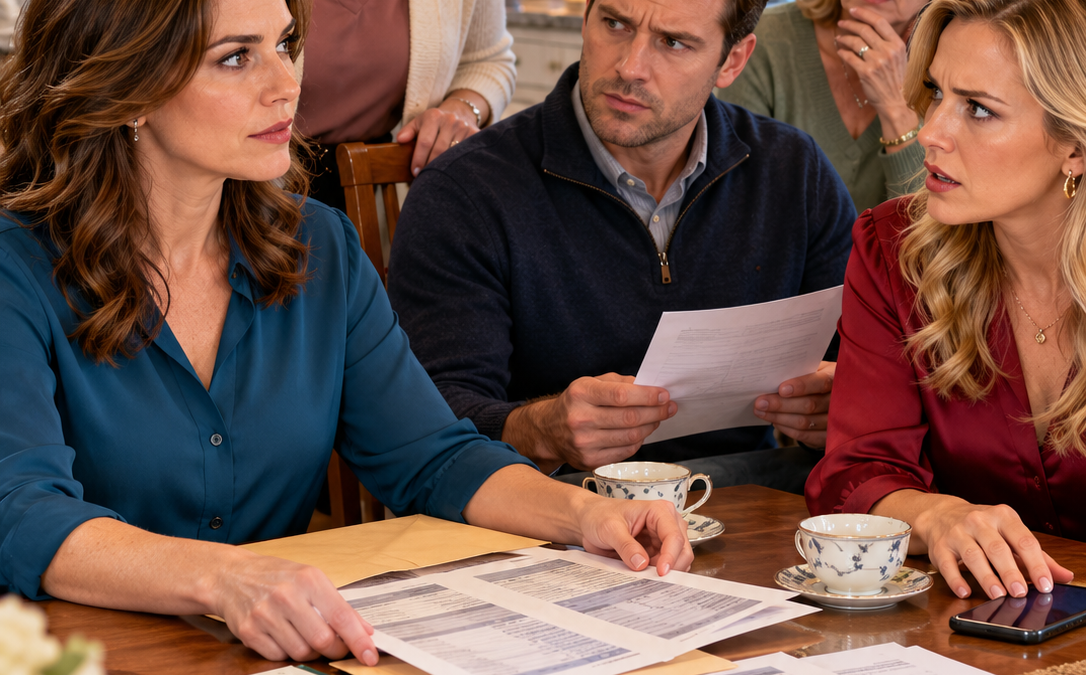
My mom stood up at her 60th birthday dinner, lifted her champagne glass, and said, “To my only daughter who never let me down.”
And she was looking at my sister.
Forty people clapped. Brooke pressed a hand to her chest like she’d just won something. I was sitting two chairs away. I had paid my mother’s mortgage for six years, $1,640 on the fifth of every month, 72 times, and the toast didn’t even have room for a plural.
I didn’t say a word. I took my phone out under the tablecloth, opened my banking app, and found the recurring transfer I had named myself six years earlier: Mom, House. I tapped Cancel. The app asked if I was sure. I was. My hand didn’t shake.
Nobody at that table knew whose money was keeping the roof over my mother’s head. By Friday, there was a red notice on her front door, and the date printed on it told me something I had spent 41 years refusing to see.
Welcome back to Calm Drama Stories. Here, we share family stories about quiet strength, hard choices, and the moment someone finally decides what she will and will not carry anymore. If you have ever been the one everyone counted on and nobody thanked, these stories are for you. Drop a comment and be sure to subscribe.
The party room at the Cascade Supper Club still smelled like lemon cake and candle smoke when my mother sat back down, flushed and pleased with herself. Someone dimmed the lights for the cake. It was sitting on my grandmother’s cut-glass cake stand, the one I had driven over to my mother’s house on Thursday night because she said the rented ones looked cheap. Nobody mentioned who had brought it.
My mother blew out the big gold six and zero on the first try and looked straight down the table at Brooke while everyone sang. I sat there with my napkin folded in my lap and my phone still warm in my hand, waiting to feel sorry about what I had just done.
I didn’t.
Brooke stood to give her gift, a gold charm bracelet from her own shop with Mom engraved on a little heart. My mother held it up to the light so everyone could see. Aunt Patty, my mother’s younger sister, leaned toward me while the room was still cooing over the bracelet.
“You okay, hon?” she whispered.
“Fine,” I said.
That was my word. I had been saying it since I was 12 years old.
Halfway through coffee, Brooke slid into the empty chair beside me and lowered her voice.
“Hey, can you pay the cake lady? She wants cash or a Venmo, and I’m tapped out after the deposit on this room. I’ll pay you back.”
She said it the way you ask someone to pass the salt. For six years, I had said yes to that tone without even hearing it. I looked at my sister, then at the bracelet glinting on Mom’s wrist across the room, and I heard myself say, “Ask Greg.”
Brooke blinked like I had spoken a language she’d never studied. Then she shrugged and went off to find her husband. It was the smallest no in the history of the world, and my heart was pounding like I had stolen something.
When I hugged my mother goodbye, she patted my back twice, the way you pat a coworker at a retirement party.
“Thanks for coming, sweetheart.”
“I’ll bring Grandma’s stand by next week.”
In the car, my daughter Ava, 15 and far too observant, buckled her seat belt and stared straight ahead through the windshield.
“Did Grandma forget you were there?” she asked.
I started the engine. I didn’t answer her because I didn’t have an answer that wouldn’t break something.
Sunday morning, it rained, and the ceiling over my kitchen table started dripping again in the same spot it had dripped every spring and fall for four years. I put the yellow bucket under it without even looking up. Then I sat down with my coffee and opened the banking app.
The canceled transfer sat at the top of my history in gray letters. Below it, the old ones went on and on. Mom, House. Mom, House. Mom, House. I scrolled with my thumb until the dates were six years old. Seventy-two lines, $1,640 each.
I’m a hospital billing auditor. I know what a column of numbers looks like when it stops being numbers and starts being a story.
Every line was something else I hadn’t done. The March I skipped the dentist. The summer I picked up Saturday shifts so I could cover Ava’s braces on a payment plan. The roof estimate I had folded into a drawer because $9,000 might as well have been $90,000.
Next to the canceled transfer, there was a button that said Restore. One tap and everything would go back to the way it was before a sentence at a supper club. Nobody would ever have to know I’d been angry.
The bucket went plink.
I looked at that button for a long time. Then I closed the app, put the phone face down on the table, and let the fifth of October come without me.
I kept thinking about the first time someone in my family decided I would be fine.
I was 12 the year I won second place at the Michigan State Science Fair. My project was a water filter made from charcoal, sand, and two-liter bottles, and I had tested it 41 times in our garage while my dad timed the drips with his wristwatch.
The fair was in Lansing on a Saturday in May. That same Saturday was Brooke’s spring dance recital. She was seven, and she was a sunflower. My mother made the costume herself, yellow felt petals around the face, and she sewed late into the night all that week.
I remember standing beside my trifold board in that big, echoing hall, watching the doors every time they opened. My dad was there. He had driven me at six in the morning with a thermos of cocoa.
My mother wasn’t.
When the judge pinned the red ribbon to my board, Dad clapped so hard the people next to us laughed. On the drive home, he said, “Your mom knew you’d be fine, Clare Bear. You’re the sturdy one. Brooke gets nervous.”
I nodded because he believed it and because I wanted it to be a compliment.
By the time we got home, my mother had already picked up the recital photos from the drugstore. She hung the sunflower on the refrigerator under a magnet shaped like a strawberry. My ribbon went into the junk drawer with the batteries and the takeout menus because she said it would only get greasy on the fridge.
That night, I took the ribbon out of the drawer and taped it to my own bedroom door at eye level, where I would see it every morning. I didn’t cry about it. I just learned something the way kids learn where the stove is hot.
If I wanted to be seen in my family, I was going to have to hold up the evidence myself.
Sturdy.
I carried that word for 29 years. I carried it all the way to my father’s funeral.
Dad died six and a half years ago on a Tuesday in March, of a heart attack in the parking lot of the machine shop where he had worked for 31 years. He was 57.
At the funeral, people kept telling my mother how strong she was being, and she kept looking at me like I was the one who ought to answer them. Brooke cried in the front pew with her head on Greg’s shoulder. I handled the casket, the flowers, the obituary, and the lunch afterward in the church hall because somebody had to, and everyone already knew who that somebody would be.
Six months later, my mother called and asked me to come over after work. She had the bills spread across the kitchen table on Ridgewood Avenue like a hand of cards nobody wanted to play.
Dad’s pension had a survivor benefit, but it was small. Her own pension from 30 years as a school secretary was smaller. The mortgage on the little brick ranch, with taxes and insurance folded in, was $1,640 a month.
Brooke had just signed a lease on a storefront in East Grand Rapids for a home decor shop she was calling Birch and Bramble.
“She can’t right now, honey,” Mom said. “You know how it is when you’re starting out.”
I said I could help. I offered to pay the bank directly so she wouldn’t even have to think about it.
She pulled her hand back like I had suggested selling her furniture.
“It’s my house, Clare. I’ll pay my own mortgage. Just send it to me, and I’ll take care of it.”
I understood, or I thought I did. It was her pride. It was the last thing in that house that still felt like hers.
So I sat at her table and set up the transfer on my phone. The fifth of every month, right after my paycheck cleared. In the little memo box, I typed Mom, House.
“Just until I’m back on my feet,” she said, and she hugged me harder than she had at the funeral.
Then she said into my hair, “Your father always said you were the sturdy one.”
I drove home that night and took the roofer’s estimate off my own refrigerator. My roof could wait a year.
Just until, I told myself.
Just until turned out to be six years.
Here is what six years of the fifth looks like from the inside. It looks like taking every Saturday shift the billing office will give you. It looks like buying your daughter’s school clothes at the outlet mall in August and telling her the sales are better that way.
It looks like a divorce that was mostly kind, from a man who said near the end, “You give everybody everything, Clare, and then you’re surprised there’s nothing left for us.”
Mark wasn’t wrong. He just wasn’t the one I was giving it to.
It looks like a yellow bucket on the kitchen floor every time it rains. And it looks like not telling a single person because my mother asked me not to.
“People talk,” she’d said. “I don’t want the whole family thinking I can’t manage.”
So nobody knew. Not Aunt Patty, not Greg. Maybe not even Brooke, I told myself, which was a kindness I gave my sister that she had never once given me.
Meanwhile, my mother told everyone how proud she was of Brooke. Brooke’s shop was in a local magazine. Brooke hosted Easter. Brooke’s candles were in a boutique hotel downtown.
When I came to family gatherings, I was asked to come early to help set up and to stay late to help clean.
At Thanksgiving three years ago, a cousin asked what I had been up to, and before I could open my mouth, my mother laughed and said, “Oh, Clare’s always been fine on her own. She doesn’t need anybody.”
I smiled and passed the stuffing.
Some part of me still believed that if I just kept being the one who never let her down, someday she would notice. Someday she would stand up in a room full of people and say it out loud.
I even pictured it sometimes, driving home from the hospital on a dark February evening with the heater blowing. A holiday dinner. My mother tapping a spoon against her glass. Something simple.
Clare has carried more than any of you know.
I would have cried. I think I would have kept paying forever for that one sentence.
I never asked her for it. I believed that asking would ruin it, that it only counted if she thought of it herself.
She did stand up and say it finally.
She just said it to the wrong daughter.
And on Monday morning, the fifth of October, for the first time in 72 months, the money didn’t go.
Monday, I was at my desk on the fourth floor of the hospital’s administrative building by 7:30, which is when the billing office is quiet enough to think. My job, stripped down, is reading. I read claims, codes, dates, charges, and the long, boring paper trail between what a hospital says it did and what it actually did.
Most errors aren’t fraud. They’re people in a hurry. But the hurry always leaves a mark somewhere, and usually the mark is a date.
That morning, I had a file for a man who’d had his gallbladder removed in August. The charges looked clean. The total looked right. Then I saw it. A second charge for the same imaging procedure, dated the 14th. His discharge summary said he went home on the 12th.
You can’t image a man who is already home eating soup in front of his television.
I flagged it, pulled the order history, and found where somebody had entered the procedure twice, two days apart, from two different screens.
My supervisor, Nadia Brennan, leaned over my cubicle wall with her reading glasses pushed up into her hair.
“How do you always catch these?” she asked.
“Dates,” I said. “Dates don’t care how anyone feels about them.”
She laughed and went back to her office. I sat there with the sentence still in my mouth. I had said some version of it a hundred times at work. It had never once been true at my mother’s house.
In my family, how everyone felt about a thing decided what had happened.
I’ve been doing this job for 14 years. I took it when Ava was a baby because the hours were steady and the work was quiet. And I stayed because I turned out to be good at it. I can read 400 lines of charges and feel the one that’s wrong before I can say why.
It’s not a glamorous skill. Nobody throws you a party for it. But it means that when something doesn’t add up, I can’t stop looking at it until it does.
At 10:52, my phone buzzed against the desk. The screen said Mom. She almost never called before noon. I picked it up, walked past the copier and the coffee machine, and pushed open the heavy door to the stairwell, where the only sound was the hum of the lights.
She didn’t say hello.
“The transfer didn’t come,” she said. “Call your bank. Something’s wrong with your account.”
I sat down on a concrete step.
“Nothing’s wrong with my account, Mom. I canceled it.”
There was a silence so long I checked to see if the call had dropped. When she spoke again, her voice had gone thin and high.
“You canceled it, Clare? You can’t just— You know what that money is for?”
“I know exactly what it’s for,” I said. “I’ve known for six years.”
“Then turn it back on.”
I looked at the painted cinder-block wall in front of me. Somebody had written a phone number on it in pencil years ago, and nobody had ever cleaned it off.
“On Saturday,” I said, “you thanked the daughter who never let you down. Maybe you should ask her.”
Another silence. Then she laughed, a short little laugh with no air in it.
“Is this about a toast? Clare, you are 41 years old. You’re going to throw a tantrum over a toast at my birthday?”
“I’m not throwing anything. I just stopped sending money.”
She changed tactics then, the way she always did when the first one didn’t work. Her voice went soft and sad.
“If something happens to this house,” she said slowly, “it’s on you. I want you to understand that. It’s on you.”
And she hung up.
I stayed on that step for a while. Twenty minutes later, a text came in from Brooke.
Wow. Over a toast. Mom’s in tears. Grow up.
I didn’t answer, but something about the call kept snagging like a sweater caught on a nail.
One missed transfer. One.
The money hadn’t even been due to the bank yet. For six years, my mother had mailed her payment around the tenth, comfortably inside the grace period. So why did she sound like a woman watching her house burn?
If something happens to this house.
Not if I’m late. Not if they charge me a fee.
If something happens.
I went back to my desk and put my hand on my mouse and didn’t click anything for a long time.
The rest of that week was quiet in the way the air gets quiet before a storm. I went to work. I came home. I made Ava spaghetti and sat with her while she did her chemistry homework. Three times I opened the banking app and put my thumb over the Restore button, and three times I closed it again.
On Tuesday, Ava looked up from a page of equations and said, “Grandma hasn’t texted you back about Sunday dinner.”
“Grandma was busy,” I said.
She gave me the look teenagers give you when they can see straight through the wall you’re standing behind.
“Is this because of the toast?” she asked.
“Partly,” I said.
“Good.”
She went back to her chemistry, and I sat there not knowing whether to laugh or cry.
On Wednesday night, Aunt Patty called. She asked about Ava and about work, and then she cleared her throat.
“Hon, your mom says you’re having some money trouble. Is everything all right? You know, you can always come to me.”
I didn’t know what to say.
“I’m fine, Aunt Patty. I’m not having any money trouble.”
“Oh,” she said. “Okay, because back in July, she—”
She stopped.
“She what?”
“Nothing. Never mind. I’m sure I got it mixed up. You know me.”
She changed the subject to her tomatoes, and I let her. But after we hung up, I wrote one word on the notepad by my phone.
July.
On Thursday, I texted my mother for the first time since Monday.
I’m coming by Friday at lunch for Grandma’s cake stand.
She didn’t answer. That was fine. I still had my key. I’d had it since the week Dad died, when I started mowing her lawn on Sunday afternoons.
Friday, I took a late lunch and drove to Ridgewood Avenue. It was 12:40, bright and cold, the maples along the street just starting to turn. My mother’s car wasn’t in the driveway. On Fridays, she helped out at Brooke’s shop, folding throw blankets and making the place look busy.
I parked at the curb and walked up the path, already wondering whether she’d remembered to wash the stand.
Then I saw the door.
Taped to the front door at eye level was a sheet of paper in a clear plastic sleeve with a thick red border printed around its edge. Yellow tape at the corners, the kind of thing you are meant to see from the sidewalk.
Across the top, in black capital letters, it said:
NOTICE OF MORTGAGE FORECLOSURE SALE.
For a second, everything went white and loud.
I did this, I thought. One week, one canceled transfer, and they’re taking my mother’s house.
My knees went soft, and I put a hand on the brick to steady myself. There was a number on the page, the amount claimed to be due, and it was over $148,000.
The whole loan. Not a payment.
My stomach dropped through the porch. Then 14 years of habit did what they always do. My eyes went past the big number and the legal language, and they went looking for the dates.
Default in the payment due March 1st.
First publication of this notice September 24th.
Sale to be held October 29th at the Kent County Courthouse.
March 1st.
I read it three times.
I had canceled the transfer on October 3rd. March was seven months ago. Seven times since March, my money had left my account on the fifth. Mom, House. Every single month.
And the bank was saying it hadn’t been paid since February.
I stood there on my mother’s front step with my heart going hard and slow, and the guilt drained out of me and left something cold and clear behind.
I took out my key.
I wasn’t there for the cake stand anymore.
I needed to know where March went.
The house smelled the way it always did, of lemon furniture polish and coffee and the faint mothball sweetness of the hall closet. Grandma’s cake stand was on the kitchen counter, washed and dried upside down on a dish towel. She had been planning to bring it back.
That almost undid me.
On the kitchen table, there was a catalog from Brooke’s shop, glossy pages of candles and linen napkins. Underneath it, squared into a neat stack the way my mother squares everything, were envelopes. Six or seven of them, slit carefully along the top with a letter opener.
The return address was a law firm in Troy. The one on top was dated August, and beside the stack, open to a page halfway through, was the green checkbook register.
My mother has kept a paper register for 30 years. Even after online banking, even after I set up her phone to show her balance, she writes every deposit and every check in blue ballpoint, small and slanted, and she balances it on Sunday nights with a calculator that prints a little paper tape.
I didn’t have to dig. It was right there.
March 6th: Clare, House, +$1,640.
March 7th: B Shop, −$1,640.
I turned back a page to February.
February 6th: Clare, House, In.
February 9th: Mortgage, Out.
Then I turned forward.
April 6th: Clare, House, In.
April 7th: B Shop, Out.
May, June, July, August, September. The same two lines every month, the same amount, one day apart, in my mother’s careful hand.
Not one check to the mortgage company after February.
In the middle of July, there was another line.
Patty, +$3,000.
I took out my phone and photographed every page, the way I would photograph a chart at work, flat and in good light. Nothing cropped. Then I sat down in my father’s chair at the head of the table, the one nobody had sat in for six years, and I looked at the stack of envelopes from the law firm.
My mother hadn’t been late.
My mother had stopped.
She had taken the money I sent for her house and handed it to my sister, month after month, and let the bank walk right up to her front door.
And on Monday, she had told me it was on me.
I sat there and understood it all at once, the way you finally see the second image hiding in one of those optical illusions.
I had been paying for my place at her table.
She had been spending it on Brooke.
I put the register back exactly where it had been, open to the same page. I picked up Grandma’s cake stand. I was locking the front door behind me when I heard tires on the driveway.
I turned around, and my mother was getting out of her car.
She saw the cake stand in my arms. Then she saw the door behind me and the red border, and her face did something I had never seen it do.
It folded.
She came up the path fast, right past me, and tore the sheet down, sleeve and tape and all, and crumpled it against her coat.
“Look what you did,” she said. “One week, Clare. One week.”
I didn’t raise my voice. I’ve never been good at raising my voice.
“It says March 1st, Mom.”
“They make mistakes. Banks make mistakes all the time. You of all people should know.”
“I saw the register.”
She stopped.
The wind pushed dry leaves along the gutter. A neighbor’s dog barked twice down the block and then quit.
Then she did what she always does when the first door is locked. She tried another one.
“Brooke was going to lose the shop,” she said, low and fast. “The landlord raised her lease twenty percent in February. She would have lost everything, Clare. Everything she built. Do you know what that would have done to her?”
I stood there holding the cake stand while my mother looked at me as if I were the one who had failed to understand something obvious.
“You have a good job,” she continued. “You have benefits. You always land on your feet. It was a loan. She’s paying it back at Christmas when the holiday season comes in.”
“Did you tell the bank that?” I asked.
She ignored me. She smoothed the crumpled notice against her coat like she could iron it flat with her hand.
“They’ll take $14,860 to make it right,” she said. “To reinstate the loan. If it’s paid before the sale, you can do that. You always can.”
There it was.
Not I’m sorry. Not I lied to you.
Just the next bill handed across the driveway the way she had handed me every bill since Dad died.
And for one second, my hand actually moved toward my purse. The old reflex. The sturdy one reaching for her wallet.
“No,” I said.
It came out quieter than I wanted, but it came out.
My mother’s eyes filled.
“Then I’ll lose the house your father died in,” she said.
He hadn’t died in this house. He had died in a parking lot on 36th Street. But I knew what she meant, and she knew I knew, and that was the whole point of saying it.
I put Grandma’s cake stand on the passenger seat and buckled the seat belt across it. Then I drove away while she stood in the driveway, holding the notice against her chest like something she’d been handed at a funeral.
Saturday morning, I made a pot of coffee, sat down at my own kitchen table with my laptop and the photographs, and did what I do for a living.
I verified.
In Michigan, a foreclosure sale notice gets published in a legal newspaper, and our county’s paper keeps them online. It took me four minutes to find hers. Same address, same date. First published September 24th.
It wasn’t a mistake, and it wasn’t new.
Then I called a housing counseling agency from the government’s list of approved counselors. On a Saturday, to my surprise, a woman picked up. Her name was Denise Okafor from Kent Home Partners, and she had the patient voice of someone who has explained the same terrible thing to a great many frightened people.
She was careful. She couldn’t discuss my mother’s loan, she said, because I wasn’t on it, and the servicer would only talk to my mother. But she explained the general shape of things.
When a homeowner falls far enough behind, the lender can start foreclosure, publish the sale, and post a copy of the notice on the house. Before the sale, there are sometimes options: catching up on what’s owed if the loan allows it, applying for help, or selling the house, which, if there’s equity, is often the most honest way out.
“Does she have equity?” Denise asked.
I thought about 72 transfers.
“Yes,” I said. “A lot of it. I paid for most of it.”
Denise was quiet for a moment.
“Then she has choices,” she said. “But she has to call me herself.”
I wrote her number on a sticky note and pressed it to the lid of my laptop.
For the first time since Friday, I could breathe all the way down. My mother wasn’t going to be put out on the street. She had a way through, and it didn’t have to run through my bank account.
The question had never been whether I could save her house.
The question was whether I would keep paying for the right to be loved inside it.
At four o’clock, my phone buzzed.
Mom: Come to Sunday dinner. Just you. I’m making pot roast.
Pot roast was my favorite. She hadn’t made it for me since I was in college.
When I walked in on Sunday, the whole house smelled like onions and bay leaf, and there was a candle burning on the table, one of Brooke’s, vanilla and cedar.
My mother hugged me at the door, a long hug with both arms. She had put on lipstick. We ate, and she asked about Ava and about my job, and she actually listened to the answers.
For 40 minutes, I was the daughter at her table.
I’m ashamed of how good it felt.
Then she cleared the plates, sat back down, and slid a piece of paper across to me. It was a sheet from her notepad, written in that small, slanted blue hand.
If you take care of the reinstatement and keep the monthly going, I will put your name on the deed. The house will go to you, not to Brooke. To you.
She had underlined you twice.
“I’ve been thinking,” my mother said. “You’ve done so much. I want you to have something for it. Your father would have wanted that.”
I looked at that paper for a long time.
It was the first time in my life my mother had chosen me over my sister.
And it came with an invoice.
“I need to think,” I said. “Give me until Wednesday.”
She smiled. She reached across and squeezed my hand, the way you squeeze the hand of someone who has already said yes.
On the drive home, I knew exactly what would happen if I signed. I would be the sturdy one for another 20 years, paying for a house I’d own only after she was gone, while my sister got her love for free.
Sunday night, it rained again. The bucket on the kitchen floor went plink, steady as a clock.
Ava came downstairs in her pajamas and stood in the doorway. She had heard me on the phone with Denise the day before, and she’d heard me come home from dinner and not say anything, which in our house is its own kind of loud.
“Are you going to pay for Grandma’s house again?” she asked.
I didn’t pretend not to know what she meant.
I told her the part that was hers to know. That Grandma was behind on her house payments. That the money I’d been sending hadn’t gone where it was supposed to go. That Grandma wanted me to fix it.
Ava looked up at the brown stain on the ceiling, then down at the bucket.
“When do we get to fix our roof?” she asked.
It wasn’t mean. It was just a question.
And that was what made it hurt.
Then she said, “You always tell me not to buy friends, like with stuff. You said if somebody only likes you when you’re buying, they don’t like you.”
I had said that. I said it when she was in sixth grade and spending her birthday money on candy for girls who never invited her anywhere.
I said it with total confidence because it was so easy to see in someone else.
I sat at that table a long time after she went to bed.
I was afraid. I want to be honest about that.
I was afraid of being the daughter who let her mother lose her house. Of what Aunt Patty would think. Of every cousin at every Christmas looking at me sideways over the ham.
And mostly, I was afraid that if I stopped paying, my mother would have no reason left to call me at all.
But the money had never bought me anything.
It had bought Brooke a lease.
So I made two decisions at that table. I would not send my mother one more dollar, and I would not stay quiet anymore.
The money had gone somewhere.
It could come back from there.
I spent Monday and Tuesday nights at my kitchen table doing what I would do for any account at work that didn’t reconcile.
I built one page.
On the left, my bank’s record of the transfers: date, amount, memo. I highlighted only the ones that mattered, March through September. On the right, next to each one, the matching lines from my mother’s register, with a small cropped photo of her handwriting.
March 5th: Out of my account.
March 6th: Into hers.
March 7th: B Shop.
One day apart every month, seven times.
At the bottom, one total.
$11,480.
No adjectives. No commentary. Just dates, the way I would hand a finding to a hospital administrator.
I printed three copies.
Twice, I almost threw the whole thing away. Once around midnight on Monday, when I pictured my mother’s face reading it in front of her sister. Once on Tuesday, when I caught myself softening the headings, writing support instead of transfer, as if I could make the truth easier for her to swallow by giving it a nicer name.
I changed the word back.
That had always been the problem in my family. Everybody kept finding nicer names for things.
Then I texted my mother.
Wednesday at 6. I’ll give you my answer in person. I’d like Brooke, Greg, and Aunt Patty to be there.
She wrote back within a minute.
Of course, sweetheart.
She thought I wanted witnesses for my yes. She thought I wanted a little bit of applause at her table finally.
And maybe I had wanted that once.
I had already called Denise again to ask whether she had anything open the following week. She had Tuesday at ten o’clock, if my mother called to claim it.
I wrote Denise’s name and number on one of my business cards, wrote Tuesday, 10:00 a.m. on the back, and slipped it into the envelope with the three pages.
Then my phone rang, and the screen said Brooke.
My sister’s voice was soft and sweet, which is how I knew she wanted something.
“Hey,” she said. “Mom told me about the deed thing. Honestly, I think it’s super generous of her, and I totally get it if you’re stressed.”
“I’m not stressed,” I said.
“Okay, well, here’s an idea. Just Venmo me the fourteen, and I’ll handle the bank stuff so Mom doesn’t have to deal with lawyers and all that. She gets so overwhelmed.”
I almost laughed out loud.
Send the money to Brooke so Brooke could take care of it.
Seven months of exactly that had put a red notice on our mother’s front door.
“Brooke,” I said, “does Greg know where the money for the shop came from this year?”
The line went quiet. I could hear her breathing and a television somewhere behind her.
“Greg doesn’t need to know every little thing,” she said finally, and the sweetness was gone. “It’s my business, Clare. It’s my shop. It was my money. It was Mom’s money. She gave it to me. What she does with her money is her choice.”
“Okay,” I said.
And then, because she couldn’t help herself, because she had never once in her life needed to, she said it.
“Mom said you’d cave by Wednesday. You always do.”
She hung up first.
I sat with that for a minute.
Mom said you’d cave by Wednesday.
It was almost a relief to hear it said out loud, plain, with nothing dressed up around it. Now I knew for certain what Wednesday was supposed to be.
I slid the three pages and the business card into a manila envelope and sealed it.
On Wednesday, I left work at 5:15 and drove to Ridgewood Avenue in the last of the light. The envelope sat on the passenger seat. Grandma’s cake stand was wrapped in a towel on the floor behind me.
I can’t fully explain why I brought it. I think I wanted something with me that had belonged to a woman who loved me without being asked.
At the stoplight on Breton Road, I thought about being 12 years old in that hall in Lansing, watching the doors, waiting for my mother to walk through them.
I was 41 now. I wasn’t waiting for anybody to walk through anything.
When I pulled up, Brooke’s white SUV and Aunt Patty’s old Buick were already in the driveway. The red notice was gone from the door. My mother had torn it down on Friday and never put it back. But the yellow tape was still stuck to the wood at all four corners, with little torn strips of plastic sleeve caught under it like the outline of something nobody was supposed to talk about.
I had a key to that door in my pocket. For the first time in six years, I rang the bell.
My mother had set the kitchen table like it was a holiday. Coffee in the good cups. A plate of the lemon bars she only makes for company.
Brooke sat at Mom’s right hand with her phone face up on the table, and I could see the Venmo app already open on the screen. Greg sat beside her in his work fleece, scrolling something the way husbands sit at their in-laws’ tables when they think the conversation won’t involve them.
Aunt Patty was at the far end with her purse still in her lap, as if she wasn’t sure she was staying.
My mother didn’t let me sit down first. She stood at the head of the table in front of Dad’s chair and smiled around at everyone.
“Clare has something she wants to tell us,” she said.
She said it the way she used to announce report cards at dinner back when Brooke’s were the ones worth announcing.
Brooke smiled at me across the lemon bars, a small, satisfied smile, the smile of someone who has already counted the money. Aunt Patty looked from her sister to me and back again, and I could see her trying to work out why she was there.
Greg finally put his phone face down.
I had stood in that kitchen a thousand times. I had never once sat at the head of the table.
I set the envelope on the table and sat down.
“My answer is no,” I said.
Brooke’s thumb stopped moving. Greg looked up. My mother’s smile stayed exactly where it was, but her eyes changed. Then, very smoothly, she turned to her sister.
“Well,” she said, “then I suppose everybody should know what’s going on. Patty, Clare canceled my mortgage payment over a toast at my birthday. Over a toast. And now the bank is foreclosing on this house.”
Aunt Patty put her hand to her throat.
“Clare,” she said, “honey, is that true?”
I opened the envelope. I took out the three pages and laid one in front of Aunt Patty, one in front of Greg, and one in front of my mother.
My mother didn’t pick hers up.
Greg did.
He read it with his forehead creased the way people read a bill they weren’t expecting. Then he read it again, more slowly, running one finger down the right-hand column.
I didn’t wait for anybody to ask. I read it out loud in the voice I use at work when I’m walking a department head through a finding, slow and flat, so nobody could say I was being emotional.
“March 5th, $1,640 out of my account. Memo: Mom, House. March 6th, Mom’s register: Clare, House, plus $1,640. March 7th, Mom’s register: B Shop, minus $1,640.”
I turned the page around so they could see the photograph of her handwriting.
“April, same. May, same. June, July, August, September. Seven months. $11,480. And no payment to the mortgage company after February.”
Nobody touched the lemon bars.
Greg set the paper down very gently, like it might go off. He turned to his wife.
“You told me the shop cleared fourteen grand this summer,” he said. “You said it was the best summer you ever had.”
Brooke’s face went red from the collar up.
“Mom offered,” she said. “I didn’t ask her. She offered.”
“It’s a loan,” my mother said quickly. “It was always a loan.”
“A loan from who?” I asked. “It was my money, Mom. Every one of those transfers says house.”
Brooke swung toward me, and I watched her decide to attack because attacking had always worked.
“You make twice what I do, Clare. You don’t have a husband. You’ve got one kid and a little house. What do you even need it for?”
“A roof,” I said. “And if you needed it that badly, you could have asked me. You asked her to take it from me instead.”
Greg was still looking at his wife. His voice was very quiet.
“How much of our life has your sister been paying for?” he asked.
Brooke opened her mouth, and nothing came out.
For the first time in 36 years, my little sister had nothing at all to say.
My mother pushed back her chair and stood up.
“None of this matters,” she said.
Her voice was shaking now, but not with sorrow.
“None of it. The point is that she canceled. That’s why there’s a notice. That’s why they put it on my door. A good daughter would never—”
“The notice says March 1st, Mom,” I said. “I canceled on October 3rd.”
It was very quiet in that kitchen. The refrigerator hummed down the hall. The clock my father had bought at an estate sale ticked the way it had ticked my whole life.
Then Aunt Patty set her purse down on the floor slowly, like she had decided to stay.
“Linda,” she said, “in July, you came to me and borrowed $3,000. You told me it was because Clare had fallen behind on the house money. You said she was struggling and you didn’t want to embarrass her.”
My mother’s face went pale under her lipstick.
“I was going to pay you back,” she said.
“That’s not what I asked,” Patty said. “You told me my niece was failing you. You sat in my kitchen and told me that, and I believed you, and I felt sorry for her.”
She looked down the table at me, and her eyes were wet.
“I’m sorry, honey. I should have called you.”
I shook my head.
“You didn’t know,” I said. “Nobody was supposed to know.”
Brooke had started to cry. The quiet kind of crying she’d done at Dad’s funeral, the kind that always made every head in a room turn toward her.
Nobody turned.
Greg stood up. He didn’t yell. I think that was worse for Brooke than if he had.
“Linda,” he said, “we’ll put $11,480 back into your account by Friday, from our savings.”
“Greg,” Brooke said, “we can’t.”
“By Friday,” he said. “And then you and I are going to sit down and go through the shop. All of it. Every number.”
He turned to me. He looked tired and older than he had at the party.
“Clare, I didn’t know. I need you to know that I didn’t know.”
“I believe you,” I said.
And I did.
My mother looked at me then, and I watched her do the arithmetic in her head.
$14,860 minus $11,480.
“And the rest?” she asked.
“That’s between you and your savings, Mom,” I said.
I took the business card out of the envelope and set it on top of her green register, which she had brought to the table for reasons I never understood. Maybe she had planned to show everyone how hard she’d been working to keep things together.
“Denise Okafor. Kent Home Partners,” I said. “She’s a housing counselor. She has an opening Tuesday at ten. If you call her tomorrow, she can walk you through catching up or selling, whatever’s right for you. I’ll drive you there. I’ll sit in the waiting room, but I’m not paying. Not the reinstatement, and not the month after that.”
My mother looked at the card for a long moment.
Then she said, without looking up, “Can I talk to you outside?”
The porch light was on, yellow and buzzing with a few late moths still circling it. The tape on the front door caught the light at its corners.
My mother pulled her cardigan tight across her chest and stood with her back to the street. Without an audience, she looked smaller. She looked 60.
“Just restart it,” she said quietly. “Going forward. Only going forward. I’ll catch up the rest somehow. And the deed is still yours, Clare. I meant that. I’ll make this right with you. I will.”
I didn’t say anything.
She took a breath.
“I didn’t think you’d notice,” she said. “That’s the truth. You never needed anything. You were always fine. I thought, Clare won’t even feel it. And Brooke… Brooke would have lost everything.”
Standing there under the porch light, I realized she meant it.
It wasn’t a cruel thing to her. It was just the way the world had always been arranged inside her head.
One daughter who needed and one daughter who provided. One sunflower on the refrigerator and one ribbon in the junk drawer.
In her mind, she hadn’t stolen from me. She had simply moved money from the child who could take it to the child who couldn’t, the way you move a coat from one hook to another.
I felt something let go in my chest. It wasn’t anger exactly. It was more like a door I had been holding shut with my whole body for years finally allowed to close on its own.
“Mom,” I said, “I’m not going to buy my way back into this family. I already did that for six years, and you gave the receipt to Brooke.”
She flinched like I had raised my hand.
I hadn’t.
I took out my key ring, worked the brass key to her front door off it with my thumbnail, and held it out to her.
She didn’t take it, so I opened her hand, set the key in her palm, and closed her fingers over it.
“Here’s what I’ll do,” I said. “I’ll drive you on Tuesday. I’ll call you on Sundays if you want me to. I’ll come to Thanksgiving if I’m invited to sit down, not to set up. But I won’t send you money again, and I don’t want to hear about Brooke’s bills. Not ever.”
She looked down at the key in her hand for a long time.
Then, in the smallest voice I had ever heard her use, she said, “Did you even like the party?”
I thought about it honestly.
“I liked the cake,” I said. “It was on Grandma’s stand.”
I walked down the path to my car. The cake stand was still on the floor behind my seat, wrapped in its towel, and I left it exactly where it was.
It was mine. Grandma had left it to me, and it was coming home.
In my rearview mirror, as I pulled away from the curb, my mother was still standing under the porch light holding the key.
Greg’s money landed in my mother’s account on Thursday, a day early.
On Tuesday morning, I drove her to Kent Home Partners, a low brick building off 28th Street, and I sat in a plastic chair in the waiting room for an hour and ten minutes, reading the same magazine about lake houses over and over.
When she came out, her eyes were red.
She didn’t tell me what was said, and I didn’t ask.
The reinstatement was paid on the 21st out of Greg’s money and most of my mother’s savings. The sale on the 29th was canceled, but Denise had shown her the thing she’d refused to look at for seven months.
Without my transfer, she couldn’t make the next payment or the one after that.
In March, my mother listed the house on Ridgewood Avenue. It sold in nine days. With the equity left over after the loan was paid off, she bought a two-bedroom condo in a quiet complex ten minutes from Aunt Patty, with a little patio where she grows tomatoes now because Patty talked her into it.
Birch and Bramble closed in January. Brooke took a job managing a home goods store at the mall, and she and Greg started seeing a counselor on Thursday nights.
Brooke didn’t speak to me for five months.
Then, in April, a text came.
Greg says I owe you an apology. I’m working on it.
I wrote back.
Okay.
That was all. It was enough for then.
My mother called on Sundays the way I had said she could. The calls were short at first, mostly weather and Ava and Aunt Patty’s tomatoes. She never mentioned the house, and I never mentioned the money.
That first November, Thanksgiving was at Aunt Patty’s, and there was a place card with my name on it in Patty’s loopy handwriting at the middle of the table.
Nobody asked me to come early. Nobody asked me to stay and wash the roasting pan.
I sat, and I ate.
And when a cousin asked what I’d been up to, I told her myself.
The roofers came on the first Saturday in May. By Monday afternoon, my house had a new roof, gray shingles that didn’t leak, and the brown stain over the kitchen table had disappeared under a fresh coat of ceiling white.
I put the yellow bucket in the garage, then thought better of it, filled it with dirt, and planted marigolds in it by the back steps.
On the morning of the fifth, I sat down at that same table with my coffee and opened the banking app. I set up a new recurring transfer, $1,640 on the fifth of every month, from my checking account into a savings account in my own name.
In the memo box, I typed Ava College.
Outside, Ava was in the driveway practicing parallel parking between two recycling bins with her dad in the passenger seat, the two of them yelling and laughing at the same time.
That afternoon, a package came. It was a padded envelope with my mother’s handwriting on the front.
Inside was the green checkbook register.
She had balanced it one last time, all the way to the day the house closed, with the little paper tape folded into the back cover.
On the last page, under the last line, she had written something in that small, slanted blue hand.
72\. Clare. Mom, House. Thank you.
That was all.
No I’m sorry. No speech.
I read it twice. I wanted more, and I knew I wasn’t going to get more. And for the first time in my life, I found that I could live with that.
It was true. It was in her handwriting. And it was enough to be going on with.
I put the register in my desk drawer next to a faded red ribbon from a science fair in Lansing that I had kept, it turns out, for 29 years.
Two weeks later, for Ava’s 16th birthday, I set her cake on my grandmother’s cut-glass stand in the middle of our table under our new roof.
And before I cut a single slice for anybody else, I cut the first one for myself.
For six years, I paid for a seat at my mother’s table.
Now I sit at my own.
If you had been in my place, would you have turned that transfer back on for your mom or kept it? Tell me in the comments. And if this story stayed with you, subscribe so you don’t miss the next one.








