After my grandfather’s funeral, my dad inherited $56m then threw me out, saying, “you’re useless now.” 24h later, the lawyer laughed: “did you even read the will?” my dad went pale… because the will said…
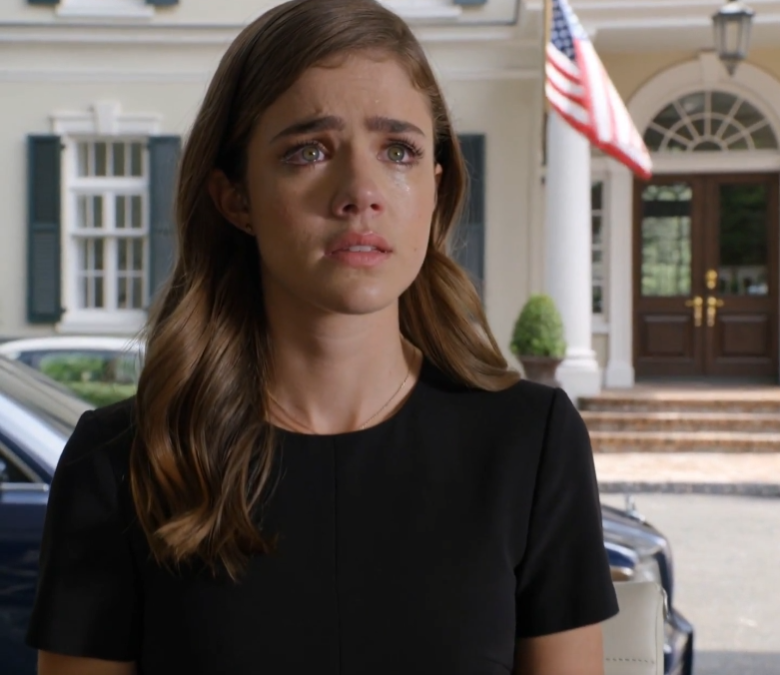
My name is Sophia. I used to believe that family was the most important thing in the world. I thought that no matter how bad things got, a father would always love his daughter.
I was wrong.
It happened at the funeral of my grandfather, William. He was the only person who ever truly loved me. While I was crying over his casket, my father, Thomas, was smiling. He had just found out that he was inheriting $56 million.
I looked at him, expecting a hug or a kind word. I thought maybe now, with Grandpa gone, we could finally be a family.
Instead, he looked me dead in the eyes in front of everyone. His face was cold as stone.
“You are useless to me now.”
My heart shattered.
I felt small and worthless. He thought he had won. He thought he had the money and the power.
But there was something he didn’t know.
He didn’t know that Grandpa William had left a secret clause in the will—a ticking time bomb set to go off the moment my father betrayed me. He thought he was throwing me out.
But in twenty-four hours, he would be the one begging.
Before I tell you how everything flipped, like and subscribe. Drop a comment. Where are you watching from?
My name is Sophia Stewart. I am twenty-four years old, and I live in New England. To understand why my father did what he did at the funeral, you have to understand how we got there. You have to understand that, to Thomas Stewart, I was never really a daughter.
I was an obligation.
I was a burden left behind by a woman he had stopped loving long before she died.
My life split into two parts when I was eight years old.
Before that, I had my mother, Sarah. She was the light in the house. She was the one who made sure my socks matched and that I had a warm breakfast.
My father, Thomas, was always there physically, but he was like a ghost. He would come home late, eat his dinner in silence, and disappear into his study. I remember trying to show him my drawings from school. He would glance at them, nod once without smiling, and say, “That’s nice, Sophia. Now run along.”
He never yelled.
He never hit me.
He just didn’t care.
It’s a strange thing to realize as a child that your own father looks at you like you are a stranger in his house.
Then came the day my mother died.
It was a Tuesday. I remember it was raining. It wasn’t a storm, just a steady, cold drizzle that made the whole world look gray.
We were at the hospital. Mom had been sick for a while, but I didn’t understand how bad it was.
I was sitting in a hard plastic chair in the waiting room, swinging my legs. I was holding a small stuffed bear that my grandfather William had given me. My father was standing by the window.
He wasn’t pacing.
He wasn’t crying.
He was on his phone.
I could hear him talking about stock prices.
I remember thinking, How can you talk about money right now? Mom is hurting.
A doctor came out. He looked tired. He walked over to my father and spoke in a low voice.
I watched my father’s back.
I waited for his shoulders to shake. I waited for him to drop the phone. I waited for him to scream.
He didn’t do any of those things.
He just nodded.
He put his phone in his pocket, turned around, and looked at me. His face was completely blank. There were no tears in his eyes.
He walked over and said, “Sophia, your mother is gone. We are going home now.”
Just like that.
No hug.
No “I’m sorry.”
No “I love you.”
Just a statement of fact.
She is gone. We are going home.
I didn’t move. I couldn’t process it. I started to cry—a loud, confused wail.
He looked annoyed.
He glanced around the waiting room as if my crying was embarrassing him.
“Compose yourself, Sophia,” he said sharply. “Crying won’t bring her back.”
That was the moment the first crack appeared in my heart.
I realized then that I was alone with him.
And being alone with him was scarier than being alone in the dark.
The funeral was three days later. It was a grand event because my grandfather, William Stewart, was a very important man in our town. He owned a massive construction empire. Everyone respected him.
My father stood by the grave wearing expensive black sunglasses. He shook hands with people. He accepted their condolences with a polite nod. He played the part of the grieving widower perfectly for the public.
But I was standing right next to him, and I felt the coldness radiating off him.
He kept checking his watch.
He had a meeting at two o’clock, and he was worried the funeral would make him late.
Then I felt a large, warm hand on my shoulder.
I looked up.
It was Grandpa William.
He looked devastated. His eyes were red. He had been crying.
He looked down at me, and for the first time in days, I saw love.
He crouched down in his expensive suit, ignoring the mud, and pulled me into a hug. He smelled like old paper, peppermint, and tobacco.
“I’ve got you, Sophia,” he whispered into my hair. “I’ve got you. You are not alone.”
I clung to him.
I cried into his coat.
I didn’t want to let go because I knew that once I did, I had to go back to my father.
For the next six months, I lived in the house with him.
It was a nightmare of silence.
He fired the housekeeper my mother loved because he said she cost too much. The house became dusty and quiet. He stopped buying groceries I liked. There was only coffee and bread.
I learned to make my own toast at eight years old.
I learned to wash my school uniform in the sink because he wouldn’t help me with the laundry.
I would come home from school, and the house would be empty. He would be at the office. When he finally came home, he would walk right past me in the living room.
“Hello, Father,” I would say.
“Sophia,” he would acknowledge, not even breaking his stride.
I tried so hard to make him see me.
I cleaned the living room. I got perfect grades on my spelling tests. I even tried to cook him eggs one night.
I burned them, and the smell filled the kitchen.
He came in, saw the mess, and sighed. It was a heavy, exhausted sigh that made me feel like the smallest person in the world.
“If you cannot cook, don’t make a mess,” he said.
He didn’t yell.
He just sounded disappointed.
“Clean this up. I’m going out for dinner.”
Then he left.
He left me alone in the house with the burnt eggs and my tears.
I think Grandpa William saw what was happening.
He visited us every Sunday. Those were the only days my father acted like a parent. When William was there, Thomas would pat my head. He would ask me about school. He would smile.
But Grandpa wasn’t easily fooled.
He was a businessman who had built an empire from nothing. He knew how to read people.
He saw the dust in the house. He saw that my clothes were getting small and that my father hadn’t bought me new ones. He saw the sadness in my eyes.
One Sunday, Grandpa stayed for dinner.
The tension was thick.
My father was talking about the company, about profits and expansion. Grandpa wasn’t listening. He was watching me push peas around my plate.
“Thomas,” Grandpa said, his voice low and gravelly. “Sophia looks thin.”
My father didn’t look at me.
“She’s fine. She’s a picky eater.”
“She’s wearing shoes that have holes in them,” Grandpa said.
My father took a sip of his wine.
“I’ve been busy. I’ll get her new shoes next week.”
Grandpa slammed his hand on the table.
The silverware rattled.
I jumped.
“You have not been busy,” Grandpa roared. “You have been negligent. This is your daughter, Thomas. Not an employee you can ignore.”
My father’s face went red.
“I am doing my best, Father. It is not easy raising a child alone.”
“You are not raising her,” Grandpa said.
He stood up.
He looked like a giant.
“You are existing in the same house as her. There is a difference.”
Then Grandpa turned to me and held out his hand.
“Sophia,” he said gently. “Pack a bag. You’re coming home with me.”
I looked at my father.
I wanted him to fight for me.
I wanted him to say, No. She’s my daughter. She stays here.
I wanted him to show just one ounce of possession or love.
He just shrugged.
He took another sip of wine.
“If you think that’s best, Father,” he said. “It will probably be less of a distraction for my work.”
A distraction.
That was what I was to him.
I packed my bag in five minutes.
I didn’t have much.
I walked out of that house holding Grandpa’s hand, and I didn’t look back.
My father didn’t even come to the door to say goodbye.
Moving into Grandpa William’s estate was like moving into a different world. His house was huge, filled with light and books.
But it wasn’t the size of the house that mattered.
It was the warmth.
Grandpa William was busy, but he always made time for me. He hired a kind woman named Mrs. Higgins to help cook and clean, and she treated me like a granddaughter.
But the nights were still hard.
I missed my mom.
And despite everything, I missed the idea of my dad.
I kept waiting for him to call.
Every night, I would sit by the phone in the hallway and wait for it to ring.
“He’s probably just working late,” I would tell Mrs. Higgins.
She would look at me with sad eyes and give me a cookie.
“Eat up, sweetie.”
He never called.
Not for my birthday.
Not for Christmas.
He would send a card signed by his secretary.
Best wishes, Thomas Stewart.
One night, when I was about ten, I asked Grandpa the question that had been burning a hole in my chest.
We were in his library. He was reading in his big leather chair, and I was doing my homework on the rug. The fire was crackling.
It was safe there.
“Grandpa?” I asked.
“Yes, Sophie?”
He always called me Sophie.
“Why doesn’t Daddy love me?”
Grandpa closed his book.
He took off his reading glasses.
He looked old then. Tired.
He waved me over.
I climbed into his lap even though I was getting a little big for it.
“Oh, honey,” he said. “It’s not that he doesn’t love you. It’s that he doesn’t know how to love anyone. His heart is broken. It’s been broken a long time.”
“Is it my fault?” I asked.
“No.”
He said it so firmly that it startled me.
He held my face in his rough hands.
“Listen to me, Sophia. It is never the child’s fault. You are perfect. You are smart and kind and beautiful. Your father is a man who cares about numbers. He cares about things he can control. He can’t control love, so he ignores it.”
He kissed my forehead.
“But I am here, and I have enough love for both of us. Okay?”
“Okay,” I whispered.
But it wasn’t okay.
As I grew older, the hole my father left didn’t close.
It just changed shape.
It turned from sadness into a desperate need to prove him wrong.
I thought, If I become smart like him, he will love me. If I understand business, he will respect me.
I started reading the business section of the newspaper because I knew he read it. I started asking Grandpa about the construction company.
I wanted to speak my father’s language.
I remember one specific time when I was sixteen.
I had won a statewide math competition.
It was a big deal.
I was so proud.
Grandpa was beaming. He took me out for ice cream, but I wanted Dad to know.
I asked Grandpa to drive me to his office.
Grandpa hesitated.
“Sophia, he’s working,” he warned.
“I know, but this is math. He loves numbers. He’ll be impressed.”
Grandpa sighed, but he drove me.
I walked into the sleek glass building. The receptionist knew me by then. I was the girl who sometimes waited in the lobby for hours hoping to catch him.
“He’s in a meeting, Sophia,” she said.
“I’ll wait.”
I waited for two hours.
Finally, the door opened.
My father walked out with two other men.
He was laughing.
I hadn’t seen him laugh in years.
He looked charming.
I jumped up.
“Dad!”
His smile vanished instantly.
The mask fell back into place.
He looked at me like I was a stain on his shirt.
“Sophia, what are you doing here?”
“I—I won the state math competition,” I said, holding up the certificate.
My hands were shaking.
“I got first place.”
The men with him looked awkward.
“That’s fine, Sophia,” my father said.
He didn’t look at the certificate.
“But you cannot just barge into my place of business. It’s unprofessional.”
“But I won,” I said, my voice getting smaller.
“Go home,” he said, turning his back to me. “I have work to do.”
He walked away with the men.
He didn’t even take the paper.
I stood there in the lobby, feeling like that eight-year-old girl in the hospital again.
I felt the same coldness.
Grandpa was waiting in the car.
When I got in, I didn’t say anything.
I just ripped the certificate into tiny pieces.
Grandpa didn’t say anything either.
He started the car and drove.
Then he reached over and held my hand.
His hand was warm and rough.
My father’s hands were smooth and cold.
That was the dynamic of my life.
I was split between two men—one who gave me everything but whom I took for granted, and one who gave me nothing but whom I desperately chased.
I didn’t know then that this dynamic was setting the stage for the biggest betrayal of my life.
I didn’t know that my father wasn’t just indifferent.
He was resentful.
He hated that Grandpa loved me.
He hated that I was happy without him.
And as Grandpa got older, my father started watching us.
He started watching the money.
He wasn’t looking at me as a daughter.
He was looking at me as competition.
As I entered my twenties, the lines were drawn clearly in the sand.
I was Team William.
My father was Team Thomas.
And we were playing a game I didn’t even know the rules to yet.
Grandpa William was a self-made man. He started his construction company, Stewart and Sons, with a single truck and a shovel. He built it into a $50 million empire through sweat, handshakes, and honest work.
He knew every foreman’s name.
He knew whose wife was sick and whose kid was graduating.
My father, on the other hand, had never held a shovel in his life.
He went to the best boarding schools, then an Ivy League business school. He wore Italian suits that cost more than a worker’s monthly salary.
He viewed the company not as people and buildings, but as a spreadsheet.
He wanted to cut costs, fire older workers, and use cheaper materials.
Grandpa fought him on everything.
I was in the middle, observing.
I was studying business management at the university, still foolishly trying to impress my father, but using the ethics Grandpa had taught me.
Every Sunday dinner, which had become a mandatory ritual, was a battlefield.
We would sit at the long mahogany table.
Grandpa at the head.
Me on his right.
My father on his left.
“We need to cut the pension plan for new hires,” Thomas said one evening, cutting his steak with surgical precision. “It’s draining our liquidity.”
Grandpa put his fork down.
“Those men break their backs for us, Thomas. We treat them right. That is the Stewart way.”
“The Stewart way is inefficient,” Thomas countered. “We are losing bids to cheaper competitors. If we want to grow, we need to trim the fat.”
“People are not fat to be trimmed.”
Grandpa’s face went red.
He was getting older. His heart wasn’t as strong, and these arguments worried me.
“Grandpa is right,” I chimed in.
I tried to keep my voice steady.
“If we cut benefits, quality drops. We lose the experienced guys. In the long run, it costs more to fix mistakes.”
My father slowly turned his head to look at me.
It was that same look from the funeral. From the office lobby.
Pure dismissal.
“And what would you know about it, Sophia?” he asked softly. “You are a student. You have never run a company. Stick to your textbooks.”
“She’s right, though,” Grandpa grumbled. “She has good instincts. Better than yours sometimes, Thomas.”
My father’s jaw tightened.
I saw a flash of pure hatred in his eyes.
Not annoyance.
Hatred.
He hated that his father praised me.
He hated that I had an opinion.
“She is a girl,” Thomas said, wiping his mouth with a napkin. “She will get married, have children, and forget all about business. Why are we wasting time discussing this with her?”
“I’m not going to just get married and leave,” I said, feeling the anger rise. “I want to work for the company. I want to help run it one day.”
Thomas laughed.
It was a dry, humorless sound.
“You? Run Stewart and Sons? Don’t be ridiculous, Sophia. This is a man’s world. You wouldn’t last a day in the boardroom.”
“I’d last longer than you,” I snapped. “Because I actually care about the people.”
Thomas stood.
“I’m done with this conversation, and I’m done with dinner.”
He walked out.
Grandpa reached over and patted my hand.
His hand shook a little.
“Don’t listen to him, Sophie. You have the fire. You have the heart. Thomas has book smarts, but no heart. A business without a heart is just a machine that eats people.”
That phrase stayed with me.
Thomas has book smarts, but no heart.
I worked harder than ever.
I graduated at the top of my class.
I wanted to prove my father wrong.
I wanted to show him that a woman—that his daughter—could be a leader.
On my graduation day, Grandpa was there in the front row.
He was cheering louder than anyone. He had a bouquet of roses the size of a bush.
My father sent a text.
Congratulations. I have meetings all day.
That was it.
Four years of hard work.
Summa cum laude.
And I got a text message.
I put my phone away and hugged Grandpa.
“Thank you for being here,” I told him.
“I wouldn’t miss it for the world,” he said. “I’m so proud of you, Sophia. You are the future of this family.”
But the future was about to get very dark.
Shortly after I graduated, Grandpa’s health began to decline rapidly.
The stress of the business and the constant fighting with Thomas was taking a toll on his heart.
He started getting tired in the afternoons.
He would lose his breath walking up the stairs.
One afternoon, I found him sitting in his library, clutching his chest.
His face was gray.
“Grandpa!”
I ran to him.
“I’m okay. I’m okay,” he wheezed. “Just need a minute.”
We went to the doctor.
The news wasn’t good.
Congestive heart failure.
The doctor said he needed rest.
No stress.
No work.
“You need to step back, William,” the doctor said. “Let Thomas handle things.”
Grandpa looked at me.
I saw fear in his eyes.
Not fear of dying.
Fear of what Thomas would do if he had total control.
“I can’t,” Grandpa whispered to me later. “He’ll ruin it. He’ll ruin everything I built.”
“I’ll help,” I said. “I’ll move back home. I’ll take care of you, and I’ll keep an eye on the company.”
So, at twenty-four years old, I moved back into the estate full-time.
I became his nurse, his secretary, and his eyes and ears.
That was when my father’s behavior changed.
He stopped ignoring us.
Suddenly, he was visiting the estate three or four times a week.
But he wasn’t coming to see his sick father.
He was coming to check the inventory.
He would walk in, barely say hello to me, and go straight into Grandpa’s office.
“We need to sign over the power of attorney, Father,” Thomas would say. “In case you get incapacitated. It’s just a formality.”
I would be in the corner, adjusting Grandpa’s pillows or bringing him tea.
I would watch my father hover over the sick man like a vulture waiting for a meal.
“I am not incapacitated yet, Thomas,” Grandpa would say.
“But you are weak. You need to rest. Let me take the burden.”
His voice was smooth.
Fake.
“I will sign when I am ready,” Grandpa said firmly.
Thomas would glare at me.
“Can you give us some privacy, Sophia?”
“No,” Grandpa would answer before I could move. “Sophia stays. She is my eyes.”
My father hated that.
He hated that I was the gatekeeper.
He started treating me with open hostility.
One day, I was in the kitchen making Grandpa’s lunch when Thomas came in for coffee.
“You know,” he said, leaning against the counter, “you’re wasting your life here changing bedpans for an old man. You should be out finding a husband.”
“I’m taking care of the man who raised me,” I said, slicing an apple. “Something you should be doing.”
“He’s dying, Sophia,” Thomas said coldly. “And when he’s gone, things are going to change. You won’t be the little princess of the estate anymore.”
I put the knife down.
“What is that supposed to mean?”
“It means you should have a backup plan.”
He smirked.
“This house, the money, the company—it all goes to the heir. And that’s me.”
“Grandpa loves me,” I said. “He wouldn’t leave me with nothing.”
Thomas laughed.
“Love doesn’t write checks, Sophia. Law does. And by law, I am the only son. You are just extra.”
A chill ran down my spine.
He was planning something.
He was so confident.
I went back to Grandpa’s room.
He was awake.
He looked at my face.
“What did he say?” Grandpa asked.
“Nothing,” I lied. “Just business.”
Grandpa reached out and took my hand.
His grip was weak.
“He thinks he has won,” Grandpa whispered. “He thinks because I am sick, I am stupid.”
He pulled me closer.
“Call Harold Jenkins.”
Harold was his personal lawyer.
“Call him today. Tell him to come when Thomas isn’t here. Late at night.”
“Why?”
“Because I need to make a change to the will.”
Grandpa’s eyes were sharp—sharper than they had been in months.
“Thomas thinks he is inheriting a kingdom, but I am going to give him a test.”
“A test?”
“Yes.”
Grandpa smiled weakly.
“A test of character. If he passes, he gets it all. If he fails… well, justice will be done.”
“What if he fails, Grandpa?”
“He won’t know he’s taking a test until it’s too late,” Grandpa said mysteriously. “I have made sure you will be taken care of, Sophia. No matter what he does.”
I didn’t know the details then.
I just called Harold.
He came at midnight, sneaking in like a thief.
They spent two hours whispering in the bedroom while I stood guard in the hallway.
When Harold left, he looked at me and winked.
“Don’t worry, Miss Stewart. Your grandfather is a very smart man.”
I didn’t know what they had done.
I only knew that Grandpa seemed more peaceful after that night.
He stopped fighting Thomas.
He let Thomas think he was winning.
But as Grandpa got weaker, my father grew bolder.
He started bringing contractors to the house to look at renovations.
He was measuring the windows for new curtains while Grandpa was still alive in the next room.
“I’m going to tear down that library,” I heard Thomas tell a contractor. “Make it a home gym. I hate all those old books.”
I ran into the room.
“You can’t do that. Grandpa loves that library.”
Thomas looked at me like I was a bug.
“It’s my house, Sophia. Or it will be very soon. I can do whatever I want.”
I ran back to Grandpa’s side and held his hand.
I didn’t tell him about the library.
I didn’t want to break his heart.
But I knew war was coming.
I just didn’t know how brutal it would be.
The house, which used to be full of laughter and the smell of pipe tobacco, became a hospital.
That is the only way to describe it.
The grand library where I had learned to read was now filled with the sound of an oxygen machine.
Hiss. Click. Hiss. Click.
The rhythm echoed through the hallway.
My life shrank down to the four walls of Grandpa William’s bedroom.
I stopped seeing friends.
I stopped thinking about my own future.
My entire world became measuring medicine, fluffing pillows, and holding the hand of the only man who loved me.
My father, Thomas, viewed this period very differently.
For him, it was a waiting game.
An inconvenience.
I remember one morning clearly.
It was a Tuesday, about three weeks before the end.
I was in the kitchen, grinding pills into applesauce because Grandpa was having trouble swallowing.
My father walked in.
He was wearing a crisp navy suit and checking his watch.
“How long is this going to take, Sophia?”
I paused, the spoon hovering over the bowl.
“How long is what going to take? Feeding him?”
“The dying part.”
He didn’t say it with sadness.
He said it like he was asking when a meeting would end.
I felt sick to my stomach.
“He is your father. He is fighting for his life.”
Thomas poured himself a coffee.
“He is suffering, and he is draining the estate’s resources. Do you know how much the night nurses cost? It’s astronomical.”
“He built this fortune,” I snapped. “He can spend every penny of it on his comfort if he wants to.”
Thomas turned toward me.
His eyes were cold.
“It’s wasteful, and it delays the transition. The board is getting restless. They want to know who is in charge. I need him to pass the baton, but he’s holding on to it with a death grip.”
He took a sip of coffee.
“Make sure you don’t give him too much sugar. It makes him hyperactive. I need to talk to him about the land deeds in Vermont today.”
I watched him walk out.
I wanted to scream.
I wanted to throw the bowl at his head.
But I couldn’t.
I had to stay calm for Grandpa.
When I went upstairs, Grandpa was awake.
He looked so small in the big four-poster bed.
His skin was like paper, but his eyes were still bright blue.
The same eyes that used to wink at me when he snuck me candy before dinner.
“Was that Thomas?” he whispered.
His voice was a rasp.
“Yes,” I said, sitting on the edge of the bed. “He’s anxious about work.”
“He’s anxious about the money,” Grandpa corrected. “He’s measuring the curtains for my coffin, Sophia.”
I tried to smile, but tears pricked my eyes.
“Don’t say that.”
“It’s the truth.”
He squeezed my hand.
“Listen to me. Tonight, Harold is coming back.”
Harold Jenkins, the family lawyer, had been there a few times over the last month.
“Again?” I asked. “I thought you finished the paperwork.”
“We are making the final adjustments,” Grandpa said. “The trap is set. I just need to bait it.”
That night, Harold arrived at nine o’clock.
My father had already left for his apartment in the city.
He couldn’t stand the smell of sickness in the house at night.
Harold was a short, round man with thick glasses.
He looked nervous.
He carried a heavy leather briefcase.
I led him to the bedroom.
I started to leave to give them privacy, but Grandpa called me back.
“Stay, Sophia,” he said. “I want you to hear this part. Not all of it, but this part.”
I stood by the door.
The room was dim, lit only by a bedside lamp.
“Harold,” Grandpa said. “Read the clause. The condition.”
Harold cleared his throat and adjusted his glasses.
Then he read from a document.
“The entirety of the estate, including the majority share of Stewart and Sons, the properties, and liquid assets totaling $56 million, shall pass to my son, Thomas Stewart.”
My heart sank.
A cold wave washed over me.
He was giving it all to Thomas.
After everything.
After the neglect.
After the way Thomas had treated me.
I looked at Grandpa, hurt and confused.
Harold continued.
“On the strict condition that he proves himself to be a guardian of the family. He must provide residence, financial support, and care for my granddaughter, Sophia Stewart, for the duration of her life or until she marries. The family home must remain her home. If at any point he evicts her, cuts her off financially, or fails to act as a father, the assets are forfeited immediately.”
Grandpa looked at me.
“Do you understand, Sophia?”
“You’re forcing him to take care of me,” I said quietly.
“I am giving him a choice,” Grandpa said. “If he is a good man, if he lets you stay, if he shares the wealth, he keeps the $56 million. He gets to be the big tycoon he wants to be. All he has to do is treat you with basic human decency.”
“But he hates me,” I whispered.
“If he hates you more than he loves $56 million, then he is a fool,” Grandpa said. “And if he is a fool, he doesn’t deserve my money.”
“Does he know?” I asked. “Does he know about this clause?”
Grandpa smiled.
It was a mischievous, sad smile.
“No. That is the test. If I tell him, he will fake it. He will pretend to be nice to keep the money. I need to know who he really is when he thinks no one is watching.”
He nodded toward Harold.
“So, the main will—the one he will read first—says he gets everything. This clause is in the addendum. It activates twenty-four hours after the reading.”
“Twenty-four hours?”
“Yes,” Harold explained. “He has a one-day window. If he throws you out immediately, he loses. If he lets you stay, the clause is revealed privately, and he is bound by it forever.”
“It’s a gamble,” I said, trembling. “Grandpa, what if he throws me out? What if I have nowhere to go?”
“Then you won’t need him,” Grandpa said firmly.
“Because if he fails the test, the $56 million doesn’t go to charity.”
He looked straight at me.
“It goes to you.”
I gasped.
The room went silent.
“Me?”
“You,” Grandpa said. “But you cannot tell him. Sophia, you must promise me. You have to let him show his true colors. You have to be brave.”
His eyes stayed on mine.
“Can you be brave for me?”
I looked at his frail body.
He was trying to protect me from the grave.
He was trying to force my father to love me—or punish him if he didn’t.
“I promise.”
“Good.”
Grandpa sighed, closing his eyes.
“Now let me sleep. I’m very tired.”
Harold packed up his papers.
He looked at me on his way out.
“He’s a genius, your grandfather. But this is going to be a very difficult week for you, Sophia. Prepare yourself.”
I didn’t know how right he was.
The next few days were a blur.
Grandpa stopped eating.
He slept twenty hours a day.
When he was awake, he was confused.
He thought I was my mother.
“Sarah,” he would mumble. “Did you plant the tulips?”
“Yes, Grandpa,” I would say, wiping his forehead with a cool cloth. “They’re beautiful.”
Thomas visited once.
He stood in the doorway for five minutes.
“He’s not lucid,” Thomas said, sounding annoyed. “There’s no point in me staying. Call me when it happens.”
When it happens.
He couldn’t even say the word death.
I spent the nights in the chair beside Grandpa’s bed.
I held his hand.
I memorized the lines on his face.
I thanked him for the books, for the ice cream, for the love.
I told him it was okay to go.
I told him I would be okay.
I lied.
I was terrified.
I knew that the moment he took his last breath, my shield would be gone.
I would be alone in the cage with a tiger.
But I stayed.
I didn’t leave his side because that’s what you do for family.
That’s what you do for love.
Something my father never understood.
It happened on a Thursday night.
It was raining again, just like when my mother died.
The universe has a strange sense of humor.
It was three o’clock in the morning.
The house was silent except for the rain hitting the windowpane.
I was dozing in the chair, my head resting on the mattress, when suddenly the rhythm of the oxygen machine changed.
It didn’t beep.
It just stopped clicking.
I sat up.
“Grandpa?”
The room was still.
He wasn’t moving.
His chest wasn’t rising.
I reached out and touched his cheek.
It was still warm.
But the life was gone.
He looked peaceful.
The lines of pain were gone from his forehead.
“Grandpa,” I whispered.
My voice broke.
No answer.
I didn’t scream.
I didn’t run.
I just laid my head on his chest and cried.
I cried for him.
I cried for the little girl who had lost her mom.
I cried for the woman who was about to lose her home.
I cried until I had no tears left.
Then I did what I had to do.
I stood up.
I kissed his forehead one last time.
“Goodbye, Grandpa,” I said. “I love you.”
I walked into the hallway and picked up the phone.
My hands were shaking so badly that I dropped the receiver twice.
I dialed my father’s number.
He answered on the second ring.
His voice was groggy.
“What?”
“He’s gone,” I said.
My voice sounded hollow, as though it were coming from a tunnel.
There was a pause.
I heard him shift in bed.
“Okay,” he said. “What time?”
“Just now. About three.”
“Okay. Call the doctor to pronounce him. Then call the funeral home. I’ll be there in the morning. There’s no point in me driving over in the rain now.”
That was it.
No “Are you okay?”
No “I’m sorry.”
Just a to-do list.
“Okay,” I said.
Click.
I sat on the floor in the hallway and waited for the sun to come up.
The next three days were a nightmare of logistics.
People flooded the house.
Florists.
Caterers.
Distant relatives I hadn’t seen in years.
Everyone wanted to be part of the William Stewart farewell tour.
My father was the ringmaster.
He was everywhere.
He was shaking hands, accepting casseroles, looking somber and dignified.
He told everyone how much he would miss his beloved father.
I felt like vomiting.
I stood in the corner wearing a simple black dress, invisible.
People would walk past me to get to Thomas.
“So sorry for your loss, Thomas. He was a titan.”
“Thank you. Thank you. It’s a heavy blow,” Thomas would say, checking his reflection in the hall mirror.
Then came the funeral.
The scene I told you about at the beginning.
The betrayal.
We were at the graveside.
The priest was throwing dirt onto the casket.
“Ashes to ashes. Dust to dust.”
My father leaned toward me.
I thought he was going to comfort me.
Instead, he whispered, “Be at the lawyer’s office at nine tomorrow morning. Don’t be late. We need to get the property transfer settled so I can list the house.”
I froze.
“List the house? What do you mean?”
“I’m selling it,” he said without looking at me. “It’s too big. Too old. I’m liquidating the assets.”
“But I live there,” I stammered.
He turned his head.
The sunglasses hid his eyes, but I saw the sneer on his lips.
“Not for long.”
Then he walked away to shake hands with the mayor.
I didn’t sleep that night.
I packed a small bag just in case.
My heart was pounding like a drum.
I kept remembering Grandpa’s words.
Wait for the test.
Be brave.
The next morning, I walked into the conference room at Jenkins and Associates.
There was a long glass table.
My father sat at the head, looking relaxed. He had a coffee and a bagel.
He looked like he had won the lottery.
Harold Jenkins sat opposite him.
Harold looked pale.
He looked at me with sad, sympathetic eyes.
“Sit down, Sophia,” Thomas said. “Let’s get this over with.”
I sat at the far end of the table.
Harold opened a folder.
His hands were trembling slightly.
“We are here to read the last will and testament of William Arthur Stewart,” Harold began.
“Skip the preamble, Harold,” Thomas interrupted. “Just read the distribution of assets.”
“Very well.”
Harold looked down.
“‘I, William Stewart, being of sound mind, hereby leave the entirety of my estate, including the primary residence at 12 Oak Lane, the entirety of the stock portfolio, and one hundred percent ownership of Stewart and Sons Construction, to my son, Thomas Stewart.’”
Thomas clapped his hands together.
The sound was loud and sharp in the quiet room.
“Excellent,” Thomas said. “Is that it?”
Harold hesitated.
He looked at me.
I held my breath.
This was the moment.
“That is the primary will, yes,” Harold said.
“Good.”
Thomas stood.
“Send the deed transfer to my office by noon. I have a locksmith meeting me at the house at eleven.”
“Thomas,” Harold said, his voice carrying a warning. “There are ethical considerations. Sophia has lived there for fifteen years.”
Thomas looked at me.
He smiled.
It was a terrifying smile.
The smile of a man who finally had the power to crush the thing that annoyed him.
“Sophia is an adult,” Thomas said smoothly. “She has a degree. She can get a job. She can get an apartment. It is time for her to stand on her own two feet.”
Then he looked directly at me.
“You heard the man, Sophia. The house is mine. The money is mine. You are entitled to nothing.”
“Dad, please,” I said.
I didn’t have to fake the desperation.
“I have nowhere to go. Just let me stay for a month. Just until I find a place.”
“No,” he said. “I want the house empty. I have stagers coming on Monday. You are a liability.”
Then came the words.
“You are useless to me now.”
There it was.
The line that broke me.
“You have until twelve today to remove your personal effects,” Thomas said, checking his watch. “After that, anything left inside becomes my property, and I will throw it in the trash.”
“That’s two hours,” I cried.
“Then you’d better hurry.”
He grabbed his briefcase and walked out of the room.
I sat there, stunned.
Harold looked at me.
“I’m so sorry, Sophia,” he whispered.
“He didn’t,” I said, my voice shaking. “He didn’t pass the test.”
“No.”
Harold looked at the clock on the wall.
“The clause activates in twenty-four hours, at nine tomorrow morning. Until then, legally, he is the owner.”
“So I’m homeless for twenty-four hours.”
“Yes,” Harold said. “But Sophia, if you can survive until tomorrow, everything changes. Just stay safe. Don’t tell him. Let him dig his own grave.”
I nodded.
I wiped my face.
I stood.
“Okay,” I said. “I can do this.”
I drove back to the estate.
My hands gripped the steering wheel so tightly that my knuckles were white.
When I reached the driveway, there was already a black van there.
Private security.
My father wasn’t wasting a second.
Two large men in uniforms were standing by the front door.
My father was there, pointing at the entrance.
“I want the locks changed on all exterior doors,” he was saying. “And reprogram the gate code.”
I got out of my car.
“Dad!”
He turned.
“You’re wasting time, Sophia. The clock is ticking.”
I ran past him into the house.
I grabbed my suitcase and rushed to my room.
I threw my clothes inside.
I grabbed the photograph of my mom from the nightstand.
I grabbed the stuffed bear Grandpa had given me.
I could hear the locksmith’s drill working on the front door.
It sounded like a dentist’s drill.
It was the sound of my life being erased.
I ran to Grandpa’s room.
I wanted to take something of his.
His watch.
A book.
Anything.
My father was standing in the doorway.
“Don’t touch anything in here,” he said sharply. “This is all part of the estate value. That watch is worth ten grand. If you take it, I’ll have you arrested for theft.”
“He was my grandfather!” I screamed. “I just want a keepsake.”
“You have memories,” Thomas said coldly. “Those are free. Now get out.”
One of the security guards stepped forward.
“Miss, you need to vacate the premises.”
I looked at my father.
I searched his face for any sign of regret.
Any sign of humanity.
He just checked his phone.
“Make sure she gives you her key before she leaves,” he told the guard.
I took the house key off my ring.
The key I had used since I was eight years old.
I threw it at my father’s feet.
“You will regret this,” I said.
My voice was low.
I was shaking with rage and grief.
“You think you won, but you have no idea what you just started.”
Thomas laughed.
“Threats from a homeless girl. How terrifying.”
He smiled.
“Goodbye, Sophia.”
I walked out.
The security guard followed me all the way to my car to make sure I didn’t steal the garden gnomes.
I got inside.
The car was piled high with clothes and boxes.
I drove down the long driveway.
The iron gates closed behind me with a final clang.
I pulled over onto the shoulder of the road just outside the gate.
I watched the house.
My house.
It was starting to rain again.
I had $74 in my bank account.
I had a tank of gas.
And I had a secret worth $56 million.
I reclined the seat of my car.
I locked the doors.
I watched the rain hit the windshield.
I checked the time.
11:45 a.m.
I just had to wait.
I just had to survive the night.
Inside that house, my father was probably popping champagne.
He thought he was king of the world.
He thought he had erased me.
But the clock was ticking.
And when the sun came up, the king was going to lose his crown.
I closed my eyes and whispered to the empty car, “Just wait, Dad. Just wait.”
Sleeping in a car is not something you can understand until you do it.
It’s not just the discomfort.
It’s the vulnerability.
I parked my small sedan in a twenty-four-hour grocery store parking lot because the lights made me feel safer.
I reclined the seat, but the gearshift dug into my leg.
It was cold.
The rain hammered against the roof all night.
A relentless drumbeat reminding me that I had nowhere else to go.
Every time a car drove past, I flinched.
I thought it might be the police telling me to move.
Or worse, someone trying to break in.
I locked the doors three times just to be sure.
I didn’t sleep.
I lay there staring at the dark fabric of the car ceiling, replaying the look on my father’s face.
You are useless to me now.
Those words echoed in my head louder than the rain.
He hadn’t just evicted me.
He had erased me.
He had looked at his own daughter and seen nothing but an obstacle to his bank account.
I ate a stale granola bar for dinner.
My stomach growled, but I was too nauseous to eat more.
I watched the digital clock on the dashboard.
2:00 a.m.
4:00 a.m.
6:00 a.m.
When the sun finally came up, I felt as though I had aged ten years in one night.
My neck was stiff.
My eyes were puffy from crying.
I drove to a gas station to use the bathroom and splashed cold water on my face.
I looked in the mirror.
I looked like a ghost.
A homeless ghost.
But as the sun rose higher, a strange feeling replaced the sadness.
Adrenaline.
I knew something my father didn’t.
I knew a clock was ticking down.
I drove back to the road outside the estate gates.
I parked on the shoulder, hidden behind a line of trees.
I could see the iron gates.
I could see the security booth.
I watched the clock on my phone.
8:55 a.m.
8:58.
8:59.
My heart hammered against my ribs.
Please let him fail, I thought.
Please don’t let him have a sudden change of heart.
If my father had called me even once in those twenty-four hours to say, “Come home. I made a mistake,” the deal was off.
If he had sent a text saying, “Let’s talk,” he would have kept the money.
I checked my phone log.
Nothing.
No missed calls.
No texts.
Just silence.
9:00 a.m.
The deadline passed.
At 9:01, my phone rang.
The name on the screen was Harold Jenkins.
I took a deep breath and answered.
“Hello, Harold.”
“Sophia.”
Harold’s voice was tight with anticipation.
“Where are you?”
“I’m in my car. Down the street from the house.”
“Did he call you?” Harold asked. “Did he offer you shelter? Did he reach out in any way?”
“No,” I said. “Not a word.”
I heard Harold let out a long breath.
It sounded like relief.
“Then it is done,” he said. “He has failed the condition of the will. He has abandoned his duty as a father and a guardian. The clause is triggered.”
“What happens now?”
I felt light-headed.
“I just filed the paperwork electronically with the probate court,” Harold said. “It’s official. The moment the clock struck nine, the assets transferred.”
He paused.
“The $56 million. The company. The estate. It is all legally yours, Sophia.”
I started to cry.
Not sad tears this time.
Tears of release.
The weight of the last few years—the neglect, the insults, the cruelty—it all lifted off my shoulders.
“He doesn’t know yet, does he?” I asked.
“No,” Harold said. “I have a meeting scheduled with him at the house in one hour to finalize the paperwork. He thinks he is signing the final deeds to himself. I want you to be there, Sophia.”
“I can’t go back there alone,” I said. “He has security. They’ll throw me out again.”
“You won’t be alone,” Harold said. “I’ve hired a private security firm. They are meeting you at the gate in ten minutes. They work for you now. They are bigger and meaner than the guys your father hired.”
“Okay,” I said. “I’ll be there.”
“Sophia,” Harold added, his voice softening, “your grandfather would be very proud of you. You survived the test.”
“He knew,” I whispered. “He knew Dad would do this.”
“He hoped he wouldn’t,” Harold said. “But he prepared for the worst. Go take your house back, Sophia.”
I hung up.
I looked at the mansion in the distance.
It looked different now.
It didn’t look like a fortress I was locked out of.
It looked like home.
Ten minutes later, two large black SUVs pulled up behind my car.
A man in a suit stepped out.
He looked like an ex-military commando.
“Miss Stewart?”
“Yes.”
“Mr. Jenkins sent us. I’m Commander Davis. We are here to escort you onto your property and remove any trespassers.”
Trespassers.
My father was now a trespasser in his own childhood home.
“Thank you,” I said. “Let’s go.”
I got back into my car.
I led the convoy.
We drove up to the main gate.
The guard my father had hired—the one who took my keys the day before—stepped out of the booth.
He looked confused when he saw the three vehicles.
He waved for me to stop.
I rolled down my window.
“You can’t come in here, miss,” he said smugly. “Mr. Stewart gave strict orders. No access for you.”
Commander Davis stepped out of the SUV behind me.
He walked up to the guard.
Davis was a head taller and twice as wide.
“Open the gate,” Davis said calmly.
“Who are you?” the guard stammered. “I work for Thomas Stewart.”
Davis held up a piece of paper.
It was a court order Harold had emailed him.
“Thomas Stewart doesn’t own this property anymore,” Davis said. “This lady does. Now open the gate, or I will remove you from this post physically.”
The guard looked at the paper.
He looked at Davis.
Then he looked at me.
He realized he was outgunned.
He pressed the button.
The iron gates swung open.
I drove through.
The drive up the long, winding driveway felt like a victory lap.
The trees seemed greener.
The air seemed fresher.
I wasn’t the scared little girl anymore.
I wasn’t the daughter begging for crumbs of affection.
I was the owner.
I pulled up in front of the house.
My father’s convertible was parked right out front, taking up two spaces.
The front door was open.
I could hear music playing.
I stepped out of the car.
I smoothed down my wrinkled dress.
I took a deep breath.
Commander Davis and four of his men flanked me.
We walked up the steps.
I walked through the front door.
My father was in the hallway with a real estate agent, a blonde woman with a fake smile.
They were looking at the grand staircase.
“We can rip this carpet out,” Thomas was saying. “Put in something modern. Glass railings, maybe. Get rid of this old-fashioned wood.”
“Excuse me,” I said.
My voice was steady.
It echoed through the high ceiling of the foyer.
Thomas turned around.
When he saw me, his face twisted into a scowl.
“Sophia, I told you to get lost,” he snapped. “I’m in a meeting. Security! Where is security?”
Then he looked past me and saw Commander Davis and his team.
His face went pale.
“Who are these people?” Thomas demanded. “If you don’t leave immediately, I’m calling the police.”
“We are the police,” Davis said, flashing a badge.
He was retired law enforcement—private security with full jurisdiction on the property.
“This is my property!” Thomas yelled.
His face was turning red.
“I am Thomas Stewart. I own this house.”
I stepped forward.
I walked right up to him.
He smelled like expensive cologne and arrogance.
“Actually,” I said, “you don’t.”
Just then, Harold Jenkins walked through the open door.
He was carrying his briefcase.
“Harold!” Thomas shouted. “Tell these thugs to leave. Tell my crazy daughter that she has no rights here.”
Harold walked over.
He didn’t look at Thomas.
He looked at me and nodded.
Then he turned to my father.
“I’m afraid that’s not correct, Thomas,” Harold said. “As of nine o’clock this morning, you have been stripped of all assets related to the William Stewart estate.”
Thomas laughed.
It was a nervous, high-pitched sound.
“What are you talking about? The will? I read the will yesterday.”
“You read the first part of the will,” Harold said calmly. “You didn’t read the addendum. The conditional clause.”
“What condition?” Thomas spat.
“The condition requiring you to provide housing and care for Sophia,” Harold explained. “If you had let her stay, you would have kept the $56 million. But because you evicted her—because you abandoned her—the assets have transferred.”
Thomas froze.
He looked as though he had been punched in the stomach.
“Transferred to who?”
Harold pointed at me.
“To Sophia.”
The silence that followed was heavy.
The real estate agent quietly backed toward the door and hurried to her car.
Thomas looked at me.
His eyes widened with shock.
Then confusion.
Then pure rage.
“You,” he hissed. “You little brat. You tricked me.”
“I didn’t do anything,” I said calmly. “I just asked for a place to stay. You’re the one who threw me out.”
“I am your father!” he screamed. “I deserve that money! I waited fifty years for that money!”
“You waited for the money,” I said. “But you never waited for me. You never cared about me. And Grandpa knew it.”
“This is illegal!”
Thomas lunged toward me.
Commander Davis stepped in front of me instantly, blocking him with a wall of muscle.
“I wouldn’t do that, sir,” Davis warned.
Thomas backed away, breathing heavily.
He looked around the room, realizing he was trapped.
He looked at the walls he wanted to tear down.
The floor he wanted to replace.
“It’s all gone,” he whispered. “Fifty-six million dollars. And the house.”
“And the company,” I added.
“The company?”
Thomas looked up.
“No. Not the company. I’m the CEO.”
“Not anymore,” I said. “I own the controlling shares now.”
I looked him straight in the eyes.
“I’m firing you, Dad.”
The look on his face was worth every tear I had shed in the previous twenty years.
It was the look of a bully who had finally met someone he couldn’t intimidate.
The transition of power in that hallway was swift and brutal.
My father went from master of the manor to trespasser in seconds.
“You can’t fire me,” Thomas stammered, trying to regain some composure.
He adjusted his tie, but his hands were shaking.
“The board won’t allow it. I know this business inside and out.”
“The board answers to the majority shareholder,” Harold reminded him gently. “And that is Sophia. She holds fifty-one percent of the stock. Her word is law.”
Thomas turned his gaze toward me.
For the first time in my life, I saw fear in his eyes.
He wasn’t looking at his daughter anymore.
He was looking at his boss.
“Sophia,” he said.
His tone changed completely.
It became wheedling and soft.
“Let’s not be rash. We are family. We can work this out. You’re upset about yesterday. I understand. I was stressed. Grief does strange things to people.”
I almost laughed.
“Grief? You weren’t grieving, Dad. You were measuring the curtains while Grandpa was dying. You were counting his money before his body was cold.”
“I was trying to be practical,” he insisted. “Look, you don’t know how to run a construction empire. It’s complicated. Unions, contracts, supply chains. You need me.”
Then he started bargaining.
“I’ll tell you what. We’ll split it fifty-fifty. I’ll stay on as CEO. You can be a silent partner. You can live here. I’ll even move out if you want.”
It was pathetic.
“I don’t need a silent partnership,” I said. “And I don’t need your permission to live in my own house.”
I turned to Commander Davis.
“Please escort Mr. Stewart off the property.”
“What?”
Thomas gasped.
“You’re throwing me out?”
“You have until—”
I glanced at my watch, mocking the gesture he had used on me the day before.
“Well, actually, you don’t have any time. You are trespassing. You need to leave now.”
“I have clothes here. My laptop. My car.”
“Your car is leased by the company,” I said. “So that stays. You can call a cab. As for your clothes, I’ll have someone pack them and send them to your apartment in the city. The one you prefer over this house anyway.”
“Sophia, please.”
He fell to his knees.
It was shocking to see my proud, cold father kneeling on the rug.
“I have debts. I leveraged my own assets expecting this inheritance. If I don’t get this money, I’m ruined. I’ll be bankrupt.”
I looked down at him.
A part of me—the little girl who had only wanted her dad to love her—wanted to help him.
Wanted to say, Okay. Just be nice to me and you can have it.
But then I remembered the rain the night before.
I remembered the fear of sleeping in the car.
I remembered him saying, You are useless to me.
“You should have thought about that before you evicted me,” I said. “Grandpa gave you a test, Dad. A simple test. All you had to do was be a father for one day.”
I paused.
“And you failed.”
I nodded to Davis.
Two security guards took Thomas by the arms and hoisted him up.
“Get your hands off me!” Thomas shouted, struggling. “This is insanity! Harold, do something!”
Harold simply cleaned his glasses.
“I am doing something, Thomas. I’m executing the will of my client.”
They dragged him toward the door.
He was kicking and screaming like a toddler.
“I’ll sue you!” he yelled as they pushed him onto the porch. “I’ll take you to court! You’ll never see a dime!”
“We’ll see,” I said.
I walked to the door and watched.
They marched him down the driveway, past his expensive company car, all the way to the front gate.
They pushed him outside and closed the iron gates.
I saw him standing on the roadside in his expensive suit, screaming at the closed gate.
He looked small.
Powerless.
I closed the heavy front door.
It shut with a solid thud.
Silence.
I stood in the hallway.
It was just me, Harold, and the house.
I sank onto the bottom step of the grand staircase and put my head in my hands.
I was shaking.
“Are you okay?” Harold asked gently.
“No,” I said.
Then I laughed weakly.
“Yes. I don’t know.”
“It’s a lot to process,” Harold said. “But you did the right thing. He would have drained this estate dry and left you with nothing. You saved your grandfather’s legacy.”
“He said he’s going to sue,” I said, looking up. “Can he win?”
“No.”
Harold smiled.
“William was very thorough. There is a no-contest clause in the will. If Thomas challenges the will in court, he forfeits even the small stipend William left him in the original trust. He won’t risk it. He knows he has no case.”
“So it’s really over.”
“The war is over,” Harold said. “Now the work begins. You have a company to run, Sophia.”
I looked around the house.
I walked into the living room.
There were empty spots on the shelves where my father had already started picking away at Grandpa’s things.
I went to one shelf and found a framed photograph of Grandpa and me fishing when I was ten.
My father had turned it facedown.
I turned it right side up.
“I won’t let you down, Grandpa,” I whispered.
I spent the rest of the day walking through the house, reclaiming it.
I went into the kitchen and made myself a sandwich.
Not because I was starving.
Because I could.
No one was there to tell me I was making a mess.
No one was there to judge me.
I went into the library, the room my father had wanted to turn into a gym.
I sat in Grandpa’s leather chair.
It still smelled like him.
I spun around in it.
For the first time in my life, I felt safe.
But the victory wasn’t complete.
I had the house, but I needed to understand why.
I needed to hear it from Grandpa himself.
Harold told me there was one last thing.
A video.
“We need to watch it together,” Harold said. “Tomorrow. With Thomas.”
“With Thomas? Why?”
“Because William wanted him to see it,” Harold said. “It’s the final part of the punishment and the final part of your closure.”
The next morning, the atmosphere in the library was tense.
I sat behind Grandpa’s massive oak desk.
It felt strange to occupy the seat of power, but I sat up straight, channeling every ounce of confidence I had.
Harold sat on the sofa, setting up a laptop connected to a projector.
And then there was Thomas.
He had been allowed back onto the property solely for this meeting.
He looked terrible.
He hadn’t shaved.
His eyes were bloodshot.
He was wearing the same suit as the day before, but it was rumpled.
He looked like a man who had spent the night drinking and pacing.
He refused to look at me.
He stared at the floor, his jaw clenched.
“Why are we here?” Thomas grumbled. “You’ve already stolen everything. Do you need to rub it in?”
“We are here to fulfill the final request of William Stewart,” Harold said. “He left a video message to be played only in the event that the conditional clause was triggered.”
Thomas flinched.
Harold pressed play.
A projection appeared on the white wall of the library.
There was Grandpa William.
He was sitting in that very room, in the chair I now occupied.
He looked sick.
It must have been filmed a few weeks before he died.
But his voice was strong.
“Hello, Thomas. Hello, Sophia.”
Thomas looked up at the screen.
His face crumbled slightly at the sight of his father.
“If you are watching this,” Grandpa continued, “it means I have passed on. And more importantly, it means Thomas has failed.”
Thomas winced as if he had been slapped.
“Thomas,” Grandpa said, staring directly into the camera lens. “I know you. I raised you. And I know that for a long time, you have been waiting for me to die so you could take my money. You think I didn’t see it, but I saw every look. I heard every comment.”
Thomas shifted uncomfortably in his seat.
“I wanted to give you a chance,” Grandpa said. “I wanted to believe that deep down there was still a father inside you. That’s why I created the test. I thought maybe if I forced you to care for Sophia, you would learn to love her. But I knew the odds were low. I knew your greed was stronger than your heart.”
On the screen, Grandpa leaned forward.
“You threw her out, didn’t you?”
It was eerie how accurately he had predicted what would happen.
“You evicted your own flesh and blood to secure a bank balance. That is why you are sitting there with nothing, Thomas. You chose money over family. So you lose the money, and you lose the family.”
Thomas put his head in his hands.
“Stop it,” he muttered. “Turn it off.”
“I’m not done,” Grandpa said sternly.
Then his expression softened.
“Sophia. My dear, sweet Sophia.”
I looked at the screen with tears streaming down my face.
“I am sorry I had to put you through this,” Grandpa said. “I am sorry I had to use you as bait in a trap for your father. It was a cruel thing to do, but it was the only way to ensure your future.”
His eyes seemed to hold mine through the screen.
“I needed you to see him for who he really is. You spent your whole life trying to please him, trying to earn his love. I needed you to see that the well is dry. There is no water there, Sophia.”
He paused.
“Stop lowering your bucket.”
I sobbed.
That metaphor hit me hard.
Stop lowering your bucket.
“You are the heir,” Grandpa said. “Not because you are my granddaughter, but because you are the only one who understands what true wealth is. It’s people. It’s kindness. It’s integrity. You have those things Thomas does not.”
He leaned back.
“Take the company, Sophia. Lead it with your heart. Don’t let the business turn you cold like it did to him. Be the steward I know you are.”
Then Grandpa’s eyes hardened again.
“And Thomas, if you try to fight this, if you try to hurt her, remember that I have files on every shady deal you ever made. Harold has them.”
Thomas went completely still.
“Walk away. Accept your failure. And maybe if you spend some time in the wilderness, you’ll find your soul again. But you won’t find it in my bank account.”
Grandpa looked into the camera one last time.
“Goodbye, my loves.”
The screen went black.
The room was silent.
The only sound was the whirring of the projector fan.
Thomas didn’t move for a long time.
Then, slowly, he looked at me.
The anger was gone.
The arrogance was gone.
He simply looked defeated.
“He hated me,” Thomas whispered. “My own father hated me.”
“He didn’t hate you, Dad,” I said quietly. “He was disappointed in you. There is a difference.”
Thomas stood.
He looked unstable.
“So what now?” he asked. “I’m destitute. I’m on the street.”
I looked at Harold.
Harold gave a small nod, leaving the decision to me.
This was my moment.
I could destroy him.
I could do exactly what he had done to me.
I could say, You are useless to me.
I could have security throw him out.
Revenge would feel sweet.
But then I heard Grandpa’s voice in my head.
Lead with your heart.
If I destroyed Thomas, I would be just like him.
I would be another cold, ruthless Stewart.
I wanted to be a William.
Not a Thomas.
“I’m not going to throw you onto the street, Dad,” I said.
Thomas looked up, surprised.
“What?”
“I’m not you. I don’t kick family when they’re down.”
I opened the desk drawer and pulled out the new company checkbook.
“I’m going to set up a small monthly allowance for you,” I said. “Enough to pay rent on a modest apartment and buy food. You won’t be rich. You won’t be flying first class. You will have to live like a normal person. But you won’t starve.”
Thomas stared at me.
“An allowance?”
“Like a child?” he asked bitterly.
“Like a dependent,” I corrected. “Which is what you are now.”
“And the company?”
“You’re fired,” I said firmly. “I’m taking over as CEO on Monday. You are not to come near the office. If you do, the allowance stops.”
He stood there, processing it.
He realized he had no leverage.
He realized he was lucky to get anything at all.
“Why?” he asked. “After what I did, why give me anything?”
“Because Grandpa was right,” I said. “My heart is my strength, and I refuse to let you turn it into stone.”
Thomas looked at me for a long moment.
I saw something flicker in his eyes.
Shame.
Deep, burning shame.
He nodded once.
He didn’t say thank you.
He couldn’t bring himself to say it.
He simply turned and walked out of the library.
He walked with a slump in his shoulders, looking ten years older than he had the day before.
I watched him go.
I felt a sense of lightness I had never felt before.
I didn’t need his approval anymore.
I didn’t need his love.
I had my own.
Harold closed the laptop.
“That was incredibly generous of you, Sophia,” he said.
“It wasn’t for him,” I said, looking at the blank screen where Grandpa had been. “It was for me.”
Monday morning arrived.
It was my first day as CEO of Stewart and Sons.
I woke up in my own bed, in my own house.
But I was terrified.
I stood in front of the mirror wearing a navy-blue suit.
I looked young.
Too young to run a $56 million empire.
I could hear my father’s voice in my head.
You wouldn’t last a day.
I took a deep breath.
Then I put on the necklace Grandpa had given me for my sixteenth birthday.
It was a small gold compass.
“So you never lose your way,” he had said.
I drove to headquarters.
My father’s parking spot—the one right in front—was empty.
The sign still said:
THOMAS STEWART, CEO.
I parked in the visitor lot.
I walked into the lobby.
The receptionist, Mrs. Gable, looked up.
She had been there for thirty years.
She looked nervous.
Everyone knew the rumors.
Everyone knew the drama.
“Good morning, Mrs. Gable,” I said.
“Good morning, Miss Stewart,” she stammered. “Or is it Miss CEO now?”
“Sophia is fine.”
I smiled.
“Can you please have maintenance take down the sign in the parking lot and the one on the corner-office door?”
She nodded, looking relieved that I wasn’t screaming or firing people.
“Right away, Sophia.”
The real challenge was the boardroom.
At ten o’clock, I walked into the conference room.
Twelve men in expensive suits sat around the table.
They were the board of directors.
They were my father’s friends.
They looked at me like I was a lost child who had wandered into a serious meeting.
One of them, a man named Mr. Henderson, didn’t even stand.
“Sophia,” he said, leaning back in his chair. “This is a surprise. We heard about the legal situation, but surely you don’t intend to actually run the company. We have prepared a severance package for Thomas, but we assume you will appoint an interim CEO. Someone with experience.”
He meant a man.
He meant someone like them.
I walked to the head of the table.
I didn’t sit.
I placed my hands on the leather surface and looked at each of them.
“Mr. Henderson,” I said clearly, “my grandfather built this company with a shovel in his hand. He didn’t have an MBA. He had grit. My father had an MBA, and he almost drove the morale of this company into the ground because he forgot that employees are human beings.”
The room went silent.
“I am not appointing an interim CEO,” I continued. “I am the CEO. And things are going to change.”
“Change is expensive,” Henderson grunted. “The shareholders won’t like it.”
“The shareholders want stability,” I said. “And treating people like garbage creates instability. I’ve reviewed the books. We are spending three million dollars a year on executive bonuses while cutting the pension fund for construction workers. That stops today.”
“You can’t just cut bonuses,” another man shouted.
“I can,” I said. “And I did. I signed the order this morning. The executive bonus pool is frozen. That money is going back into the pension fund and into safety-equipment upgrades for the crews.”
I pulled a folder from my bag.
“This is the new strategy,” I said. “It’s called the William Stewart Standard. Quality over speed. People over profits. If you don’t like it, you can resign. I will buy back your shares at market value.”
They stared at me.
They had expected a scared girl.
They got a Stewart.
For the first few months, it was hard.
They tested me.
They tried to hide reports.
They tried to make decisions without me.
But I worked sixteen hours a day.
I went to construction sites.
I put on a hard hat and muddy boots.
I talked to the foremen.
I learned the names of the guys pouring concrete.
When they saw me out there in the mud instead of sitting in an ivory tower like my father, they started to respect me.
“She’s got William’s chin,” one old foreman told me. “And his stubbornness.”
The company didn’t collapse.
In fact, it grew.
Our reputation for quality came back.
Clients who had left because of my father’s cheap tactics returned.
We won the biggest contract in the state—a new hospital wing.
I did it.
I proved him wrong.
But the hardest part wasn’t the business.
It was the family.
For the first month, I didn’t hear from Thomas.
I sent the allowance check to the address Harold had given me.
It was a small apartment complex on the other side of town.
Harold told me Thomas hadn’t cashed the first check.
He was too proud.
He was trying to find a job.
But who hires a fifty-five-year-old disgraced CEO with a reputation for laziness?
No one.
Eventually, the check was cashed.
Three months later, I was sitting in my office when Mrs. Gable buzzed me.
“Sophia,” she said, “your father is here. He doesn’t have an appointment. Should I send him away?”
I looked at the paperwork on my desk.
I was busy.
But I remembered the video.
Lead with your heart.
“No,” I said. “Send him in.”
The door opened.
Thomas walked inside.
He looked different.
The expensive suit was gone.
He was wearing slacks and a sweater.
He looked thinner.
His hair was gray.
He had stopped dyeing it.
He looked like a regular old man.
He stood awkwardly by the door.
He looked around the office.
His old office.
Then at me sitting in his old chair.
“Hello, Dad,” I said.
“Sophia.”
He nodded.
He held his hat in his hands.
He looked humble.
It was a strange look on him.
“Please sit down.”
I pointed to the chair opposite my desk.
The guest chair.
The chair where I used to sit when I begged him for attention.
He sat.
He looked down at his hands.
“I—I wanted to thank you,” he said softly. “For the check. It helped. I was behind on rent.”
“You’re welcome.”
“I tried to get a consulting gig,” he admitted. “But word gets around.”
“People know you were pushed out.”
“People know why,” I said gently.
He sighed.
“Yes. They do.”
He looked up at me.
His eyes were tired.
“You’re doing a good job,” he said.
It looked painful for him to say it.
“I read about the hospital contract in the paper. That’s a big win.”
“It was a team effort,” I said. “The guys worked hard for it.”
“You went to the site,” he said. “I saw the picture. You were wearing boots.”
“Grandpa always wore boots.”
“Yes.”
Thomas looked away.
“He did. I never liked the mud.”
“I know.”
There was a long silence.
It wasn’t a warm silence.
But it wasn’t angry either.
It was the silence of two people who realized the war was over and the dust was settling.
“I miss the house,” he said suddenly. “I miss the garden.”
“It’s well taken care of,” I said. “I hired a new gardener. He planted tulips.”
“Your mother liked tulips,” Thomas whispered.
I froze.
He hadn’t mentioned my mother in twenty years.
“Yes,” I said. “She did.”
He stood.
“Well, I shouldn’t keep you. You’re a busy woman. A CEO.”
He turned to leave.
“Dad.”
He stopped.
“You can come for dinner,” I said. “On Sunday, if you want.”
He turned around.
He looked shocked.
“Dinner?”
“It’s just pot roast,” I said. “Nothing fancy. But you shouldn’t be alone on Sunday. Grandpa wouldn’t want that.”
His eyes filled with tears.
He quickly wiped them away.
“I—I would like that.”
“Okay. Six o’clock. Don’t be late.”
He nodded.
“I won’t be.”
He walked out.
He came to dinner that Sunday.
It was awkward.
We talked about the weather.
We talked about sports.
We didn’t talk about the past.
We didn’t talk about the $56 million.
But he came back the next Sunday.
And the next.
He never got the company back.
He never got the mansion back.
He lived in his small apartment until the end of his days.
But he changed.
He became quieter.
He stopped caring about what people thought of him.
I think, in a way, losing the money saved him.
It stripped away the arrogance.
It forced him to be just Thomas.
A year later, I established the William Stewart Foundation.
It was a trade-school program for kids who couldn’t afford college.
It taught them carpentry, plumbing, electrical work.
It gave them a future.
At the opening ceremony, I gave a speech.
“My grandfather taught me that true wealth isn’t what you keep,” I told the crowd. “It’s what you build. And the most important thing you can build is people.”
I looked at the front row.
My father was sitting there.
He wasn’t in the VIP section.
He was in general seating.
He was clapping.
And for the first time in my life, he was smiling at me with genuine pride.
I drove to the cemetery after the ceremony.
I walked to the family plot.
There were two stones there.
Sarah Stewart.
William Stewart.
I placed a bouquet of tulips on Mom’s grave.
I placed a hard hat on Grandpa’s.
“You were right,” I whispered to the wind. “The test worked. He failed, but we survived. And I think… I think he’s finally learning.”
I sat on the grass for a long time.
The sun was setting, casting golden light over the stones.
I felt a deep sense of peace.
I wasn’t the victim anymore.
I wasn’t the neglected daughter.
I was Sophia Stewart.
I was a survivor.
I was a leader.
And most importantly, I was happy.
I had walked through the fire of my family’s drama.
And I had come out the other side not as ash, but as steel.
So that is my story.
I’m telling you this not to brag about the money.
The $56 million is nice.
I won’t lie.
It buys security.
It buys comfort.
But it doesn’t buy a happy ending.
You have to build that yourself.
I’m telling you this because I know there are people out there watching who feel small.
Maybe you have a father who doesn’t look at you.
Maybe you have a family that treats you like an option instead of a priority.
Maybe you are the black sheep.
Or the scapegoat.
I know how much it hurts.
I know what it’s like to sit in a waiting room and feel invisible.
I know what it’s like to try to buy love with good grades or achievements, only to realize that the price is too high.
But I want you to listen to me.
Do not let them define your worth.
My father called me useless.
He said I was nothing without him.
He was wrong.
Your value does not come from your parents’ approval.
It comes from your own heart.
It comes from your resilience.
If you are in a toxic situation, if you’re being mistreated, you have to be brave.
You have to be like Grandpa William.
You have to set boundaries.
You have to demand respect.
And if they won’t give it to you, you have to be willing to walk away.
Sleeping in that car was the scariest night of my life.
But it was also the beginning of my freedom.
Sometimes you have to lose the roof over your head to find the ground beneath your feet.
And about revenge—a lot of you probably wanted me to destroy my father.
You wanted me to leave him on the street.
You wanted me to scream at him and make him suffer the way I suffered.
But that’s not real power.
Real power is looking at the person who hurt you and showing them mercy.
Not because they deserve it.
But because you are better than them.
My father lives a small life now.
He has to budget for groceries.
He drives a used car.
He has lost his status.
That is his punishment.
He has to live every day knowing that he threw away a kingdom because he couldn’t love his daughter.
I didn’t have to crush him.
I just had to succeed without him.
That is the best revenge.
Success.
Happiness.
Peace.
I still have hard days.
I still have scars.
But I am the one holding the keys now.
I am the one driving the car.
I want to hear from you.
Have you ever been underestimated by your own family?
Have you ever had someone tell you that you were useless, only to prove them wrong?
I want to know your story.
I want to know how you survived.
Drop a comment below.
Share your experience.
Let’s build a community here where we remind each other that we are strong.
If you liked this story, if you felt for that little girl in the hospital waiting room, please hit the like button. It helps more people see this message.
And if you want to hear more stories about justice, about turning pain into power, and about winning against the odds, hit that subscribe button.
I’m Sophia.
I’m the girl who was thrown out and the woman who came back to own it all.
Thank you for listening.
And remember: lead with your heart.
It’s the strongest muscle you have.
See you in the next one.








