$135,000 for my sister’s dream wedding, $0 for my back surgery, “you’ll manage,” mom said, so i managed, i healed, i built a medical practice, 11 years later, my sister’s husband left her bankrupt, mom called me crying: “your sister needs surgery now, please help,” i replied with her own words: “she’ll manage” -true story-
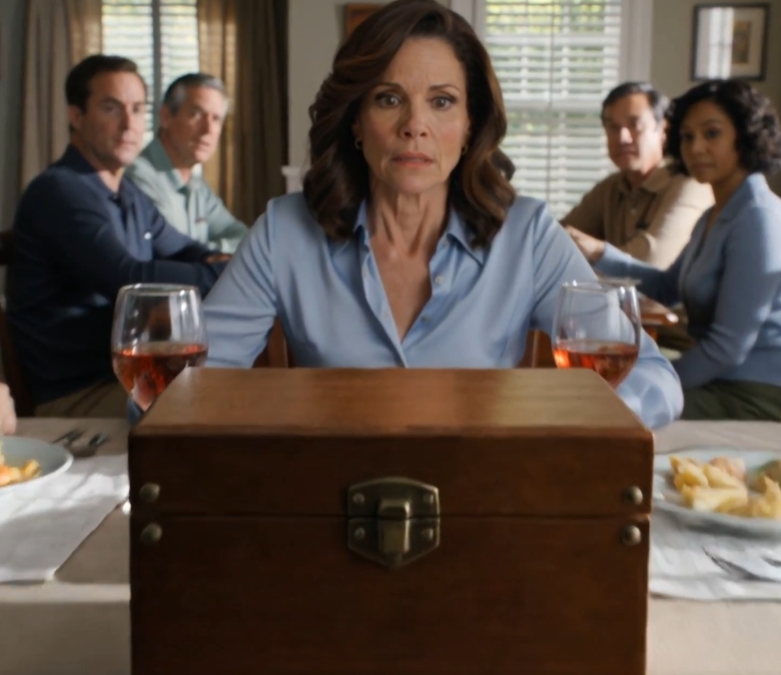
But here’s what none of them counted on: the woman I’d become, or the cedar box I’d find in my grandmother’s attic.
Before I tell you what I finally said back to my mom, you need to know what $135,000 really bought.
Welcome back to Hidden Family Revenge, the channel where quiet people keep the receipts and self-respect always balances the books. If your family ever decided you were the strong one so they could hand your share to someone else, this story is for you. Drop a comment and be sure to subscribe.
I run a forensic accounting practice out of a converted storefront in Columbus, Ohio. Five employees, three conference rooms, and one wall of filing cabinets that my assistant jokes could survive a direct hit from a tornado.
I audit medical practices, clinics, outpatient surgery centers, and small hospital networks. When a billing department can’t figure out where $4 million went, they call me. When an office manager has been skimming co-pays for six years, I’m the one who finds the pattern.
Numbers are honest.
They don’t perform for holidays. They don’t pretend to love you at Thanksgiving and steal from you by January.
That’s something my grandmother taught me before I ever knew what a balance sheet was. Nana used to sit me on her kitchen floor in Dayton with a leather ledger older than my mother and walk me through columns of figures, pointing with a pencil that had no eraser.
“Numbers don’t lie, Wendy. People do.”
I was seven the first time she said it. I believed her then, and I believe her now.
The practice is mine. Built from nothing. No investors, no family money, no favors. I stand carefully when I get up from my desk because eleven years ago, a surgeon fused two vertebrae in my lower back, and the hardware reminds me on cold mornings.
I move well. I move deliberately. I don’t complain about it.
That’s a habit I picked up young—not complaining. Being the daughter who handled things. Being the one nobody worried about.
Eleven years ago, that quality almost cost me the ability to walk.
But here’s the thing about being the quiet one in a loud family: eventually, you learn that silence has a compound interest nobody sees coming.
Growing up, there were two Foster daughters. Brooke was the eldest by three years. She had the cheekbones. She had the laugh that made waiters lean in. She had the closet full of dance recital trophies and the senior portrait that still hangs in my mother’s hallway, backlit like a campaign poster.
I had good grades. I had a used car I paid for myself at 16 with lawn-mowing money.
I had Nana.
Our grandmother lived twenty minutes away in a brick ranch house that smelled like cedar and old paper. While Brooke was at cheer camp and my parents were orbiting her schedule, I’d ride my bike to Nana’s and sit cross-legged on the rug while she opened the cedar box.
The box was dark, heavy, about the size of a shoebox, with a brass latch that clicked twice. Inside was the leather ledger—cracked spine, ruled pages, Nana’s careful handwriting in blue ink.
She’d been a bookkeeper for a plumbing supply company for 31 years. She retired without fanfare, but those columns were gospel to her. She taught me debits and credits the way other grandmothers teach pies.
When I was 12, Nana opened a custodial account in my name.
“A UTMA,” she explained, “so no one can take it back. This is for your future. College, a first apartment, whatever you need.”
She deposited birthday money, holiday checks, stock dividends from a small inheritance of her own. Year after year, the balance grew. She kept a record of every deposit in the ledger right next to my name.
Then Nana died when I was 19.
Heart attack on a Tuesday afternoon.
I lost the person who saw me clearest.
I didn’t know yet that I’d also lose the money she’d saved.
Six years after Nana passed, I was 25 and driving home from a temp job at a medical billing office in Westerville when a pickup ran a red light on Route 3. The impact compressed my L4 and L5 vertebrae and ruptured the disc between them.
I remember the sound before the pain—a wet crunch, like stepping on a rotten apple the size of a basketball.
Then the pain arrived and didn’t leave.
The ER doctor showed me the MRI and pointed to a white smear pressing into my spinal cord.
“You need a fusion,” he said. “Sooner rather than later, or you’re looking at permanent nerve damage.”
The estimate came back at $58,000.
I had catastrophic-only insurance through the temp agency, with an $11,000 deductible and a provider network that didn’t include the only spine surgeon within 60 miles who would take my case. Out of pocket, best-case scenario, I was looking at north of $40,000.
I couldn’t sit for more than twenty minutes. I couldn’t stand straight.
The clinic gave me a rigid back brace, white plastic and Velcro straps that dug into my ribs every time I breathed. I wore it under my clothes to job interviews. I wore it to Brooke’s birthday dinner. I wore it to sleep because lying flat without it felt like someone was driving a screwdriver into my hip.
I had $4,300 in savings.
I was 25 years old, and my spine was disintegrating.
But there was money for this.
Nana’s account.
The UTMA she’d built for years, the one she told me was mine. My parents were the custodians. All they had to do was sign the release.
I called my mother on a Wednesday night and asked.
My mother’s voice went strange, the way it does when she’s rearranging facts before she speaks.
“Honey, that account… there’s barely anything left.”
I shifted in my chair, and the brace creaked.
“What do you mean, barely anything?”
“Well, your schooling and fees, and there were some adjustments.”
“Nana deposited into that account for seven years.”
“Wendy, your grandmother was generous, but she also wasn’t keeping great records toward the end. Things got confused. I’ll look into it, but don’t count on much.”
Then she changed the subject to Brooke’s new curtains.
I sat there in the kitchen of my studio apartment with the phone wedged between my shoulder and my ear because I couldn’t bend my neck, and I thought about the word adjustments.
I’d worked in billing long enough to know that people who say adjustments without giving you a number are hiding the number.
But I was in pain.
Real pain. The kind that narrows your vision to the next hour, the next position that hurts slightly less. I didn’t push. I told myself she’d check and call back.
She didn’t call back.
I called again the following week. She said she was still looking into it. The week after that, she said the bank was being difficult. The week after that, she didn’t pick up.
By then, my left foot had started going numb for ten minutes at a time, and the surgeon’s office had called twice about scheduling.
I was running out of time and out of spine.
Then, on the first Saturday of April, Brooke showed up at my parents’ house with a two-carat ring and a man named Garrett Palmer, and my mother’s attention shifted to the only project that had ever truly mattered to her.
The wedding planning started the same week.
Diane Foster, my mother, had been waiting for this her entire adult life. She grew up poor in a two-bedroom rental in Urbana, with hand-me-down furniture and a father who fixed refrigerators. She married my dad, Raymond, who managed an auto-parts distribution warehouse.
They were comfortable, not wealthy. Comfortable.
But Diane had always looked at Brooke and seen something shinier than what she’d been given. Brooke was the corrective. Brooke was the daughter who’d marry up, throw a party people would talk about, and live the life Diane had cataloged in magazine clippings since 1987.
So when Brooke got engaged, my mother didn’t plan a wedding.
She built a monument.
The venue was a restored barn forty minutes outside Columbus with floor-to-ceiling windows and a chandelier imported from a showroom in North Carolina. The florist specialized in peonies flown in from Holland. The dress was custom. The caterer served a six-course tasting menu for 180 guests.
I know these details because my mother talked about them every time I saw her. Every time I called about the account. Every time I shifted in my brace and tried not to wince loudly enough for her to hear.
I was sleeping in a recliner by then because lying flat was no longer possible. The numbness in my foot had spread to my calf. I’d started using a cane when no one was looking, and my mother was debating between Italian marble and French limestone for the cocktail-hour risers.
The numbers weren’t complicated.
$135,000 for a wedding.
Zero for a surgery.
The math was simple.
The message was simpler.
I drove to my parents’ house on a Sunday in May. I hadn’t been invited. They were doing menu tastings with the caterer, but I came anyway because my surgeon had moved my case to urgent and my left leg was buckling twice a day.
I found my mother at the kitchen table with binder tabs organized by color: ivory for linens, sage for flowers, blush for seating arrangements.
I sat across from her and said it plainly.
“Mom, I need the surgery. The doctor says if I wait past June, I could lose function in my leg. Nana’s account has the money. I just need you to sign the release.”
She didn’t look up from the binder.
“We’ve been over this.”
“You told me you’d look into it. That was two months ago.”
“Wendy, the timing isn’t—”
“The timing is that my spine is collapsing.”
She closed the binder, looked at me, and her face had the expression I’d seen a thousand times—the one where she’s already decided, and the conversation is just a courtesy she’s running out of patience for.
“Your sister is getting married in four months. Do you understand what that costs? Do you have any idea what we’re managing right now?”
“I’m asking about my account. The one Nana left for me.”
“Brooke needs it more than you do.”
The room went quiet.
My dad was in the doorway holding a glass of iced tea. He looked at the floor. I waited for him to say something.
He took a sip and walked back toward the garage.
My mother picked up the binder and opened it to a new tab.
“You’re young,” she said. “You’re smart. You’ll manage.”
She went back to her seating chart.
I drove home in the brace.
I stopped asking after that.
Something closed in me. Not a door, more like a valve.
I didn’t yell. I didn’t cry in front of them. I went back to my apartment and made a spreadsheet. I listed every payment I could defer, every side job I could pick up, every credit card with a promotional zero-percent rate.
I took a second temp gig doing payroll for a construction company on weekends. I worked in the brace every day, standing at a desk I’d rigged with boxes because sitting was a negotiation I kept losing.
The wedding was in September.
I went.
I wore a navy dress that hid the brace and took three ibuprofen before the ceremony. The barn looked like a page from the magazines my mother had been collecting since before I was born.
Peonies and glass cylinders. Candles on every surface. A string quartet playing something I didn’t recognize. One hundred eighty people eating duck confit and laughing about how Diane had outdone herself.
I stood in the back because the chairs were too low.
I watched my sister walk down the aisle in a dress that cost more than my annual rent. I watched my father give a toast about investing in your children’s happiness. I watched my mother beam in a way she had never once beamed at me.
The photographer caught everything.
That photo—the one of Brooke and Garrett under the chandelier, with the peonies framing them like a crown—ended up in a silver frame on my mother’s mantel.
It’s still there.
Eleven years later, it’s still the first thing you see when you walk in.
It took me two years to save enough for the surgery.
It took me eleven to learn what they’d actually spent.
I had the fusion at 27, a four-hour procedure at a hospital in Cleveland that accepted a payment plan I’d spend the next five years honoring. The surgeon put in two titanium rods and a cage between L4 and L5.
When I woke up, the first thing I noticed was the absence.
The nerve fire that had been burning down my left leg for two years was gone.
Just gone.
Like someone had turned off a faucet I’d forgotten was running.
Recovery took four months. I did physical therapy three times a week in a clinic that smelled like rubber bands and antiseptic. I learned to walk again without the cane. I learned to sit for an hour without checking the clock.
The brace went into a closet, then into a box, then into the back of the box.
The scar runs six inches along my lower spine, a pale line like a seam in fabric. I don’t hide it. I don’t show it off either.
It’s just there.
The way the hardware is just there.
The way the memory of the brace is just there on cold mornings, when I stand up too fast and feel the rods settle.
While I was recovering, I finished my CPA certification. I’d been studying between shifts, between pain flares, between the nights I sat in the recliner at three in the morning reading forensic accounting case studies because I couldn’t sleep and needed to believe that numbers could fix something.
They could.
They can.
I started picking up contract work, auditing small medical practices, the ones with billing departments that ran on spreadsheets and trust. I was good at it. I was patient. I could sit with a thousand lines of data and find the one that didn’t belong.
I kept my distance from my family, not out of spite.
Out of math.
By 30, I’d incorporated Foster Medical Audit: one woman, one laptop, and a reputation for being thorough enough that clinics in four counties started calling before their insurance audits.
By 32, I’d hired my first employee.
By 34, I had the storefront, three analysts, and a client list that kept the lights on without me chasing invoices.
I didn’t talk about it at family dinners because I stopped going to family dinners.
I sent birthday cards. I answered the phone when my dad called, which was about twice a year. Always brief, always the same script.
“How’s work?”
“Fine.”
“How’s Mom?”
“Fine.”
“How’s Brooke?”
“Fine.”
Nobody asked about the surgery.
Nobody asked about the payment plan I’d just finished.
Nobody asked about the scar.
I was the daughter who managed, and managing was assumed to be effortless, the way people assume the lights come on because that’s what lights do.
Nana would have asked.
Nana would have opened the ledger and pointed to the column and said, “Show me the numbers, Wendy. Show me what it cost.”
But Nana was gone, and the cedar box was wherever my mother had stored the things she didn’t find useful.
I thought about it sometimes. The ledger. The account records. The columns in blue ink.
I thought about calling the bank and requesting statements, but the account had been custodial. The custodians were my parents, and every time I’d tried to get information at 25, the bank had directed me back to them.
I’d moved on. I’d built something.
I told myself that was enough.
If you’re still paying off something a family member should have covered, I see you. I paid mine off one late night at a time. Subscribe. The next part is where the numbers start talking. Trust me, you’ll want to hear what they say.
Last March, my mother’s voice broke through eleven years of careful distance like a brick through a window.
“Wendy, it’s your sister.”
I was reviewing a billing discrepancy for a dermatology practice in Worthington. I put my pen down.
“What about her?”
“Garrett left.”
She said it the way you’d say a pipe burst. Sudden, expensive, someone else’s fault.
The details came in fragments over the next two calls.
Garrett Palmer, Brooke’s husband of eleven years, had been running a contracting business that turned out to be running on debt. When the debt called, Garrett didn’t answer. He moved to a furnished apartment in Indianapolis and filed for divorce, leaving Brooke with a mortgaged house, two maxed credit cards, a 13-year-old daughter named Maddie, and a herniated disc in her cervical spine that her soon-to-be ex-husband’s soon-to-be-canceled insurance would no longer cover.
My mother delivered this like a verdict that required an immediate appeal.
“She needs surgery, Wendy. The doctor says the numbness in her hands is getting worse. She can’t afford it. She can’t even afford the consultation.”
I let the silence sit.
My mother is not comfortable with silence.
“Are you there?”
“I’m here.”
“Well?”
“I’m thinking.”
“What is there to think about? She’s your sister.”
Three days later, Aunt Carol called.
Carol is my mother’s younger sister, a retired dental hygienist from Springfield who serves as the family’s unofficial communications director. She told me the whole family was heartbroken. She told me Brooke was barely functioning. She told me everyone was hoping I’d do the right thing.
I thanked her for calling.
I didn’t commit to anything.
I sat in my office and stared at the filing cabinets and thought about a cedar box I hadn’t seen in seventeen years.
Two weeks later, my mother called again.
This time, the ask was different.
“We’re selling Nana’s house.”
The brick ranch in Dayton had been sitting since my grandfather moved to assisted living five years ago. My parents had been paying the taxes, mowing the lawn, putting it off. Now they needed the money.
“There are boxes in the attic with your name on them. Old school things. Some of Nana’s stuff she wanted you to have. If you want any of it, come get it before the estate sale.”
I said I’d drive down Saturday.
I told myself it was about the boxes. Yearbooks, maybe the watercolor set Nana gave me for my tenth birthday, maybe a few of her cooking things. I told myself I was going for closure, for the last piece of a house that had been the safest place in my childhood.
But somewhere under the telling, underneath the practical reasons and the clean logic, there was a question I’d been carrying for eleven years.
A question shaped like a bank statement.
How much had really been in that account?
I knew I could have fought harder at 25. I could have hired a lawyer, demanded records, pushed until something gave.
But I’d been in a brace.
I’d been in pain.
I’d been 25 and broke and outnumbered by the people who were supposed to protect me.
So I’d let it go.
I’d managed.
And now my mother was offering me a reason to walk back into that house. The house where Nana had kept her records. Where the cedar box had lived on the top shelf of the hall closet. Where the numbers waited in blue ink for someone who knew how to read them.
I told myself I was just going for the boxes.
I was right about the box.
Just not the one I expected.
The house smelled like dust and lavender sachets. Nana had put them in every closet, and they’d outlasted her by seventeen years.
My mother was in the kitchen sorting dishes into keep and sell piles. My father was in the garage doing whatever my father does when my mother is in charge of something—staying out of range.
Brooke was in the living room.
She was sitting on Nana’s old sofa, scrolling her phone, and she looked diminished in a way I hadn’t expected. Thinner. Her right hand rested on her neck in the careful way you hold something that hurts.
She looked up when I walked in.
“Hey.”
“Hey.”
That was the extent of our warmth.
On the wall behind her, next to Nana’s landscape painting, hung the wedding photo in its silver frame. Brooke and Garrett under the chandelier, the imported peonies framing them like a painting of people who’d never run out of luck.
The peonies alone must have been $8,000.
I knew because I’d audited a floral supplier the year before and learned what Dutch imports cost when you need two hundred stems in September.
Eight thousand dollars in flowers.
Gone in a night.
Still on the wall.
Brooke caught me looking.
“You always did count things.”
“Occupational hazard.”
She smiled, but it had an edge.
“Not everyone’s built for the fairy tale, Wendy. Some of us get it and lose it.”
Then she added, “You’ll manage. You always do.”
She went back to her phone.
There it was.
My mother’s phrase, handed down like a family heirloom.
The assumption that I was built for surviving and she was built for being saved.
I walked past her toward the stairs.
The attic was one flight up, and seventeen years of Nana’s carefully labeled boxes were waiting in the dark. It was hot and low-ceilinged, lit by a single bulb on a pull chain.
Boxes everywhere. Christmas ornaments. Old tax files. A sewing machine in a carrying case.
In the far corner, behind a stack of Reader’s Digest anthologies, I found a box labeled WENDY — NANA’S THINGS in my mother’s handwriting.
Inside were the watercolors, a tin of buttons, Nana’s reading glasses in a quilted case, and at the bottom, wrapped in a dish towel printed with cardinals, the cedar box.
I knew it before I touched it.
The brass latch clicked twice, same as it always had.
I opened it in the heat of that attic and smelled cedar and old paper, and something hit me so deep I had to sit on the floor.
The leather ledger was inside.
Cracked spine.
Blue ink.
But underneath the ledger were documents I’d never seen.
A custodial account agreement.
Uniform Transfers to Minors Act, State of Ohio.
Beneficiary: Wendy Anne Foster.
Custodians: Diane Foster and Raymond Foster.
Opening balance: $4,200.
And clipped to the agreement, page after page in Nana’s handwriting. Every deposit she’d ever made. Birthdays. Christmases. Quarterly dividends from her small inheritance. Seven years of entries.
The last deposit, made four months before she died, brought the running total to $67,400.
Below that total, in Nana’s steady hand, a single line:
For Wendy. Numbers don’t lie.
I sat on the attic floor with the ledger in my lap, the heat pressing down on me and the sound of my mother sorting dishes one floor below.
And I felt something colder than anger.
I felt math.
Because $67,000, with even modest growth over the six years between Nana’s death and the day I’d asked for my surgery money, should have been well over $80,000.
My mother had told me there was barely anything left.
Numbers don’t lie.
People do.
I took the cedar box home.
I didn’t tell my mother.
I didn’t tell anyone.
I set the ledger and the UTMA agreement on my dining table and looked at them the way I look at a client file when something doesn’t reconcile—with patience and with the knowledge that the answer is always in the records.
The account number was on the agreement. The custodian names were on the agreement.
And I was the beneficiary.
The person to whom every dollar in that account legally belonged from the moment Nana deposited it.
At 25, I’d called the bank and been told the custodians would need to authorize any information release. I’d accepted that.
I was young.
I was in pain.
I didn’t know better.
At 36, I knew better.
I knew that as the named beneficiary of a UTMA account who had long since passed the age of majority, I had the legal right to a full accounting. I knew that a formal demand letter on my firm’s letterhead, citing Ohio’s UTMA statute and referencing the original account agreement, would carry weight that a 25-year-old in a back brace never could.
I drafted the letter on a Monday.
Sent it certified mail on a Tuesday.
I requested complete transaction records from the date of account opening to the date of final withdrawal. Every deposit. Every withdrawal. Dates, amounts, authorizations.
I copied a colleague who practiced fiduciary law because I wanted the bank to understand this wasn’t a daughter asking.
This was a forensic accountant with standing and the original paperwork.
The bank’s first response came in nine days.
It was one page.
They confirmed the account had existed and had been closed. For detailed transaction history on an account closed over a decade ago, they’d need to retrieve archived records, and they’d need either custodian authorization or a court order.
I’d expected that.
My colleague sent a follow-up citing the Ohio UTMA statute, my status as the named beneficiary past the age of majority, and a polite note that a subpoena would follow within ten business days if the records weren’t produced voluntarily.
The bank’s compliance department called three days later.
The archived records would take two to three weeks to pull.
I waited.
I didn’t want revenge.
I wanted the ledger to balance.
Five weeks after my first letter, a thick envelope arrived by certified mail.
I opened it at my desk after my last employee left for the night.
And the numbers started talking.
The UTMA account had not been empty when I asked for my surgery money.
It had held $82,416.
Nana’s deposits plus six years of modest market growth on the index fund she’d chosen.
Eighty-two thousand dollars.
My mother had told me there was barely anything left.
She told me it went to my schooling.
She told me the records were confused.
The records were not confused.
They were meticulous, because banks are meticulous and numbers are meticulous.
The only thing confused was the story my mother had built around them.
The withdrawals started in March of the year Brooke got engaged. Three transactions in March. Two in April. A large one in June. Another in August.
The last one, the one that emptied the account to zero, was dated September 3.
Brooke’s wedding was September 7.
I spread the statements across my desk and stared at the dates.
March through September.
Engagement through wedding.
$82,000 withdrawn in eight installments over six months.
By Diane Foster, custodian.
I hadn’t looked at bank statements in years without knowing exactly what I’d find.
This was different.
This was seeing your own name at the top of a ledger that someone had robbed while you were lying in a recliner with a disintegrating spine.
I opened Nana’s leather ledger and placed it next to the bank printout.
Her deposits on the left.
The withdrawals on the right.
The handwriting on one side and the printer ink on the other.
And between them, the entire architecture of a lie that had lasted eleven years.
I closed the ledger.
I didn’t cry.
Crying doesn’t reconcile a balance.
I picked up my phone and called a lawyer.
The next morning, I pulled the vendor records for Brooke’s wedding.
It didn’t take long.
The bank statements themselves did most of the work. Every withdrawal showed the pay line, the name on the check, or the wire recipient. All I needed was to match those names to the vendors.
My mother had kept a binder—the same color-tabbed binder I’d watched her organize that Sunday afternoon while I sat across the table in a back brace asking for my own money.
I didn’t have the binder, but I had the vendor names from the invitation suite Brooke had mailed to 180 guests, including me.
The venue.
The florist.
The caterer.
I still had the invitation in a drawer because I’d never had a reason to throw it away.
I matched the March withdrawal.
The barn venue deposit, paid March 15.
The April withdrawal.
The florist who specialized in imported peonies. First payment, April 10.
June, the caterer.
August, the bridal boutique.
September 1, the décor rental company.
I lined the payee names and dates up next to the UTMA withdrawal dates.
They matched.
Not approximately.
Exactly.
Every single disbursement from my custodial account mapped dollar for dollar, week for week, to a wedding expense.
My surgery money paid for the peonies.
My surgery money paid for the chandelier.
My surgery money paid for the six-course duck confit and the French limestone cocktail risers and the string quartet and the silver frame that still hangs on my mother’s wall.
Nana saved for seven years so I’d have a future.
My mother spent it in six months so Brooke could have a weekend.
Numbers don’t lie.
They don’t editorialize. They don’t console you or explain why. They just sit there, row after row, quiet and irrefutable, and let you decide what to do with the truth.
I decided.
The attorney’s name was David Kesler.
He practiced fiduciary and estate law out of an office in German Village with a view of a brick wall and a filing system that rivaled mine.
I brought the cedar box, the bank statements with the payee lines annotated, the wedding invitation, and the UTMA agreement. I laid them on his desk in order.
The gift.
The growth.
The theft.
And the proof.
He read for twenty minutes without speaking.
Then he looked up.
“This is clean.”
Under Ohio law, he explained, a UTMA custodial account is an irrevocable gift. The money belonged to me from the moment Nana deposited it. My parents, as custodians, had a fiduciary duty to manage those funds solely for my benefit.
Education. Medical expenses. The things a careful custodian would authorize.
Spending it on another child’s wedding was not on that list.
It was a textbook breach of fiduciary duty.
It was conversion, the legal term for taking someone’s property and using it as your own.
David outlined the path.
A formal demand for repayment. If refused, a civil complaint for breach of fiduciary duty, conversion, and an accounting.
He was candid about the range of outcomes. A judge might award the principal only, or the principal plus statutory interest, or, in the best case, the amount the funds would have reasonably grown to had they remained invested.
Nothing was guaranteed at trial, but David had handled enough fiduciary cases to know the math itself was leverage. Custodians caught with this kind of paper trail almost always settled because the alternative was a courtroom where a judge would read Nana’s handwriting out loud.
He ran the numbers on the strongest scenario: $82,000 invested in a standard index fund over eleven years at historical average returns.
The figure came back at approximately $135,000.
I looked at it on his yellow legal pad and almost laughed.
$135,000.
The same number my mother had spent on the wedding.
The math was so symmetrical it felt designed.
But it wasn’t.
It was just math.
Numbers don’t negotiate.
They don’t forgive.
And they don’t forget.
I told David to prepare the demand letter.
He said he’d have it ready by Friday.
I drove home from David’s office and sat in my driveway for a long time. The engine was off. The neighborhood was quiet. A woman across the street was watering her garden and waving at a mail carrier.
Normal Tuesday.
I had just set in motion a lawsuit against my own parents.
That’s not a normal Tuesday.
I want to be clear about something.
I didn’t feel righteous.
I didn’t feel powerful.
I felt tired.
I felt the specific tiredness of a person who has been managing for eleven years and has just discovered that managing was never a personality trait.
It was a sentence handed down by people who found it convenient.
I thought about my mother’s face at the kitchen table. The binder tabs. The way she didn’t look up.
You’ll manage.
It had never been a compliment.
It was a budget allocation.
I was the line item that got cut so the other line item could have peonies.
The question isn’t whether I felt guilty.
I didn’t.
Guilt was what they’d handed me for free for years.
Guilt for needing.
Guilt for asking.
Guilt for existing with a body that required repair while my sister’s body required a party.
What I felt in that driveway was clarity.
The kind that comes when you stop being the easy one and start being the accurate one.
People keep asking if I felt guilty.
I didn’t.
Guilt is what they handed me for free for years.
If anyone ever taught you that asking for your fair share makes you the villain, stay with me. The receipts are about to do the talking.
Hit subscribe.
I went inside. I poured a glass of water. I opened the cedar box one more time, ran my finger along Nana’s handwriting, and closed it.
Friday was three days away.
Friday came.
The demand letter went out.
And before the postal service could deliver it, my mother called to invite me to dinner.
Not a regular dinner.
A family dinner.
The kind with aunts and uncles and cousins. The kind my mother orchestrates when she needs an audience.
“We’re getting everyone together Sunday for Brooke. She’s been through so much, and the family wants to show support.”
I knew exactly what this was.
I’d seen my mother run this play before.
The gathering designed to look like warmth but function like a tribunal.
Everyone would be briefed. Everyone would know that Wendy had the money and Brooke needed help.
The meal would be served.
The small talk would wind down.
Then my mother or Aunt Carol would make the ask publicly, with fourteen sets of eyes watching me to see whether I’d be a good sister or a selfish one.
I said I’d come.
My mother sounded relieved.
“Bring a dessert.”
“Sure.”
I hung up and imagined the table.
My parents at the heads. Brooke looking fragile. Carol looking righteous. Uncle Dennis and Aunt Pat from Xenia. Cousin Megan with her husband. Maybe Great-Aunt Linda, who always sides with whoever cries first.
Fourteen people arranged to apply maximum pressure on the one person in the room who understood what $135,000 actually represented.
They thought I was coming to say yes.
They thought the daughter who managed would manage one more thing. Write a check. Absorb the cost. Confirm her role as the family’s financial utility.
They didn’t know about the bank records.
They didn’t know about the demand letter already in transit.
They didn’t know I was bringing the cedar box.
Saturday afternoon, I drove to Brooke’s apartment, a rental in Reynoldsburg that smelled like carpet cleaner and stress.
I didn’t call ahead.
I knocked.
Maddie answered.
She was 13, tall for her age, with Brooke’s cheekbones and none of Brooke’s practiced composure. She looked startled to see me.
We didn’t have that kind of relationship. I was the aunt who sent birthday checks and showed up at Christmas with a book.
“Hey, Aunt Wendy.”
“Hey, Maddie. Is your mom home?”
Brooke was lying on the couch with an ice pack on her neck. She sat up too fast and winced.
For a second, she looked exactly like me at 25.
Careful.
Hurting.
Trying to pretend she wasn’t.
I didn’t feel sympathy so much as recognition.
Pain looks the same on everyone.
It doesn’t care about fairness.
I told Brooke I’d come by to see how Maddie was doing with the transition.
That was true.
I sat with Maddie at the kitchen table for twenty minutes while Brooke rested. Maddie told me about her science project, a study on bridge load-bearing.
She liked math.
I didn’t tell Maddie about the lawsuit.
I didn’t tell her about the account.
I told her that whatever happened between the adults in our family, she wasn’t part of it and never would be.
“You’re not part of this, sweetheart. You never were.”
She nodded like she understood more than a 13-year-old should have to.
I left Brooke’s apartment, sat in my car, and made a quiet promise to myself.
No matter what happened at that dinner table tomorrow, no matter what came out of the demand letter or the lawsuit or the reckoning, Maddie would be protected.
The cycle stops when someone decides it stops.
Saturday night, 11:00 p.m., my phone lit up.
Mom.
I picked up because if I didn’t, she’d call seven more times.
“I just wanted to make sure you’re coming tomorrow.”
“I said I’d come.”
“Good. Because your sister, Wendy, you have no idea what she’s going through. The bills, the house. Garrett just vanished. She’s alone with Maddie, and her neck is—”
“I know.”
“Then you understand why we need to come together as a family. This is what family does, Wendy. After everything we gave you—”
After everything we gave you.
I held the phone against my ear and let that phrase sit in the air between us. Let it ring against eleven years of what she’d actually given me.
A lie about an empty account.
A brace I wore to a wedding I paid for with my own spine.
And a sentence—You’ll manage—that she’d packaged as confidence and meant as dismissal.
“I’ll be there at five.”
“Bring the peach cobbler. The one Nana used to make.”
She said it without irony.
She wanted me to bring Nana’s recipe to a dinner designed to spend Nana’s money a second time.
I made the cobbler.
I used Nana’s recipe card, the one with flour smudges and a grease stain in the corner from 1993. I baked it in Nana’s dish, and while it cooled on the counter, I packed the cedar box into my bag.
The leather ledger.
The UTMA agreement.
A copy of the bank statements printed on my firm’s letterhead, annotated in my own handwriting with a red pen.
Each withdrawal date circled.
Each corresponding wedding invoice date noted in the margin.
I didn’t rehearse a speech.
Numbers don’t need rehearsal.
They just need someone willing to read them out loud.
Sunday, 5:00 p.m.
My parents’ house.
The driveway was full.
Uncle Dennis’s truck. Aunt Carol’s sedan. Cousin Megan’s minivan.
I parked on the street.
I carried the cobbler in one hand and my bag—the one with the cedar box—in the other.
I stood on the porch for a moment and listened.
Laughter inside.
The clink of ice and glasses.
My mother’s voice, higher than usual, directing someone to move the extra chairs.
Through the front window, I could see the dining-room table extended with two leaves, fourteen place settings, the good china—the kind that only comes out when my mother wants to stage something.
I walked in.
“There she is!”
Aunt Carol, arms wide, perfume preceding her by three feet. She hugged me like I’d just returned from a deployment.
Uncle Dennis shook my hand. Cousin Megan squeezed my arm with a look that said she’d been briefed and was already on Team Brooke.
My father was in the kitchen doorway holding a beer, and he gave me a nod that contained absolutely nothing.
Brooke was seated at the table already, a neck brace visible above her collar.
A soft brace, not the rigid kind I’d worn, but visible.
Staged or genuine, it was there.
My mother emerged from the kitchen with serving platters.
She saw the cobbler first.
“Oh, you made Nana’s.”
Then she saw me set my bag down on the chair next to mine, and something crossed her face.
A flicker too fast to name.
Like seeing someone bring a briefcase to a birthday party.
On the wall behind the table was the wedding photo.
Silver frame.
Peonies like a crown.
$135,000 of frozen happiness.
I sat down.
The cedar box waited at my feet.
Dinner was pot roast.
My mother carved.
The conversation circled Brooke the way water circles a drain. Every topic bent toward her. How hard the divorce had been. How brave she was with Maddie. How the house was underwater. How the surgery couldn’t wait.
Carol steered it.
She was good at this.
The casual aside. The meaningful pause.
“I just think family should be there for each other.”
Deployed like a conversation grenade.
By the time my mother brought out the cobbler, the table had been sufficiently primed.
Carol put her fork down.
“Wendy, we all know why we’re really here.”
The room went still.
Fourteen pairs of eyes.
My father studied his plate.
“Your sister needs surgery. The kind you, of all people, understand.”
That was a nice touch.
Invoking my own experience as leverage.
“The consultation alone is $3,000. The procedure, if she can even find a surgeon who will take payments…”
She trailed off and looked at Brooke.
Brooke looked at me.
Her eyes were damp.
Whether that was pain or performance, I genuinely don’t know.
“Wendy,” my mother said.
She used her serious voice. The one from parent-teacher conferences. The one that means this is the part where you agree.
“Your sister needs surgery now. Please help.”
The exact words from the phone call.
The exact intonation.
Probably rehearsed.
Around the table, I could feel the weight of expectation settling.
Dennis was nodding. Megan had her hands folded like she was in church. Great-Aunt Linda was already reaching for a tissue.
My mother waited.
Brooke waited.
Carol waited.
They all waited for the daughter who manages to manage one more thing.
I reached down and picked up the bag from beside my chair.
I set the cedar box on the table next to my plate.
The brass latch clicked twice.
My mother’s expression shifted.
She recognized it.
Nana’s box.
The one from the hall closet.
The one she’d apparently thought was buried in the attic forever.
“What is that?” Carol asked.
I opened the box and removed the leather ledger.
I placed it on the table, opened to the last page of entries.
Nana’s careful blue handwriting.
Seven years of deposits.
The running total of $67,400.
And the line at the bottom:
For Wendy. Numbers don’t lie.
Then I removed the UTMA agreement.
I placed it next to the ledger.
“This is the custodial account Nana opened for me. Under the Uniform Transfers to Minors Act, every dollar in this account legally belonged to me. Mom and Dad were the custodians.”
The room was quiet.
My father set down his beer.
“Wendy—” my mother started.
I removed the bank statements.
Eight pages printed on my firm’s letterhead.
I placed them next to the agreement.
“When I was 25 and needed spinal surgery, I asked you to release these funds. You told me the account was nearly empty. You told me it went to my schooling.”
I pointed to the statements.
“The account held $82,416 on the day I asked. It was emptied over six months.”
I placed the wedding invitation next to the bank records.
The same invitation Brooke had mailed to 180 guests.
“Every withdrawal shows a payee line. The barn venue. The florist. The caterer. The bridal boutique. Every vendor name on this invitation matches a payee on these bank statements. The withdrawal dates match the payment dates.”
I looked around the table.
“My custodial account—the one Nana saved for seven years—paid for this wedding.”
I looked at the photo on the wall.
The peonies.
The chandelier.
The silver frame.
Then I looked at my mother.
“Brooke needs it more than you do.”
Her own words.
Returned with documentation.
The room didn’t breathe.
Aunt Carol was the first to speak.
“Now, hold on. I’m sure there’s an explanation.”
“There is,” I said. “The explanation is breach of fiduciary duty and conversion. Those are the legal terms for what happens when a custodian spends a minor’s irrevocable funds on someone else’s wedding.”
I kept my voice level.
This was an audit presentation, not an argument.
“I’ve retained an attorney. A formal demand for repayment was mailed to this address on Friday. Under the UTMA statute, we believe I’m entitled to recover the principal plus the growth those funds would have earned had they remained invested. Custodians with this kind of paper trail almost always settle.”
I let that sit for a moment.
“The attorney’s estimate, based on standard index fund returns over eleven years, comes to approximately $135,000.”
Uncle Dennis leaned back in his chair.
Megan put her hand over her mouth.
Great-Aunt Linda lowered her tissue.
$135,000.
The same number this family had celebrated.
The same number that hung in a silver frame on the wall.
The same number that had bought peonies and duck confit and a string quartet while I slept in a recliner because I couldn’t lie flat.
Now it was just a debt.
“That money belongs to me,” I said. “It always did. Nana deposited it. Nana documented it. The bank recorded it. And my parents spent it. Not on my education. Not on my medical care. Not on anything the law authorizes a custodian to spend it on.”
I looked at my father.
He was gripping the edge of the table with both hands.
I looked at Brooke.
She was staring at the bank statements like she’d never seen her own wedding itemized.
I looked at my mother.
“They spent it on a party.”
She hadn’t moved.
Then she moved.
My mother stood up so fast her chair scraped the floor and tilted against the wall.
“How dare you?”
Her voice cracked on the second word.
“How dare you sit at this table, in this house, and accuse me?”
“I’m not accusing you. The bank statements are accusing you. I’m just presenting them.”
“Your grandmother would be ashamed of you.”
I kept my hands flat on the table.
Steady.
“Nana wrote, ‘For Wendy. Numbers don’t lie.’ I think she knew exactly who she’d be ashamed of.”
My mother’s face collapsed into a different shape.
Not grief.
Not remorse.
Something closer to exposure.
She started crying, but it was the crying I’d seen her do at retail counters and insurance offices. The kind designed to shift the room’s sympathy back to her.
“I did what I had to do for this family. Your grandmother left that money for the family, not just for you.”
“It was a UTMA account. My name. My funds. That’s not an interpretation. It’s a statute.”
“You always had to be so smart, didn’t you? So righteous.”
Brooke stood up.
“Are you serious right now? I’m sitting here with a broken neck and you’re suing Mom over money. You’re punishing me.”
“I’m not punishing you. I’m recovering what’s mine.”
Carol jumped in with something about family and forgiveness and how money isn’t everything.
I let her finish because she wasn’t saying anything that changed a number.
Then my father spoke.
He hadn’t looked up since I placed the bank records on the table.
“I should have said something.”
The room went quiet again.
He stared at his hands.
“I knew. I should have told you.”
He paused.
Then he said, “But Wendy, can’t you just let this go for the family?”
I studied his face for a long time.
The same face from that Sunday in May eleven years ago.
Holding the iced tea.
Looking at the floor.
Walking toward the garage.
My mother wiped her eyes. She steadied herself on the back of the chair. She took a breath I could hear from across the table.
Then she played the only card she had left.
“But your sister needs surgery now.”
Same words.
Same cadence.
Same appeal.
Spoken to a room full of people who now understood for the first time what those words had cost me the last time she said them.
I looked at Brooke.
At the soft brace on her neck.
At the invoice for peonies sitting two inches from her water glass.
I looked at my mother.
At the woman who’d told me to manage while she spent my future on someone else’s weekend.
I looked at the wedding photo on the wall.
The chandelier.
The silver frame.
The 180 guests and the imported flowers and the six-course meal and the custom dress.
All paid for with money my grandmother had saved, one deposit at a time, in a leather ledger with a cracked spine.
I felt the rods in my back.
I felt eleven years of managing.
I looked my mother in the eye and said it the way she’d said it to me—even, practical, without cruelty, as if I were simply describing how the world works.
“She’ll manage.”
I left that night before the cobbler was finished.
Nobody followed me to the car.
The lawsuit settled three months later.
My parents’ attorney advised them to avoid court. The documentation was too complete. The breach too clear.
The settlement returned $131,000 plus attorney’s fees.
Not the full $135,000, but close enough that the math felt honest.
My parents refinanced the house to pay it.
I don’t take satisfaction in that.
I take accuracy.
Brooke found a surgeon who accepted a payment plan through a hospital assistance program. She had the procedure in August and was back on her feet by Thanksgiving.
She managed.
She managed the way I managed.
Slowly.
Painfully.
With nobody writing a check to make it easier.
The difference is that nobody stole from her to fund someone else’s comfort.
She just had to do it the hard way, like I did.
The money that came back to me went three places.
I put a portion into a UTMA account in Maddie’s name—her name, with myself as custodian—and attached a letter explaining exactly what the account is, exactly how much is in it, and exactly when it becomes hers.
I donated a portion to a hospital fund that covers surgical costs for uninsured patients in central Ohio.
And the rest went back into my practice.
Because the practice is mine.
And everything it is, I built while sleeping in a recliner.
My father calls about twice a year.
The conversations are shorter now.
My mother doesn’t call.
Brooke sent a text in December.
No request.
No demand.
Just two sentences.
I didn’t know where the money came from.
I’m sorry.
I haven’t replied yet.
I’m still deciding what that’s worth.
I visit Maddie once a month. We sit at her kitchen table and she shows me her homework, mostly math, which she’s good at.
I don’t coach her.
I just check her work and let her explain her thinking.
Last week, she asked me if I was mad at her mom.
I told her the truth.
“I’m not mad. I’m clear. There’s a difference.”
Anger runs out.
Clarity compounds.
I stood up from her table and felt the rods settle in my lower back the way they always do.
A small shift.
A quiet reminder.
The scar is pale now.
The brace is in a landfill somewhere.
The cedar box is on my desk at the office, next to the monitor where I can see it while I work.
I open it sometimes.
Not for the documents. Those are filed.
But for the ledger.
For Nana’s handwriting.
For the steady blue ink that says the same thing on every page.
I was here.
I counted.
And what I counted, I counted for you.
Math can expose the truth.
Every withdrawal.
Every lie.
Every dollar rerouted from the person who needed it to the person who was preferred.
But peace doesn’t come from the balance sheet.
It comes from the day you stop spending your heart on people who were never going to pay you back and start investing it in the ones who show up with their own receipts.
That’s my story.
Eleven years.
One cedar box.
And a balance that finally came due.
If this reminded you to check where your own fair share quietly went—a custodial account, a loan you covered, a promise nobody kept—take that as a sign.
Check it.
And if someone in your life needs to hear this, share this video with them.
Drop a comment, hit subscribe, and I’ll see you in the next.








