1. “Get a real job,” dad texted in family chat, “your online thing is pathetic,” 47 likes, i kept working, five days later, cnn broke the news: my ai company’s $2.1b ipo, sister called screaming: “is this you?” the color drained from…
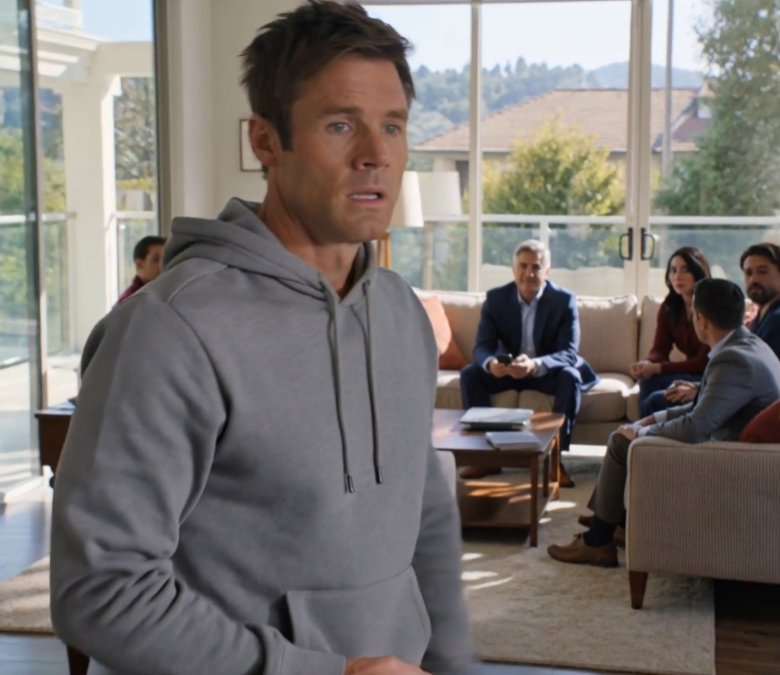
The text came through at 2:47 p.m. on a Tuesday.
I was in the middle of a conference call with our investment bankers at Goldman Sachs and Morgan Stanley, finalizing the S-1 filing for our IPO—the biggest moment of my professional life, seven years in the making—and my phone kept buzzing on the table.
I glanced down and saw the Carter family group chat lighting up.
Dad: Talked to the Hendersons today. They asked about Alex. I didn’t know what to tell them.
Dad: He’s 35 and still playing with computers. Didn’t seem like a good answer.
Dad: Alex, it’s time. Get a real job. Your online thing is pathetic.
Mom: Your father has a point, sweetheart. We’re worried.
Megan: Dad’s right. This has gone on long enough.
Uncle Tom: The kid needs to grow up.
Aunt Linda: Maybe it’s time to consider other options.
Cousin Ryan: 100 points.
Cousin Emma: Agreed.
I watched the reactions pile up—thumbs-up, hearts, the 100 emoji. Forty-seven family members weighing in on my failure. Forty-seven people who had decided my life’s work was pathetic without knowing a single detail about what I actually did.
My CFO, Sarah Chin, noticed me staring at my phone.
“Everything okay?”
“Family stuff. Let’s keep going.”
She gave me a knowing look. Sarah was one of the few people who knew about my complicated relationship with my family.
“The S-1 goes live Friday morning,” she said. “After that, everything changes.”
“I know.”
“Do they know?” She gestured toward my phone.
“No.”
“Are you going to tell them?”
I thought about it for exactly two seconds.
“No. Let them find out with everyone else.”
I’d started Neural Path in 2018 with $73,000—my life savings, maxed-out credit cards, and a loan from my former Stanford roommate, David Kim.
The company’s mission was to build artificial intelligence that could actually understand human language, not just process it. Back then, everyone thought I was crazy. AI was still mostly hype. The big tech companies were throwing billions at the problem with limited results.
What chance did a 28-year-old dropout with no funding have?
But I’d seen something they hadn’t.
While everyone was trying to build general AI, I focused on one specific problem: helping businesses understand their customers through natural language processing.
Real conversations. Real insights. Real value.
The first two years were hell.
I lived in a studio apartment in Oakland that cost $1,400 a month. Cheap for the Bay Area, but devastating when you’re burning through savings. I ate rice and beans. I wrote code eighteen hours a day. I pitched to 273 investors and got rejected by every single one.
Then, in 2020, everything shifted.
A Fortune 500 insurance company was drowning in customer-service calls. Their existing AI couldn’t understand regional accents, slang, or context. They were losing millions through declining customer-satisfaction scores, and they had a 40 percent agent turnover rate because of the stress.
They hired Neural Path for a last-resort pilot program, probably because we were cheap and desperate.
I built them a custom NLP engine in three months.
It didn’t just transcribe calls. It understood them.
It detected frustration before customers explicitly complained. It identified upsell opportunities. It reduced average call time by 63 percent while improving satisfaction scores by 41 percent.
The client’s CEO called me personally.
“Whatever you need to scale this, we’ll fund it.”
Six months later, we had $15 million in Series A funding. Twelve months after that, $67 million in Series B. By 2023, we’d raised $180 million in Series C at a $680 million valuation.
We grew from one client to 340 clients. From one employee—me—to 480 employees across offices in San Francisco, New York, and Austin. From zero dollars in revenue to $340 million annually.
Our AI powered customer service for 23 Fortune 500 companies, processed more than 400 million customer interactions every month, and had been featured in Wired, TechCrunch, The Wall Street Journal, and MIT Technology Review as the most accurate natural-language-processing system ever built.
Last month, we’d filed confidentially for our IPO.
The proposed valuation was $2.1 billion.
The public announcement was scheduled for Friday at 9:00 a.m. Eastern, when CNN Business would break the story just as our S-1 filing went live.
But my family had no idea.
Not because I was hiding it—though I suppose I was—but because they’d never asked.
They’d seen my studio apartment. I’d never upgraded. Why would I? My eight-year-old Subaru still ran perfectly. My hoodies and jeans were comfortable and practical.
And they’d decided I was a failure.
I’d stopped correcting them around year three. What was the point? They weren’t interested in what I was building. They were interested in what I looked like I was building.
And I looked like a broke millennial playing startup in Silicon Valley.
The rest of Tuesday was a blur of legal reviews, banker calls, and preparations for the road show. I got home to my studio apartment in Oakland at eleven that night, exhausted.
The family group chat had continued without me.
Dad: Alex isn’t even responding. Typical.
Megan: He’s probably busy with his company.
Mom: I think we should plan an intervention. This isn’t healthy.
Uncle Tom: I could talk to him. Man to man.
Dad: Good idea.
Dad: Alex, your uncle is going to call you this week. Please answer.
Cousin Ryan: Someone needs to tell him the truth.
Aunt Linda: We’re doing this because we love him.
I turned off my phone and went to bed.
Wednesday and Thursday were consumed by final preparations. Our lawyers at Wilson Sonsini reviewed every comma in the S-1. Our bankers prepared the investor presentation. Our PR team coordinated with CNN Business for the exclusive announcement.
Thursday night, Sarah and I sat in the Neural Path conference room reviewing the final IPO documents. The sun was setting over San Francisco Bay, painting the sky orange and pink.
“Last chance to tell your family,” she said.
“Why?”
“Because in twelve hours this is going to be international news. Your face will be on CNBC, Bloomberg, CNN. Your net worth will be public information. Your family is going to find out whether you tell them or not.”
“I know.”
“And you’re okay with that?”
I thought about all the family dinners where they’d asked what I did and then immediately zoned out. All the holidays where they’d compared me unfavorably to Megan—corporate lawyer, married, two kids, house in the suburbs. All the times Dad had suggested I apply to “real companies” like Google or Facebook.
“I’m okay with it,” I said.
Sarah shook her head. “You’re either the most Zen person I’ve ever met, or you’re really good at compartmentalizing.”
“Can’t it be both?”
She laughed. “Fair point. For what it’s worth, I think you’re handling this exactly right. They didn’t believe in you when it cost them nothing. They don’t get to share the victory.”
“It’s not about revenge.”
“Isn’t it?”
“A little bit.” I paused. “Maybe a little bit.”
My phone buzzed.
Another family-chat message.
Uncle Tom: Alex, I’ve been calling you. Answer your phone. We need to talk about your future.
Forty-seven family members saw the message. Thirty-two reacted with supportive emojis.
I put my phone facedown on the table.
“Twelve hours,” Sarah said. “Then everything changes.”
Friday morning, I woke up at 5:30.
I couldn’t sleep. Too much adrenaline.
I made coffee in my tiny kitchen, sat on my secondhand couch, and opened my laptop. The S-1 filing would go live at 9:00 a.m. CNN’s story would publish at the same time. The stock market would see Neural Path’s IPO plans, revenue numbers, growth metrics, and valuation.
By 9:01, my family would know everything.
At 8:45, Sarah texted me.
Sarah: Sir, ready?
Me: Ready.
Sarah: The bankers are freaking out. In a good way.
Sarah: Early demand is 3x oversubscribed.
Me: What does that mean for the opening price?
Sarah: It means we might price higher than $2.1 billion. Possibly $2.4 or $2.5 billion.
Me: Holy—
Sarah: Holy is right. Turn on CNN in ten minutes.
I didn’t own a TV, so I pulled up CNN Business on my laptop.
At 8:58, my phone started ringing.
Unknown number.
I ignored it.
At 8:59, another call. Also unknown.
Ignored.
At exactly 9:00 a.m., CNN’s homepage refreshed.
BREAKING: AI STARTUP NEURAL PATH FILES FOR $2.1 BILLION IPO. CEO ALEX CARTER’S COMPANY PROCESSES 400M CUSTOMER INTERACTIONS MONTHLY.
There was a photo of me from our Series C announcement, standing in front of the Neural Path logo wearing my usual hoodie and jeans, looking about as corporate as a college dropout could look.
The article was detailed.
Revenue numbers. Growth rates. Client list. My background—Stanford dropout, self-taught coder, seven years building in obscurity.
They’d interviewed our investors, our clients, industry analysts.
One quote jumped out.
“Alex Carter built the most valuable AI company nobody’s heard of. While everyone was chasing AGI, he solved a real problem that real businesses desperately needed. That’s why Neural Path is worth billions.”
My phone exploded.
Twenty-three incoming calls in thirty seconds. Text messages flooded in faster than I could read them.
I scrolled through them.
Most were from investors, clients, colleagues. Congratulations. Celebration. Excitement.
Then I reached the family messages.
Megan: Alex.
Megan: ALEX.
Megan: Answer your phone.
Megan: Is this you on CNN?
Mom: Alexander Carter, call me right now.
Dad: What is happening?
Uncle Tom: Alex, CNN just said your company is worth $2 billion. Is this true?
Aunt Linda: Oh my God.
Cousin Ryan: No way.
Cousin Emma: This can’t be real.
My phone rang.
Megan.
I let it go to voicemail.
It rang again immediately.
I let that go to voicemail too.
Then I turned off my phone and went for a run.
When I got back an hour later, I had 147 missed calls and more than 300 text messages.
I turned my phone on and called Sarah.
“How are you feeling?” she asked, surprisingly calm. “The press wants interviews. CNBC, Bloomberg, TechCrunch, Wired. Everyone.”
“Schedule them for next week. Today I just want to process.”
“Your family reached out to me on LinkedIn.”
“What?”
“Your sister, your mom, and someone named Uncle Tom. All asking me to have you call them. I didn’t respond.”
“Good call.”
She hesitated. “I have to ask. Are you going to call them back?”
I thought about it.
About Dad’s text calling my work pathetic. About forty-seven family members agreeing. About years of dismissal and doubt.
“Eventually,” I said. “But not today.”
“Want to get lunch? Celebrate properly?”
“Rain check. I need some time alone.”
I spent the rest of Friday in my studio apartment watching the news cycle explode.
CNBC ran a segment on Neural Path. Bloomberg interviewed our investors. TechCrunch published a deep dive into our technology.
By evening, my net worth was being publicly calculated.
I owned 42 percent of Neural Path. At a $2.1 billion valuation, that made my stake worth approximately $882 million.
The financial press was calling me one of the youngest self-made tech billionaires in Silicon Valley, and my family was losing their minds.
Saturday morning, I finally listened to the voicemails.
Megan, Friday, 9:03 a.m.
“Alex, I just saw CNN. Call me back. Is this real? Are you serious? Just call me back.”
Dad, Friday, 9:07 a.m.
“Alex, your mother showed me a news article. We need to talk about this immediately.”
Mom, Friday, 9:15 a.m.
“Sweetheart, why didn’t you tell us? We had no idea. Please call us back. We’re so confused.”
Uncle Tom, Friday, 9:42 a.m.
“Alex, I owe you an apology. I had no idea what you were building. Call me when you can.”
Megan, Friday, 2:33 p.m.
“Alex, this is getting ridiculous. The whole family is freaking out. Mom is crying. Dad is in shock. Please just call us back and explain what’s happening.”
Dad, Friday, 5:18 p.m.
“Alex, I’m reading articles that say you’re worth nearly a billion dollars. Your mother is having a panic attack. Call us, please.”
Megan, Friday, 8:47 p.m.
“Okay, clearly you’re ignoring us. Fine. But you need to know that Mom and Dad are devastated. They’re asking what they did wrong, why you didn’t trust them enough to tell them. This is cruel, Alex.”
I deleted the voicemails without responding.
Saturday afternoon, I got a text from David Kim, my former roommate who’d loaned me $15,000 in 2018.
David: Congratulations, man. I knew you’d do it.
Me: Thanks for believing in me when nobody else did.
David: That $15,000 loan just turned into millions. Best investment I ever made.
I’d given David 0.5 percent equity in Neural Path when he’d loaned me the money. At our current valuation, his stake was worth $10.5 million.
“You earned it,” I told him. “You literally saved the company.”
David: Your family reach out yet?
Me: 147 missed calls.
David: You going to call them back?
Me: Not yet.
David: Savage. I love it.
Sunday morning, my doorbell rang.
I wasn’t expecting anyone.
I looked through the peephole and saw Megan standing in the hallway, looking exhausted.
I opened the door.
“Hi, Megan.”
“Can I come in?”
I stepped aside and let her into my studio apartment.
She looked around at the secondhand furniture, the basic kitchen, the clothes hanging in the open closet because there wasn’t room for a wardrobe.
“This is where you live?” she asked.
“Yeah.”
“But you’re worth—the news said about $880 million.”
“On paper. Can’t exactly spend it while it’s tied up in equity.”
She sat down on my couch, looking shell-shocked.
“Alex, what the hell is going on?”
“I built a company. We’re going public. It’s pretty straightforward.”
“Straightforward? Alex, you’re on CNN, Bloomberg, The Wall Street Journal, and none of us knew. How is that straightforward?”
“You never asked.”
“That’s not fair.”
“Isn’t it?”
I sat down across from her.
“When’s the last time you asked about Neural Path? And I mean really asked. Not just, ‘How’s the computer thing going?’ before changing the subject.”
She went quiet.
“That’s what I thought.”
“We asked about your work all the time.”
“You asked if I had a job. You asked when I was going to get a real career. You asked why I was still living like a college student. You never once asked what my company actually did, what problems we solved, who our clients were, or how we were growing.”
“Because you never told us.”
“I tried to. Multiple times. Every family dinner, every holiday, every phone call. But you’d already decided I was failing, so you stopped listening.”
Megan’s eyes filled with tears.
“That’s not true.”
“Megan, Dad texted the family chat on Tuesday and called my work pathetic. Forty-seven people agreed with him, including you. Five days before CNN announced our $2.1 billion IPO. That’s how little you knew about what I was actually doing.”
She covered her face with her hands.
“Oh my God.”
“Did any of you even Google me once? In seven years?”
“I didn’t think to.”
“Why not?”
“Because I thought I already knew. I thought you were a struggling startup founder who was too proud to quit. I thought we were being supportive by not pushing too hard, by not making you feel bad about not succeeding.”
“So you made me feel bad about not trying instead.”
She looked up at me, mascara running.
“I’m so sorry, Alex. We all are. Mom and Dad are devastated. They can’t believe they didn’t know. They’re blaming themselves.”
“They should.”
“That’s harsh.”
“Is it? Dad called my life’s work pathetic, Megan. In front of the entire family, without knowing a single fact about what I’d built. That’s not concern. That’s judgment.”
“He was worried about you.”
“No. He was embarrassed by me. There’s a difference. If he was actually worried, he would have asked questions. He would have tried to understand. Instead, he decided I was a failure and treated me accordingly.”
Megan stood up and began pacing my tiny apartment.
“What do you want from us, Alex? An apology? We’re sorry. We were wrong. We should have asked more questions. We should have believed in you. What else can we say?”
“Nothing. I don’t want anything from you.”
“Then why won’t you call Mom and Dad back? They’re terrified you hate them.”
“I don’t hate them. I’m just done needing their approval. For seven years, I built this company while my own family thought I was a joke. That changes you.”
“We never thought you were a joke.”
“You called me pathetic on Tuesday.”
She flinched.
“Dad called your job pathetic. Not you.”
“Same thing.”
“It’s not.”
“To me, it is. My company is everything I’ve worked for, everything I believe in, everything I’ve sacrificed for. When Dad called it pathetic, he called me pathetic. And forty-seven people agreed.”
Megan sat back down, defeated.
“What do we do now?”
“I don’t know.”
“Can you at least come to Sunday dinner? Mom’s making your favorite pot roast. Everyone wants to see you.”
“Everyone wants to see the billionaire, you mean.”
“That’s not fair.”
“Isn’t it? Where were all these dinner invitations last month? Last year, when I was supposedly failing?”
She didn’t have an answer.
“I’ll come to dinner,” I said finally. “But Megan, things are different now. I’m different. I don’t need the family’s approval anymore. I don’t need Dad’s validation. I spent seven years building something incredible while you all thought I was wasting my life. I succeeded despite you, not because of you. That’s something we all need to sit with.”
“That’s really what you think? That we didn’t support you?”
“That’s what I know.”
She wiped her eyes and stood.
“Dinner’s at six. Mom said to tell you she loves you.”
“Tell her I’ll be there.”
After she left, I sat in my apartment for a long time, watching the sun move across the wall.
My phone buzzed.
Sarah.
Sarah: The IPO pricing came back. We’re going at $2.4 billion instead of $2.1 billion.
Me: What does that mean for my stake?
Sarah: It means you’re worth about $1.008 billion. Congratulations, Alex. You’re officially a billionaire.
I stared at the message.
A billion dollars.
And all I felt was tired.
Sunday dinner at my parents’ house in Marin County was surreal.
The entire extended family was there—Mom, Dad, Megan and her husband Tom, Uncle Tom and Aunt Linda, cousins Ryan and Emma, plus assorted spouses and children.
Twenty-three people crammed into the dining room, all staring at me like I was a museum exhibit.
“Alex.”
Mom hugged me at the door, holding on longer than usual.
“Oh, sweetheart, I’m so glad you came.”
“Hi, Mom.”
Dad appeared behind her. He looked older somehow. Tired.
“Son, we need to talk later.”
“Dad, let’s eat first.”
Dinner was awkward.
Everyone kept glancing at me, then away, then back, like they didn’t know how to act around me anymore.
Finally, Uncle Tom broke the silence.
“So, Alex. $2.4 billion. That’s… that’s incredible.”
“It’s the company’s valuation, not my net worth.”
“But you own what? Forty percent?”
“Forty-two.”
He did the math in his head.
“$1.008 billion on paper. Still—a billion dollars at thirty-five.”
He shook his head.
“I don’t even know what to say.”
“You could say congratulations.”
“Congratulations. Absolutely. I’m just blown away. We all are.”
Cousin Ryan raised his wineglass.
“To Alex. Tech billionaire. Who knew?”
“I did,” I said quietly. “I always knew.”
The table went silent.
Dad cleared his throat.
“Alex, about Tuesday. That text. I was completely out of line.”
“You were.”
“I had no idea what you’d built.”
“None of you did.”
“We made assumptions, and we were wrong.”
“Why did you make those assumptions?”
He looked confused.
“What do you mean?”
“Why did you assume I was failing? Why didn’t you ask what I was actually doing before deciding it was pathetic?”
“I… I saw how you were living. The apartment. The car. The clothes. You didn’t look successful.”
“So you equated appearance with success.”
“I suppose I did.”
“That’s exactly the problem, Dad. You looked at my life and saw failure because I wasn’t performing success the way you expected me to. You never asked if I was happy, if my work was meaningful, if I was building something I believed in. You just decided I was pathetic because I drove a Subaru.”
Mom started crying quietly.
“We’re sorry,” Dad said. “We’re all sorry. We should have believed in you.”
“You should have asked about me. That’s different from believing in me. Belief without knowledge is just blind faith. I didn’t need blind faith. I needed curiosity. Interest. One real conversation about what I was building.”
Megan spoke up.
“We tried to ask.”
“You asked if I had a job. That’s not the same thing.”
“Then help us understand now,” Dad said. “What does Neural Path do? Explain it to us. We want to know.”
I looked around the table at twenty-three faces that had dismissed me for seven years, and I realized something.
I didn’t want to explain.
Not because I was angry, though I was a little. But because explaining would mean trying to earn their approval retroactively.
And I didn’t need that anymore.
“You can Google it,” I said. “It’s all public now. The S-1 filing explains everything—what we do, how we do it, why it matters. Read that. Then, if you have specific questions, ask me. But I’m not going to sit here and justify seven years of work to people who couldn’t be bothered to show interest before CNN told them to.”
The room was completely silent.
Uncle Tom set down his fork.
“That’s fair.”
“Is it?” Emma asked. “We’re family. We deserve—”
“You deserve what you’ve earned,” I interrupted. “Which is exactly what I gave you: seven years of surface-level conversations, because that’s all you wanted. Now that I’m worth a billion dollars, suddenly everyone’s interested. That’s not family. That’s opportunism.”
Mom sobbed harder.
“Alex, please.”
Dad looked at me.
“We love you. We’ve always loved you. We just didn’t understand what you were doing.”
“You didn’t try to understand. There’s a difference.”
Megan’s husband, Tom, who usually stayed quiet during family drama, spoke up.
“Can I say something?”
Everyone turned to look at him.
“I’ve been watching this family treat Alex like a failure for three years now, since I married Megan. Every dinner, every holiday, someone makes a comment about his ‘computer thing’ or suggests he get a real job. And every time, Alex just smiles and changes the subject. I always wondered why he didn’t defend himself. Why he didn’t explain what he was building.”
“Tom,” Megan started.
“Let me finish. Now I get it. He was testing you. All of you. Waiting to see if anyone cared enough to actually ask, to show genuine interest. And none of you did. You failed the test. Every single one of you.”
“That’s not fair,” Uncle Tom protested.
“Isn’t it? Alex just became a billionaire. He built one of the most valuable AI companies in the world, and his own family had no idea because you never bothered to look. That’s on you, not him.”
The table erupted in defensive protests.
I held up my hand.
“Tom’s right. I was testing you. Not consciously at first. But by year three or four? Yeah. I was curious how long it would take for someone to notice. To ask real questions. To care.”
“We cared,” Mom said through tears.
“You cared about appearances. About what the Hendersons thought. About whether I was embarrassing the family. You didn’t care about me, about what I was building, about what mattered to me.”
Dad stood.
“That’s not true, and you know it.”
“Prove it. Tell me one thing about Neural Path that you learned before Friday. One client we serve. One problem we solve. One reason our technology matters.”
He opened his mouth.
Then closed it.
Then sat back down.
“That’s what I thought.”
I stood and pushed my chair in.
“Thank you for dinner, Mom. The pot roast was great.”
“You’re leaving?” she asked desperately.
“I am. I have an investor call in an hour.”
“On a Sunday?”
“Building a billion-dollar company doesn’t stop for weekends.”
I walked toward the door.
Megan followed me.
“Alex, wait. Please. They’re trying. Can’t you see that?”
“They’re trying now, after CNN told them to. That’s not the same as believing in me when it was hard.”
“What do you want from us?”
I thought about it.
“Time. Space. And maybe some genuine introspection about why you all assumed I was failing instead of asking if I was succeeding.”
“How much time?”
“I don’t know. Months, maybe longer. I need to figure out who I am now that I don’t need your approval.”
“You never needed our approval.”
“I did for thirty-two years. I did. Then I spent three years building a company while you all thought I was pathetic, and I learned something. I could do it without you. I could succeed massively without your support or belief or validation. That changes things.”
She hugged me.
“I’m proud of you. I know I should have said it sooner, but I’m proud of you.”
“Thanks, Megan.”
“Are we okay?”
“Eventually. But not today.”
Neural Path went public on September 15, 2025.
Our opening stock price valued the company at $2.7 billion. By the end of the first day of trading, we’d climbed to $3.1 billion.
My 42 percent stake made me worth $1.302 billion.
Forbes put me on its cover.
THE BILLIONAIRE NOBODY SAW COMING.
The article interviewed my family.
Dad said, “We underestimated him completely. That’s on us.”
Mom said, “I’m so proud of my son. I just wish I’d known sooner.”
Megan said, “Alex taught our whole family a lesson about assumptions. We won’t make that mistake again.”
The thing is, they’re trying now.
Really trying.
Dad reads every article about Neural Path and sends me questions—real questions about our technology, our strategy, our vision.
Mom asks about my employees, my investors, my daily life.
Megan calls every week just to talk, with no agenda beyond genuine interest.
It’s been six months of slow rebuilding. Of earning back trust. Of learning to be a family that actually knows each other instead of just assuming.
Last month, I invited them to our new headquarters in San Francisco for a tour.
I showed them our technology, introduced them to my team, and explained what we’re building and why it matters.
Dad cried when he saw my name on the building.
NEURAL PATH INCORPORATED
FOUNDED BY ALEX CARTER
“I’m sorry I didn’t see this sooner,” he said. “I’m sorry I called your work pathetic.”
“I know, Dad.”
“Do you forgive me?”
I thought about it.
About seven years of doubt. About forty-seven people agreeing when he called my life’s work pathetic. About building a billion-dollar company while my own family assumed I was failing.
“I’m working on it,” I said honestly. “Ask me again in a year.”
He nodded.
“That’s fair.”
Later that evening, Sarah and I stood in the conference room looking out at the San Francisco skyline.
“Your family seems different,” she observed.
“They are different. Or maybe I’m different. It’s hard to tell.”
“You going to forgive them eventually?”
“They earned seven years of doubt. They need to earn back seven years of trust.”
“That’s harsh.”
“Maybe. But I spent seven years building this company without their support. I proved I didn’t need them. Now they need to prove I can want them anyway. That’s the difference.”
My phone buzzed.
A text from the family group chat.
Dad: Thank you for the tour today, Alex. Your mother and I are so proud of you. We love you.
Forty-seven people reacted to the message.
Hearts. Thumbs-up. Celebration emojis.
The same forty-seven people who’d agreed when he called me pathetic six months earlier.
I didn’t react to the message.
But I did respond.
Me: We love you too, Dad. See you next month.
It was a start.
Not forgiveness.
Not yet.
But a start.
And for now, that was enough.








